
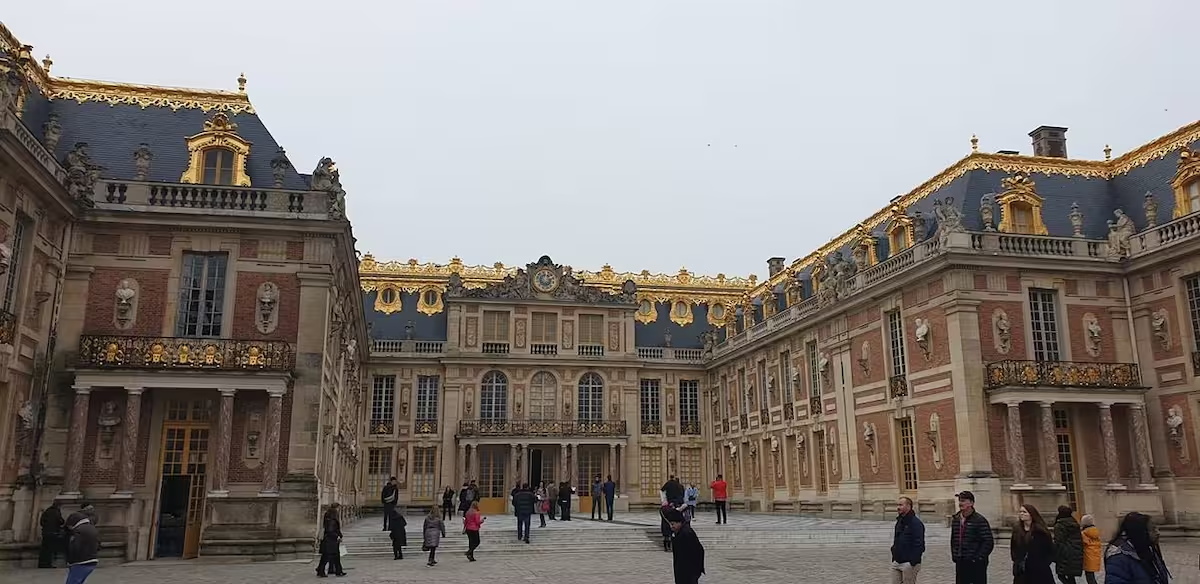
The Palace of Versailles is not just a visit—it is an experience. From the very moment you pass through its gilded gates and see the golden rooftops shimmering in the distance, you realize that you are about to step into another world. A world where architecture, art, and politics were fused together to serve one man’s vision: the Sun King, Louis XIV.
What strikes you first, standing in the main courtyard, is the theatrical aspect of the place. The façades, with their red bricks, light-colored stone, statues, and golden balconies, are like a stage set designed to impress. And that is exactly what Versailles was meant to be: a stage for power, where every detail reminded courtiers and visitors that the king was at the center of everything.
Inside, each room adds to this story. The State Apartments, richly decorated with marble, paintings, and mythological references, glorify the king as if he were a god. And then, there is the Hall of Mirrors. Stepping into this legendary gallery is like entering another dimension: 73 meters long, lined with 357 mirrors, and opening onto the gardens, it was created to dazzle. Here, the greatest ceremonies of the monarchy unfolded—royal receptions, extravagant balls, and key diplomatic encounters. History echoed here too: in 1919, the Treaty of Versailles was signed in this very room, ending World War I.
And yet, the palace is only half the story. Once outside, the gardens designed by André Le Nôtre stretch endlessly, turning nature itself into an instrument of power. Straight alleys, majestic fountains, and hidden groves form a masterpiece of symmetry and control. To walk there is to step into a vision of harmony where even nature bowed to the will of the king.
Beyond the grand perspectives, you reach the estate of Marie Antoinette, with the Petit Trianon and her charming Hamlet. These more intimate spaces remind us that behind the rituals and the grandeur, there were human beings who longed for simplicity and escape. Here, away from the rigid etiquette of the court, the queen sought refuge in a pastoral setting that contrasted so strongly with the splendor of Versailles.
Versailles dazzles, but it also makes you reflect. Its beauty and magnificence are undeniable, but so too is the sense of excess. The palace symbolizes the height of French absolutism, but also the fragility of a system that, through its extravagance, paved the way for its own downfall.
Leaving Versailles, I felt that I had not only visited one of the most beautiful palaces in the world, but also walked through history itself. The Palace of Versailles is more than a monument—it is a universal symbol of ambition, grandeur, and the complex legacy of the monarchy.
📍 Address & Visitor Information
Palace of Versailles
Place d’Armes
78000 Versailles
France
Visitor Tips:
- Book tickets online in advance; Versailles is one of the most visited sites in France.
- Allow a full day to explore the palace, gardens, and the Trianon estates.
- The gardens are free to visit on certain days, but during fountain shows and musical garden events, tickets are required.
- Arrive early in the morning to avoid long lines.
- Wear comfortable shoes—the gardens are vast!
- Don’t miss the Hall of Mirrors and the Grand Trianon for a deeper perspective of the royal lifestyle.