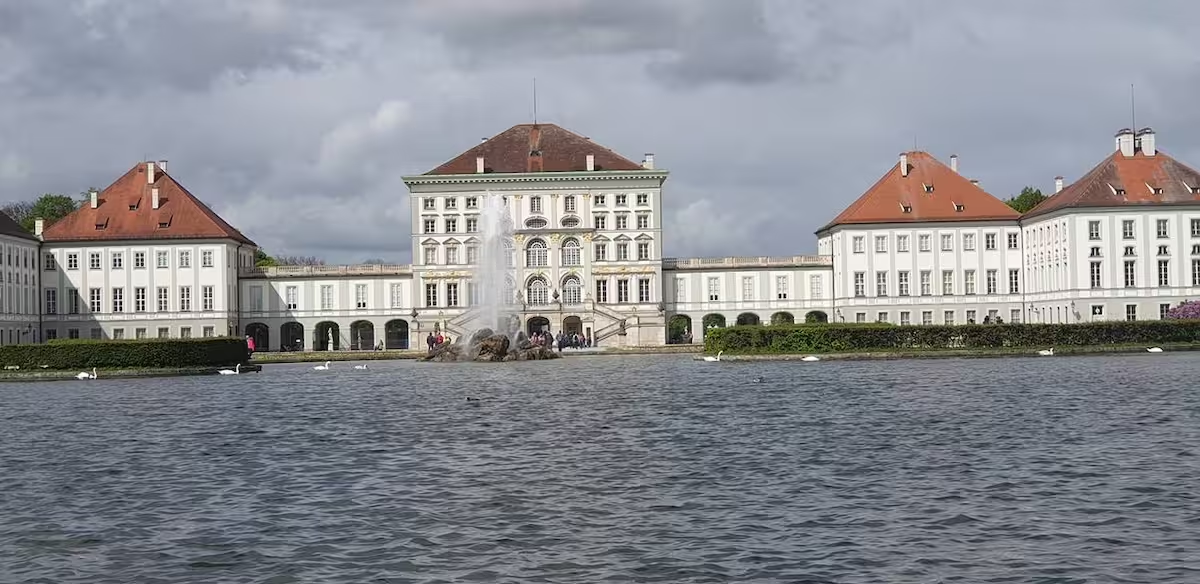
Strolling through the western part of Munich, I found myself drawn to a palace that seems to emerge from a storybook: Schloss Nymphenburg. Its pale yellow façades, crowned with elegant domes and surrounded by sprawling gardens, radiate a quiet grandeur. Unlike the imposing and somewhat austere Munich Residence, Nymphenburg exudes charm, inviting visitors to explore both the beauty of its interiors and the serenity of its park. Built in the 17th century as a summer residence for the Electors of Bavaria, Nymphenburg quickly became more than just a seasonal retreat. It was a symbol of power, taste, and refinement. Walking through its gates, I felt transported back to an era where art, architecture, and nature intertwined perfectly to celebrate the elegance of the Bavarian court. The palace is not a single cohesive structure; it is a series of pavilions, wings, and galleries, each reflecting the tastes of different rulers across centuries. From the Italian Baroque foundations to the Rococo interiors that dazzle with pastel colors and gilded stucco, Nymphenburg feels like a living story of artistic evolution. Every room tells a tale, and every hall reflects the ambitions of the Wittelsbach dynasty, who left an indelible mark on Bavaria. One of the highlights for me was the Marstallmuseum, the former royal stables turned museum. The collection of ceremonial carriages, sleighs, and equestrian equipment is astonishing. Each piece is not only beautifully crafted but also a testament to the ceremonial life of the court, where even transportation was an expression of prestige. Walking among the gilded carriages, I could almost imagine parades through Munich, with horses prancing and bells ringing. Inside the palace, the Gallery of Beauties, commissioned by King Ludwig I, stands out. Portraits of women from various social backgrounds, painted by Joseph Stieler, line the walls, each capturing elegance, charm, and personality. It’s a gallery that goes beyond mere decoration; it offers a glimpse into the human stories and ideals of beauty cherished by the Bavarian court. The palace gardens deserve just as much admiration. Stretching over 490 acres, they are a masterpiece of landscape architecture, combining formal French-style gardens with naturalistic English-style parkland. Walking along the canals, fountains, and tree-lined avenues, I felt a rare sense of calm. Hidden pavilions, small lakes, and carefully sculpted statues create moments of surprise at every turn, making the gardens not just a backdrop but an integral part of the Nymphenburg experience. Visiting Schloss Nymphenburg is also a lesson in historical resilience. While some parts suffered during wars, the palace has been carefully preserved and restored, allowing visitors to experience its original splendor. From the ornate ceilings and lavish rooms to the serene beauty of the park, the palace embodies the elegance and sophistication of Bavaria’s past. Leaving Nymphenburg, what stayed with me was not only its grandeur but its harmony—a perfect balance of architecture, art, and nature. Unlike the more formal city palaces, it feels like a place where people lived, celebrated, and enjoyed the beauty of life. It is a palace that invites exploration, contemplation, and admiration, and a true jewel of Bavarian culture. Visiting Schloss Nymphenburg: Tips and Information
The Munich Residence: A Palace at the Heart of Bavaria
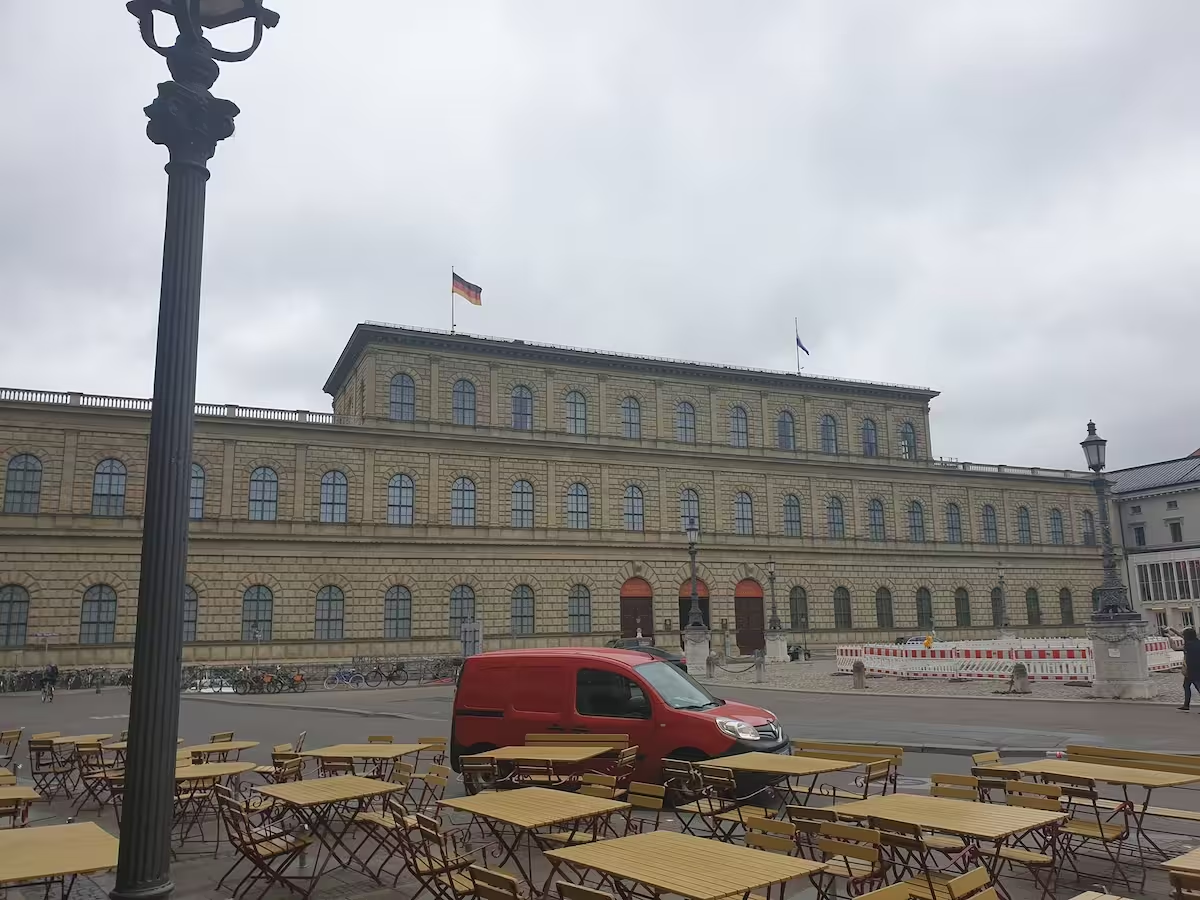
Walking through the center of Munich, I couldn’t miss this immense building with its sober yet imposing façades: the Munich Residence, once the seat of the Dukes, Electors, and later Kings of Bavaria. At first glance, its massive and somewhat austere exterior doesn’t necessarily reveal the wealth hidden behind its walls. Yet, once you pass through the doors, a whole world opens up—a journey through five centuries of history and art, a place where Bavaria has written some of its greatest chapters. The Residence is not a palace frozen in a single style. It is a grand assembly of rooms, courtyards, and galleries built over time, reflecting the tastes and ambitions of each ruler. Here, one finds Italian Renaissance, Baroque splendor, Rococo exuberance, and Neoclassical elegance. Every room is a surprise, giving the impression of walking through a living mosaic of European architectural history. One of the places that impressed me most is the Antiquarium, a huge gallery built in the 16th century to house the Dukes of Bavaria’s collection of antique sculptures. With its painted vaults, frescoes, and aligned busts, it is a hall that impresses with its majesty—a space where ancient art dialogues with the Renaissance. One almost feels tiny walking through this nave, which resembles a cathedral dedicated to culture and knowledge. Then, around a corner, you discover Baroque and Rococo rooms of incredible splendor: gilded decorations, painted ceilings, mirrors, and marble. Each salon seems designed to shine brighter than the previous one, to dazzle visitors and remind them of the power of the Wittelsbach dynasty, which ruled Bavaria for nearly 700 years. Among these jewels, the Cuvilliés Theatre, rebuilt after the war, is a pure Rococo masterpiece, all lace-like carved wood and red velvet—a small marvel that seems straight out of a dream. What makes the Residence fascinating is also its historical role. More than a palace, it was the real political heart of Bavaria, a center of power where major decisions were made. Each ruler left their mark, expanding the palace, adding new wings, and decorating according to the fashions of their era. This richness gives today an impressive ensemble of more than 130 rooms open to the public, an immersion into art and history that seems almost endless. The Treasury of the Residence also deserves attention: jewels, insignia, crowns, and reliquaries recall the wealth and prestige of the House of Wittelsbach. These precious objects perfectly complement the visit to the ceremonial rooms, offering an intimate view of power and its display. Leaving the Residence, what stays in memory is not only the image of a vast and sumptuous palace but that of a living place, which tells as much about dreams of grandeur as about the trials of history. Largely destroyed during World War II, the palace was patiently rebuilt, bringing back to life this masterpiece of European culture. Visiting the Munich Residence is a journey through time, from the splendor of the Renaissance to the elegance of the 19th century. It allows one to understand how Bavaria established itself at the heart of Europe, and above all, to feel the power and fragility of human heritage. It is a visit that dazzles, enriches, and leaves a lasting impression. Visitor Information
Versailles Palace: Splendor, Power, and the Memory of History
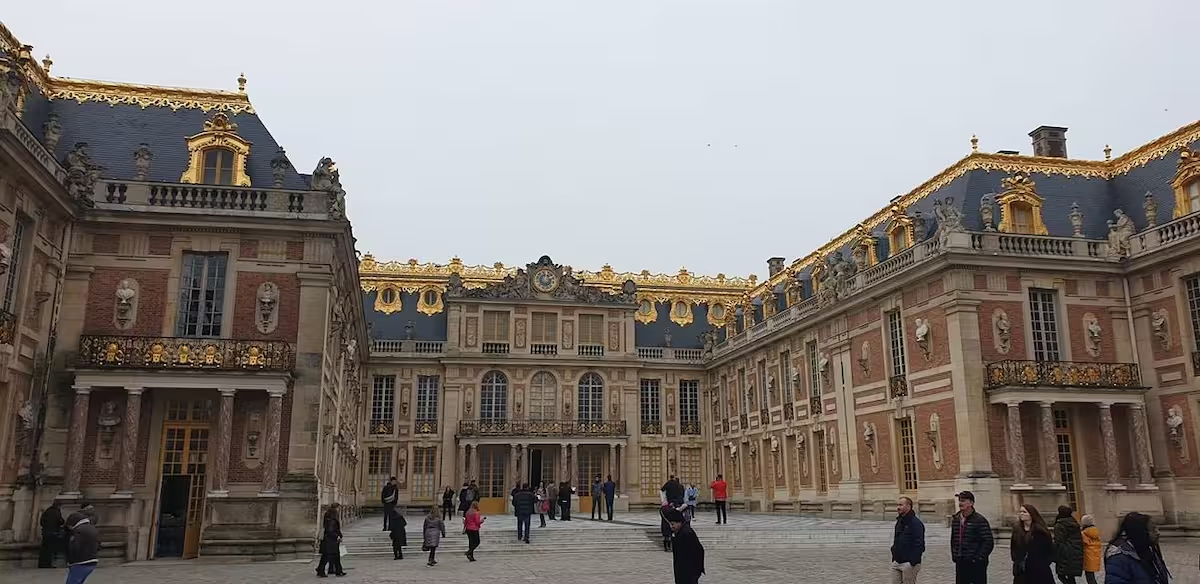
The Palace of Versailles is not just a visit—it is an experience. From the very moment you pass through its gilded gates and see the golden rooftops shimmering in the distance, you realize that you are about to step into another world. A world where architecture, art, and politics were fused together to serve one man’s vision: the Sun King, Louis XIV. What strikes you first, standing in the main courtyard, is the theatrical aspect of the place. The façades, with their red bricks, light-colored stone, statues, and golden balconies, are like a stage set designed to impress. And that is exactly what Versailles was meant to be: a stage for power, where every detail reminded courtiers and visitors that the king was at the center of everything. Inside, each room adds to this story. The State Apartments, richly decorated with marble, paintings, and mythological references, glorify the king as if he were a god. And then, there is the Hall of Mirrors. Stepping into this legendary gallery is like entering another dimension: 73 meters long, lined with 357 mirrors, and opening onto the gardens, it was created to dazzle. Here, the greatest ceremonies of the monarchy unfolded—royal receptions, extravagant balls, and key diplomatic encounters. History echoed here too: in 1919, the Treaty of Versailles was signed in this very room, ending World War I. And yet, the palace is only half the story. Once outside, the gardens designed by André Le Nôtre stretch endlessly, turning nature itself into an instrument of power. Straight alleys, majestic fountains, and hidden groves form a masterpiece of symmetry and control. To walk there is to step into a vision of harmony where even nature bowed to the will of the king. Beyond the grand perspectives, you reach the estate of Marie Antoinette, with the Petit Trianon and her charming Hamlet. These more intimate spaces remind us that behind the rituals and the grandeur, there were human beings who longed for simplicity and escape. Here, away from the rigid etiquette of the court, the queen sought refuge in a pastoral setting that contrasted so strongly with the splendor of Versailles. Versailles dazzles, but it also makes you reflect. Its beauty and magnificence are undeniable, but so too is the sense of excess. The palace symbolizes the height of French absolutism, but also the fragility of a system that, through its extravagance, paved the way for its own downfall. Leaving Versailles, I felt that I had not only visited one of the most beautiful palaces in the world, but also walked through history itself. The Palace of Versailles is more than a monument—it is a universal symbol of ambition, grandeur, and the complex legacy of the monarchy. 📍 Address & Visitor Information Palace of VersaillesPlace d’Armes78000 VersaillesFrance Visitor Tips:
Rivau Castle: A Fairytale in the Heart of Touraine
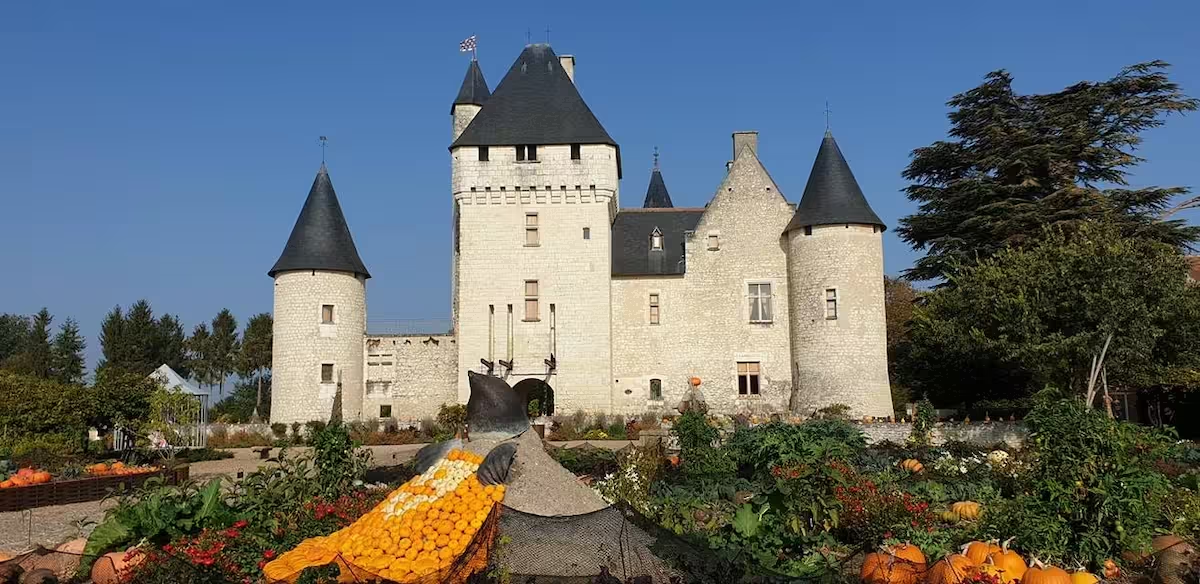
Arriving at Rivau Castle, I immediately felt as though I had stepped into a fairytale. Nestled in the peaceful countryside of Touraine, this castle does not overwhelm with the majesty of Chambord or the historical weight of Langeais. Instead, it possesses a unique atmosphere—enchanting, poetic, and almost dreamlike. With its tall towers, moats, and vibrant gardens, Rivau invites you not only to admire but to imagine, to dream, and to rediscover a childlike sense of wonder. Built in the 15th century, Rivau began as a medieval fortress but gradually transformed into a graceful residence. Its history is inseparably linked to Joan of Arc, who came here to requisition horses for her army. Walking across the cobbled courtyard, I couldn’t help but picture the scene: the sound of hooves, the clanking of armor, and Joan herself—determined, courageous, and larger than life—passing through the castle gates. That connection to one of France’s most legendary figures gives Rivau an aura of timeless significance. What makes Rivau truly unforgettable, however, are its gardens. Twelve themed gardens surround the castle, each inspired by myths, legends, and fairy tales. From the Snow White Garden to Gargantua’s Vegetable Patch, from the Unicorn’s Labyrinth to the Secret Garden, each space tells a story through colors, scents, and playful details. Strolling among them, I felt transported into a world where nature and imagination intertwine—a place where flowers bloom like characters, and where every corner offers a surprise. Inside the castle, the atmosphere is warm and full of life. The rooms are furnished to evoke daily life in the past, but what struck me most was Rivau’s unique ability to combine heritage with creativity. Contemporary art installations are displayed throughout the historic halls, creating a striking dialogue between centuries. Seeing a modern artwork framed by Gothic arches or a bold installation sharing space with an ancestral portrait felt refreshing and inspiring. This blend of history, nature, and art makes Rivau Castle unlike any other. It doesn’t seek to impress with grandeur or power; instead, it charms and enchants. It is a place that tells stories, sparks the imagination, and offers both adults and children a journey beyond time. Leaving Rivau, I felt I had experienced not just a castle, but a living fairytale—one that reminds us that heritage is not only about battles and stone walls, but also about dreams, creativity, and the emotions they awaken. 📍 Address & Visitor Information Rivau CastleChâteau du Rivau9 Rue du Château37120 LémeréFrance Visitor Tips:
Chambord Castle: The Masterpiece of the Renaissance in the Heart of the Loire
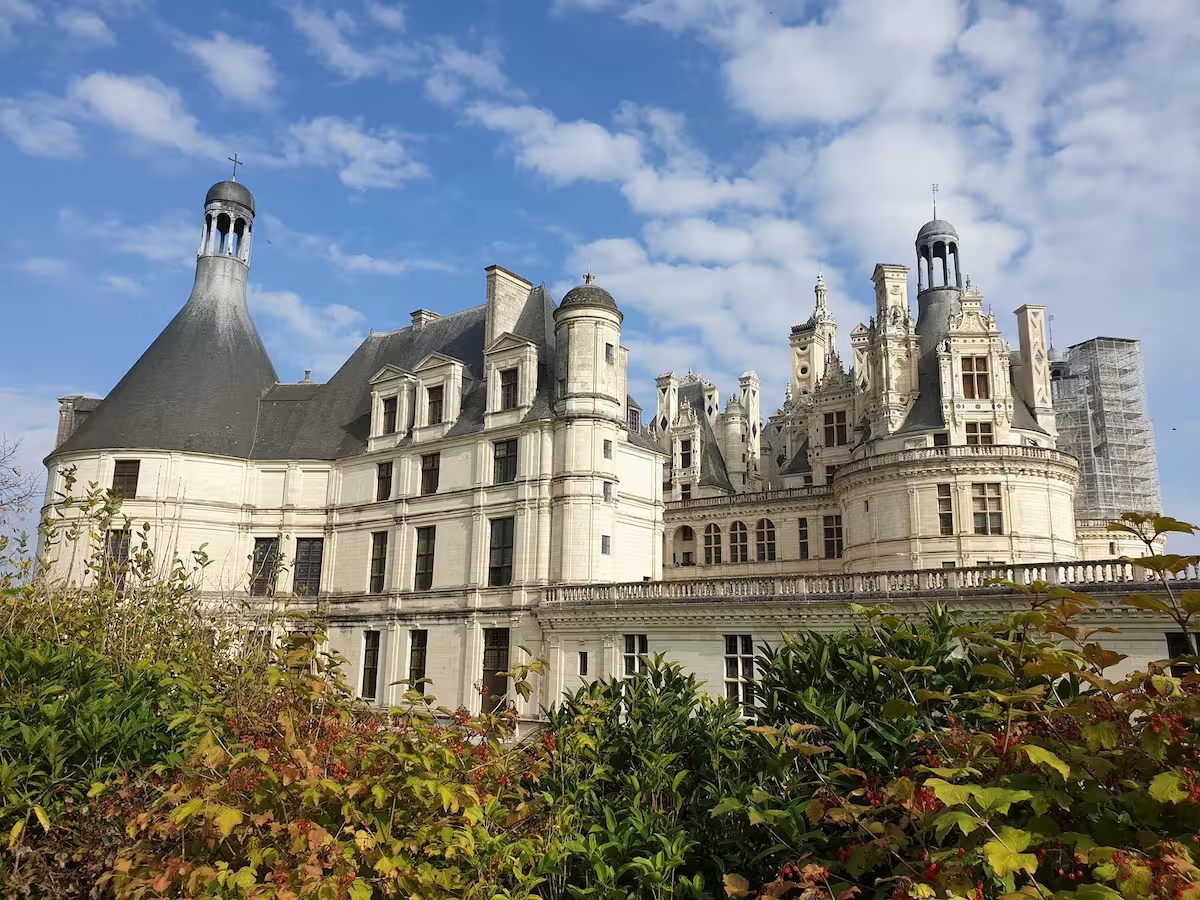
The moment you approach Chambord Castle, you are left speechless. It rises from the forest, vast, majestic, almost surreal. With its 440 rooms, 282 chimneys, and 84 staircases, it is unlike any other castle I have ever seen. Every time I think back to my visit, it’s the feeling of grandeur and mystery that comes to mind first. You immediately sense that you are facing a unique monument, a place where history and legend are intertwined in every stone. Chambord was built in the early 16th century under the reign of King Francis I, who wanted a castle worthy of his power and love for the arts. He envisioned a place to hunt, entertain courtiers, and demonstrate the magnificence of the French monarchy. Interestingly, although often called a “castle,” it was never permanently inhabited. It served primarily as a royal residence during hunts and as a showcase of the king’s prestige. The most striking feature upon entering Chambord is the double-helix staircase, often attributed to Leonardo da Vinci. One person can ascend while another descends without ever meeting. It is a Renaissance architectural marvel, symbolizing both the ingenuity of the era and Francis I’s genius for art and innovation. Standing in the middle of this staircase, I felt as if I were walking through a dream, a space where every detail was designed to impress and inspire awe. The vast rooms of the castle are equally impressive, with monumental fireplaces, intricately carved ceilings, and finely crafted woodwork. While many of the original furnishings have disappeared over the centuries, the rooms still evoke the lavish life of the royal court and aristocracy of the time. Each space invites you to imagine grand banquets, political discussions, and festive gatherings that animated Chambord during the Renaissance. Outside, the park of Chambord is equally remarkable. Spanning over 5,000 hectares of forest and meadows, it was designed for hunting and remains today one of Europe’s largest enclosed parks. Walking through this immense estate, with the castle framed against the horizon, offers a sense of freedom and reflection found nowhere else. The perspectives, pathways, and moats create a continuous dialogue between nature and architecture, characteristic of Renaissance vision. Chambord Castle is also fascinating for its historical significance. It has witnessed kings and emperors, survived revolutions and wars, yet it stands today imposing and elegant—a symbol of French grandeur. For me, visiting Chambord is not just about seeing a castle; it is about feeling the ambition, creativity, and genius of an era, understanding why it remains a unique monument in the world. Leaving the castle, I was struck by the impression that Chambord is more than a historic building. It is a visual, intellectual, and emotional experience, where every stone tells a story, every tower, staircase, and façade bears witness to the passion for art and the power of those who imagined it. Chambord is a place where the French Renaissance is not only read about but lived and felt. 📍 Address & Visitor Information Chambord CastleChâteau de Chambord41250 ChambordFrance Visitor Tips:
The Royal Castle of Blois: A Journey Through the Heart of French History
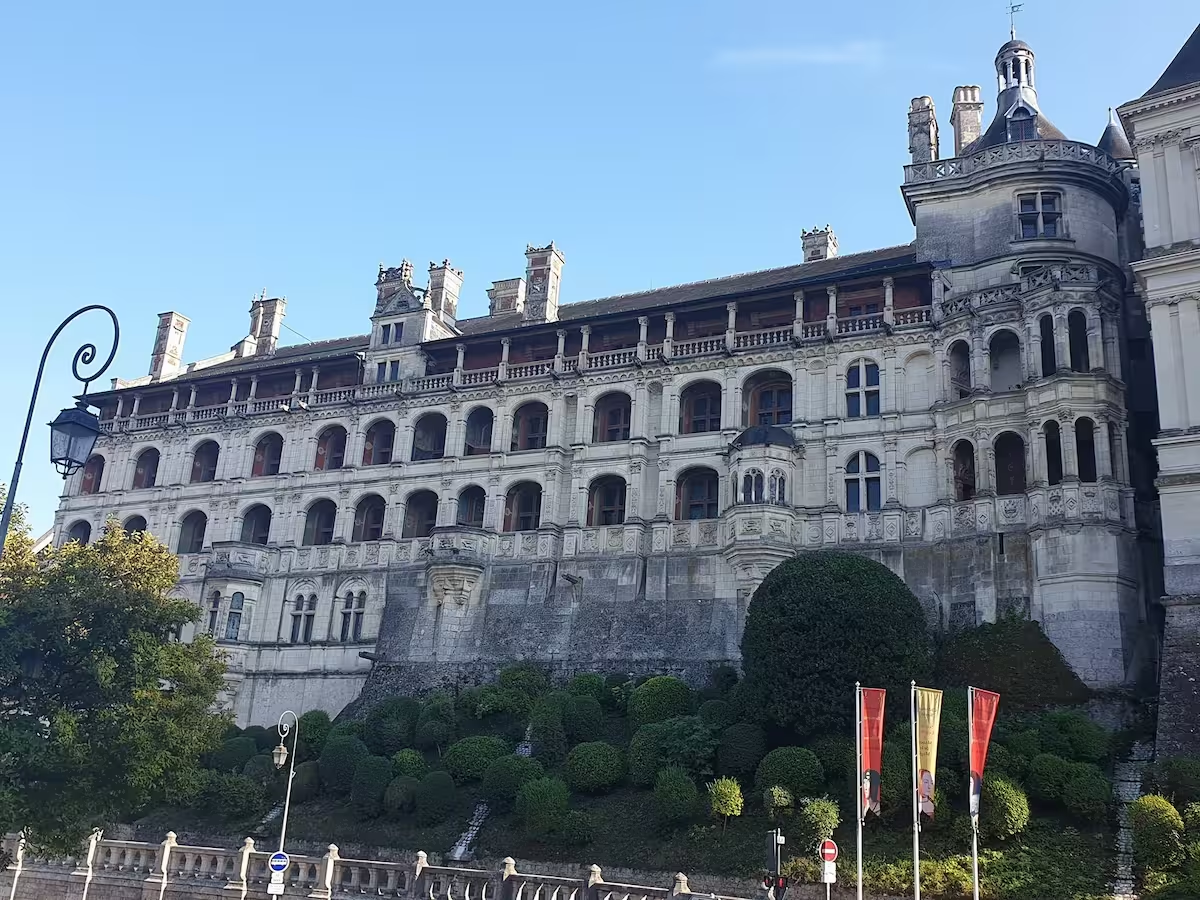
The moment you approach the Royal Castle of Blois, you immediately understand why it holds such a special place in French history. This castle, with its wings built over several centuries, is like an open book showing the evolution of architecture and royal power. From flamboyant Gothic to Renaissance elegance, and then to classical façades, each style tells the story of an era, and each stone whispers centuries of history. What struck me the most upon arrival was the variety of façades. The Renaissance wing, with its monumental staircase decorated with intricate sculptures, draws the eye and gives the feeling of entering a palace of art and light. Next to it, the Gothic wing still reflects medieval fortifications and the power of the monarchy in the Middle Ages. This juxtaposition of styles never feels confusing; instead, it creates a unique harmony, a living testimony to France’s layered history. Inside, the castle is equally fascinating. The grand halls and royal apartments reveal the lives of the kings and queens who lived here. One can almost hear the footsteps of the kings of France on the great staircase, feel the grandeur of royal receptions, and imagine the political intrigues and alliances formed within these walls. The apartments of Francis I and Catherine de’ Medici are especially impressive: every detail, every piece of furniture, every carved ceiling demonstrates the taste for luxury and the importance of royal power. The castle is also famous for its staircases and inner courtyard. The Francis I staircase, with its airy spiral and sculpted motifs, is a masterpiece that captures every visitor’s attention. Standing at the foot of this staircase, I felt as if I could touch the grandeur of the French Renaissance. The courtyard, with its colorful façades and finely decorated windows, is perfect for a leisurely stroll while admiring the architectural diversity of the castle. Walking through the Royal Castle of Blois, I was also captivated by the Hall of the Estates and the Saint-Calais Chapel, emblematic spaces that witnessed important historical events. Blois is a living castle, where every corner tells a story and every room invites visitors to travel back in time and better understand French history. But the charm of Blois is not limited to its architecture. The gardens and terraces offer magnificent views over the city and the Loire River, highlighting the intimate relationship between the castle and its surroundings—a reflection of royal authority harmoniously integrated into the landscape. Visiting the Royal Castle of Blois is much more than seeing a historic monument. It is being transported through centuries of history, marveling at architecture and decoration, and feeling the presence of kings and queens who shaped France. It is an experience that stays with you, a meeting with the past that you will never forget. 📍 Address & Visitor Information Royal Castle of BloisChâteau Royal de BloisPlace du Château41000 BloisFrance Visitor Tips:
Langeais Castle: Where Medieval Strength Meets Renaissance History
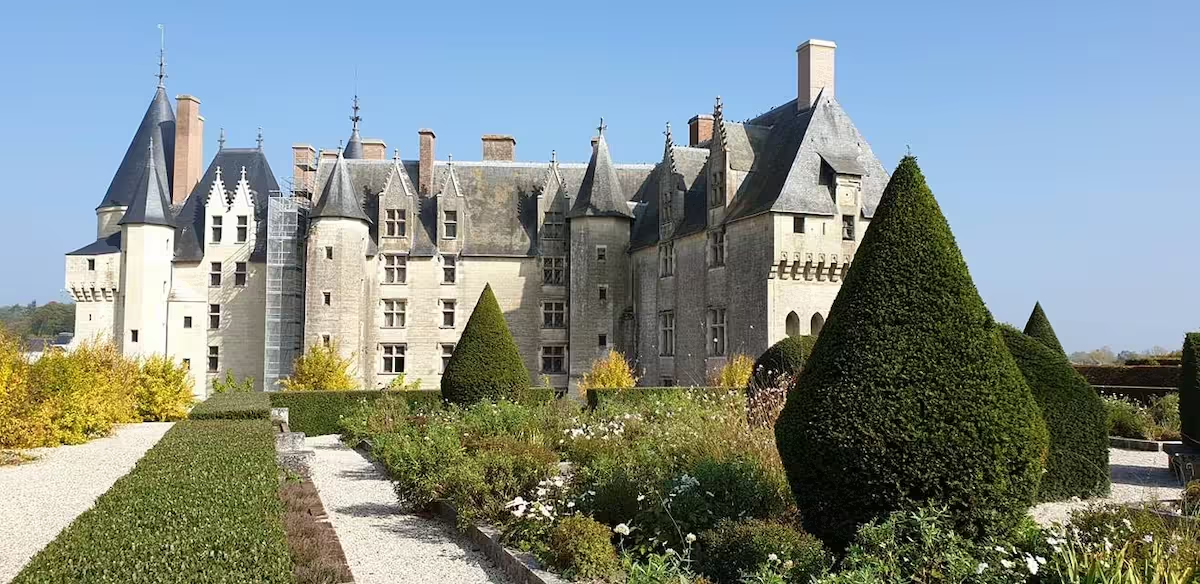
Arriving in the charming town of Langeais, on the banks of the Loire, it is impossible to miss the imposing silhouette of Langeais Castle. With its tall towers, crenellated walls, machicolations, and a working drawbridge, the castle looks like it has been taken straight out of the Middle Ages. One almost expects armored knights to appear on the battlements. Built in 1465 by King Louis XI, Langeais Castle was designed above all as a fortress—a rare example of defensive architecture at a time when many castles were beginning to turn into Renaissance residences of prestige and comfort. Yet behind its austere exterior lies a story that forever changed the destiny of France. It was here, in 1491, that Charles VIII, King of France, married Anne of Brittany, Duchess and heir to the powerful Duchy of Brittany. This marriage, celebrated in the castle’s wedding hall, was not just a union between two young royals; it was a political event of immense importance. It sealed the definitive attachment of Brittany to the French crown, shaping the nation as we know it today. Standing in that very room, it is easy to imagine the scene—the glow of torches, nobles gathered in solemn silence, and a royal oath that altered the course of history. Inside, Langeais Castle reveals a surprising richness. While the exterior still carries the weight of medieval austerity, the interiors are warm, ornate, and richly decorated. Flemish tapestries cover the walls, sculpted wooden furniture recalls the artistry of the 15th century, and immense canopy beds show the grandeur of daily life for royalty. Each room feels frozen in time, as though its occupants had only just left a moment before. The banquet hall, with its long tables and benches, evokes scenes of feasts and celebrations, while the royal chamber offers a glimpse into the more private side of power. The most powerful space, however, remains the wedding hall, carefully reconstructed to evoke the historic union of Charles VIII and Anne of Brittany. Here, history does not feel distant—it feels alive. The atmosphere is almost tangible, a reminder that these walls were silent witnesses to one of the most decisive moments in the history of France. Outside, the contrast is striking. Beyond the heavy fortress walls, the castle gardens and terraces open onto peaceful views. The Loire stretches out in the distance, a reminder of the strategic and cultural importance of this valley for the kings of France. Strolling through the gardens, I found it easy to pause, admire the scenery, and reflect on the centuries of life, trade, and royal processions that once animated this river landscape. Langeais Castle may not be the largest of the Loire Valley castles, but it stands out with its authenticity and its powerful historical legacy. While Chambord amazes with its grandeur and Chenonceau enchants with its elegance, Langeais moves the heart with its strength, its sincerity, and its role in shaping French history. It is a castle of transition—a place where the Middle Ages meet the Renaissance, where fortress walls shelter refined interiors, and where love and politics merged to change the course of a kingdom. Leaving the castle, I carried with me the impression of having stepped into a true threshold of time. Langeais is not just a monument—it is a living story, a reminder that the soul of France was built in moments like this, between stone walls where history was sealed forever. 📍 Address & Visitor Information Langeais CastleChâteau de LangeaisPlace Pierre de Brosse37130 LangeaisFrance Visitor Tips:
Chenonceau Castle: Elegance and History Across the River Cher
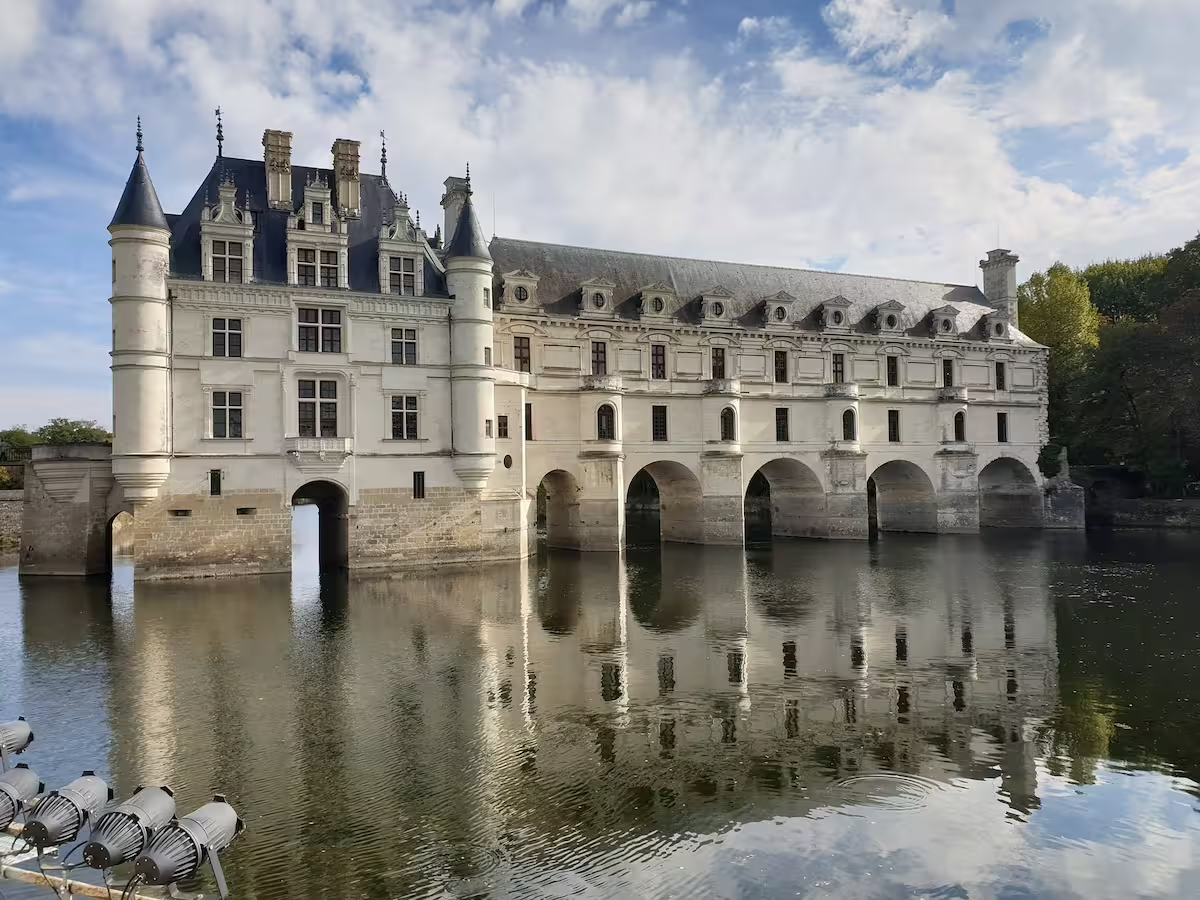
Among the jewels of the Loire Valley, there is one château that stands apart from all others: the Chenonceau Castle. Gracefully stretching across the River Cher, its arches form a bridge between two banks, giving the impression that the castle floats above the water. At first glance, its elegance is striking, not only because of the finesse of its Renaissance architecture but also for the way it harmoniously blends with its natural surroundings. The story of Chenonceau is inseparable from the women who shaped it, earning it the nickname “the Ladies’ Castle.” Catherine Briçonnet oversaw its construction in the early 16th century, Diane de Poitiers gave it beauty and balance by adding its iconic gardens, and Catherine de’ Medici transformed it into a true Renaissance palace. Later, Louise de Lorraine, Madame Dupin, and others left their mark, each woman weaving a new chapter into its history. This feminine legacy still lingers today, infusing Chenonceau with a unique aura where strength and refinement walk hand in hand. Inside, the château enchants as much as it impresses. Vast halls open onto monumental fireplaces, corridors are adorned with rich tapestries and fine furnishings, and walls are decorated with masterpieces of European painting. The most emblematic space remains the long gallery, stretching more than sixty meters above the Cher. Once a ballroom for grand festivities and later an improvised hospital during the First World War, it is today a space bathed in light, with tall windows offering breathtaking views of the river below. Yet Chenonceau is more than just a castle on water—it is also a living estate. The gardens, shaped by Diane de Poitiers and Catherine de’ Medici, are a symphony of symmetry, color, and fragrance. In spring, tulips and roses bloom in abundance; in summer, the parterres overflow with vivid colors; in autumn, the foliage brings warm tones that reflect in the basins. Wandering through the park, with its centuries-old trees and shaded paths, is as much a pleasure as stepping inside the château itself. Chenonceau also bears the weight of history. Through centuries of glory and turmoil, it welcomed queens, favorites, artists, and thinkers. It endured wars and revolutions, but always survived, preserved by those who cherished it. Today, it is one of the most visited castles in France, attracting travelers from around the world who come to marvel at its unique silhouette and the richness of its past. Visiting the Chenonceau Castle is more than admiring a historic monument. It is stepping into a place where architecture, history, and poetry intertwine. It is walking through a gallery suspended over a river, contemplating gardens that change with the seasons, and sensing the presence of the women who made this castle an enduring symbol of elegance and resilience. Chenonceau is not just seen; it is experienced as an encounter with beauty, history, and timeless enchantment. 📍 Address & Visitor Information Chenonceau Castle37150 ChenonceauxFrance Visitor Tips:
Azay-le-Rideau Castle: A Renaissance Gem Floating on Water
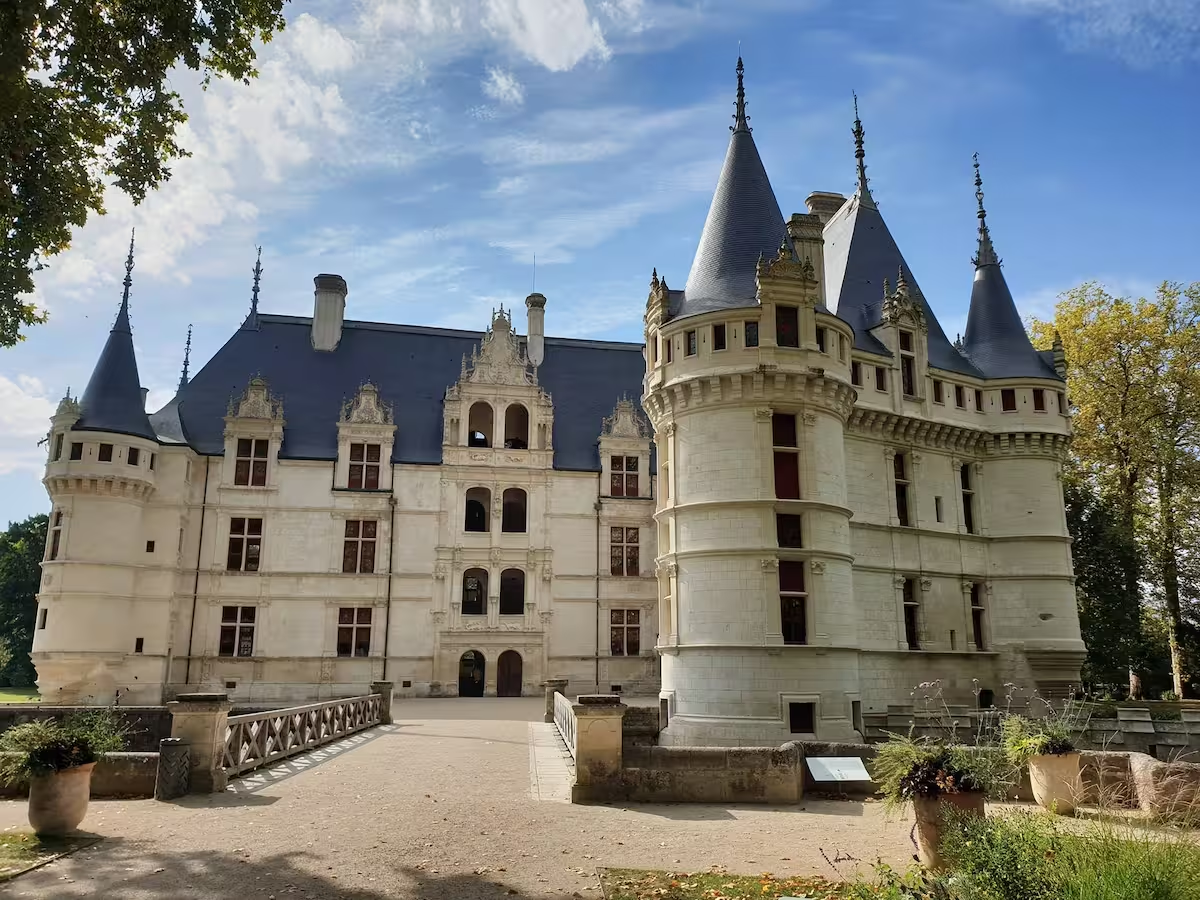
In the heart of the Loire Valley, where stone meets water and light, rises the enchanting Azay-le-Rideau Castle, one of the finest examples of French Renaissance architecture. Built on a small island of the Indre River, the château appears to float on its mirror-like waters, offering a vision of elegance and harmony that seems almost unreal. Approaching through the landscaped park, the visitor is struck by its slender towers, richly sculpted façades, and wide windows that let the daylight flow in. It is no surprise that Balzac once described it as a “faceted diamond set in the Indre.” Constructed in the early 16th century during the reign of François I, the castle perfectly embodies the meeting of medieval tradition and Italian Renaissance innovation. It was commissioned by Gilles Berthelot, a wealthy financier who sought to display his fortune and prestige, but whose ambitions were soon swept away by the political storms of the time. Yet the château endured, carrying through the centuries the elegance of a bygone age, a living witness to the artistic fervor of the Renaissance. Inside, the journey continues in an atmosphere of refinement. The grand staircase, with its delicately carved details, seems to invite visitors upward, as if leading not only to the upper floors but also deeper into history. The great halls, adorned with tapestries and woodwork, evoke the grandeur of courtly life, while the private chambers create a more intimate atmosphere, filled with the quiet charm of Renaissance interiors. Carefully chosen furnishings and decorations bring the past to life, immersing visitors in a world where beauty and comfort were beginning to blend. But the château’s greatest magic lies in its constant dialogue with water and nature. Its 19th-century landscaped park surrounds the château with shaded paths and majestic trees, while the reflective pools create a dreamlike effect. The château, doubled in the waters of the Indre, seems at once real and illusory, suspended between solidity and lightness. At sunset, when golden light brushes its stone walls and stretches across the river, the entire scene transforms into a living painting. A visit to Azay-le-Rideau Castle is far more than admiring a historical monument. It is an invitation to lose oneself in beauty, to feel the spirit of the Renaissance, and to step into a place where time seems suspended. Among the jewels of the Loire Valley, this château shines as one of the most refined, offering visitors not just history, but an unforgettable experience of elegance, serenity, and enchantment. 📍 Address & Visitor Information Azay-le-Rideau Castle19, Rue Balzac37190 Azay-le-RideauFrance Visitor Tips:
Ussé Castle: The Fairytale Castle That Inspired Sleeping Beauty
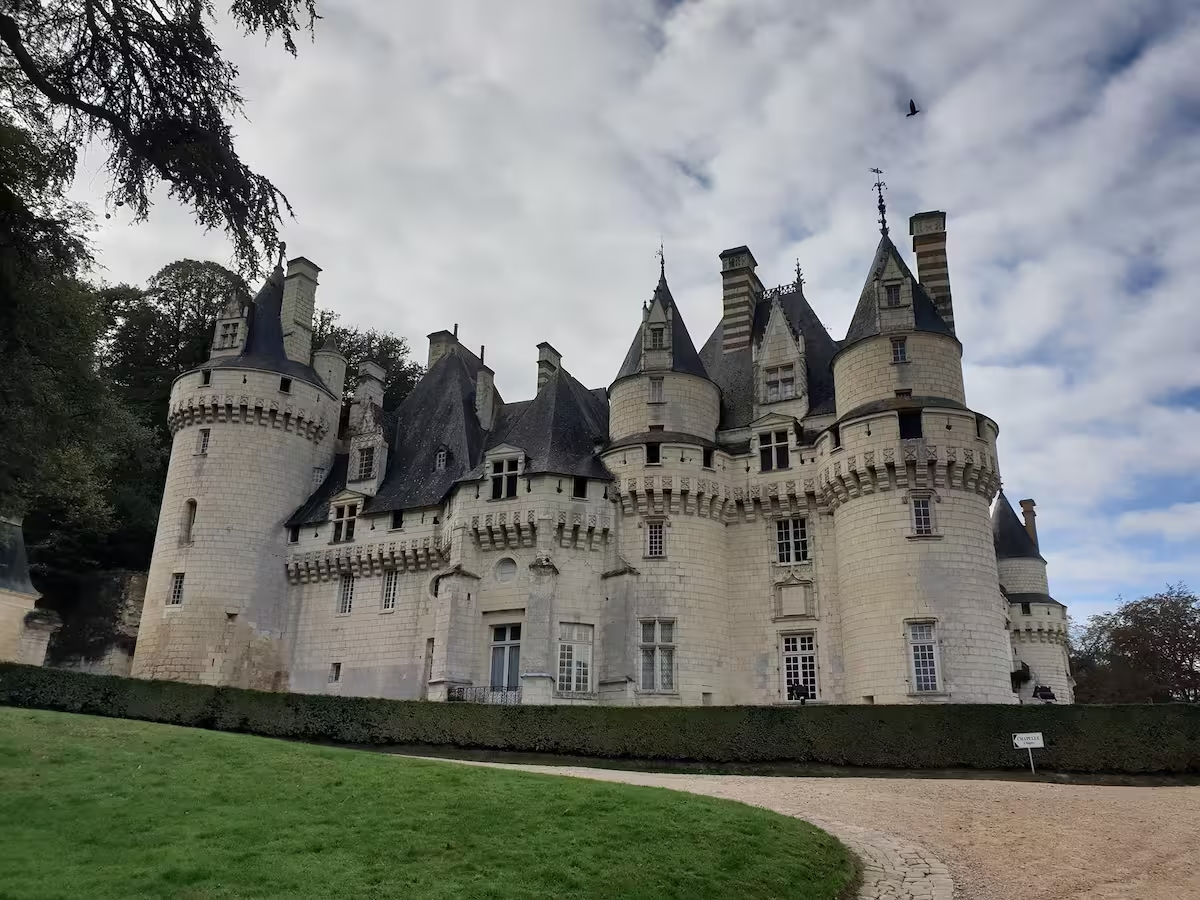
Along the winding roads of the Loire Valley, nestled between deep forests and sunlit hills, stands one of France’s most enchanting castles: Ussé Castle. With its tall slate-roofed towers, slender turrets, and bright façades outlined against the sky, it seems lifted straight from the pages of a fairytale. It is said to have inspired Charles Perrault to write Sleeping Beauty, and a single glance at Ussé reveals why. The castle exudes a unique magic that transports visitors into a world where history and imagination intertwine. Its origins date back to the Middle Ages, but it was during the Renaissance and in the centuries that followed that the castle took its present form, blending defensive architecture with residential elegance. This contrast between strength and refinement gives it a majestic yet welcoming appearance. Over the years, Ussé has been home to noble families, each leaving their mark—sculpting gardens, decorating halls, and expanding façades. The castle is like a book of stone, telling the story of evolving architectural styles across the centuries. Upon entering the main courtyard, visitors are struck by the balance of its volumes and the way its white stones reflect light. Inside, the rooms unfold like chapters of a historical novel. The salons, adorned with exquisite tapestries and period furniture, evoke the refined life of French aristocracy, while the chapel, a jewel of Gothic and classical elegance, inspires admiration and reflection. In the upper rooms and towers, displays evoke the story of Sleeping Beauty, a charming nod to the legend that has embedded Ussé Castle into the collective imagination. But Ussé is not just a building—it is also a breathtaking setting. Its formal gardens, designed in the 17th century and attributed to Le Nôtre, reveal geometric paths and flowerbeds that frame the castle façade. From there, the gaze stretches across the Indre Valley and the surrounding forest, offering a panorama that enhances the romantic charm of the site. Each season dresses the castle in a new coat: summer roses, autumn golds, winter mists—all highlighting its timeless character. Today, Ussé Castle remains one of the Loire Valley’s most captivating sites, drawing both history enthusiasts and dreamers alike. Its elegant silhouette, its legendary atmosphere, and its rich heritage make it an unmissable destination. Visiting Ussé is like stepping between reality and imagination, a journey into beauty that has endured through the centuries. Like a never-ending fairytale, Ussé Castle stands as both a testament to the past and a promise of wonder. 📍 Address & Visitor Information Ussé CastleChâteau d’Ussé37230 Rigny-UsséFrance Visitor Tips: