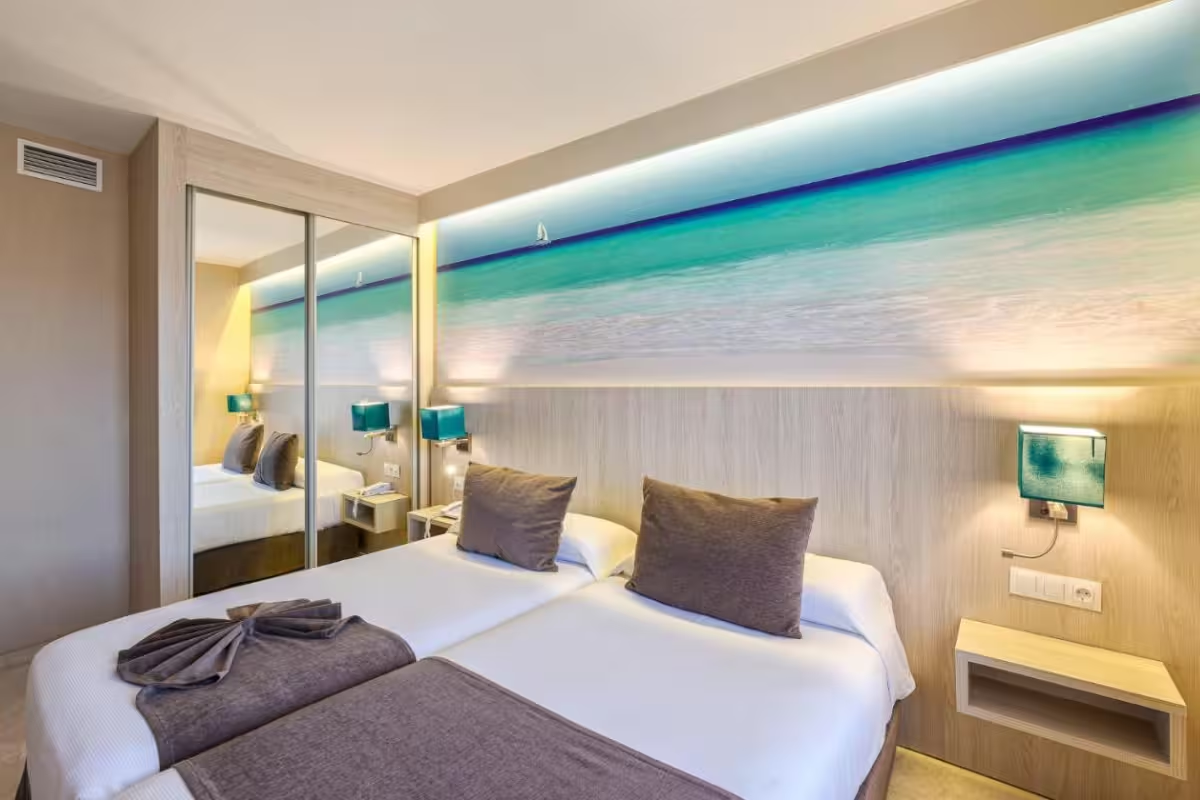
During our January getaway to the Costa del Sol, we had the pleasure of staying at the Benalmadena Palace Spa, and it was truly a moment of relaxation and comfort. Located just a few minutes from the beach, this hotel offers a peaceful setting with beautiful views of the Mediterranean Sea. The welcome was very warm upon our arrival, and we immediately appreciated the friendly, family-oriented atmosphere of the hotel. The reception area is modern and spacious, and the staff was attentive throughout our stay. Our room was spacious, clean, and very well-equipped, with a balcony offering a pleasant view of the sea or the gardens. The comfort of the bedding contributed greatly to restful nights after a busy day. One of the highlights of the hotel is undoubtedly the spa and indoor pool. In January, after a day of sightseeing or relaxing at the beach, it was wonderful to unwind in the modern spa facilities, with a jacuzzi and treatment options. The outdoor pool with lounge chairs is also perfect for relaxing in the sun. The hotel’s restaurant offers a varied buffet with both local and international dishes, and the quality of the meals was very satisfying. The service at the restaurant was also very friendly, with staff always ready to assist. In terms of location, the hotel is ideally situated in Benalmádena, with nearby attractions such as Parc de la Paloma, the aquarium, and the marina. It is also easy to reach Marbella and other towns along the Costa del Sol by car. In summary, our stay at the Benalmadena Palace Spa in January was a great success. It’s the perfect spot for families looking for relaxation, comfort, and a wonderful experience in the Mediterranean sun, even during the winter. We will leave with fond memories and wouldn’t hesitate to return on our next visit to the region.
Teror – A Picturesque Mountain Village in Gran Canaria
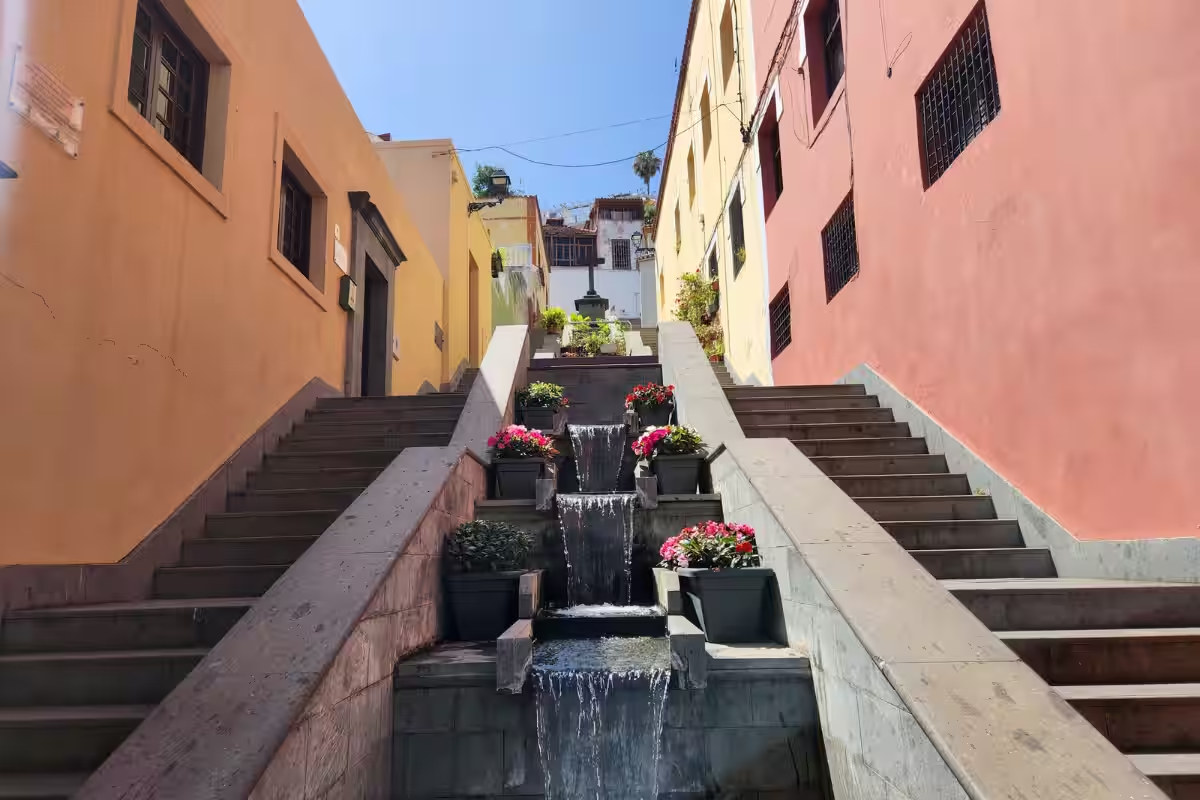
in the lush northern highlands of Gran Canaria, Teror is a charming village renowned for its rich religious heritage, colonial architecture, and vibrant local culture. Situated at an altitude of approximately 543 meters, Teror offers visitors a serene atmosphere amidst verdant landscapes. The heart of Teror is its historic old town, characterized by narrow cobbled streets and traditional Canarian houses adorned with intricately carved wooden balconies. The village’s centerpiece is the Basílica de Nuestra Señora del Pino, a significant pilgrimage site dedicated to the island’s patron saint, the Virgin of the Pine. This basilica, built in the 18th century, stands as a testament to Teror’s spiritual significance and architectural beauty. Every Sunday, Teror hosts a bustling market (mercadillo) in the town square, where locals and visitors alike can explore stalls offering regional delicacies, handcrafted goods, and traditional products like the famous Chorizo de Teror, a spreadable sausage unique to the area. The market is not only a place for shopping but also a cultural experience, often accompanied by live music and traditional dances. Beyond its cultural attractions, Teror is surrounded by natural beauty, making it an excellent base for hiking and exploring the island’s mountainous interior. The village’s proximity to lush forests and scenic trails offers outdoor enthusiasts numerous opportunities for adventure and relaxation. Driving Itinerary from HD Parque Cristóbal Gran Canaria to Teror If you’re staying at HD Parque Cristóbal Gran Canaria in Playa del Inglés and wish to visit the picturesque village of Teror, driving is the most convenient and flexible option. Route: The drive offers a blend of coastal views and mountainous terrain, providing a glimpse into the diverse landscapes of Gran Canaria. Upon arrival, ample parking is available near the town center, allowing easy access to Teror’s main attractions. Enjoy your visit to this enchanting village, where history, culture, and nature converge to create a memorable experience.
Tejeda – A Picturesque Mountain Escape in Gran Canaria
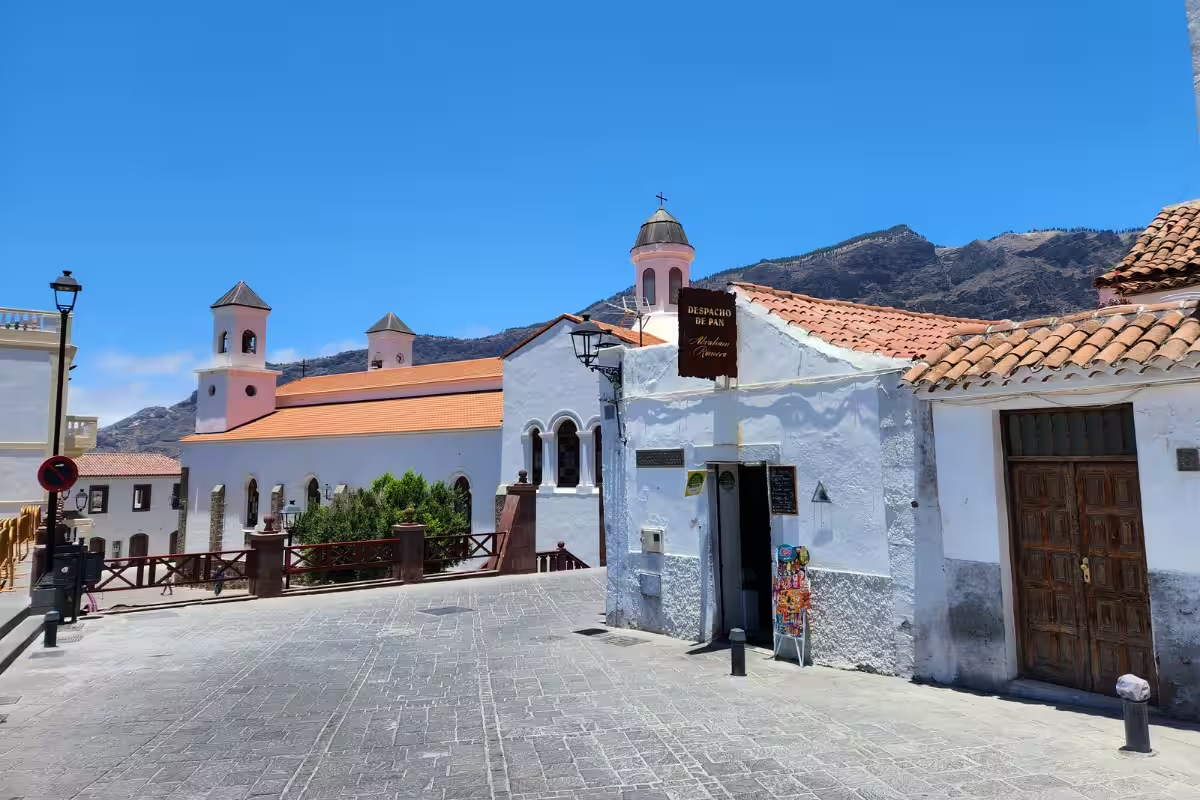
Located in the breathtaking mountainous region of Gran Canaria, Tejeda is a picturesque village that captures the true spirit of the island’s rugged beauty and traditional charm. Known for its spectacular landscapes, rich history, and serene atmosphere, Tejeda is a must-visit destination for those looking to immerse themselves in nature, culture, and the authentic Canarian way of life. Tejeda is often considered the heart of Gran Canaria due to its central location within the island’s mountainous interior. Surrounded by towering peaks, including the famous Roque Nublo and Pico de las Nieves, the village offers visitors stunning panoramic views of the island’s volcanic landscapes. The dramatic cliffs, lush ravines, and deep valleys create a mesmerizing backdrop that makes Tejeda one of the most beautiful spots on the island. The village itself exudes a tranquil and traditional atmosphere. Its whitewashed houses, narrow cobbled streets, and quaint squares provide the perfect setting for a relaxing stroll. As you wander through the village, you’ll encounter local craft shops, cafés offering delicious Canarian pastries, and friendly locals who make visitors feel at home. One of the highlights of Tejeda is the Plaza de la Iglesia, where you can enjoy a coffee while admiring the village’s historic church, Iglesia de Nuestra Señora del Socorro. For nature lovers, Tejeda is a paradise. The village is situated near several hiking trails that lead to some of Gran Canaria’s most iconic natural landmarks, including the Roque Nublo, a massive volcanic rock formation that rises dramatically from the landscape. Hiking up to the summit of Roque Nublo offers breathtaking views of the island and is a must-do activity for outdoor enthusiasts. Additionally, the Pico de las Nieves, the highest point on the island, is located nearby and offers stunning views of the entire region. Tejeda is also known for its almond trees, which bloom in the winter months, creating a beautiful blanket of white and pink flowers across the landscape. The Almond Blossom Festival (Fiesta del Almendro en Flor), which takes place in February, celebrates this natural spectacle with music, traditional dances, and local food. It’s a perfect time to visit and experience the village at its most picturesque. In addition to its natural beauty, Tejeda is a great place to explore local Canarian cuisine. The village is home to several restaurants where you can enjoy traditional dishes such as potaje de berros (watercress soup), papa arrugadas (wrinkled potatoes), and the famous bienmesabe, a sweet almond dessert that reflects the village’s agricultural heritage. Tejeda is also a wonderful place to learn about the island’s history and culture. The Museo de la Historia de Tejeda provides fascinating exhibits about the village’s past, including its role in the Guanche period and its development through the ages. The museum also highlights the importance of agriculture, particularly almond and honey production, in the region. In conclusion, Tejeda is a hidden gem that offers a perfect mix of stunning landscapes, rich culture, and traditional Canarian life. Whether you’re hiking through the mountains, exploring the charming village streets, or enjoying the breathtaking views, Tejeda provides a peaceful escape into the heart of Gran Canaria’s natural beauty. Estimated Driving Time: 1 hour 15 minutes Distance: About 47 km Route: The road is well-maintained, but it is winding and climbs through mountainous terrain, so take your time and enjoy the incredible landscape views along the way. There are several great viewpoints and rest areas where you can stop for photos. This drive is not just a route—it’s an experience through the heart of Gran Canaria’s natural beauty.
Fontfroide Abbey : A Timeless Cistercian Jewel in the Heart of Occitanie
Hidden in a quiet valley just outside Narbonne, the Abbaye de Fontfroide is one of the best-preserved Cistercian monasteries in France and a place where history, spirituality, and natural beauty blend seamlessly. Founded in 1093, the abbey first followed the Benedictine rule before becoming part of the Cistercian order in the 12th century, at a time when Cistercian monks spread across Europe, promoting simplicity, prayer, and manual labor. Throughout the Middle Ages, Fontfroide flourished, thanks to generous donations from local nobility, its vineyards, and the dedication of its monks, who transformed this secluded valley into a center of religious and cultural life. The abbey is not just a relic of the past but a living monument, carefully restored and maintained, where visitors can experience the serenity that once defined monastic life. As you walk through its vast stone walls, you discover the magnificent Romanesque church, with its pure lines and harmonious proportions, an ideal setting for contemplation. Adjacent to it lies the cloister, the true heart of the abbey, an architectural jewel where slender arcades and delicately carved capitals frame a tranquil garden. It was here that the monks would gather for meditation, readings, and silent prayer, the rhythm of their days punctuated by the sound of bells and chants. Beyond the cloister, the abbey unfolds in a series of beautifully preserved spaces that reflect the daily life of the monastic community. The chapter house, where decisions were taken and rules read aloud, resonates with echoes of centuries of discipline and devotion. The dormitory, austere yet spacious, reveals the simplicity of the monks’ existence, while the refectory still conveys the sense of silence and humility that accompanied each shared meal. Every corner of Fontfroide seems imbued with an atmosphere of calm and timelessness, as if the stones themselves were whispering stories of faith and perseverance. Yet the abbey is not frozen in time. Its stunning gardens are today a highlight of any visit, carefully designed and maintained to enhance the experience of peace and beauty. Terraces filled with roses, Mediterranean plants, and cypress trees invite visitors to stroll and breathe in the fragrances of the south. The surrounding hills are home to vineyards that continue a tradition dating back to medieval times, producing wines that are directly linked to the abbey’s heritage. Fontfroide is also renowned for its cultural life, hosting concerts, exhibitions, and festivals throughout the year, where the exceptional acoustics of the church and cloister offer a magical setting for music and art. The abbey’s history is not only one of spirituality and art but also one of turbulence. During the Albigensian Crusade in the early 13th century, Fontfroide played a central role in combating the Cathar heresy that spread across the Languedoc. Its monks were directly involved in preaching and defending Catholic orthodoxy, making the abbey an influential religious and political force. Over the centuries, despite wars, plagues, and the decline of monastic orders, Fontfroide endured, later being restored in the late 19th century by private owners who saved it from ruin and opened it to the public. Visiting the Abbaye de Fontfroide today is an experience that goes beyond a simple historical tour. It is a journey into the soul of the Middle Ages, into the daily rhythm of monks who sought God in silence and work, and into the beauty of a place where stone and nature meet in perfect harmony. Whether you come for its history, its architecture, its gardens, or simply the peace it offers, Fontfroide leaves a lasting impression, inviting each visitor to pause, reflect, and connect with a heritage that continues to inspire across the centuries. 🏰 Address Abbaye de FontfroideRoute Départementale 61311100 Narbonne, France📍 GPS Coordinates: 43.1193° N, 2.8956° E📞 Phone: +33 (0)4 68 45 11 08🌐 Website: abbayedefontfroide.com 🚗 Parking & Access ✔️ Visitor Tips
Visiting the Citadel of Dinant with My 8-Month-Old Son
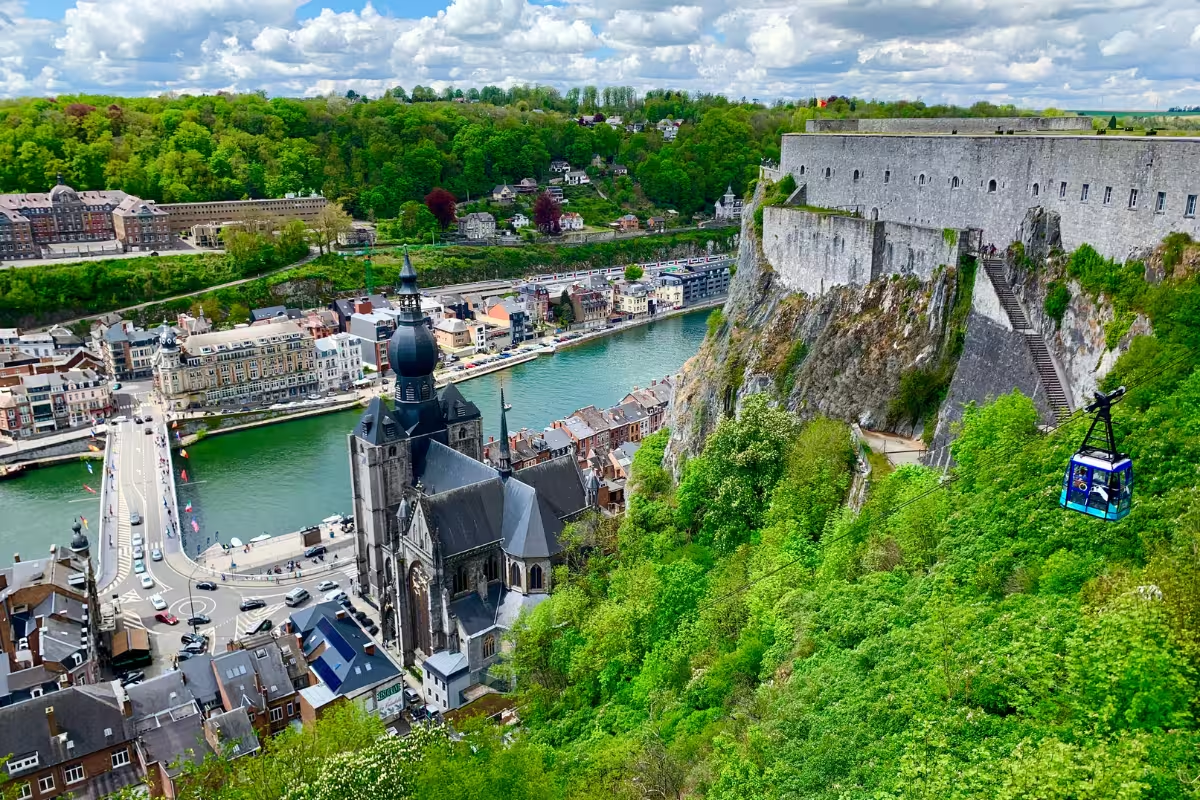
Visiting a fortress perched 100 meters above the Meuse River with a baby? Yes, we did it! And it was absolutely worth it. After parking in the center of Dinant, we chose the easy way up — by cable car. The ride was short but offered stunning views over the rooftops and river. My 8-month-old son, snug in his baby carrier, was fascinated by the movement and the changing landscape. At the top, the Citadel welcomed us with its rich history. Though rebuilt in the 19th century, it stands on medieval foundations. I explored the museum rooms filled with weapons, uniforms, and wartime memorabilia, while my son was more captivated by the light dancing on the stone floors and the echoes in the vaulted corridors. The highlight for me? The panoramic view from the terrace. With the Meuse stretching below, the church towers, and the green cliffs all around — I took a quiet moment, holding my son, letting the breeze and sunlight settle the memory deep. The site is fairly family-friendly. The staff was kind, and we had no trouble navigating with the baby carrier (I’d strongly advise against strollers). There’s also a small café for a snack or bottle break, and plenty of benches with great views. After descending by cable car, we took a slow stroll along the riverbank. Dinant is more than a postcard town — it’s an experience. And the citadel is the crown on top. Tips for Parents:Bring a baby carrier, not a stroller. Use the cable car rather than the stairs. Pack a hat or blanket depending on the season — it can get chilly at the top, even on sunny days. 📍 Visitor Info – Citadel of Dinant
Pfahlbaumuseum Unteruhldingen – Discover Prehistoric Lake Dwellings on Lake Constance
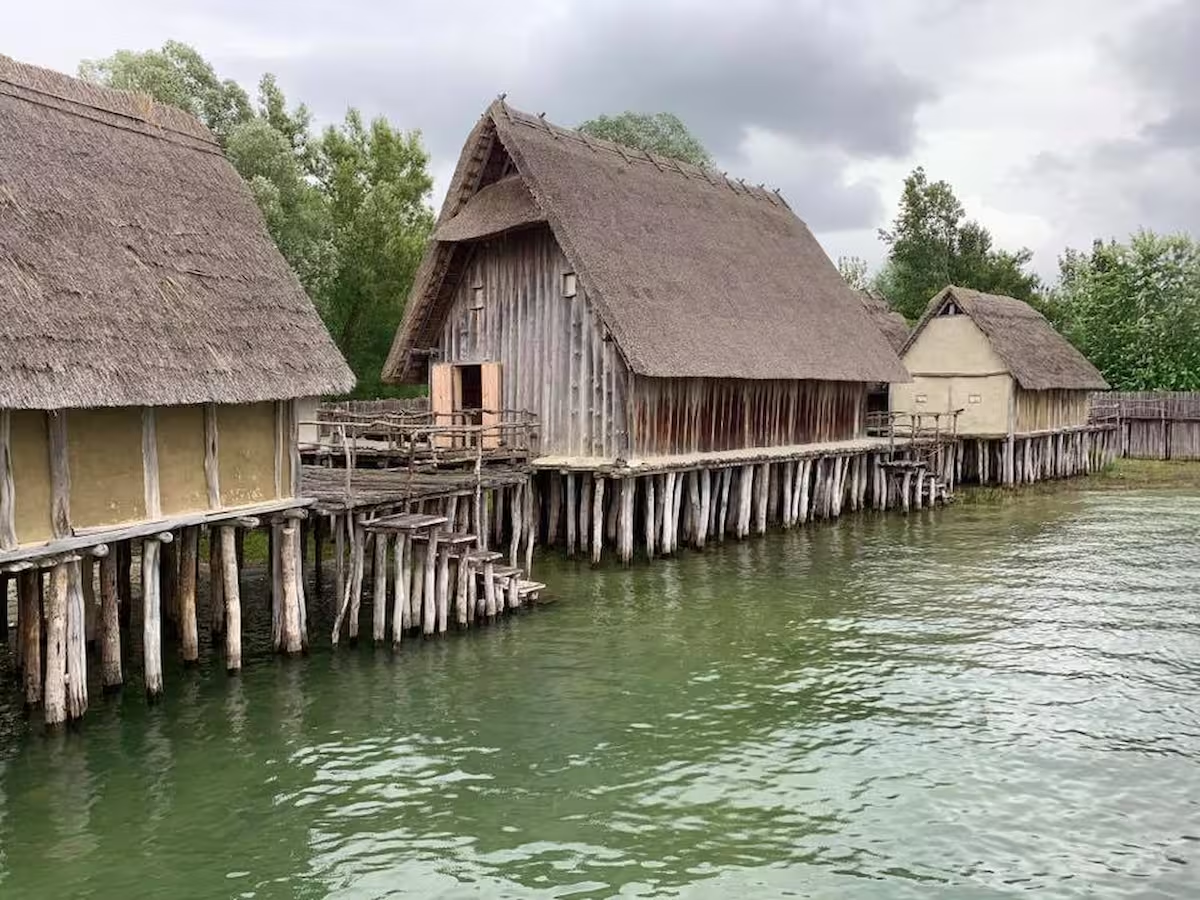
Nestled on the shores of Lake Constance in southern Germany, the Pfahlbaumuseum Unteruhldingen offers a fascinating journey into prehistoric life, transporting visitors back thousands of years to the stilt house settlements of the Stone and Bronze Ages. As Germany’s oldest open-air archaeological museum, it reconstructs the daily life of prehistoric communities from 4000 to 850 BCE, giving a vivid sense of how our ancestors lived in harmony with their environment. The museum features 23 meticulously reconstructed stilt houses spread across six chronological zones, showcasing the evolution of building techniques and human settlement. Walking among the wooden dwellings, visitors can imagine families cooking, crafting, and fishing by the lake, experiencing first-hand how prehistoric people adapted to their surroundings. Each house is accompanied by detailed information, highlighting tools, construction methods, and cultural practices of the time. A standout feature of the museum is the ARCHAEORAMA, a 360-degree multimedia projection that immerses guests in a virtual reconstruction of the original submerged villages. This innovative installation allows visitors to explore underwater remains and understand the archaeological techniques used to uncover and preserve these UNESCO World Heritage sites, recognized for their exceptional cultural significance in the Alpine region. Beyond the stilt houses, the museum offers interactive workshops, educational displays, and live demonstrations of traditional crafts. Visitors can handle replica tools, try their hand at prehistoric construction methods, and learn about ancient techniques in a highly engaging and hands-on way. Seasonal events, from guided tours to family workshops, enhance the experience, making the museum suitable for both casual visitors and serious history enthusiasts. Located at Strandpromenade 6, 88690 Uhldingen-Mühlhofen, the museum is easily accessible by car with nearby parking, or via public transport through Oberuhldingen train station and local bus connections. While the site is mainly outdoors, paths are maintained for comfort, although sturdy shoes are recommended due to uneven terrain. The museum is generally open from March to December, with schedules varying slightly depending on the season, and special summer events taking advantage of the lakeside setting. Visiting the Pfahlbaumuseum Unteruhldingen is not just a step back in time; it is a fully immersive experience that connects visitors with the ingenuity and daily life of prehistoric communities. From exploring stilt houses to marveling at the scenic Lake Constance backdrop, every moment offers a glimpse into a world long past yet vividly brought to life. For anyone interested in archaeology, prehistory, or cultural heritage, this museum provides an unforgettable journey that combines education, adventure, and natural beauty in one remarkable setting.
Préhisto Parc: A Journey Through Prehistoric Times in Tursac
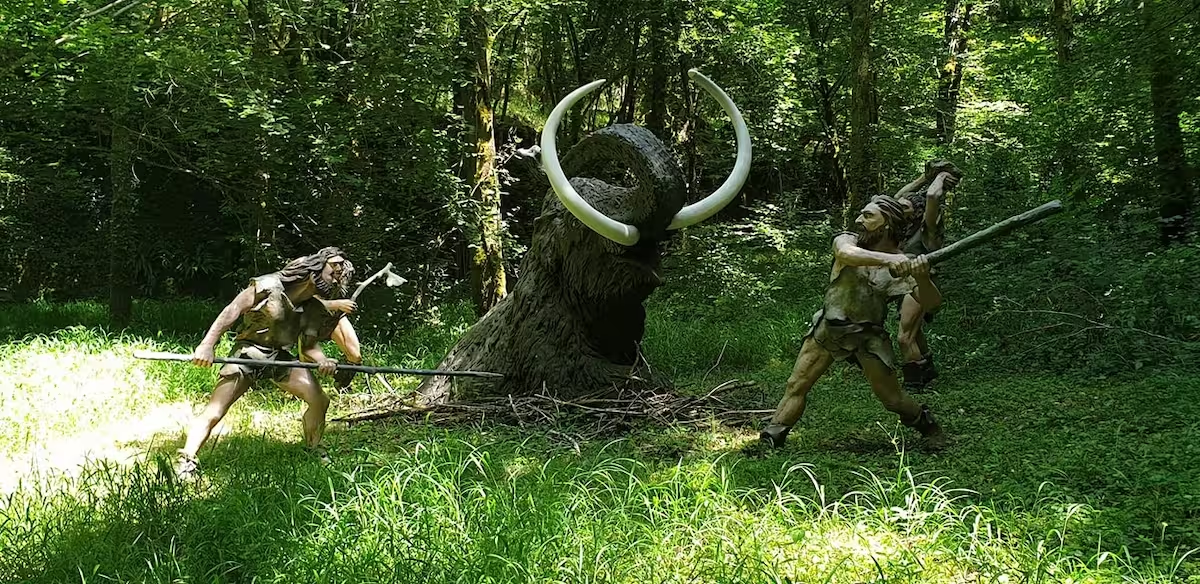
Nestled in the heart of the Vézère Valley near the world-renowned prehistoric sites of Les Eyzies and Montignac-Lascaux, Préhisto Parc in Tursac offers a captivating journey into the distant past. As you enter the park, you are immediately transported tens of thousands of years back, to a time when Neanderthals and Cro-Magnon humans walked the forests of Dordogne. This open-air museum spans several hectares of carefully designed trails and exhibits that allow visitors to experience prehistoric life in a vivid and interactive way, combining education with entertainment in a setting that is as beautiful as it is informative. The park’s main attraction is its series of life-sized reconstructions of prehistoric humans and animals, crafted with incredible attention to detail. Walking through the trails, you encounter hunters carrying spears, families gathered around primitive shelters, and realistic scenes of daily life that showcase the ingenuity and resilience of early humans. Alongside these human reconstructions, the park features models of prehistoric fauna, from mammoths and saber-toothed cats to giant deer and other Ice Age creatures, allowing visitors to understand the world in which our ancestors lived. Informational panels accompany each scene, explaining the significance of tools, hunting techniques, and the social structures of early human communities, ensuring that every step through the park is both educational and immersive. One of the unique aspects of Préhisto Parc is its focus on interactive learning, particularly for children and families. The park offers activities such as archaeological digs, prehistoric games, and the Préhisto-Jeux booklet, which encourages young visitors to explore, answer questions, and engage with the exhibits. These hands-on experiences not only make learning fun but also deepen the understanding of prehistoric life, bridging the gap between imagination and science. Adults, too, find themselves fascinated by the detailed reconstructions, the naturalistic settings, and the opportunity to connect with a world that existed long before written history. The natural environment of the park adds another layer of authenticity to the experience. Walking along shaded trails and open clearings, visitors feel as though they are moving through the landscapes that prehistoric humans once inhabited. The forests, streams, and meadows of Tursac provide a fitting backdrop to the scenes of daily life, reinforcing the connection between humans and their environment in the distant past. The park’s layout encourages leisurely exploration, with pauses along the way to admire the craftsmanship of the models, observe educational displays, and imagine the rhythms of prehistoric existence. Visiting Préhisto Parc is not only a journey through time but also an invitation to reflect on the ingenuity and adaptability of our ancestors. From the tools they created to the communities they built, from their interactions with now-extinct animals to their mastery of fire and shelter, every exhibit tells a story of survival, creativity, and human curiosity. The park captures the imagination of all who visit, making it an unforgettable destination for families, school groups, and anyone with an interest in history, archaeology, or the natural world. Whether you arrive on a sunny summer morning or a crisp autumn afternoon, Préhisto Parc provides a full day of discovery, wonder, and learning. With its combination of realistic reconstructions, interactive activities, and beautiful surroundings in the Dordogne, it offers an experience that is both educational and deeply engaging, leaving visitors with a lasting appreciation for the rich tapestry of life that existed long before our modern world. 🛍️ Visitor Information Opening Hours: Address: La Faure Reignac, 24620 Tursac, Dordogne, France Contact: Admission Fees: Facilities: 🌿 Tips for Visitors
Hautefort Castle: A Majestic Journey Through French History and Elegance
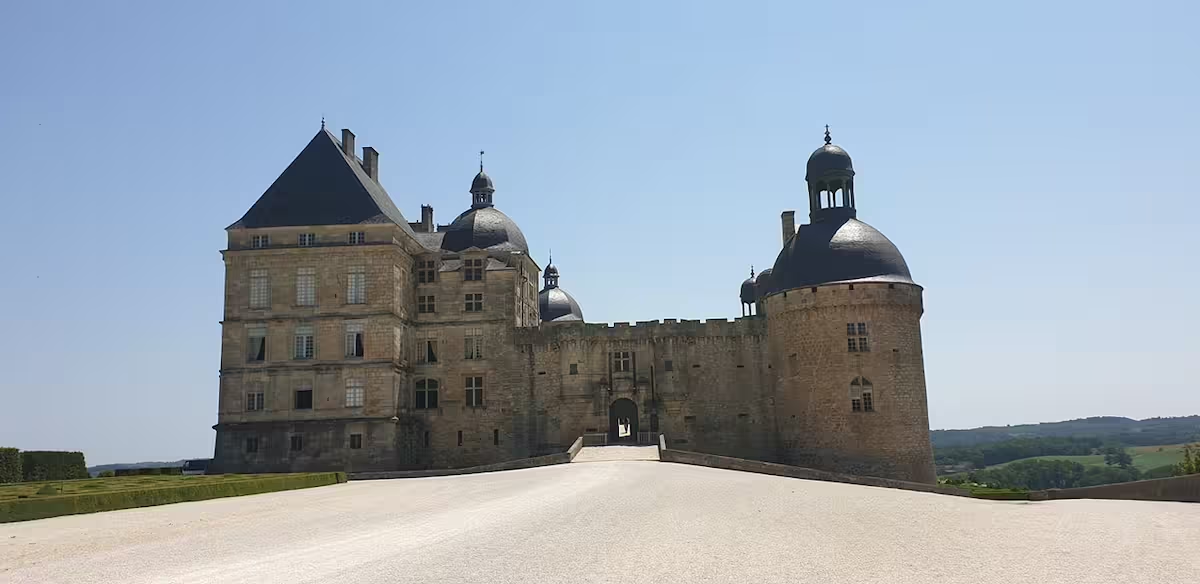
Rising proudly above the verdant hills of the Dordogne, the Hautefort Castle is one of the most majestic castles in southwest France, a place where medieval strength meets classical refinement. Originally built as a fortress in the Middle Ages, the château was transformed in the 17th century into a grand residence that reflects the elegance and sophistication of the period, making it stand out as a unique jewel in the Périgord Noir. Its harmonious blend of defensive architecture and stately design has made Hautefort not only a historical landmark but also a symbol of power, art, and refinement. Approaching the castle, visitors are immediately struck by its commanding silhouette, with round towers, sweeping façades, and elegant lines that dominate the surrounding landscape. The setting itself is spectacular: perched on a rocky spur, the château overlooks the rolling countryside, offering breathtaking views that extend for miles. Inside, the château reveals another world, where richly decorated rooms tell the story of noble life through centuries. Antique furniture, tapestries, and portraits recreate the atmosphere of aristocratic grandeur, transporting visitors back to a time when Hautefort was a center of influence and refinement. But the charm of Hautefort is not confined to its architecture alone. The gardens and landscaped grounds are equally enchanting, designed in the 19th century and maintained with great care. French-style parterres unfold in perfect symmetry, while terraces, topiaries, and flowerbeds frame the château with a natural elegance that enhances its beauty. Walking through these gardens, one can feel both the meticulous artistry of garden design and the serenity of the countryside. In spring and summer, the vibrant colors of the flowers add a touch of poetry to the already breathtaking scenery, making the château as much a delight for nature lovers as for history enthusiasts. The castle history is as rich as its appearance. Originally built in the 12th century, it was a medieval fortress belonging to the de Born family, closely tied to the famous troubadour Bertran de Born, known for his poetry and political influence during the turbulent years of the Plantagenets. Later, during the 17th century, the fortress was transformed into a residence that reflected the tastes of the French nobility, with large windows, grand halls, and elegant ornamentation replacing the austere military structures. This transformation turned Hautefort into a place of beauty and comfort without erasing the traces of its fortified past, creating the unique blend that fascinates visitors today. Beyond its historical and architectural value, the Hautefort Castle has also played a role in culture and cinema. Its grand façades and perfectly preserved interiors have provided the backdrop for numerous films and television productions, adding a touch of cinematic glamour to its reputation. Yet despite its fame, the castle remains a welcoming site, open to visitors who wish to explore its treasures at their own pace. A visit to Hautefort is not just a tour of rooms and gardens; it is an experience that awakens the imagination. The echoes of medieval battles, the elegance of classical salons, and the peaceful charm of the gardens all come together to create a journey through time. Whether you are fascinated by history, enchanted by architecture, or simply seeking a beautiful place to explore in the Dordogne, the Hautefort Castle offers an unforgettable encounter with French heritage. Standing proudly above the valley, it continues to embody the grandeur of the past while inviting each visitor to pause, admire, and be inspired by its timeless beauty. 📍 Practical Information Address:Château de HautefortLe Bourg, 24390 Hautefort, Dordogne, France📍 GPS: 45.2561° N, 1.1325° E📞 Phone: +33 (0)5 53 50 51 23🌐 Website: chateau-hautefort.com Parking & Access: Visitor Tips:
Castelnaud-la-Chapelle Castle: A Medieval Fortress Overlooking the Dordogne Valley
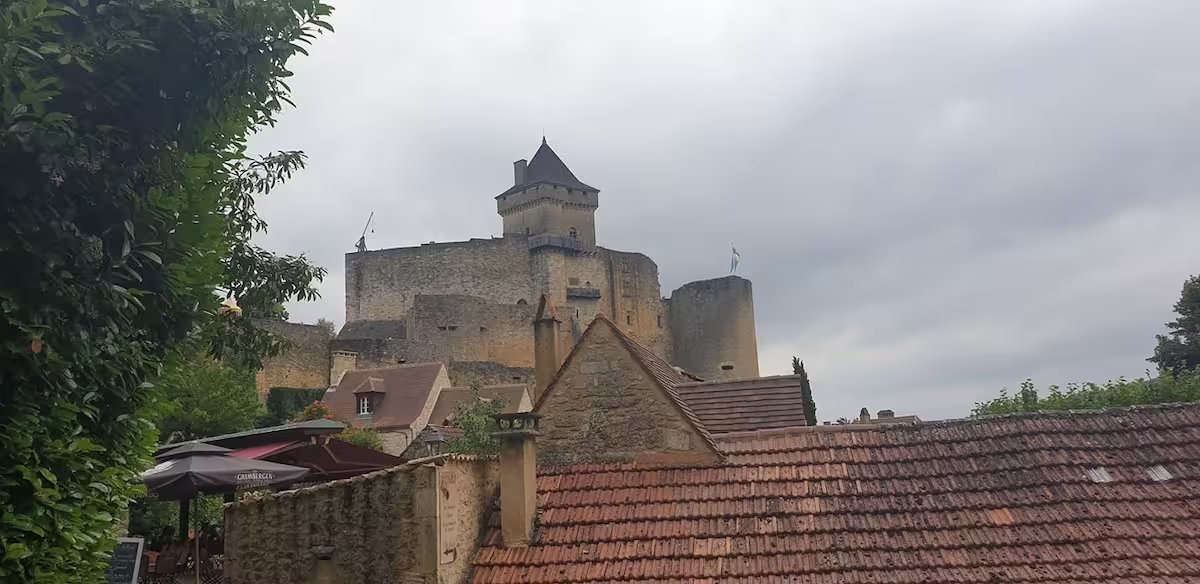
Dominating the valley of the Dordogne from the top of a steep rocky spur, the Castelnaud-la-Chapelle Castle is one of the most impressive fortresses in southwestern France. Built in the 12th century, it was a strategic stronghold during the Hundred Years’ War, a turbulent period when the region shifted repeatedly between French and English control. Throughout these centuries of conflict, Castelnaud stood as a powerful symbol of defense and authority, watching over the surrounding lands and rivers with its imposing towers and battlements. Today, fully restored and beautifully maintained, the castle is one of the most visited monuments in the Périgord Noir, admired not only for its medieval architecture but also for the extraordinary museum it houses within its walls. Walking up the narrow streets of the village of Castelnaud-la-Chapelle, which nestles at the foot of the fortress, the first view of the castle is striking. Its massive keep rises above terraced roofs and lush hills, commanding the landscape and offering spectacular views over the Dordogne valley and its neighboring castles, such as Beynac, often seen as its historic rival. Once inside the fortified gates, the visitor is immediately transported into the heart of medieval life. The castle is home to the Museum of Medieval Warfare, an exceptional collection that brings together a wide variety of weapons, armor, and siege machines, all carefully reconstructed based on historical sources. The museum is not confined to glass cases and static displays. As you walk through the castle, you encounter full-scale reproductions of trebuchets, mangonels, and other formidable engines of war installed in the courtyards, demonstrating the ingenuity and terrifying power of medieval military technology. The sight of these machines against the backdrop of the Dordogne landscape evokes the intense struggles that once shook the region. Inside, rooms are arranged with thematic exhibitions: swords and crossbows, chainmail and plate armor, and detailed models of medieval fortifications all help to illustrate the daily life of soldiers and lords. Beyond its military dimension, Castelnaud also offers an insight into seigneurial life. Kitchens, living quarters, and vaulted halls have been restored to reflect the rhythm of a fortress inhabited not only by warriors but also by families, servants, and craftsmen. The great hall, with its vast fireplace, recalls the gatherings and feasts of the lords, while the narrow spiral staircases remind visitors of the defensive needs of a building designed to resist prolonged sieges. The atmosphere is enhanced by multimedia displays and educational programs that make the visit both engaging and accessible to children and adults alike. Climbing up to the highest terraces of the castle, the panorama is breathtaking. From here, you can admire the Dordogne winding through a patchwork of green hills and villages, dotted with other medieval fortresses. This view explains why Castelnaud was such a coveted stronghold: whoever held it controlled the routes of the valley and the fertile lands surrounding it. Today, however, the atmosphere is peaceful, and the castle stands as a cultural beacon, offering both a lesson in history and an unforgettable scenic experience. A visit to the Castelnaud-la-Chapelle Castle is not just an encounter with stones and relics, but a true immersion into the Middle Ages. The fortress combines the grandeur of its architecture, the thrill of its war machines, and the richness of its museum collections with the beauty of one of France’s most picturesque valleys. It is a place where the echoes of battle have given way to discovery, learning, and wonder, making it an unmissable destination for anyone exploring the Dordogne and the treasures of the Périgord Noir. 🏰 Address of Château de Castelnaud-la-Chapelle Château de Castelnaud (Museum of Medieval Warfare)24250 Castelnaud-la-Chapelle, Dordogne, France📍 GPS: 44°48′57.4″N, 1°8′54.5″E📞 Phone: +33 (0)5 53 31 30 00🌐 Website: castelnaud.com 🚗 Parking & Access ✔️ Visitor Tips
Puymartin Castle: A Timeless Fairytale Fortress in Dordogne
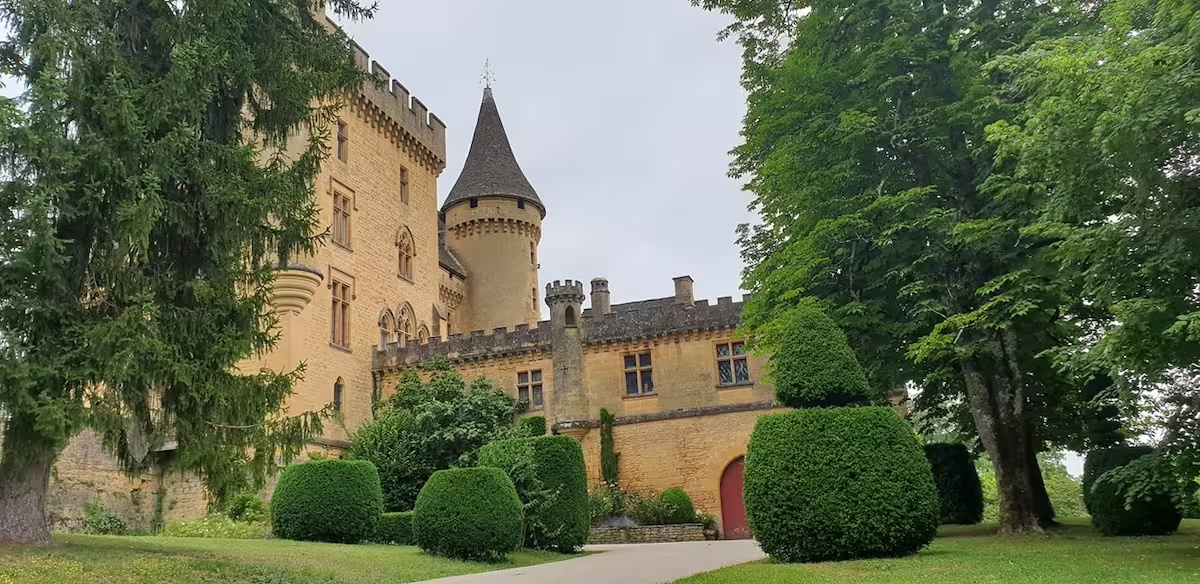
Puymartin Castle, nestled on a wooded hilltop near Sarlat in the Dordogne, is one of those rare places where history, legend, and architectural beauty blend seamlessly. From the moment I approached the gatehouse and winding ramparts, I felt transported to another era — an era of knights, aristocratic intrigue, and moonlit whispers. Originally built in the 13th century, Puymartin endured conflict, damage, neglect, and renaissance. In 1357 it fell under English occupation, then was reclaimed by local consuls before being abandoned. In the mid-15th century Radulphe de Saint-Clar undertook major reconstruction, giving the castle new life. As centuries passed, the castle witnessed the Wars of Religion — Raymond de Saint-Clar, known as Captain of Puymartin, played a part in driving Protestant forces from the region. In the 19th century, under the Marquis de Carbonnier de Marzac, Puymartin was restored with neo-Gothic influences, recreating its romantic silhouette. Walking through the castle today is a delight. The stone walls, arrow slits, dry moat, and spiral staircases evoke the castle’s defensive purpose, while inside, the décor reveals a more genteel past. Rooms display tapestries (including fine Aubusson pieces), elegant wood panelling, impressive painted ceilings with trompe-l’oeil effects, and a rare studiolo decorated in grisaille on wood panels depicting mythological scenes such as Bellerophon, Perseus, Memnon and others. One of the most captivating stories tied to Puymartin is the legend of the White Lady. According to tradition, Thérèse de Saint-Clar was discovered in an affair by her husband and, as punishment, confined in a small tower chamber for the last 16 years of her life, ultimately dying there. Her husband reputedly had her body bricked up. Many visitors claim to sense her presence on the spiral stairway, the ramparts, or in the corridors after dusk — her figure said to roam in white, sometimes seen at midnight. The tour takes about 1.5 to 2 hours if you take your time, exploring both the interior rooms and the surrounding grounds. For families, the explanatory panels are well done, and there’s the option to join a free guided tour included in the entrance fee. Outside, the gardens and terrace offer lovely views over the wooded valley, and the opportunity to walk around the castle exterior and appreciate its structure from all sides. What I loved about Puymartin is how it feels both intimate and grand: not a huge fortress, but exquisitely maintained and full of character. The transition from its austere medieval defensive architecture to the more comfortable, elegant living spaces tells a story of evolving times. The atmosphere is enhanced by the legends and the thought of past lives — it’s easy to imagine candlelit corridors, secret conversations, and even ghostly whispers. If you’re passing through the Dordogne or staying in Sarlat, Puymartin is absolutely worth a stop. It offers a perfect blend of architecture, history, and mystery, all wrapped in a peaceful landscape. Even if you’re not normally drawn to castles, the combination of views, craftsmanship, and atmosphere make it a memorable experience. Address & Visitor Tips (English) Address:Château de Puymartin24200 Marquay (near Sarlat, Dordogne, France) Getting there & practical tips: