After exploring the city’s quiet museum galleries, our journey through Ghent leads us to a stone giant: St. Bavo’s Cathedral. Thanks to exclusive permission to film inside, we are able to take you behind the scenes of this monumental edifice to reveal its most precious secrets. Dominating the skyline from a height of 89 meters, this sentinel of limestone and brick tells the story of Flanders’ glorious and turbulent past. The history of St. Bavo’s begins long before the soaring Gothic vaults we see today. To understand the soul of this place, one must venture into the cool air of the crypt. Here lie the remains of the old St. John the Baptist church, a 12th-century Romanesque structure where the original robust masonry is still visible. This transition from Romanesque to Gothic perfectly illustrates the rise of Ghent: as the city grew wealthy through the cloth trade, its church rose higher toward the sky, adorning itself with deep choirs and radiating chapels built from Tournai blue stone. However, the cathedral’s worldwide fame rests on a treasure hidden within a protected chapel: The Adoration of the Mystic Lamb. Completed in 1432 by the brothers Hubert and Jan van Eyck, this polyptych is considered the starting point of the Flemish Renaissance. Visitors are struck by the incredible, almost microscopic attention to detail. Every pearl on a crown, every blade of grass in the Garden of Eden, and every reflection of light on armor bears witness to the genius of the Van Eycks. But this painting is also a survivor of history. Stolen by Napoleon’s troops, hidden during WWI, and looted by the Nazis before being found in an Austrian salt mine, it has survived everything—except for the lingering mystery of the 1934 theft of the « Just Judges » panel, which remains missing to this day. Moving past the Middle Ages, the cathedral surprises us with its Baroque contrasts. In the center of the nave stands the monumental « Pulpit of Truth, » an 18th-century masterpiece carved by Laurent Delvaux. This blend of white Carrara marble and dark oak is a feat of movement and theatricality, illustrating the victory of Truth over Error. Nearby, the walls host the energy of Peter Paul Rubens with his painting « St. Bavo Enters the Convent at Ghent, » reminding us that the cathedral has always been a crossroads for the greatest artists of their time. Beyond the art, St. Bavo’s is a place of light. Its stained-glass windows filter sunlight to color the stone floors, creating an atmosphere of both contemplation and wonder. Each side chapel, often funded by wealthy guilds, contains altarpieces and funerary monuments that serve as pages of an open history book. In conclusion, crossing the threshold of St. Bavo’s means losing track of time. Between its thousand-year-old crypt, the striking realism of the Van Eycks, and the power of the Baroque, the building remains the spiritual and artistic heart of Ghent. This report, made possible by the cathedral’s warm welcome, is an invitation to take a fresh look at this UNESCO World Heritage site, where every stone seems to whisper a prayer or an artist’s secret. 2. Visitor Information & Tips
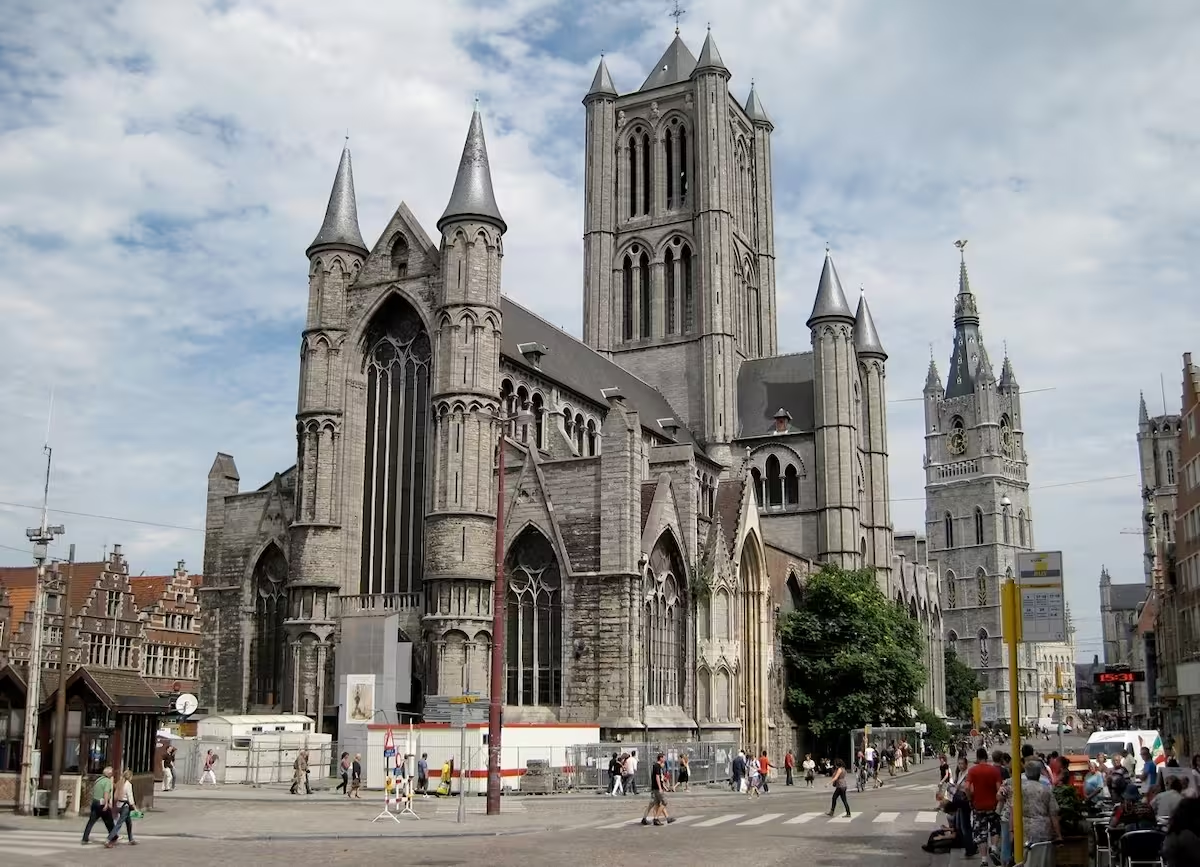
Saint Nicholas’ Church in Ghent: A Timeless Landmark at the Heart of the City
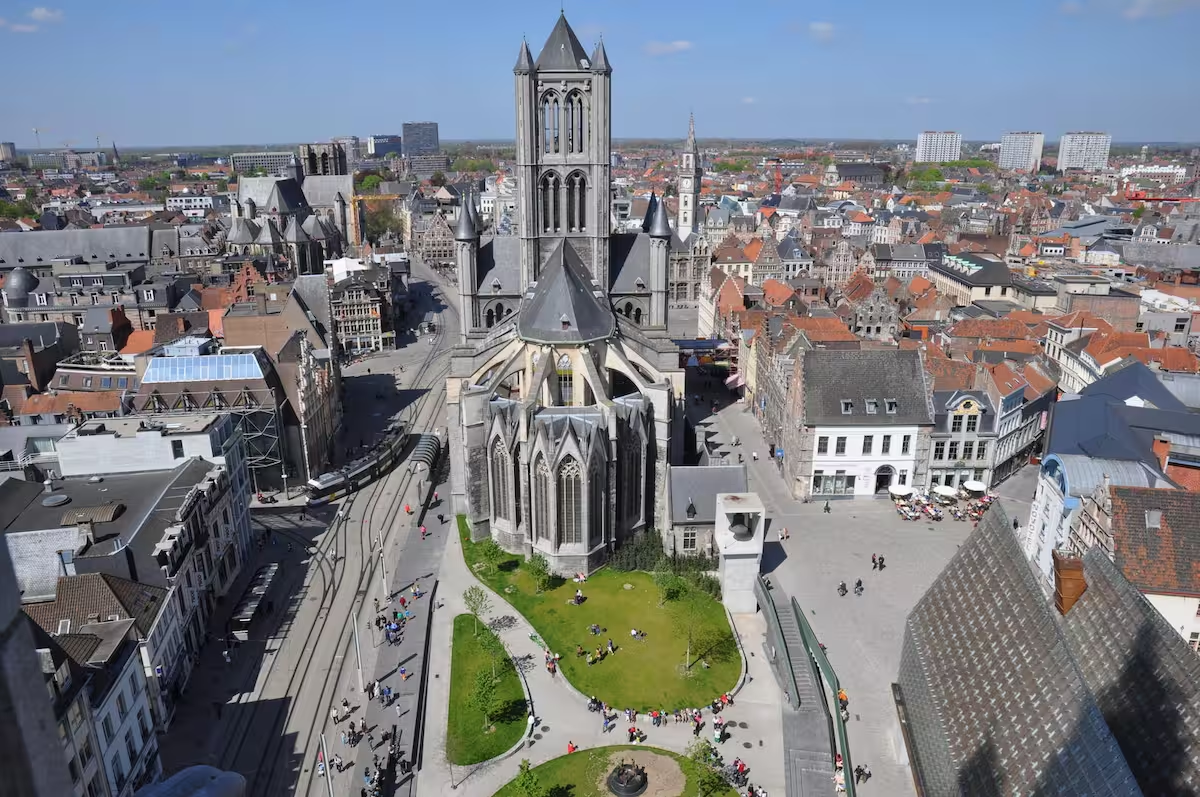
In the heart of Ghent, between the lively façades of the Korenmarkt and the historic banks of the River Lys, Saint Nicholas’ Church (Sint-Niklaaskerk) stands as one of the city’s most iconic landmarks. It is impossible to miss this majestic church, which alone tells centuries of Ghent’s rich history. Built from blue Tournai stone, its imposing silhouette immediately reflects the importance of Ghent during the Middle Ages, when it was one of the most prosperous cities in Europe. Construction of Saint Nicholas’ Church began in the 13th century, making it a prime example of the Scheldt Gothic architectural style, typical of this region. This style is characterized by sturdy towers, powerful lines, and the use of local materials. Dedicated to Saint Nicholas, the patron saint of sailors and merchants, the church held a central role in the economic life of the city. Merchants once gathered nearby to conduct business, turning the church into a symbolic crossroads between faith and commerce. The exterior is particularly striking, with its central tower that once served as a watchtower, used to monitor the city and warn of approaching danger. The flying buttresses and sculpted niches highlight the craftsmanship of medieval builders. Although the church suffered damage over the centuries due to wars and urban decline, extensive restoration work has helped restore its former glory. Inside, the atmosphere changes instantly. The noise of the city fades away, replaced by a sense of calm and spirituality. Natural light filters through the stained-glass windows, enhancing the impressive volumes of the nave. Visitors can admire several notable works of art, including religious paintings and sculptures that reflect Ghent’s artistic heritage. The elegant yet restrained interior reinforces a feeling of grandeur without overwhelming the visitor. Saint Nicholas’ Church is not only a place of worship but also a living witness to the city’s evolution. Over time, it has served as a refuge, a gathering place, and even, during certain periods, a semi-commercial space. Today, it remains an active part of Ghent’s cultural and spiritual life, welcoming both religious ceremonies and visitors from around the world. Visiting Sint-Niklaaskerk is like stepping back in time, where history, architecture, and everyday city life intersect. Whether you are a heritage enthusiast, an architecture lover, or a curious traveler, this church offers an authentic experience deeply connected to the soul of Ghent. As you leave, simply look up at its towers to understand why it has remained, century after century, one of the city’s most enduring symbols. 📍 Address Saint Nicholas’ Church (Sint-Niklaaskerk)Korenmarkt9000 GhentBelgium 👨👩👧 Visitor Tips
Hôtel d’Hane-Steenhuyse, Ghent – A Hidden Aristocratic Gem in the Heart of the City
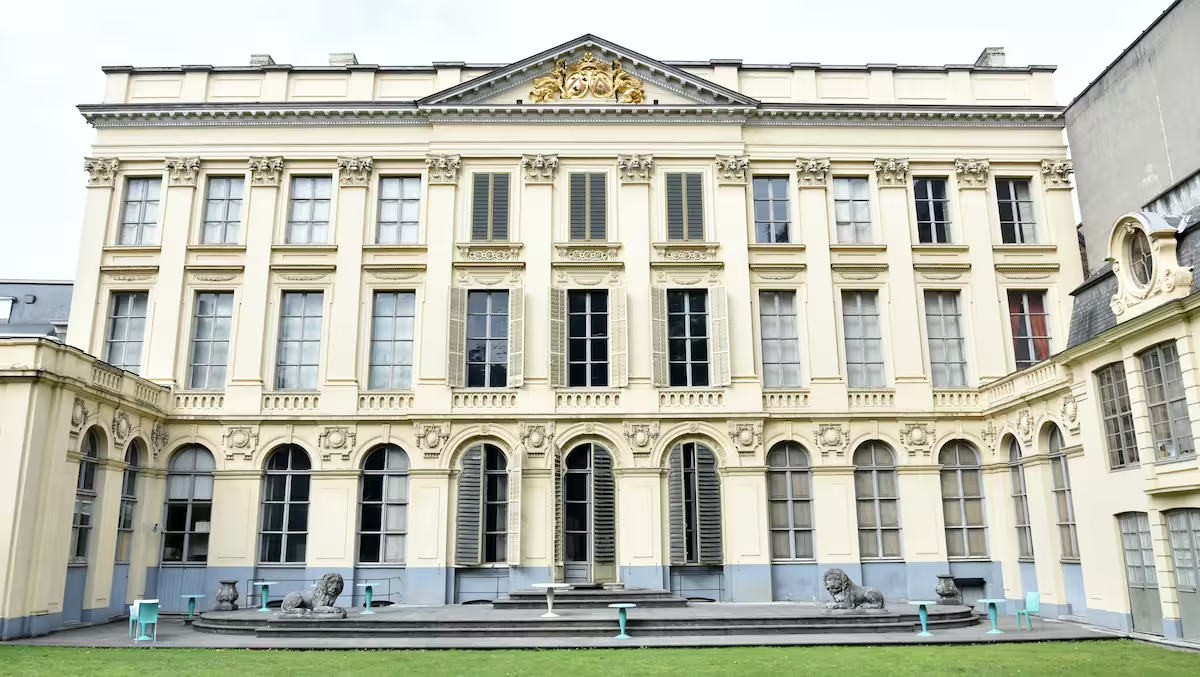
Walking along the busy Veldstraat in Ghent, nothing really prepares you for what lies behind the elegant façade of the Hôtel d’Hane-Steenhuyse. Yet the moment I stepped inside, I felt as though I had slipped quietly into the refined world of the eighteenth century. This grand town mansion, both discreet and sumptuous, offers one of the most atmospheric encounters with aristocratic life in Ghent. The Hôtel d’Hane-Steenhuyse was created between 1768 and 1773 by gradually merging several medieval houses. Over time, generations of the d’Hane family transformed the property into one of the city’s most prestigious private residences. What immediately struck me was the architectural contrast: the richly decorated street façade reflects the elegance of the Louis XV style, while the garden side adopts a calmer, more symmetrical Louis XVI neoclassical approach. It feels deliberate—prestige displayed to the city, serenity reserved for private life. Inside, the rooms unfold naturally in a refined enfilade. Each salon has its own atmosphere, shaped by delicately carved wooden panels, mirrors that amplify light, richly coloured walls, and original parquet floors that still echo with past footsteps. I particularly enjoyed how intimate the space feels despite its grandeur. The famous ballroom, with its almost theatrical proportions, is without doubt the highlight. Standing there, it is easy to imagine candlelit receptions, music drifting through the air, and conversations that once shaped social life in Ghent. Beyond its beauty, the Hôtel d’Hane-Steenhuyse is deeply connected to European history. In 1815, during Napoleon’s Hundred Days, King Louis XVIII of France stayed here while in exile. Knowing that royal decisions and political discussions took place within these walls adds a powerful historical dimension to the visit. The house is not simply decorative—it is a silent witness to turbulent times. One of the most pleasant surprises is the garden. Hidden behind the bustling shopping street, it offers a peaceful retreat and reinforces the sense of balance between city life and private comfort. This dialogue with nature is also present indoors, where floral motifs and soft decorative details reflect the eighteenth-century ideal of a refined, controlled natural world. Even the cellars tell a story, preserving traces of earlier constructions and reminding visitors that this house evolved gradually rather than appearing fully formed. Today, the Hôtel d’Hane-Steenhuyse is part of Ghent’s network of historic houses and is open to the public. I found the presentation particularly well done: the interiors feel alive rather than frozen in time, enhanced by temporary exhibitions, cultural events, and carefully displayed furniture and objects. Items such as the porcelain service gifted by Louis XVIII give the house a tangible connection to the people who once lived and visited here. Leaving the Hôtel d’Hane-Steenhuyse, I had the impression of having experienced more than a simple monument. This is a place that invites you to slow down, observe details, and imagine the lives that once unfolded here. For me, it is one of Ghent’s most rewarding hidden treasures—an elegant bridge between past and present. Visitor Tips Address Hôtel d’Hane-SteenhuyseVeldstraat 559000 GhentBelgium
🏰 Discover the Enchanting Castle Vêves in Belgium
Nestled atop a lush green hill in the picturesque village of Celles, in the Namur province of Belgium, the Castle Vêves is one of Wallonia’s most captivating historical landmarks. Dating back to the 11th century and fully reconstructed in the 15th century, this medieval castle has preserved its unique charm, featuring elegant turrets, fortified walls, and scenic moats that create a storybook-like silhouette. Every year, visitors from across Belgium and beyond come to explore its rich history, breathtaking architecture, and the magical atmosphere that surrounds it. Inside the château, every room offers a journey back in time. The lavishly decorated salons showcase ancient tapestries, period furniture, and paintings that reveal the lives of the aristocratic Villermont family, who have owned the castle for generations. Visitors will be amazed by the grand fireplaces, spiral staircases, and colorful stained glass windows that bathe the rooms in a warm, almost magical light. Original woodwork and historical furnishings offer a glimpse into the daily life of medieval nobility, making the experience truly immersive. The Castle Vêves also boasts beautiful gardens and green spaces, perfect for a relaxing stroll. The surrounding hills offer panoramic views of the valley and nearby villages, while the French-style gardens and small clearings invite moments of reflection. Seasonal changes bring new beauty: vibrant blooms in spring and summer, and a warm palette of reds and golds in autumn. For nature lovers, the nearby forests provide excellent hiking opportunities. Beyond its historical and natural charm, the Castle Vêves is a living cultural hub. It regularly hosts exhibitions, concerts, medieval workshops, and family-friendly activities, allowing visitors to experience the castle in a dynamic and engaging way. From history enthusiasts to casual travelers, the château offers something unforgettable for everyone, making it a must-visit destination in Belgium. Visitor Information & Tips Visiting the Castle Vêves is more than a sightseeing trip—it’s an immersive experience into Belgian history, culture, and natural beauty. With its perfect combination of medieval architecture, lush landscapes, and engaging activities, the château offers an enchanting experience that leaves lasting memories for families, couples, and solo travelers alike.
Schönbrunn Palace: A Journey into Vienna’s Imperial Splendor
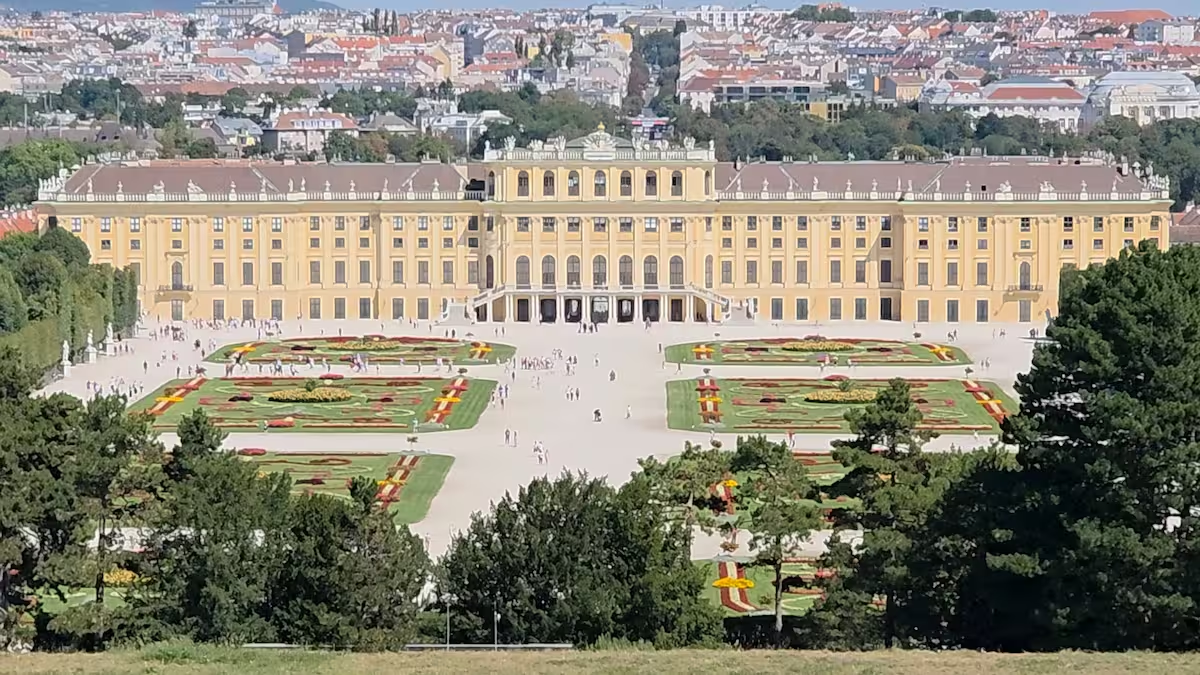
Schönbrunn Palace, one of Vienna’s most iconic landmarks, is far more than just a historic building; it is a journey through time, a window into the life, luxury, and influence of the Habsburg dynasty. Nestled in the heart of Vienna, this former summer residence has welcomed generations of emperors, empresses, and nobles, becoming a symbol of imperial grandeur that still captivates millions of visitors every year. Its name, meaning “beautiful spring,” originates from a natural spring discovered centuries ago, whose waters inspired the creation of a palace destined to reflect the power and sophistication of an empire. The palace reached its zenith under Empress Maria Theresa, who transformed Schönbrunn from a modest hunting lodge into a breathtaking baroque masterpiece. With 1,441 rooms, each adorned with gold leaf, frescoes, chandeliers, and intricate woodwork, the palace embodies the opulence and elegance of the Habsburg court. Walking through its halls, visitors can feel the presence of Emperor Franz Joseph I, a ruler devoted to duty, whose life was intricately linked to this magnificent residence, and Empress Elisabeth, “Sisi”, whose longing for freedom and beauty is still palpable in the delicate interiors of her private apartments. The Grand Gallery is the heart of Schönbrunn, a room designed to impress with its mirrored walls, frescoed ceilings, and glittering chandeliers. Here, grand balls were held, diplomatic meetings conducted, and extraordinary performances enjoyed—such as the young Mozart playing before the court, leaving everyone in awe at the age of just six. Every room, every corridor, tells a story of power, intrigue, and cultural brilliance. Beyond its walls, Schönbrunn’s gardens extend the palace’s majesty into the open air. Spanning over 120 hectares, the gardens blend symmetrical baroque design with natural beauty, featuring mythological statues, fountains, and meticulously trimmed hedges that draw the eye across endless perspectives. The Neptune Fountain stands as a symbol of authority over nature, while the Gloriette, perched atop a hill, provides one of the most breathtaking panoramic views of Vienna, making it a must-see for photographers and casual visitors alike. The gardens themselves are a testament to the vision of an era where architecture and landscape design were intertwined to convey power and beauty. Another jewel within the Schönbrunn complex is the Schönbrunn Zoo, established in 1752, making it the oldest continuously operating zoo in the world. Originally a menagerie for the imperial family, it has evolved into a center for conservation, education, and species protection, connecting the palace’s past with the present and offering visitors a unique experience of wildlife history. Schönbrunn Palace is not a static monument; it is a living cultural treasure. Recognized as a UNESCO World Heritage Site, it hosts concerts, exhibitions, and seasonal events that keep the spirit of the Habsburg era alive. During Christmas, the palace courtyard transforms into a magical market, illuminated with festive lights that bring the history of Schönbrunn to life in the most enchanting way. Visiting Schönbrunn is an invitation to walk in the footsteps of emperors and empresses, to witness the grandeur of baroque architecture, and to immerse oneself in a world where art, politics, and daily life intersected in dazzling splendor. From the palace’s ornate interiors to the expansive gardens, from the hilltop Gloriette to the historic zoo, every corner tells a story and evokes the spirit of a bygone empire. Schönbrunn is not merely visited; it is experienced, remembered, and cherished long after leaving its golden walls. Visitor Tips for the Perfect Schönbrunn Experience 📍 Address: Schönbrunner Schloßstraße 47, 1130 Wien, Austria🚇 Access: U4 – Schönbrunn Station
Upper Belvedere Vienna – Explore Klimt’s “The Kiss” and Austria’s Baroque Splendor
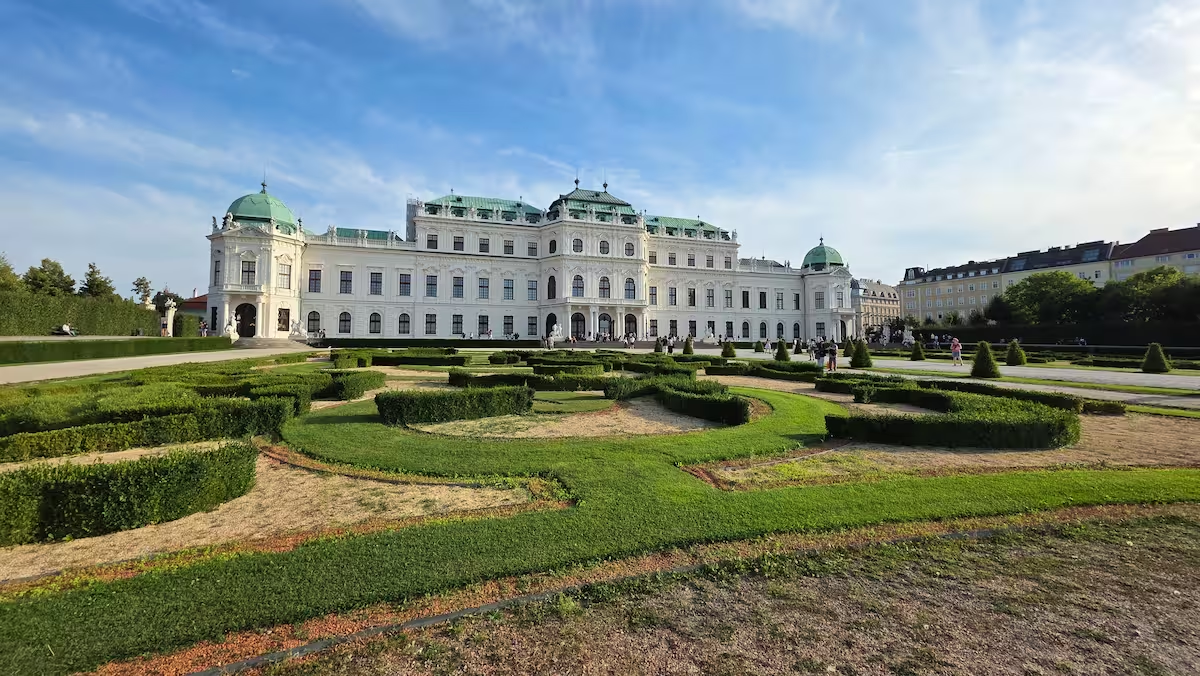
Rising gracefully above the Austrian capital, the Upper Belvedere is one of Vienna’s most dazzling baroque masterpieces — a symbol of artistic grandeur, imperial history, and timeless beauty. Designed by architect Johann Lukas von Hildebrandt between 1717 and 1723, the palace was built for Prince Eugene of Savoy, one of the most celebrated military commanders of the Habsburg Empire. Far from being a royal residence, it served as the prince’s luxurious summer retreat — a place to display his wealth, prestige, and love for the arts. As you step through the gates, you’re instantly immersed in a world of elegance. The formal baroque gardens, perfectly symmetrical and adorned with sculptures and fountains, connect the Upper Belvedere with its counterpart, the Lower Belvedere, forming one of Europe’s most harmonious architectural ensembles. From the terrace of the Upper Belvedere, visitors are rewarded with a breathtaking panoramic view over Vienna — a visual journey stretching from the manicured gardens to the spire of St. Stephen’s Cathedral in the historic city center. Inside, the Upper Belvedere hosts one of Austria’s most prestigious art collections. The museum is world-famous for housing Gustav Klimt’s “The Kiss”, an emblem of Vienna’s Art Nouveau era and one of the most beloved paintings in the world. Beyond Klimt, the galleries showcase works by Egon Schiele, Oskar Kokoschka, Ferdinand Waldmüller, and many other Austrian masters. The museum’s collection spans centuries, from medieval religious art to romantic landscapes and the avant-garde expressions of the 20th century. The palace’s interior is as impressive as its collection. Each hall glows with the opulence of the baroque era — gilded stuccoes, marble staircases, and frescoed ceilings radiate grandeur. Every detail seems to whisper the refined taste of Prince Eugene, who envisioned his palace as both a sanctuary for art and a stage for enlightenment and conversation. Today, the Belvedere Museum complex includes the Upper Belvedere, Lower Belvedere, the Orangery, and the historic gardens. Recognized as a UNESCO World Heritage Site, it stands among Vienna’s top attractions, drawing visitors eager to discover the city’s imperial charm and artistic legacy. Throughout the year, the museum organizes temporary exhibitions, educational programs, and cultural events, all while preserving the serene atmosphere that defines the Belvedere experience. Visiting the Upper Belvedere is more than a museum stop — it’s an encounter with Vienna’s soul. It’s where history, art, and beauty converge, inviting every visitor to step back in time while celebrating Austria’s creative spirit. 🎟️ Visitor Tips – Practical Information 📍 Address: Upper Belvedere, Prinz Eugen-Straße 27, 1030 Vienna, Austria🕒 Opening Hours: Daily from 9:00 AM to 6:00 PM (subject to seasonal changes)💶 Admission: Tickets available online or at the entrance (combined tickets include Upper & Lower Belvedere).🚇 Access: Easily reachable by tram D (stop: Schloss Belvedere) or S-Bahn (station: Quartier Belvedere).📸 Photography: Allowed for personal use — flash and tripods are not permitted.☕ Tip: After your visit, enjoy a coffee and a slice of Viennese cake at the Belvedere Café overlooking the gardens — it’s one of the most peaceful spots in the city.🖼️ Don’t Miss: Klimt’s The Kiss, Schiele’s The Family, and the grand Marble Hall with its stunning ceiling fresco.
🕍 The Votive Church of Vienna – A Monument of Faith, Gratitude, and Beauty
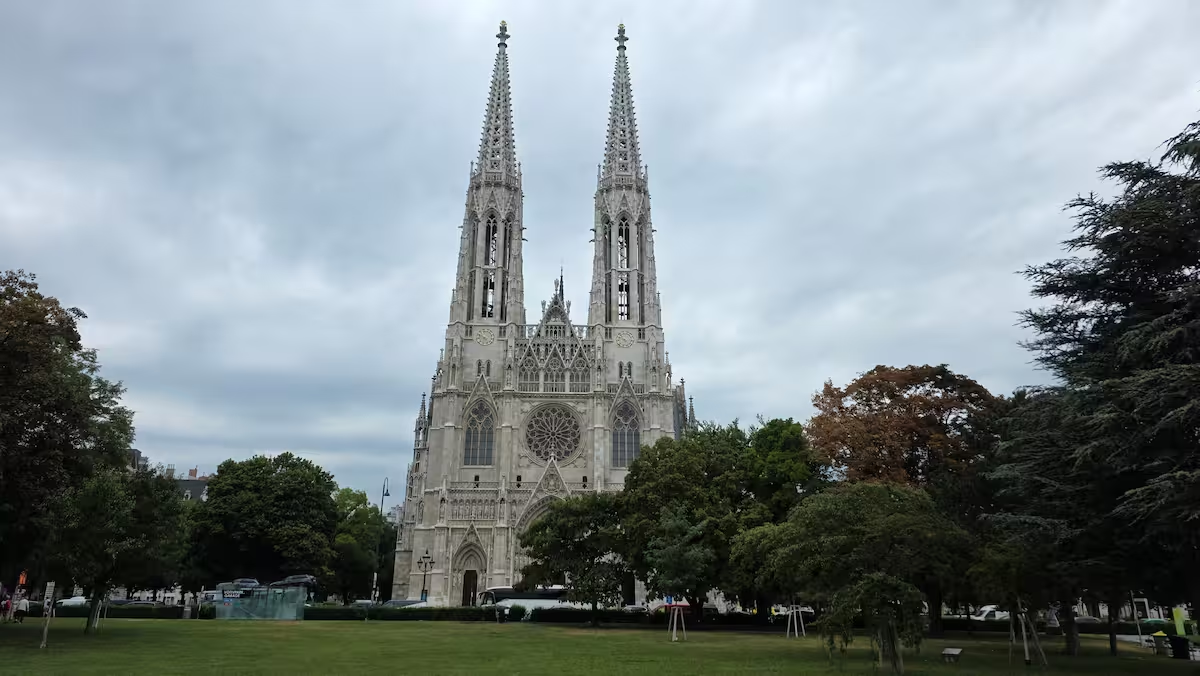
Standing gracefully near Vienna’s famous Ringstrasse, the Votive Church — or Votivkirche — is one of the city’s most breathtaking neo-Gothic landmarks. Its twin spires rise nearly 99 meters above the skyline, a majestic reminder of faith, history, and the enduring spirit of the Austrian capital. The story of this church begins not with a plan, but with a miracle. In 1853, Emperor Franz Joseph I narrowly escaped an assassination attempt. Deeply moved by this event, his brother, Archduke Ferdinand Maximilian, vowed to build a church as a gesture of gratitude to God for sparing the emperor’s life. From that vow came the name — Votive Church, a church built in thanks, a monument of survival and divine protection. A design competition was announced, and out of 75 submissions, a 26-year-old architect named Heinrich von Ferstel won the honor. His vision of soaring spires, elegant buttresses, and intricate stone carvings captured the romantic spirit of the Gothic era, even though the church itself was built in the 19th century. The foundation stone was laid in 1856, and the grand consecration took place in 1879 — the silver wedding anniversary of Emperor Franz Joseph and Empress Elisabeth. As you step inside, the city’s noise fades away. The vast interior is filled with soft, colorful light filtering through the magnificent stained glass windows. Every detail, from the ribbed vaults to the ornate chapels, speaks of devotion and artistry. The main altar, inspired by the cathedral of Chartres, draws the eye immediately, while the side chapels invite quiet reflection. One of the most remarkable treasures inside is the Antioch Cross, a medieval masterpiece that connects Vienna’s sacred heritage to the broader Christian world. The walls are adorned with frescoes and sculptures that tell stories of hope, salvation, and faith — a reminder that this church is not just an architectural marvel but a spiritual one as well. The Votivkirche also serves as a symbol of unity and peace. Through wars, political changes, and the transformations of modern Vienna, it has remained a place of calm and reflection. Today, it is not only a house of worship but also a venue for concerts, exhibitions, and cultural events, bridging the gap between faith and art. Outside, the Sigmund-Freud-Park stretches before its grand façade — a popular green space where students, locals, and visitors relax in the shadow of history. From there, you can admire the perfect symmetry of the church’s towers, the lace-like stonework, and the way sunlight touches every corner of its façade. Visiting the Votive Church is more than a stop on a sightseeing itinerary — it’s an encounter with the heart of Vienna’s soul. It embodies gratitude, resilience, and the beauty of human craftsmanship inspired by divine faith. 🌍 Visitor Information 📍 Address:VotivkircheRooseveltplatz, 1090 Wien, Austria 🕒 Opening Hours:Typically open daily from 10:00 AM to 6:00 PM (times may vary on weekends and for religious services). 🎟️ Entrance:Free entry, though donations are encouraged to support maintenance and restoration efforts. 🚇 How to Get There:Easily accessible by metro (U2 line, stop Schottentor), or by tram lines 37, 38, 40, 41, 42. 💡 Visitor Tips:
Haus des Meeres – A Fascinating Underwater World in the Heart of Vienna
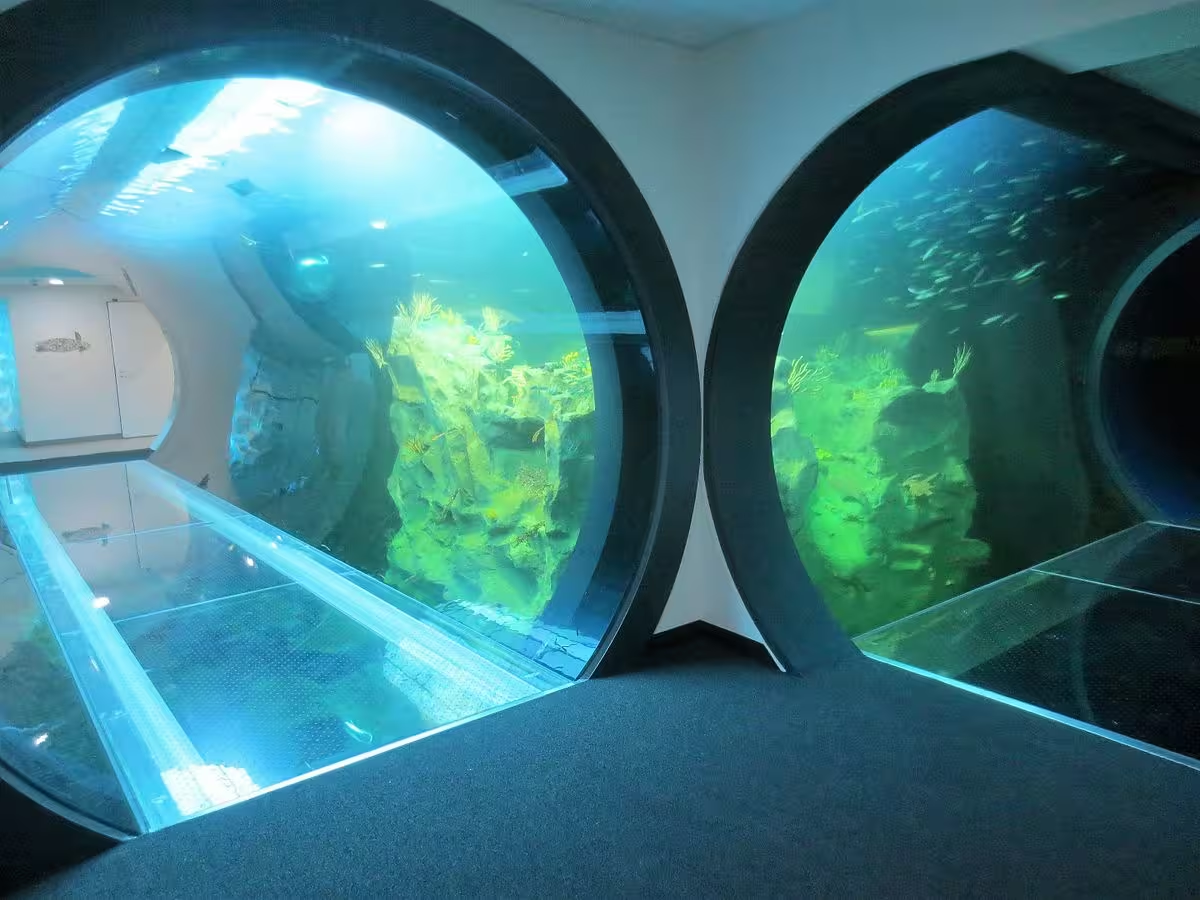
In the vibrant city of Vienna, where history, art, and music meet at every corner, there lies an unexpected treasure: the Haus des Meeres, or “House of the Sea.” Located inside a former World War II anti-aircraft tower in the heart of Mariahilf, this unique aquarium and zoo offers a journey across the world’s oceans, tropical forests, and coral reefs — all within the walls of a 45-meter-high concrete structure. The experience begins the moment you step inside. The sound of trickling water and the shimmer of colorful fish instantly transport you far away from the city’s elegant streets. The Haus des Meeres is home to over 10,000 animals, representing more than 300 species from oceans, rivers, and rainforests around the globe. Each floor invites visitors to explore a new world. The tropical house is a true highlight — a warm, lush environment where birds fly freely above your head, turtles glide past, and monkeys swing through the trees. It feels like stepping into a living rainforest, full of sound and color. Then comes the aquatic journey. Massive tanks filled with vibrant coral reefs, sharks, moray eels, and graceful rays offer a mesmerizing view of marine life. The Atlantic Tunnel, where fish swim all around you, gives a sense of being underwater, surrounded by life and movement. Kids and adults alike are left in awe by the beauty of these creatures and the peaceful rhythm of the sea. But the Haus des Meeres is not only about marine animals. There’s also a fascinating terrarium section, where snakes, lizards, and frogs showcase the diversity of the reptile world. The insect displays reveal the complexity and importance of even the smallest creatures on our planet. Every exhibit is carefully designed to be both educational and engaging, reminding visitors how delicate and interconnected nature truly is. One of the most impressive parts of the visit is the Panorama Terrace at the top of the tower. After exploring the aquatic and tropical worlds, you can take the elevator to the rooftop café and enjoy a breathtaking 360° view over Vienna. From this height, you can see the city’s famous landmarks — the Karlskirche, St. Stephen’s Cathedral, and the Vienna Woods in the distance. It’s the perfect spot to relax, have a drink, and reflect on the incredible journey you’ve just experienced. The Haus des Meeres is more than an attraction — it’s a symbol of transformation. A building once meant for war now houses a world dedicated to life, learning, and wonder. It’s a place where families, travelers, and nature lovers come together to discover the beauty of our planet and the importance of protecting it. Whether you’re visiting Vienna for art, history, or cuisine, make sure to add this destination to your list. The Haus des Meeres offers something truly different — a blend of science, adventure, and emotion that stays with you long after you leave. 🧭 Visitor Information
Karlskirche – Vienna’s Baroque Masterpiece of Faith and Beauty
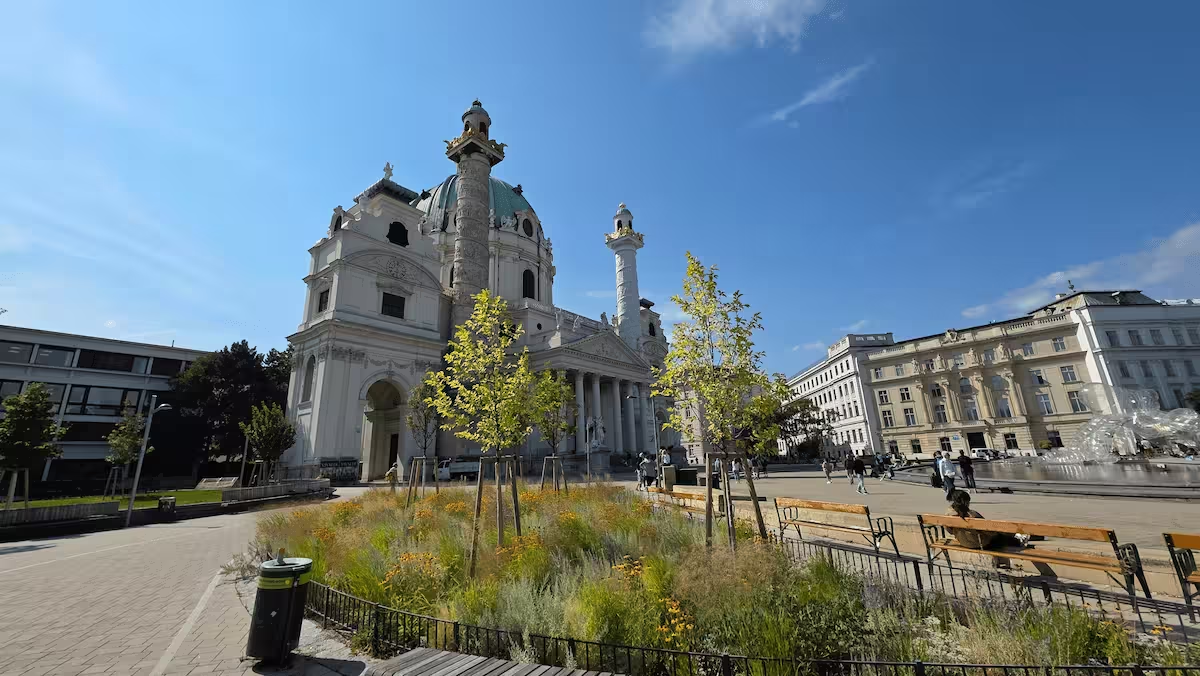
Standing gracefully on Karlsplatz, in the heart of Vienna, the Karlskirche — or St. Charles Church — is one of the city’s most breathtaking landmarks. Its green copper dome rises proudly above the skyline, while its red and white façade glows warmly in the sunlight, a masterpiece that embodies both grandeur and devotion. The story of this church begins in 1713, when Emperor Charles VI made a solemn vow during a terrible plague that struck Vienna. In gratitude for the city’s survival, he promised to build a magnificent church dedicated to Saint Charles Borromeo, the patron saint invoked against the plague. Construction began shortly after, under the direction of Johann Bernhard Fischer von Erlach, one of the greatest architects of the Baroque era. After his death, his son Joseph Emanuel continued the work, and the church was finally completed in 1737. From the moment you arrive at Karlsplatz, the Karlskirche immediately captures your attention. The grand portico framed by two colossal columns, inspired by Trajan’s Column in Rome, tells scenes from the life of Saint Charles Borromeo. Above, the massive dome seems to float against the Viennese sky, creating a perfect harmony between symmetry, symbolism, and spiritual beauty. Every architectural detail reflects the ambition of an emperor and the faith of a city that had overcome tragedy. Stepping inside, the church welcomes you into a world of light and serenity. The vast interior glows softly under the sunlight filtering through tall windows. The frescoes painted by Johann Michael Rottmayr adorn the dome, illustrating the triumph of faith and divine grace. The combination of white marble, gold ornaments, and painted clouds gives the impression of heaven opening just above your head. One of the most remarkable experiences in Karlskirche is the panoramic elevator that takes visitors up into the dome. From the platform, you can admire the frescoes up close — a rare opportunity in a Baroque church — and enjoy a stunning view of Vienna from above. The gentle contrast between the ornate interior and the city’s modern skyline creates a unique moment of reflection, both spiritual and artistic. Outside, the Karlskirche stands beside a tranquil reflecting pool, where its image dances on the surface of the water. This view, especially at sunset, is one of the most iconic in Vienna. Locals and travelers alike gather on the steps of Karlsplatz, enjoying the calm atmosphere while musicians play softly nearby. The church’s reflection glows golden as the evening light fades — a timeless postcard of Vienna’s elegance. But the Karlskirche is not just a monument to photograph. It’s also a living place of music and culture. Throughout the year, classical concerts are held within its majestic walls, often featuring Mozart’s Requiem or Vivaldi’s Four Seasons. The acoustics of the dome give the music an ethereal quality, turning each performance into a spiritual experience. Sitting there, surrounded by art, light, and sound, you can truly feel the soul of Vienna — a city where history and creativity intertwine perfectly. Visiting the Karlskirche is an experience that stays with you long after you leave. It’s not only about architecture or religion; it’s about emotion, perspective, and connection. Whether you come to admire its baroque beauty, to listen to music, or simply to sit by the pond and watch the world go by, the Karlskirche reminds every visitor that beauty can rise from hardship, and faith can inspire art that lasts forever. 🧭 Visitor Information
St. Alban Gate – A Medieval Treasure in the Heart of Basel
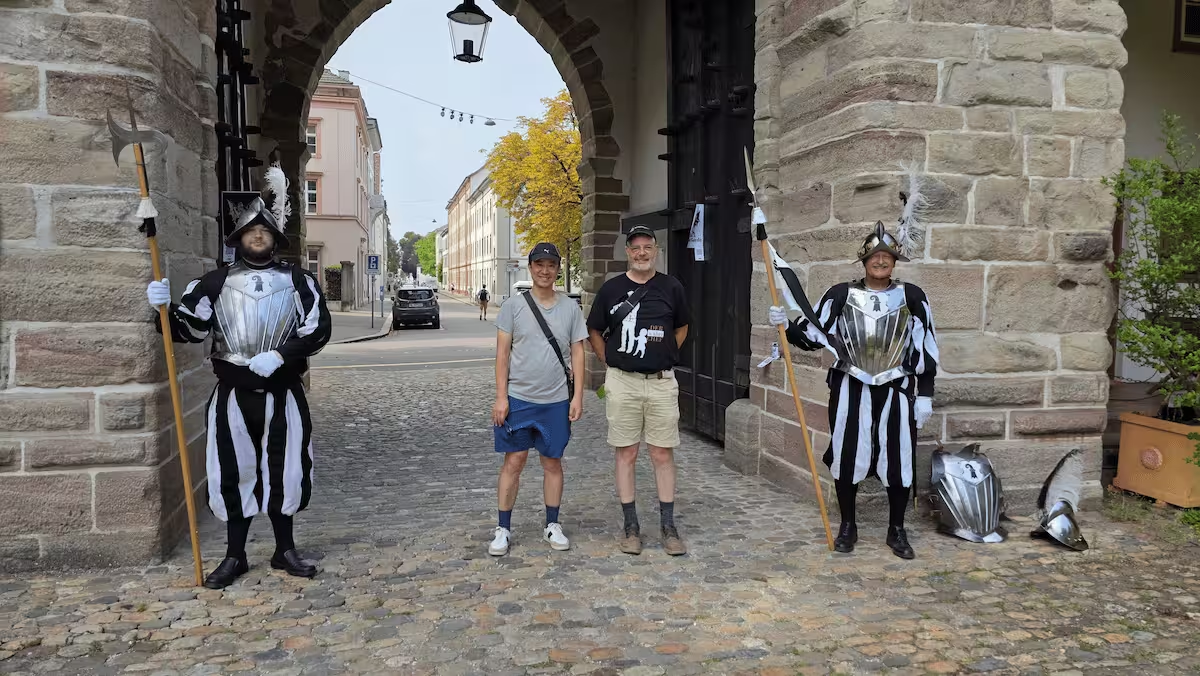
Tucked away in Basel’s charming St. Alban quarter, often called the “Venice of Basel” for its canals and quiet streets, stands one of the city’s most remarkable medieval relics: the St. Alban Gate. Known locally as the St. Alban-Tor, this fortified gate dates back to the 14th century and is one of the few surviving gateways of the old city walls that once surrounded Basel. Approaching the gate, you immediately sense its defensive past. Built from solid stone with its tall tower rising above the rooftops, the St. Alban Gate once stood as a stronghold protecting Basel from outside threats. For centuries, it was a checkpoint where merchants, travelers, and goods passed through on their way into the city. Today, instead of soldiers and guards, you will find quiet cobbled streets, leafy trees, and the gentle flow of the river Rhine nearby. What makes the St. Alban Gate so captivating is not only its architecture, but also the atmosphere of the district around it. The St. Alban quarter is one of Basel’s most picturesque neighborhoods, filled with half-timbered houses, small gardens, and peaceful paths that invite you to slow down. Walking under the arch of the gate feels like stepping back in time, where history blends seamlessly with daily life. Over the years, the gate has been carefully preserved, and it remains a proud symbol of Basel’s medieval past. The tower itself offers a commanding view of the area, and though it is not open to casual visitors, its presence adds character and charm to the district. Many photographers and history enthusiasts are drawn here, especially in the early morning or late afternoon when the sunlight gives the stone walls a warm, golden glow. Visiting the St. Alban Gate is more than just seeing an old wall – it is about experiencing Basel’s layers of history. Just a short walk from the city center and close to the Museum of Contemporary Art, the gate is perfectly placed for a peaceful detour away from the busy streets. Whether you are fascinated by medieval history or simply want to enjoy one of Basel’s most atmospheric quarters, the St. Alban Gate is a stop worth making. It stands quietly, a reminder that Basel’s story is written not only in its grand cathedrals and squares, but also in these hidden corners where time seems to move just a little slower. 📝 Visitor Tips – St. Alban Gate (St. Alban-Tor), Basel