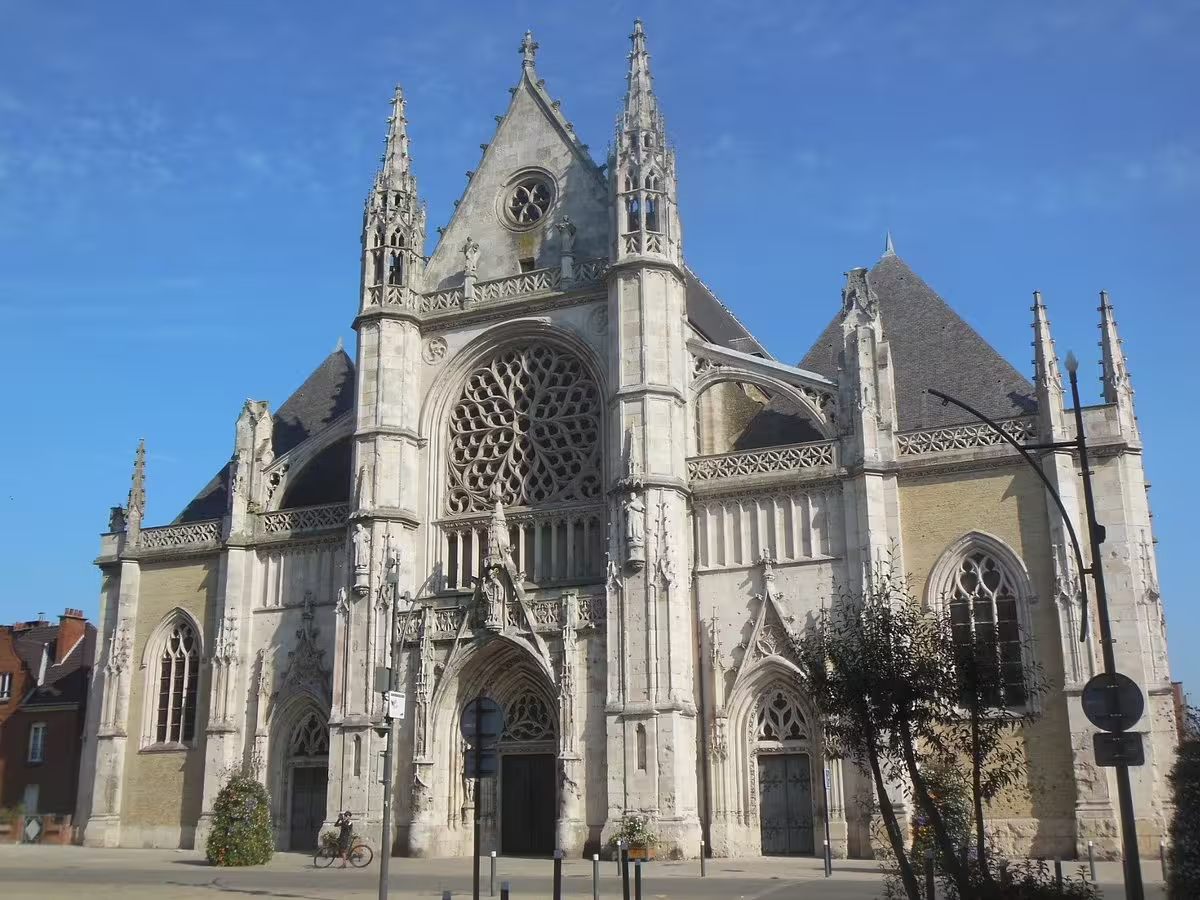
If you’re walking through the heart of Dunkirk, just a few minutes from the port, you can’t miss Saint-Éloi Church. It’s one of those places that defines the city’s skyline, but it’s much more than just an old building. To the people here, it’s a symbol of survival and a deep connection to our maritime roots. Work on the church started back in the 16th century, a time when Dunkirk was already becoming a major player on the sea. The architecture is Late Gothic—solid and imposing, yet surprisingly simple. Interestingly, the church and its famous belfry used to be part of the same structure. For centuries, that tower wasn’t just for bells; it was a lifeline for sailors, acting as a massive landmark to guide them safely back to the harbor. But Saint-Éloi’s history hasn’t been easy. Like the rest of Dunkirk, it’s been through the wars—literally. It was heavily damaged during World War II, but the city refused to let it go. It was rebuilt with a lot of grit and care, and that’s exactly what gives the place its soul today. It’s a site defined by destruction and rebirth, which makes stepping inside feel pretty powerful. Once you step inside, the vibe changes completely. It’s incredibly peaceful, a massive contrast to the busy, noisy port just a few streets away. You’ve got these high Gothic vaults and stone columns, with soft light coming through the stained-glass windows—it’s the kind of place that just makes you want to stop and take a breath. Every little detail in the stonework feels like a nod to Dunkirk’s past, a mix of old-school faith and the sheer toughness of the people who built it. Today, Saint-Éloi is much more than just a historical monument or a place of worship. It’s the heart of the community. You’ll find everything here from quiet Sunday services to local concerts and memorial events. To me, visiting the church is the best way to see the real Dunkirk—a city that’s been shaped by the sea, scarred by history, but is always looking ahead. 📍 Practical Information & Visitor Tips Address:📌 Église Saint-ÉloiPlace Charles Valentin,59140 Dunkirk, France Visitor Tips: ⏱️ Average visit time: 15–30 minutes📸 Photography allowed (without flash, depending on events)
Two Magical Clifftops for Families: Exploring Cap Blanc-Nez and Cap Gris-Nez Together
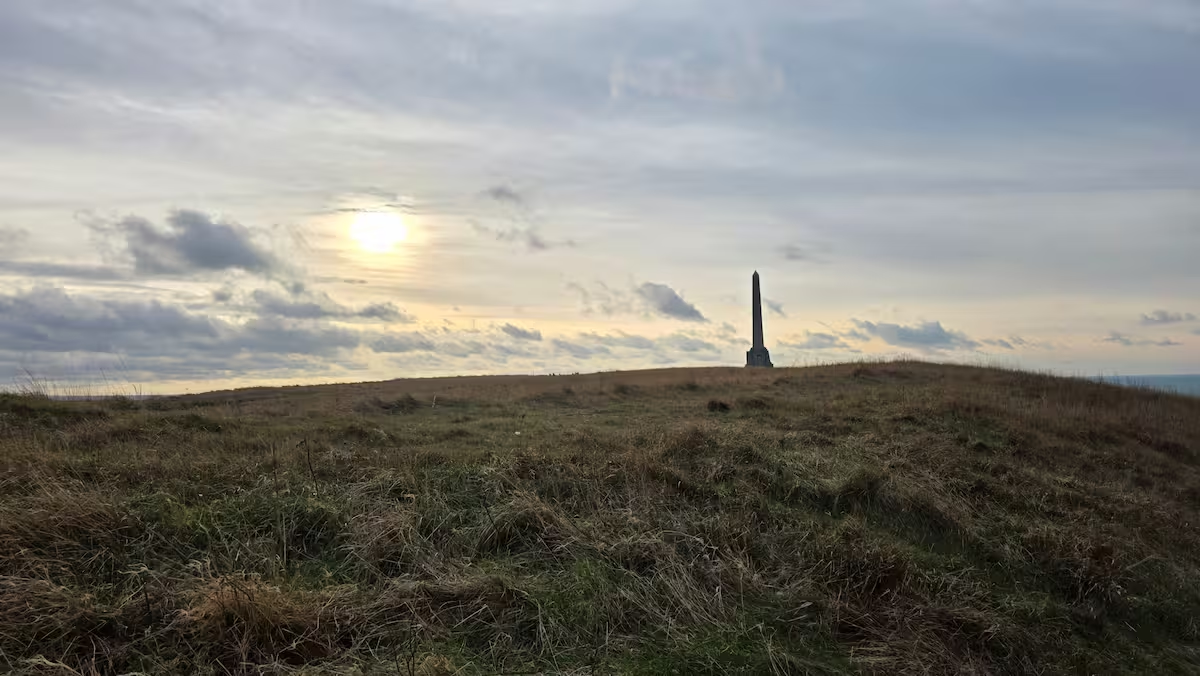
Cap Blanc-Nez and Cap Gris-Nez are wonderful places for a family adventure. Along this part of the Côte d’Opale, the sea breeze, the wide horizons and the dramatic cliffs make every walk feel like a discovery. At Cap Blanc-Nez, children are often amazed by the towering white cliffs and the incredible view over the English Channel. On clear days, you can even see England in the distance — a detail that always sparks curiosity. Walking here also means walking through history. At the top of Cap Blanc-Nez stands a large monument dedicated to sailors who protected the Channel during the First World War. Scattered across the land, small craters and broken structures remind us that this coastline was a strategic point again during the Second World War. For children, it’s a gentle way to understand that these peaceful landscapes once played an important role in Europe’s past. Cap Gris-Nez is a bit lower than its neighbor, but it feels much closer to the sea. Its lighthouse, which had to be completely rebuilt after the war, still stands guard over one of the busiest shipping lanes on the planet. If you sit down for a break nearby, you can just watch the world go by—ferries, massive cargo ships, and tiny fishing boats constantly crossing paths. It’s like a front-row seat to a living history lesson on how we’re all connected. Plus, it’s a haven for migratory birds; watching them stop over during their long journeys really puts things into perspective. The best part, though, is the walk between the two capes. The paths are easy and let families move at their own pace—no rush, no stress. You can wander for a bit, stop for a picnic whenever you find a good spot, and just keep going when the kids are ready. The scenery keeps changing between dunes, open fields, and sandy beaches, so it never gets boring. Kids love the simple stuff here: racing against the wind, hunting for shells, or trying to spot the difference between the bright white cliffs of Blanc-Nez and the darker, grey rocks of Gris-Nez. It’s those quiet moments—the laughs and the real conversations away from phones and screens—that parents seem to love the most. A quick heads-up, though: the cliffs are as fragile as they are beautiful. It’s really important to stick to the marked paths and keep a safe distance from the edge. But honestly, with just a bit of common sense, a day at the Two Capes is the perfect mix of fresh air, history, and memories that actually stick with you. Practical Information for Families Access & Parking Strollers & Walking Facilities Weather & Safety Best Times to Visit Fun Activities for Kids Final thoughts The Two Capes are an ideal destination for families: authentic nature, history to explore, spectacular coastal scenery and plenty of space for children to run, discover and marvel safely. It’s an easy, memorable and affordable outing — the kind that creates the best shared memories.
Dunkirk Port Center: Discovering the Port from the Inside, Between Virtual Experience and Real Exploration
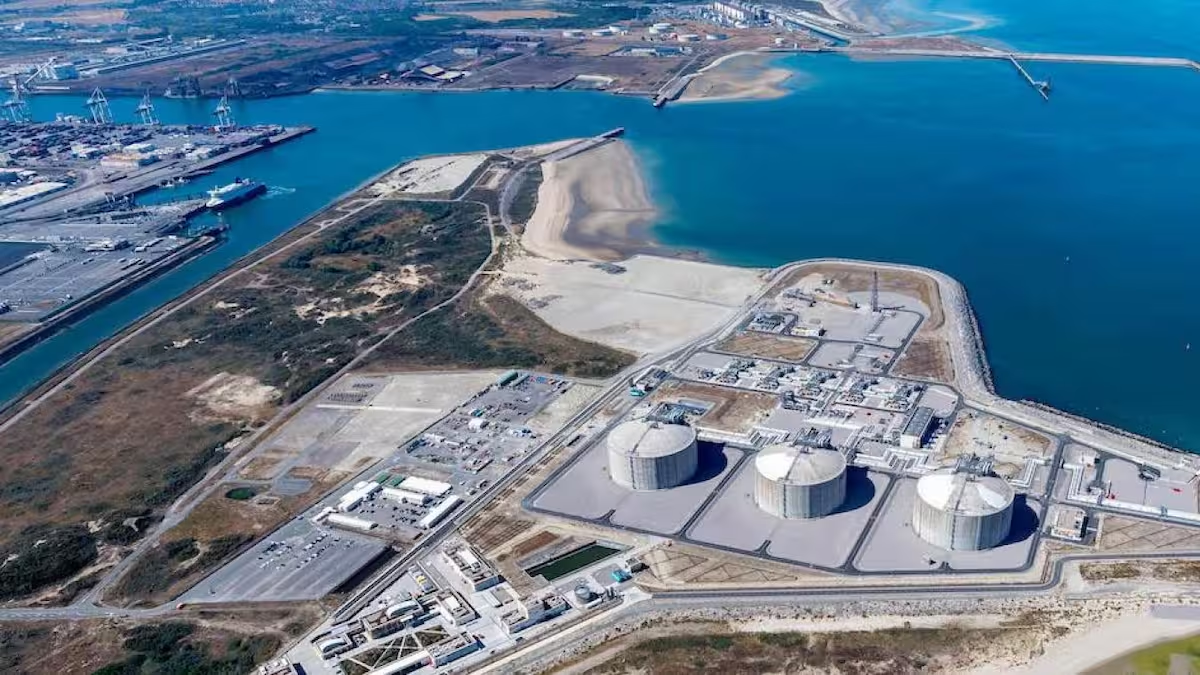
The Dunkirk Port Center offers a unique way to understand one of the largest and most strategic ports in Northern France. More than a traditional museum, it is an immersive and educational space designed to connect visitors with the port, its activities, and the people who make it function every day. From the moment you enter the Dunkirk Port Center, the focus is clear: helping visitors understand how a modern port works. Through interactive exhibitions, clear explanations, models, and digital tools, the Port Center explains the role of the port in Dunkirk’s economy, its international connections, and its importance for trade, energy, and maritime logistics. One of the highlights of the visit is the virtual experience. Thanks to immersive digital content, visitors can explore the port in virtual reality, offering a unique behind-the-scenes view of areas that are usually inaccessible to the public. This virtual tour allows you to better grasp the scale of the port, its infrastructures, and the complexity of daily operations, all in an engaging and accessible way for both adults and children. But the Dunkirk Port Center goes even further by offering real guided visits inside the port. Throughout the day, and also in the evening, guided tours are organized to take visitors directly onto the port site. These visits provide an exceptional opportunity to experience the port in real conditions, observe ships, terminals, and industrial zones up close, and better understand how everything operates together. Evening visits are particularly impressive, offering a completely different atmosphere, with lights, activity, and a unique perspective on port life. It is important to note that these guided port visits are offered in limited numbers, making advance booking highly recommended. This limited access ensures a high-quality experience, allowing guides to provide detailed explanations and answer questions while maintaining safety and comfort for visitors. The Dunkirk Port Center is designed for a wide audience. Families, students, and curious travelers will all find something to learn and enjoy. The interactive approach makes complex topics easy to understand, turning the visit into a true discovery rather than a passive experience. Visiting the Dunkirk Port Center is an excellent complement to exploring Dunkirk’s maritime museums and historic ships. It connects the city’s past with its present and future, showing how the port continues to shape Dunkirk’s identity today. For anyone interested in maritime life, modern ports, or industrial heritage, the Dunkirk Port Center is an essential stop — a place where virtual exploration and real-world experience come together to reveal the true scale of Dunkirk’s port. 📍 Practical Information & Visitor Tips Address:📌 Dunkirk Port CenterKruiskade / Quai de la Citadelle area,59140 Dunkirk, France (Located close to the port and maritime museums) Visitor Tips: 🎟️ Tickets: Indoor visit and guided port tours may require separate booking♿ Accessibility: The Port Center is accessible; guided port tours depend on conditions
Dunkirk Maritime Museum: Discovering the City’s Deep Connection to the Sea
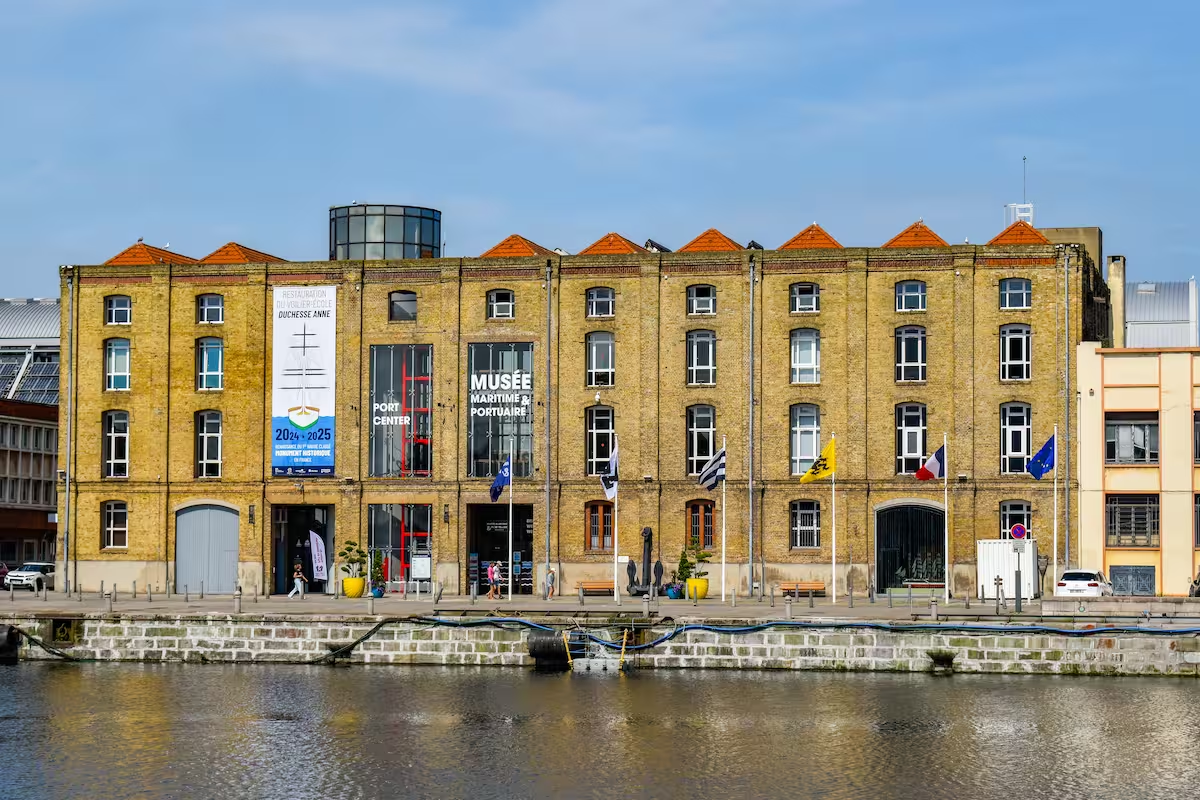
The Dunkirk Maritime Museum is a true gateway into the maritime soul of the city. Located near the historic port area, the museum offers visitors a fascinating journey through Dunkirk’s long and complex relationship with the sea — a relationship shaped by trade, fishing, exploration, and major historical events. From the very beginning, the museum immerses visitors in Dunkirk’s maritime identity. Through a rich collection of objects, ship models, maps, photographs, and interactive displays, the museum tells the story of a port city that has always lived to the rhythm of tides and ships. Dunkirk’s strategic position on the North Sea made it an essential maritime hub, and this importance is clearly reflected throughout the exhibition spaces. One of the strengths of the Dunkirk Maritime Museum is its ability to combine history with everyday life at sea. Visitors learn about sailors, shipbuilders, fishermen, and dockworkers — the men and women who shaped the city through their hard work and resilience. The museum does not only focus on great historical moments but also highlights daily maritime life, making the experience both educational and deeply human. The museum also places strong emphasis on Dunkirk’s role during major historical periods, particularly wartime. The maritime perspective offers a different understanding of the city’s past, showing how the port, ships, and sea routes played a crucial role during conflicts and reconstruction. These sections are presented with clarity and respect, making them accessible to visitors of all ages. Another highlight of the Dunkirk Maritime Museum is its family-friendly approach. Interactive elements, clear explanations, and well-organized exhibits allow children and adults alike to explore maritime history together. It is a place where curiosity is encouraged, questions are welcomed, and learning becomes an enjoyable experience. Visiting the Dunkirk Maritime Museum is more than a cultural stop — it is an invitation to understand Dunkirk beyond its beaches and port activity. It reveals a city built by the sea, shaped by challenges, and driven by a strong maritime heritage that continues to influence its identity today. For anyone interested in history, ships, or coastal cities, the Dunkirk Maritime Museum is an essential stop to truly grasp what makes Dunkirk unique. 📍 Practical Information & Visitor Tips Address:📌 Dunkirk Maritime Museum9 Quai de la Citadelle,59140 Dunkirk, France Visitor Tips: 🎟️ Tickets: Affordable prices with reduced rates for children and families♿ Accessible for visitors with reduced mobility
The Third Stop at Dunkirk Maritime Museum: The Iconic Péniche Guilde
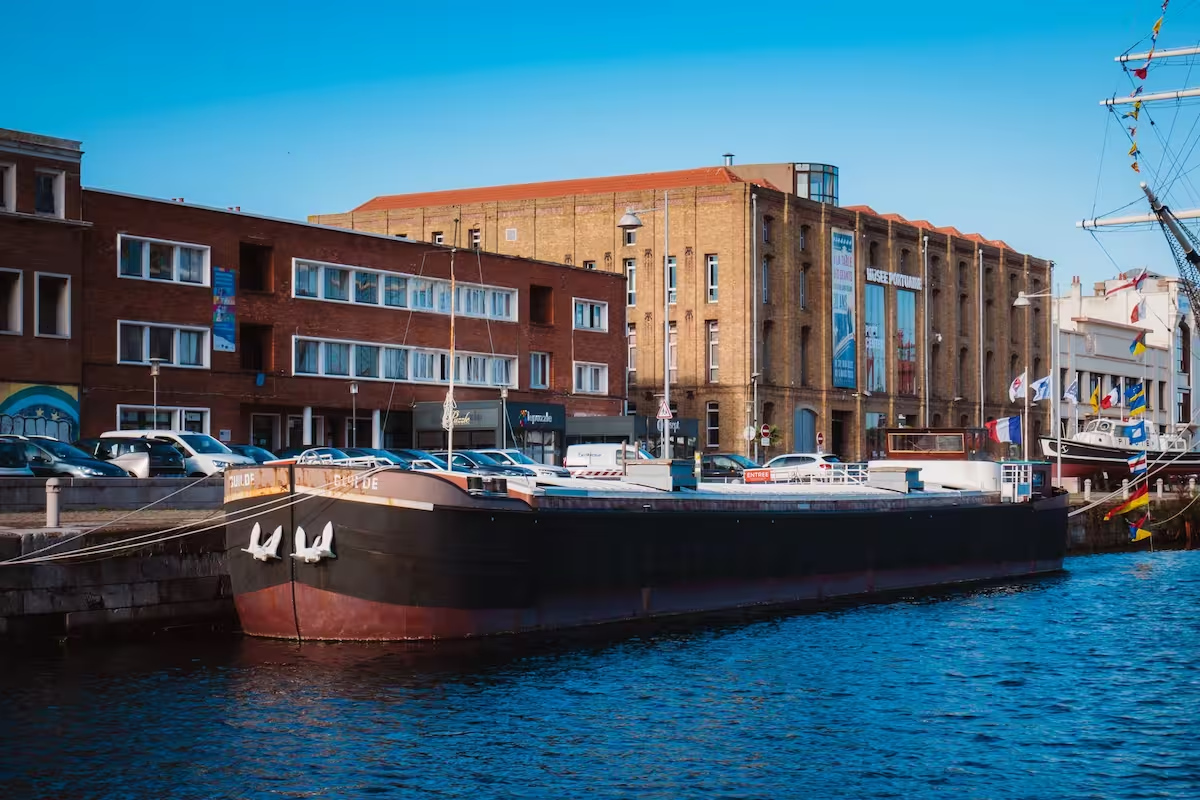
After exploring the tugboat Entreprenant and the lighthouse ship Sandettié, we continued our journey through Dunkirk’s maritime heritage with the Péniche Guilde, the third and final vessel of our visit. Unlike the first two ships, the Guilde is a historic barge designed for navigating canals and transporting goods, yet it tells an equally rich story about commerce and river transport in the region. Docked in the port, the Péniche Guilde immediately impresses with its long, low silhouette, typical of 20th-century cargo barges. Onboard, every detail reflects the daily life of the crew: modest yet functional cabins, workspaces for loading and unloading, and the wheelhouse used to navigate narrow and winding waterways. Walking along the deck, it’s easy to appreciate the discipline and skill required to operate these barges, as well as the simple but demanding life of their crews. What struck me most was the authenticity preserved throughout the vessel. Volunteers and maritime heritage enthusiasts have done an incredible job maintaining every element in its original state. You can touch the wooden cabins, examine the old engine mechanisms, and imagine a time when these barges were the lifeblood of local commerce. The Péniche Guilde offers a unique perspective compared to the first two ships: it highlights the importance of cargo transport and trade, connecting Dunkirk’s port to inland waterways. It demonstrates how maritime heritage is not only about seafaring vessels, but also the smaller, hardworking boats that supported the regional economy. Visiting the Guilde completes the experience of Dunkirk’s historic ships. It gives a tangible sense of life on the water from a practical and economic perspective while allowing visitors to appreciate the beauty and simplicity of these historic barges. Walking aboard the third ship, I felt as if I had truly journeyed through Dunkirk’s maritime history, understanding the different roles each vessel played — guiding, protecting, and transporting. The Péniche Guilde is a living testament to Dunkirk’s river and port heritage, providing an immersive experience that connects visitors to the lives of the sailors and merchants who shaped the city’s maritime history, and it closes our three-ship exploration in an unforgettable way. Visitor Tips ✨ Address: Dunkirk Maritime Museum, 9 Quai de la Citadelle, 59140 Dunkirk, France ✨ Tickets: Get the combined Museum + Boats ticket to access all three historic ships ✨ Best Time to Visit: Early morning or weekdays to enjoy a quieter experience✨ Accessibility: Museum is accessible; some areas of the barge may be narrow✨ Parking & Transport: 10-minute walk from Dunkirk train station; parking available near the port✨ Combine Visits: Explore all three historic ships, then take a stroll along the harbor for panoramic views
Step Aboard the Sandettié: Dunkirk’s Floating Lighthouse and Maritime Treasure
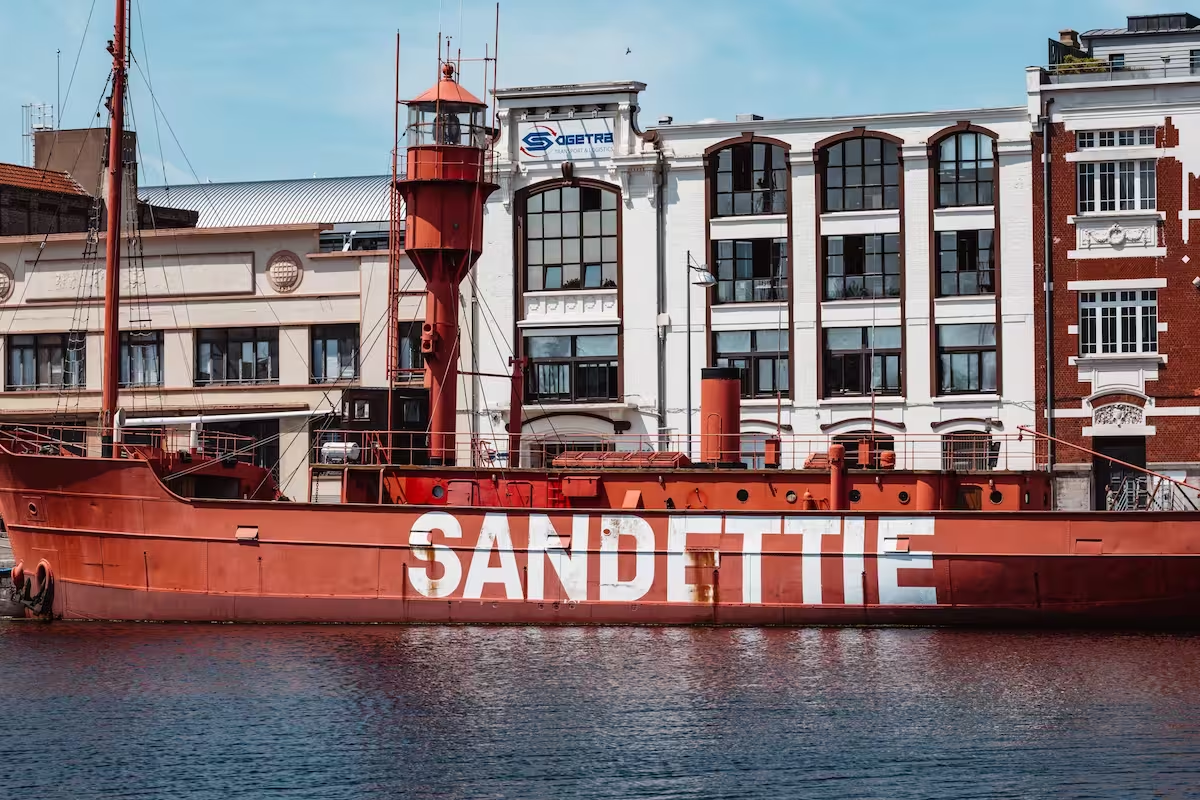
After visiting the tugboat Entreprenant, the first of the three historic ships, we continued our maritime adventure with the Sandettié Lighthouse Ship, the second vessel we had the chance to explore in Dunkirk. Docked proudly at the port, the Sandettié immediately stands out with its bright red hull and impressive silhouette — a floating beacon that once played a critical role in maritime safety. Built in 1939, the Sandettié served as a lighthouse ship, guiding vessels through the busy waters of the North Sea and the Pas-de-Calais. Its mission was crucial: in a region known for dense maritime traffic and unpredictable weather, this ship warned sailors of sandbanks and hazards, ensuring that ships could safely reach Dunkirk’s port. Walking aboard, it’s easy to appreciate the careful design of every element, from its signal lamps to the observation cabins, all built for vigilance and navigation safety. What struck me most was the sense of stepping back in time. The narrow metal staircases, the bridges, and the engine room are all authentically preserved. You can almost imagine the crew keeping watch day and night, monitoring the horizon and guiding ships safely. The restoration work done by passionate volunteers is remarkable, keeping the vessel intact while making it fully accessible to visitors. Every corner and piece of equipment tells a story about the maritime heritage of Dunkirk. Visiting the Sandettié offers a unique perspective on life at sea. While the Entreprenant showed the action of guiding ships in the port, the Sandettié demonstrates the constant vigilance required to protect maritime routes. Seeing firsthand how sailors of the past used technology and skill to navigate and secure busy shipping lanes is fascinating. This second ship gave us an incredible and immersive experience, revealing both the technical and human side of Dunkirk’s maritime history. Each tool, signal, and observation point tells a story of a sea that could be harsh, and of those who devoted their lives to keeping it safe. After exploring the Sandettié, I couldn’t wait to discover the third and final ship, completing this journey through Dunkirk’s historic vessels. Visitor Tips ✨ Address: Dunkirk Maritime Museum, 9 Quai de la Citadelle, 59140 Dunkerque, France ✨ Tickets: Purchase the combined Museum + Boats ticket for full access to all three historic ships ✨ Best Times to Visit: Early mornings or weekdays for quieter exploration and better lighting on the water✨ Accessibility: The museum is accessible, but some areas of the ships are narrow and may be challenging for visitors with reduced mobility✨ Parking & Transport: 10-minute walk from Dunkirk train station; parking available near the port✨ Combine Visits: After Sandettié, explore the other historic vessels and the nearby Risban Lighthouse for panoramic views
My Visit to the Entreprenant Museum Ship — First of Three Historic Vessels at Dunkirk’s Maritime Museum
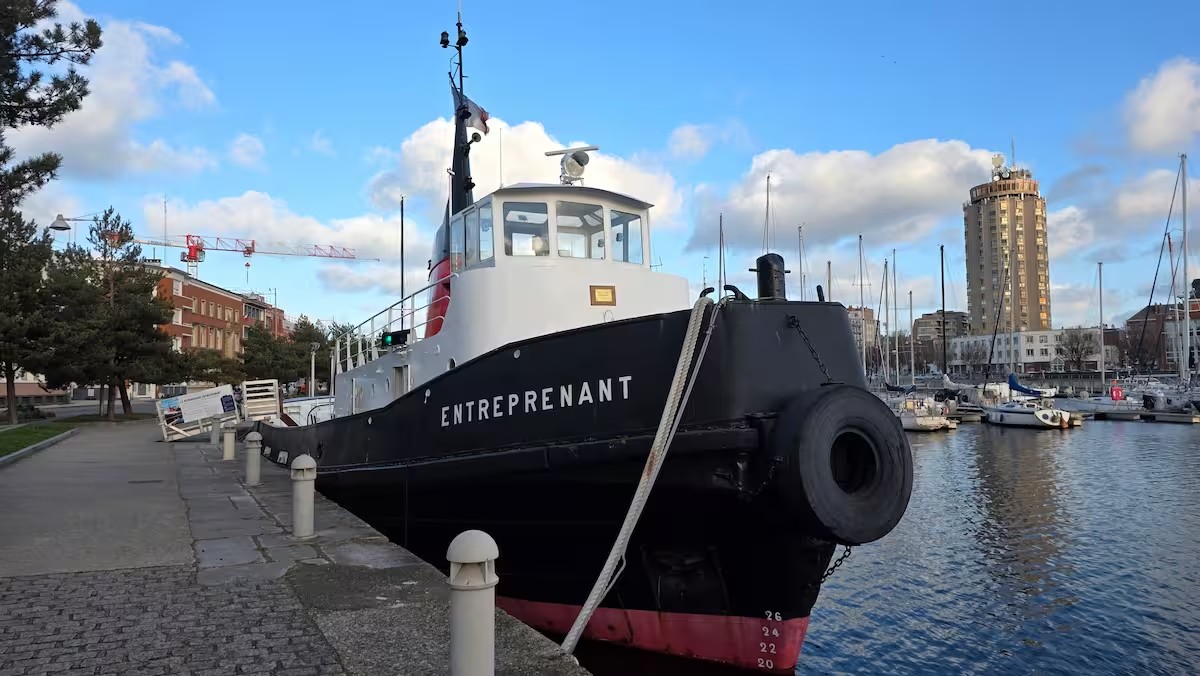
When I visited the Port Museum of Dunkirk, I didn’t just walk through a museum — I travelled through centuries of maritime history. Standing on the quay, facing the calm waters, the first boat that captured my attention was the remorqueur Entreprenant, the first of three remarkable historic ships I planned to explore that day. Docked right in front of the museum on 9 Quai de la Citadelle, 59140 Dunkerque, France, the Entreprenant carries decades of history within its steel hull. Built in 1965 in Dunkirk, this tugboat played an important role in guiding vessels safely through the busy port waters for more than thirty years. It wasn’t just a work machine — it was a trusted companion to sailors and captains, helping them maneuver through weather, tides, and the demands of maritime life. Walking aboard, I was immediately struck by the authentic feel of the ship. The bridge, the control levers, the engine room, even the narrow corridors — all of it whispered stories of countless port operations. You can really sense the daily life of the crew who once worked here, from the steady routine to the moments of intense focus as they guided heavy cargo ships and passenger vessels alike. What makes this experience even more special is the careful restoration by passionate volunteers. You can see the respect and dedication in every detail — from the polished metalwork to the preserved equipment that has been maintained for visitors to truly understand what life was like on a working tugboat. This dedication doesn’t just preserve history — it brings it to life. What I loved most about visiting Entreprenant was that I wasn’t surrounded by crowds — just space, silence, and the vessel itself, letting me absorb every detail at my own pace. It was like stepping into a moment frozen in time, where the stories of the ship’s past had room to resonate. This incredible boat is just the first of three, and I couldn’t wait to continue my journey to the other vessels moored alongside — the Péniche Guilde and other historic ships — each with their own tale to tell. Visitor Tips — Plan Your Visit Right ✨ Location: 9 Quai de la Citadelle, 59140 Dunkerque, France — right along the historic port. ✨ Museum + Boats Ticket: You can combine your entry to the museum with access to all the boats, including Entreprenant. ✨ Best Times to Go:
Santa’s Castle in Dunkirk: A Christmas Memory Our Family Won’t Forget
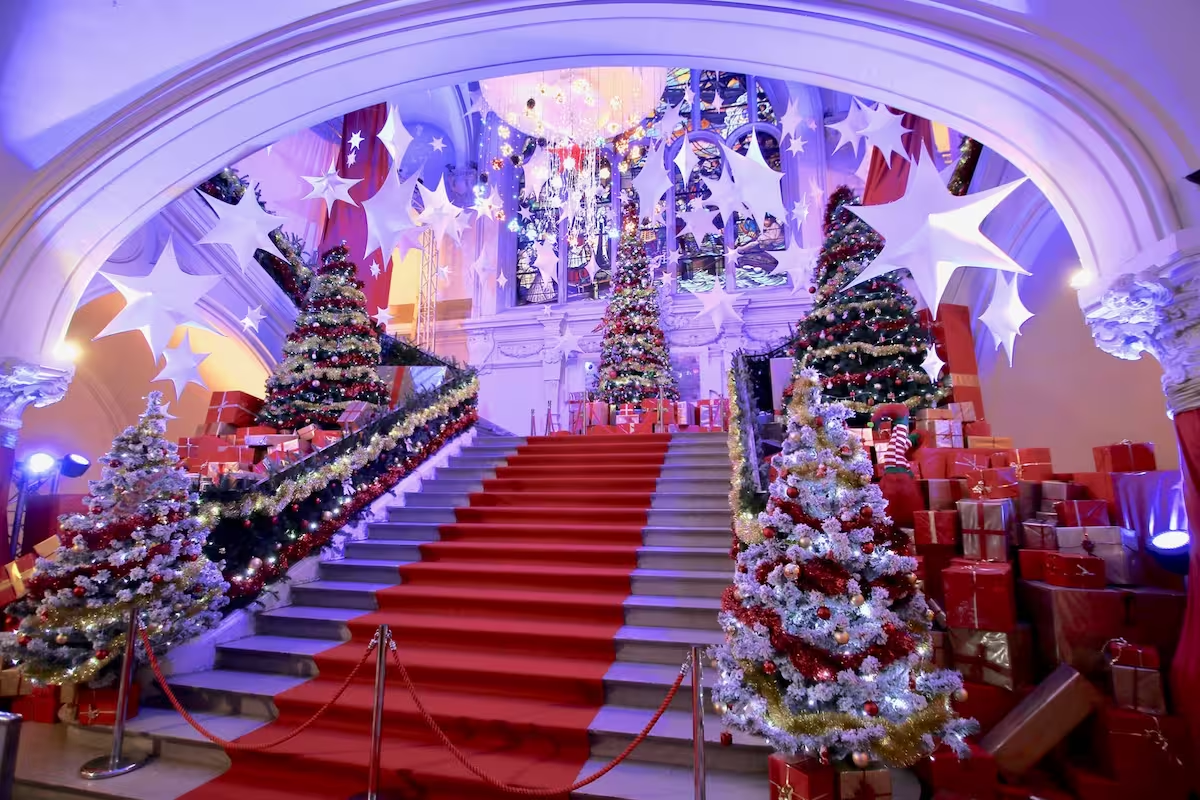
Sometimes, you visit a place thinking it will just be “something nice to do with the kids” — and you leave with real magic in your heart. That’s exactly how I felt at Santa’s Castle in Dunkirk. Every winter, the city turns its beautiful town hall into a real-life fairytale. Yes — the Dunkirk town hall actually transforms into Santa’s Castle. From the outside, the building already looks impressive, but at Christmas it becomes something completely different: lights everywhere, garlands at the doors, soft music in the air, and children whispering excitedly while waiting to go inside. Before you even step in, you feel the atmosphere. What touched me most is knowing how this castle is created. It isn’t built by a big company — it’s made by people from the city, who truly care. Around forty municipal workers designed and assembled everything, guided by the ideas of Jacques-Olivier Simon, a retired city employee whose imagination still brings joy to thousands of kids each year. When you walk through the rooms, you can almost feel the love and effort behind every scene. Inside, each space invites you to slow down. Toy trains, snowy villages, giant books, twinkling trees… children move from one scene to another with wide eyes, and honestly — as parents, we do too. I found myself stopping, smiling, and thinking, “This is exactly what Christmas should feel like.” And then, of course — comes the moment. Meeting Santa. It isn’t rushed, it isn’t commercial. Santa listens, smiles, and somehow makes every child feel special. Watching my child speak to him was one of those quiet family moments I want to keep forever — the kind you remember long after the decorations come down. What I really appreciated is how well everything is organized. You don’t feel pushed; you have time to enjoy, take photos, and simply live the moment together. It’s also manageable for families with young children, strollers, or grandparents — something that matters a lot when we travel. After the visit, we wandered outside a bit more, enjoying the Christmas lights and the festive mood around the square. Dunkirk may not be the first city you think of for a Christmas trip — but maybe that’s what makes this experience so special. It feels authentic, warm, and truly family-friendly. If you plan to go, my advice is simple: take your time. Let the kids explore, ask questions, and enjoy the details. Bring your camera, a warm jacket, and be ready to feel like a kid again yourself. We left Santa’s Castle with that soft, glowing happiness that only Christmas can bring. For us, it wasn’t just a visit. It was a shared memory — and exactly the kind of place I love discovering and sharing on Family Travel Guide. Practical Tip for 2026: Arrive Before Opening Time If you’re planning to visit Santa’s Castle in 2026, here’s my best advice: arrive before 2:00 p.m., ideally a little earlier than the official opening time. The experience has become more and more popular, and families who arrive later in the afternoon often face long lines. When doors open, the flow is smooth and pleasant — but after 2:00 p.m., waiting times can easily increase and range between 40 minutes and 1 hour, especially on weekends and during school holidays. Arriving early not only reduces stress, it also lets children enjoy the magic without feeling tired before they even get inside. Bring a small snack, dress warmly, and make it part of the adventure — a calm start makes the visit even more magical. 📍 Dunkirk Town HallPlace Charles Valentin, 59140 Dunkerque, France
The Gravensteen: A Stone Fortress in the Heart of Ghent
After gazing at the soaring spires of the Belfry and St. Bavo’s Cathedral, another giant demands your attention—but its presence is strikingly different. Massive, austere, and impenetrable, the silhouette of the Gravensteen, or the Castle of the Counts, looks as if it were dropped into the middle of the modern city by a leap through time. It is one of the only medieval moated castles in Belgium with its defense system almost entirely intact, offering a unique witness to the sheer scale of feudal power. The story of the Gravensteen truly begins in 1180, commissioned by Philip of Alsace, Count of Flanders. In those days, architecture served a dual purpose: protection and intimidation. By erecting this stone fortress on the banks of the River Lieve, the Count sent a clear message to the citizens of Ghent—his authority was absolute and unshakable. With its thick walls, crenelated battlements, and deep moats, the Gravensteen was the ultimate symbol of countly domination over an increasingly rebellious city. Stepping through the great fortified gatehouse, you enter a world of stone where every corridor seems to whisper intrigues of the past. Over the centuries, the castle has worn many faces. From the lavish residence of the Counts of Flanders, it evolved into an administrative center, then a courthouse, and eventually a dreaded prison. One of the most striking—and darkest—parts of the visit is the Torture Museum located in the old keep. Here, visitors find a chilling collection of period instruments, a stark reminder that medieval justice was as spectacular as it was cruel. Yet, the Gravensteen almost disappeared. By the end of the 19th century, the castle was in such a state of decay that it served as a cotton mill, its ancient walls disfigured by industrial buildings. Some even called for its demolition. Fortunately, the city of Ghent purchased the edifice in 1885 to undertake a monumental restoration, returning it to the heroic medieval appearance we admire today. The highlight of the visit is literally at the top. Climbing to the ramparts, you stand high above the rooftops of Ghent. From this vantage point, the view is peerless: you realize the strategic genius of the castle’s location, surrounded by water and overseeing the commercial activities that made the city rich. Today, the Gravensteen is no longer a place of terror, but a place of culture. With its famously humorous audio guides and immersive exhibitions, the castle invites visitors on a journey that is both educational and entertaining. It is a total immersion into the Middle Ages—a mandatory stop for anyone wishing to understand the soul of Ghent, a city that has never been afraid to challenge its masters from behind walls of stone. 2. Visitor Information & Tips
The Belfry of Ghent: The Tower of Liberty and World Heritage
Standing tall between the St. Bavo’s Cathedral and the St. Nicholas’ Church, the Belfry of Ghent is more than just a magnificent tower; it is the ultimate symbol of the city’s independence and the pride of its medieval burghers. As a UNESCO World Heritage site, this 91-meter-high giant has watched over the city for seven centuries, serving as a watchtower, a treasury, and the « voice » of Ghent. The construction of the Belfry began in 1313, a time when Ghent was one of the most powerful and wealthiest cities in Europe. Unlike the surrounding churches, the Belfry was a purely secular building. It wasn’t built for God, but for the people. For centuries, it housed the City Privileges—the documents that granted Ghent its rights and freedoms—locked away in a massive chest behind heavy iron doors. This was the heart of Ghent’s civic identity. As you look up at the spire, your eyes are immediately drawn to the Golden Dragon. This legendary creature has perched atop the tower since 1377. It is the guardian of the city, keeping a watchful eye over the citizens. According to local lore, the dragon was originally brought back from a crusade, and while the current dragon is a meticulously crafted replica, it remains the most beloved symbol of Ghent’s spirit. One cannot talk about the Belfry without mentioning its « voice »—the Carillon. In the Middle Ages, the bells were the city’s heartbeat. They signaled the opening of the city gates, called the weavers to work, and warned of approaching enemies or fires. The most famous bell of all was Roland, whose deep boom echoed through the streets to rally the citizens to arms. Today, the carillon consists of 54 bells, and hearing their melody ripple across the historic center is an experience that transports you straight back to the 14th century. Climbing the tower—or taking the elevator for a more modern experience—reveals the sheer architectural grit of the structure. Inside, you can see the intricate clockwork mechanism and the massive drum that operates the carillon. Once you reach the stone gallery at the top, the reward is unparalleled. The view offers a 360-degree panorama of Ghent’s « Three Towers » skyline, with the winding canals and the red-tiled roofs stretching out toward the horizon. Adjacent to the tower lies the Cloth Hall, a masterpiece of Brabantine Gothic architecture that served as the center of the city’s booming textile trade. Together, the Belfry and the Cloth Hall stand as a testament to a time when Ghent was a hub of global commerce and democratic ambition. Today, as a protected World Heritage site, the Belfry remains a living monument. It doesn’t just represent the past; it embodies the resilience and the fiery independence of the « Ghentenaars. » Whether you are listening to the chime of the bells or standing in the shadow of the Golden Dragon, you are touching the very soul of this historic city. Visitor Information & Tips