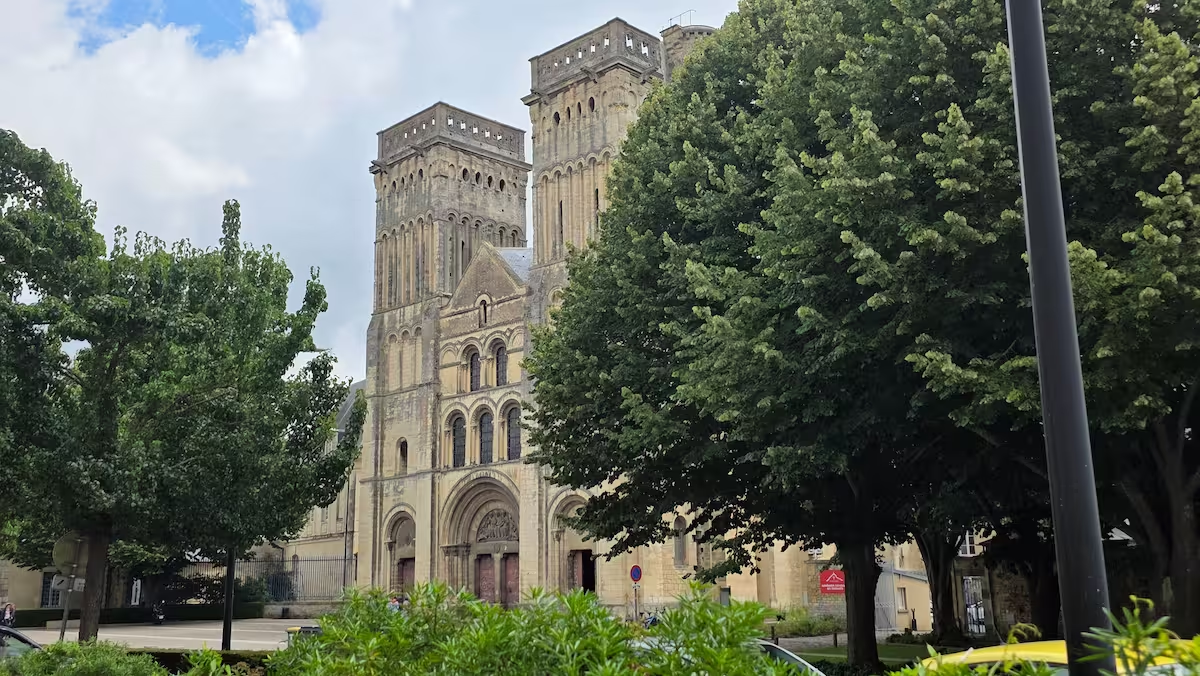
After visiting the castle, it was time to explore the Abbaye aux Dames — a place of elegance, history, and deep spirituality, perched on the heights of Caen. Also known as Sainte-Trinité, this abbey impresses with its understated beauty and Romanesque grace. But behind its pale stone walls lies a fascinating story, closely tied to one of the most famous couples of the 11th century: William the Conqueror and Matilda of Flanders. Founded around 1060 by Matilda, William’s wife, the abbey was born from a rather delicate situation. Their marriage, though politically powerful, was controversial at the time — they were distant cousins, and the Church disapproved of such unions. To reconcile with Rome, the couple each founded an abbey: William built the Abbaye aux Hommes, while Matilda, as a counterpart, created the Abbaye aux Dames. Dedicated to the Holy Trinity, the abbey quickly became both a spiritual landmark and a symbol of devotion. It welcomed a community of Benedictine nuns and stood as a testament to Matilda’s piety and influence. She was later buried here, her tomb still lying in the choir — simple, yet deeply moving. Architecturally, the abbey is a fine example of Norman Romanesque style: a pure, unadorned façade, soaring vaults, and soft light filtering through tall windows. Walking through the nave, one can almost hear the echo of Gregorian chants, marking the rhythm of the sisters’ lives in prayer and work. Over the centuries, the abbey experienced both prosperity and hardship — from wars to pillaging and religious upheavals. During the French Revolution, it was converted into a hospice for elderly women, a social mission it upheld for many years. Today, the Abbaye aux Dames remains both a major historical monument and the seat of the Normandy Regional Council. Its walls, once filled with prayers, now resonate with political decisions shaping the region. Visiting the Abbaye aux Dames means stepping into a chapter of Norman history where love, politics, faith, and art intertwine. And in the quiet cloisters, you can still feel the enduring presence of Matilda of Flanders. Now, it’s time to continue my journey through Caen and head to the Abbaye aux Hommes — William the Conqueror’s own creation. the practical info for the Abbaye aux Dames: 📍 AddressAbbaye aux Dames – Sainte-TrinitéPlace Reine-Mathilde14000 Caen, France 🕰 Visitor Tips Combine your visit with the Abbaye aux Hommes and Caen Castle for a complete half-day history loop. Plan about 1 hour to fully enjoy the church, cloister, and grounds. Join a guided tour if possible—great for hidden details and anecdotes. Go in the morning to enjoy the quiet, especially in the church and cloister. Pause at Matilda of Flanders’ tomb in the choir—simple yet moving. Check opening hours on the official website, especially off-season.
Caen Castle: A Journey Through Normandy’s History
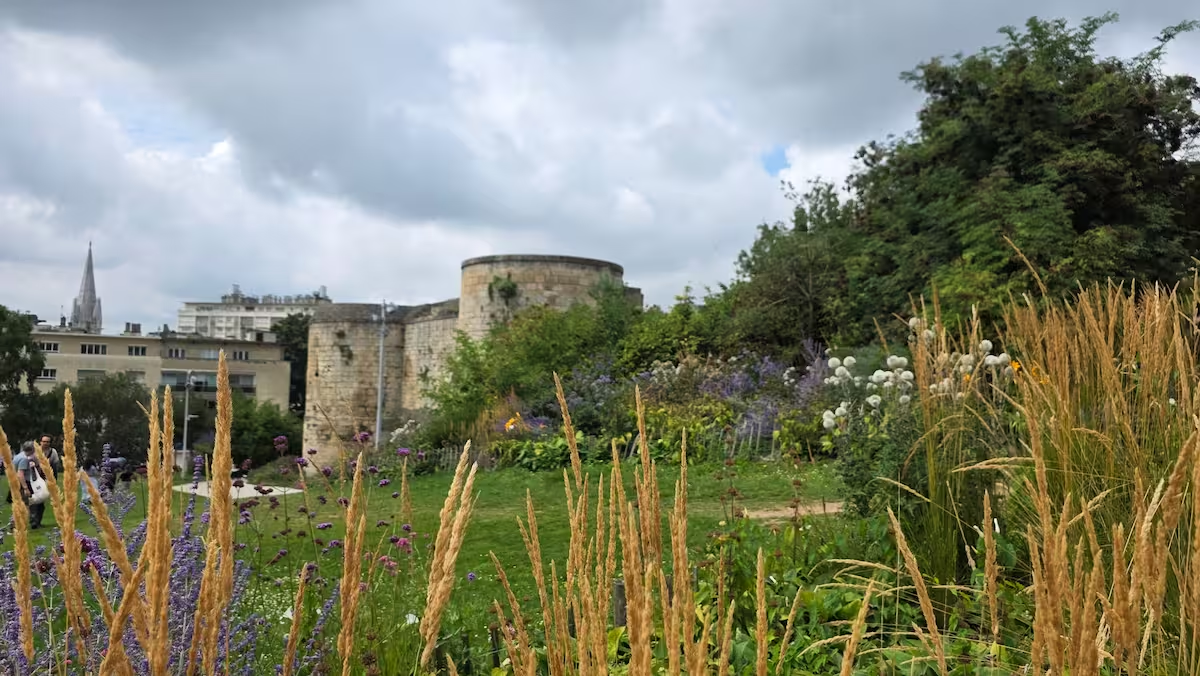
From the moment I stepped through the monumental gates of Caen Castle, I felt like I was entering a place where every stone carries the weight of time. This is one of the largest medieval fortresses in Europe, founded around 1060 by William the Conqueror, long before he became King of England. Standing here, it’s impossible not to imagine the centuries of history that have unfolded within these walls. The path leading up to the ramparts already offers a stunning view of the city. As I climbed, I could almost picture the footsteps of knights and sentinels centuries ago. From the top, the view is breathtaking: Caen’s rooftops stretch into the distance, punctuated by church spires and the tower of the Abbaye aux Hommes. William’s story also holds a curious and romantic twist. He wished to marry Matilda of Flanders, who happened to be his third cousin. At the time, such close kinship was forbidden by the Church. To gain the Pope’s approval, William and Matilda had to agree to a very unusual condition: each of them would build an abbey in Caen. And so, two of the city’s most iconic landmarks were born — the Abbaye aux Hommes, founded by William, and the Abbaye aux Dames, built by Matilda — both of which still dominate the Caen skyline today. Inside the castle grounds, the space is far larger than one might expect at first glance. The site houses the Museum of Normandy, a perfect place to discover the region’s roots, and the Museum of Fine Arts, home to an impressive collection, particularly European paintings from the 16th to the 20th centuries. Between exhibitions, I wandered along the pathways, admiring the remains of the ducal lodgings and the imposing towers, such as the Puchot Tower and the Porte des Champs. What struck me most was how the old and the modern coexist so harmoniously here. Archaeological excavations sit alongside peaceful walking paths, and the ramparts welcome visitors who come as much for the history as for the chance to enjoy a sunset over the city. It’s easy to forget that the castle also played a strategic role during World War II and suffered heavy bombardments in 1944. Walking through this vast fortified enclosure feels like traveling through several eras at once: the Middle Ages of the Norman dukes, the Renaissance with its architectural transformations, and the modern era that has breathed new life into the site. As I left the castle, I turned back for one last look at its golden-lit ramparts. More than just a monument, Caen Castle is a living book of nearly a thousand years of history, one that is a pleasure to read — page by page, stone by stone. 📍 Address:Château de CaenEsplanade Général Eisenhower14000 CaenFrance 🗝 Tips for Visitors:
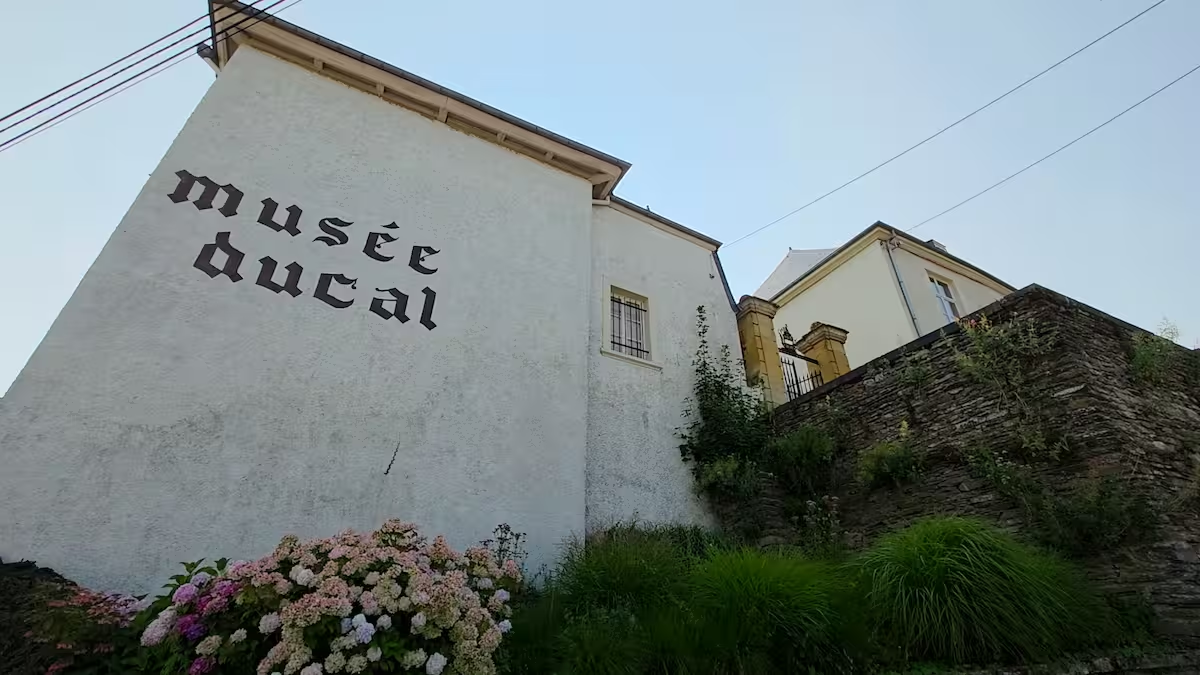
The second must-see attraction in Bouillon is the Ducal Museum — a real step back into the noble past of this Ardennes town.
When visiting Bouillon, after exploring its impressive castle and medieval streets, the Ducal Museum stands out as a fascinating place that truly brings history to life. Housed in the former residence of the Dukes of Bouillon, this elegant mansion has witnessed centuries of history. While the building’s origins trace back to the Middle Ages, it has been transformed over time, blending medieval foundations with later architectural styles, creating a unique atmosphere filled with stories and heritage. The museum itself was officially established in the early 20th century, providing a home for a rich collection of artifacts that reveal the life, culture, and history of Bouillon and the surrounding Ardennes region. As soon as you step inside, you feel transported to another era, where every room tells its own tale. Visitors can admire antique furniture, exquisite works of art, and an impressive collection of weapons and armor that recall the days when the Dukes ruled the region. The exhibits also shed light on the life and legacy of Godfrey of Bouillon, the legendary medieval hero closely tied to the town’s identity. What makes the Ducal Museum so special is how it balances historical depth with accessibility. Informative displays, well-preserved artifacts, and the evocative setting allow visitors to better understand the evolution of Bouillon’s noble families and the daily lives of its inhabitants across the centuries. Personally, I found wandering through the museum a deeply enriching experience. It’s a place where history isn’t just read about, but felt — where the echoes of the past resonate through the walls and the treasures on display. Whether you’re passionate about medieval history, art, or simply curious about Bouillon’s heritage, the Ducal Museum is an essential stop that completes your journey through this remarkable town. Practical Information – Ducal Museum Bouillon Address:Ducal Museum BouillonRue du Château 7,6830 Bouillon, Belgium Opening Hours:Tuesday to Sunday: 10:00 AM – 5:00 PMClosed on Mondays Ticket Prices: Contact:Phone: +32 61 46 45 85Website: https://www.bouillon-tourisme.be Accessibility:The museum is partially accessible to people with reduced mobility.
Bouillon Medieval Experience – A Unique Journey into the Middle Ages
When visiting the historic town of Bouillon, most travelers are drawn to its iconic medieval castle and the Ducal Museum, both rich in heritage and stories of the past. Yet, to truly grasp the fascinating history of Godfrey of Bouillon and the medieval era that shaped this region, the Bouillon Medieval Experience stands out as an essential and immersive attraction. Unlike traditional museums or castle tours, the Bouillon Medieval Experience offers a dynamic, interactive journey that brings history to life through modern technology and storytelling. Here, history is not just seen — it’s felt, heard, and experienced. Visitors step back in time through engaging multimedia exhibits, immersive projections, and realistic reconstructions that illuminate the life, struggles, and achievements of Godfrey of Bouillon, the legendary knight who led the First Crusade and became Duke of Bouillon. While the castle itself tells the story of medieval fortifications and power, and the Ducal Museum preserves artifacts and regional culture, the Medieval Experience connects the dots by explaining the human stories behind these monuments. It reveals the daily life, the political intrigues, and the fervent spirit of the medieval world in a way that is both educational and captivating for all ages. The exhibition is designed to appeal not only to history enthusiasts but also to families and casual visitors, making it accessible and engaging through a mix of historical facts and interactive displays. Visitors can walk through recreated medieval scenes, hear dramatic narratives, and even witness virtual battles, all designed to deepen the understanding of Godfrey’s legacy and the significance of Bouillon in medieval Europe. In essence, the Bouillon Medieval Experience completes the historical visit to Bouillon by offering a fresh, vivid perspective on a time when knights, castles, and crusades shaped the course of history. For anyone looking to go beyond the surface and truly immerse themselves in the medieval past, this attraction is an unmissable part of the Bouillon journey. 📍 Practical Information Address Bouillon Medieval Experience14, Quai des Saulx,6830 Bouillon, BelgiumLocated in the historic Couvent des Sépulcrines (built in 1626) on the banks of the Semois River.Official site: bouillonmedievalexperience.be Opening Hours Open daily, except December 25th and January 1st. Tickets Contact Accessibility Easily reachable on foot from Bouillon’s city center. Parking available nearby, including spaces for reduced mobility upon request. Why Visit? Even if you’ve already explored the Bouillon Castle and the Ducal Museum, the Bouillon Medieval Experience offers something unique — an immersive show that brings the era of Godfrey of Bouillon and the Crusades to life. Here, you don’t just see history… you experience it.
Bouillon Castle – A Journey Through a Thousand Years of History
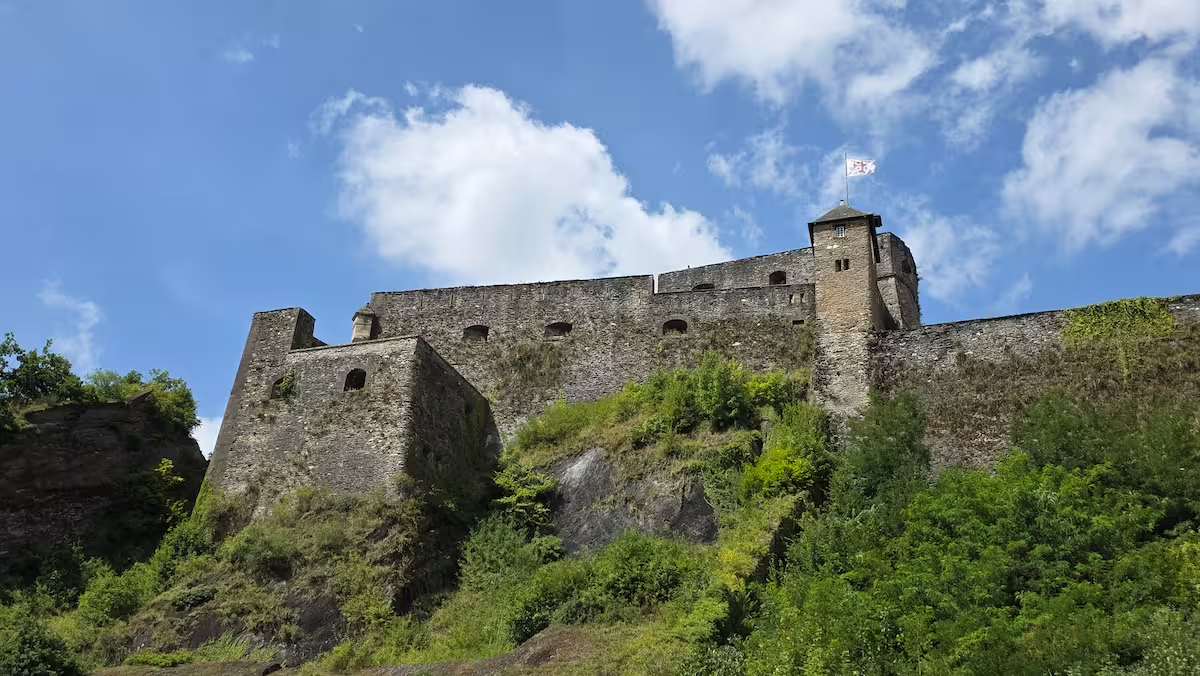
When you arrive in Bouillon, it’s impossible to miss the imposing silhouette of the bouillon castle standing proudly above the town and the Semois valley. It feels as though the very stones are whispering tales of centuries gone by—of battles, military strategy, and legends. For me, this place is far more than just a monument; it’s a living witness to history that transports you straight into the heart of the Middle Ages. The story of Bouillon Castle stretches back over a thousand years. The first traces of fortifications date from the 10th century, built to protect the region from invasions. But it was in the 11th century that the castle truly rose to prominence, thanks to a legendary figure: Godfrey of Bouillon. This lord, heir to the castle, left his mark on history by leading the First Crusade and becoming the first ruler of the Kingdom of Jerusalem in 1099. Although he never returned to reign here, his name remains forever linked to these ancient walls. After Godfrey’s era, the castle passed through various hands, most notably those of the powerful Prince-Bishops of Liège. From the 16th century onward, it underwent significant transformations, especially under the influence of the famed military engineer Vauban, who reinforced its defenses and adapted the fortress to new siege techniques. This blend of medieval architecture and military innovation is what gives the castle its unique character today. Walking through its shadowy corridors, climbing its narrow staircases, and exploring its vaulted halls, you can almost hear the echo of clashing swords and the heavy steps of armored soldiers. From the top of its ramparts, the view over the valley is breathtaking—especially at sunset. This panorama, almost unchanged for centuries, is a powerful reminder of the site’s strategic importance. Today, Bouillon Castle is much more than a relic of the past. It’s a lively, dynamic site hosting falconry shows, exhibitions, and immersive tours that bring medieval life to the present day. It’s also the perfect starting point for exploring the many other treasures of Bouillon, such as the Ducal Museum or the Belvedere viewpoint. For me, visiting Bouillon Castle is like stepping into a life-sized history book, where every stone, tower, and walkway has a story to tell. It’s an experience I recommend to anyone exploring the Belgian Ardennes. Bouillon Castle – Visitor Information 📍 Address:Bouillon CastleEsplanade Godefroy 16830 BouillonBelgium 🕒 Opening Hours: 🎟 Entry Fees (may vary depending on the season): 💡 Visitor Tips:
Saints Peter and Paul Church – The Spiritual Heart of Bouillon
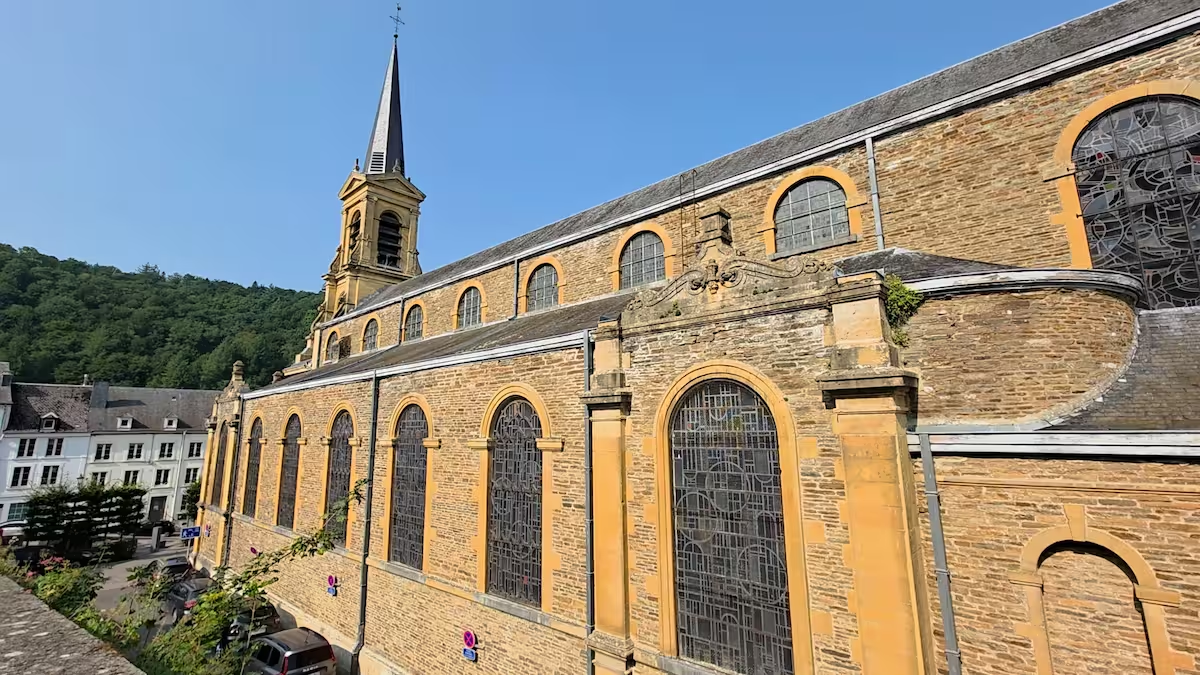
While strolling through the charming streets of Bouillon, past cobbled lanes and traditional façades, you will almost inevitably come across the Saints Peter and Paul Church. Located on Rue des Augustins, this elegant landmark rises with its square tower topped by a slender slate spire, like a silent guardian watching over the town. Its façade, built from a mix of sandstone, schist, limestone, and fine stone brought from France, reflects both strength and refinement. The current church was built in 1848 on the site of the former Augustinian college. Stepping inside, you immediately leave behind the sounds of café terraces and lively streets, entering a space filled with calm and reverence. Soft light filters through the modern stained-glass windows, bathing the three naves in warm colors. The eye is naturally drawn to the rounded choir, an area that invites contemplation and reflection. As you move forward, you will notice paintings illustrating significant episodes from the Gospel and the life of Jesus. At the entrance, frescoes remind visitors of the importance of Godfrey of Bouillon, the city’s most iconic historical figure. Every detail inside seems to tell a story, whether rooted in religion or local heritage. The finely carved wooden sculptures stand as a testament to the craftsmanship of the 19th century. The majestic organ dominates the space, and one can easily imagine its powerful music resonating through the church during services. Among the more recent additions, a statue of Saint Eloi, installed in 2017, draws attention. It replaced the previous one but continues to serve the same purpose — to watch over the faithful and the town. What struck me most was the sense of serenity. Even in the bustling heart of Bouillon, this church feels like a sanctuary, a place where time seems to slow down. Visitors linger here, whether to admire the stained glass, study the frescoes, or simply enjoy a peaceful moment. For me, Saints Peter and Paul Church is not just a historic building — it’s the soul of Bouillon. It embodies a unique blend of spirituality, heritage, and timeless beauty that makes the town so special. Visiting it feels like stepping into history while being embraced by an atmosphere of gentle tranquility. Saints Peter and Paul ChurchRue des Augustins 12,6830 Bouillon,Belgium
The Belvedere of Bouillon – A Breathtaking View Over the Ardennes
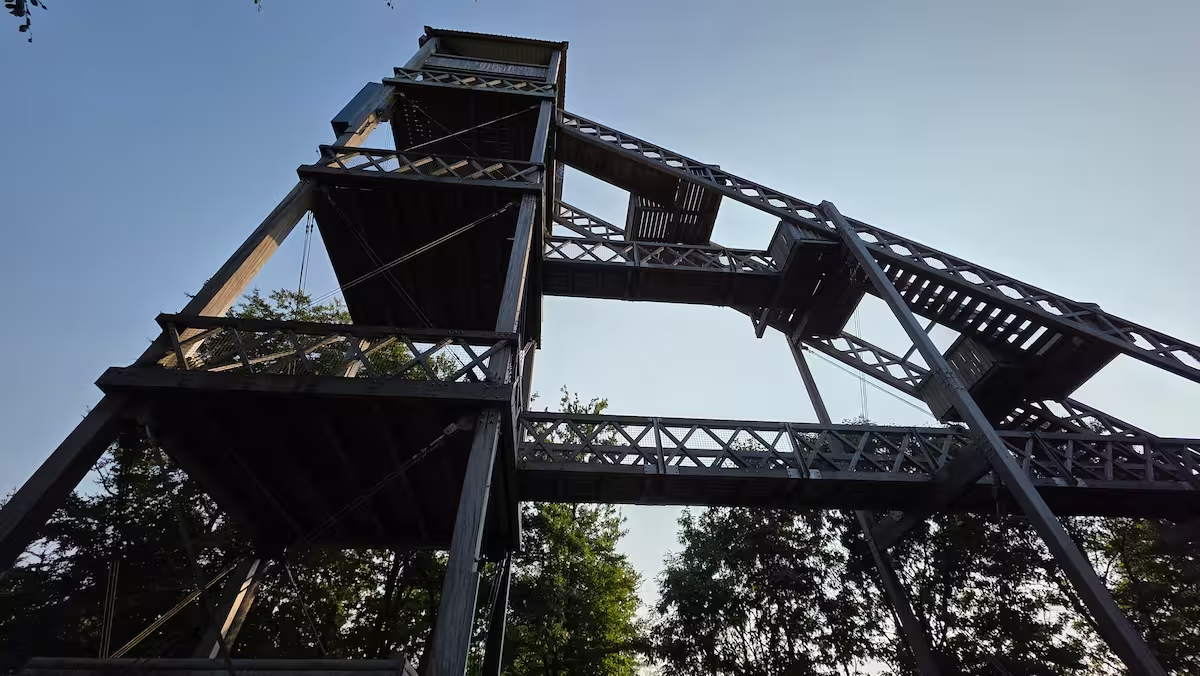
As an ambassador for the Ardennes and Wallonia, I feel it would be impossible — even unthinkable — not to talk about one of Bouillon’s most remarkable attractions: the Belvedere of Bouillon. This stunning vantage point is far more than just a viewing platform; it is a place where nature and history meet, offering visitors an unforgettable perspective over one of Belgium’s most picturesque towns. Perched high above the winding curves of the Semois River, the Belvedere rewards those who make the journey with a panoramic view that stretches over the dense forests, rolling hills, and the medieval heart of Bouillon itself. From here, the majestic Bouillon Castle rises proudly above the town, a reminder of the city’s strategic importance through the centuries. For lovers of hiking and nature, this is not just a stop — it’s an essential part of the Bouillon experience. Reaching the Belvedere can be part of a scenic walk through the Ardennes woodlands, where the air is fresh, the birdsong is constant, and every step brings you closer to an awe-inspiring view. In autumn, the landscape becomes a patchwork of gold, red, and amber; in spring and summer, the greenery bursts with life. The structure itself is a steel tower rising 30 meters high, allowing you to climb above the treetops for an even more spectacular panorama. From the top platform, the Semois appears like a silver ribbon weaving through the valley, framed by the natural beauty that has made the Ardennes famous. It’s a perfect spot for photography, contemplation, or simply soaking in the vastness of the landscape. Whether you arrive by car, bike, or on foot, the Belvedere offers a moment of pause — a chance to step back from the bustle of travel and immerse yourself in the timeless beauty of the Ardennes. It’s a reminder that Wallonia’s charm lies not only in its historic towns and cultural heritage but also in its unspoiled nature. If you are visiting Bouillon, make sure this is on your itinerary. The Belvedere is more than just a view — it’s an experience, a breath of fresh air, and a celebration of everything that makes the Ardennes so special. Practical Details Address Belvédère of BouillonRue de la Bichetour,6830 Bouillon, Belgium Situated on the right bank of the Semois River, this observation tower stands over 30 meters tall, reaching an elevation of approximately 385 meters above sea level—and about 180 meters above the river. Opening Hours The viewpoint is open 24 hours a day, every day . (Note: Access may require climbing; plan accordingly.) Highlights & Access Accessible by car or via scenic forest hikes, the Belvédère offers a rewarding view of Bouillon and the surrounding Ardennes. Climbing 161 steps leads you to the upper platform with striking 360° panoramas that encompass the town, the castle, and the river valley. Historically, this elevated position served as a visual relay for the castle’s defenses, part of a system of sightlines used for communication over distances
La Mère Champlain – My First Seafood Experience in Cancale
During my trip to Cancale, I had the pleasure of dining at La Mère Champlain, a restaurant renowned for its fresh seafood and charming coastal atmosphere. To be honest, it was the first time in my life that I had ever eaten seafood, and I wasn’t quite sure what to expect. From the moment I stepped in, I was impressed by the warm welcome and the elegant yet cozy décor. As I sat down and looked at the menu, I couldn’t help but feel both excited and curious. When my plate arrived, I was truly amazed. The seafood was beautifully presented, and I was pleasantly surprised by the flavors—I had no idea seafood could taste so fresh and so delicious! One thing that really caught my attention was how well the restaurant keeps its seafood fresh. I discovered that the shellfish and other seafood are carefully stored in water, ensuring they retain their natural flavor and quality. This attention to detail truly elevates the dining experience and reassures diners about the freshness of what they are eating. From oysters to clams and a variety of other seafood dishes, every bite was a delightful surprise. The chefs’ expertise and the quality of the ingredients made this first seafood experience unforgettable. I left the restaurant not only satisfied but also eager to explore more of Cancale’s famous seafood offerings. Visitor Tips / Practical Information: Dining at La Mère Champlain was a delightful introduction to the world of seafood, and it’s a must-visit for anyone exploring Cancale.
The Grund and Neumünster Abbey: History, Silence, and New Life in the Heart of Luxembourg
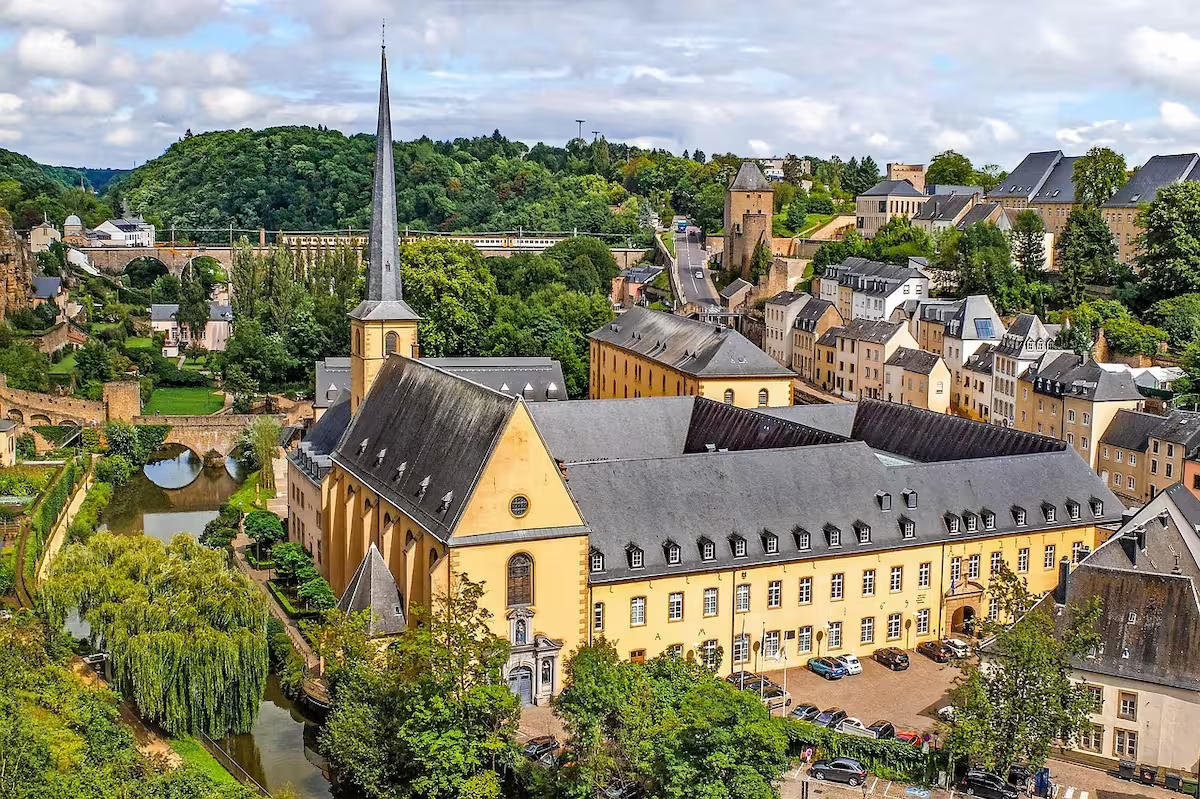
Some places seem frozen in time, and the Grund district in Luxembourg City is one of them. Just a short ride down the free panoramic elevator from the upper town, and you’re suddenly walking through cobbled alleys, colorful houses, and along the peaceful Alzette River. It feels like stepping into a hidden village — quiet, charming, and full of stories. That day, we let ourselves wander with no particular plan. The kids loved it — running across little bridges, watching ducks by the river, and discovering a slower rhythm of the city. Everything invites you to slow down and look around. In the heart of the Grund stands the impressive Neumünster Abbey. Today, it’s a peaceful cultural center. But it wasn’t always like this. Originally founded by Benedictine monks in the 10th century, the abbey has had a turbulent past. It was used as a prison all the way until 1985, which makes it even more striking to walk through its beautiful courtyard today, where exhibitions and concerts now take place. That contrast between darkness and rebirth gives the place a powerful energy. Today, Neumünster is alive with creativity. You can visit freely, admire art installations, or just sit and enjoy the quiet vibe. But what’s even more fascinating is how this neighborhood also once held a glove-making factory — a piece of Luxembourg’s forgotten working-class history that reminds us how much life has passed through these streets. Walking through the Grund isn’t just sightseeing. It’s a quiet immersion in centuries of life, faith, labor, and transformation — and sharing that with our children made the experience even richer. 📍 Practical Tips for Visiting the Grund & Neumünster Abbey Whether you’re looking for peace, architecture, or stories hidden in the stones, the Grund is a magical stop in the heart of Luxembourg. You come for an hour — and stay much longer.
The Immersive Projection at Caen Castle: A Journey Through Time
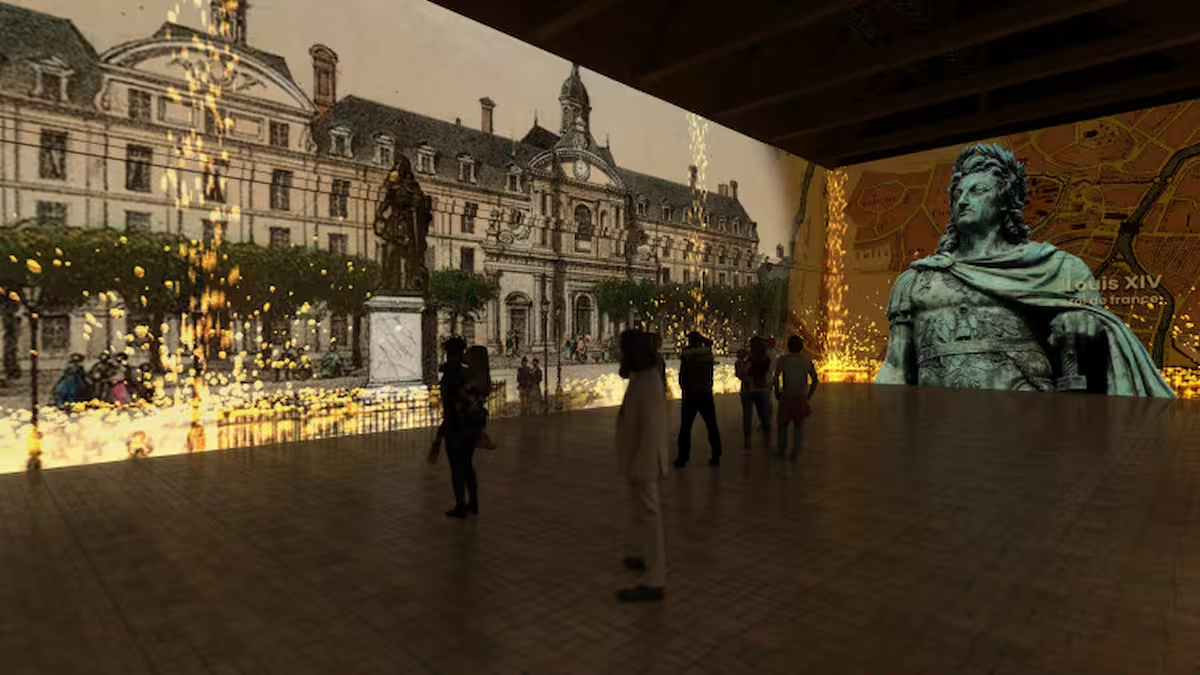
When visiting the historic Château de Caen, one experience stands out as truly unique and unforgettable — the immersive projection inside the castle’s palace. This modern show combines cutting-edge technology with the rich history of Normandy to bring the castle’s story vividly to life, making it a must-see for anyone passing through Caen. As you step into the dimly lit hall of the palace, the atmosphere immediately shifts. The thick medieval walls, built nearly a thousand years ago by William the Conqueror, become the canvas for a spectacular visual and audio experience. The projection is not just a simple slideshow; it’s an artistic storytelling masterpiece that plunges visitors into the heart of the castle’s past. The narrative begins in the 11th century, with the ambitious William the Conqueror dreaming of building a fortress to secure his power and his future conquest of England. Through dynamic animations and immersive soundscapes, you watch the castle rise stone by stone, hear the sounds of hammering and construction, and sense the tension and drama of medieval life. The show takes you on a journey through the centuries, exploring the castle’s evolution from a ducal residence to a military stronghold, witnessing key historical moments and battles, including its role during World War II. The projection’s use of light and sound transforms the stone walls, making you feel as though you are walking through time itself. What makes this projection so captivating is its ability to engage all your senses. The visual effects are stunning, but the addition of authentic sounds — footsteps echoing on cobblestones, trumpets announcing royal decrees, even the distant rumble of conflict — creates an emotional connection that textbooks and static exhibits can’t match. Visitor Tips for the Projection at Caen Castle Visiting the Caen Castle is already a journey into Normandy’s past, but the immersive projection inside the palace elevates this experience to a new level. It’s a perfect blend of history and technology that makes the stories of William the Conqueror and his fortress come alive in a way you won’t soon forget. If your travels bring you to Caen, don’t miss this opportunity to step back in time and witness the castle’s incredible story unfold before your eyes.