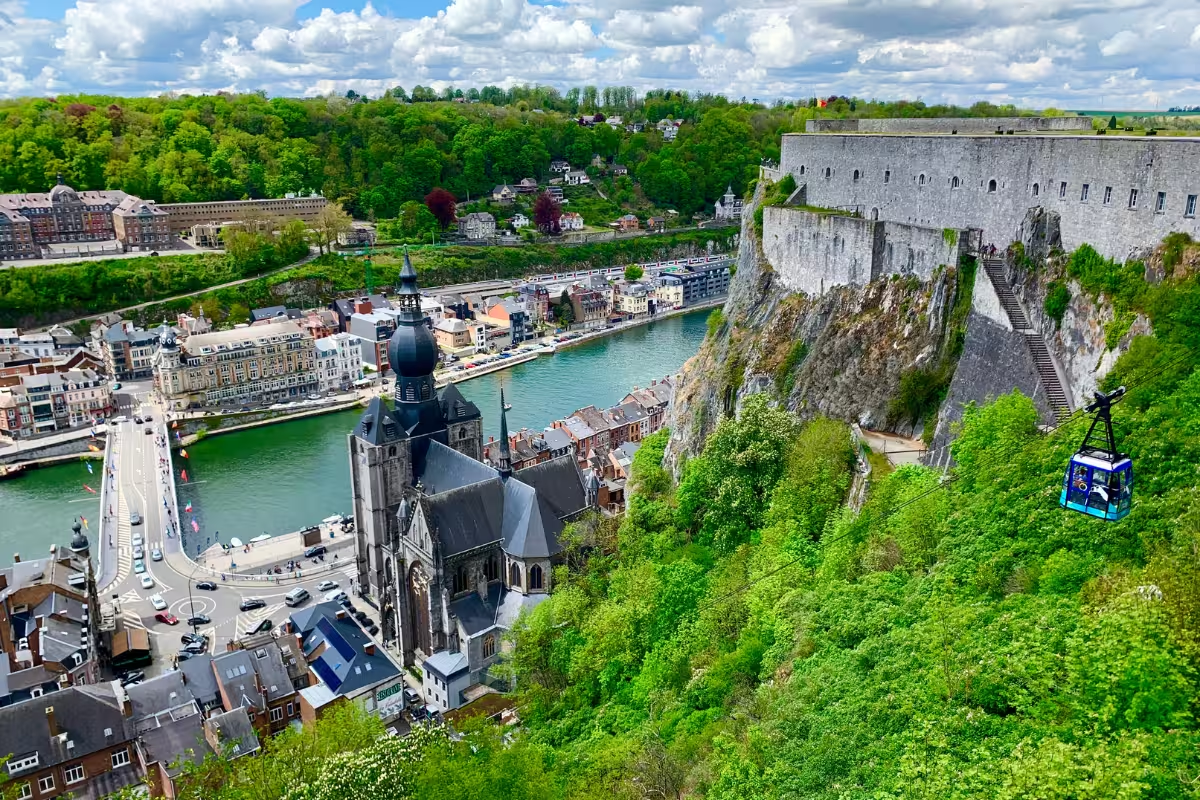
Visiting a fortress perched 100 meters above the Meuse River with a baby? Yes, we did it! And it was absolutely worth it. After parking in the center of Dinant, we chose the easy way up — by cable car. The ride was short but offered stunning views over the rooftops and river. My 8-month-old son, snug in his baby carrier, was fascinated by the movement and the changing landscape. At the top, the Citadel welcomed us with its rich history. Though rebuilt in the 19th century, it stands on medieval foundations. I explored the museum rooms filled with weapons, uniforms, and wartime memorabilia, while my son was more captivated by the light dancing on the stone floors and the echoes in the vaulted corridors. The highlight for me? The panoramic view from the terrace. With the Meuse stretching below, the church towers, and the green cliffs all around — I took a quiet moment, holding my son, letting the breeze and sunlight settle the memory deep. The site is fairly family-friendly. The staff was kind, and we had no trouble navigating with the baby carrier (I’d strongly advise against strollers). There’s also a small café for a snack or bottle break, and plenty of benches with great views. After descending by cable car, we took a slow stroll along the riverbank. Dinant is more than a postcard town — it’s an experience. And the citadel is the crown on top. Tips for Parents:Bring a baby carrier, not a stroller. Use the cable car rather than the stairs. Pack a hat or blanket depending on the season — it can get chilly at the top, even on sunny days. 📍 Visitor Info – Citadel of Dinant
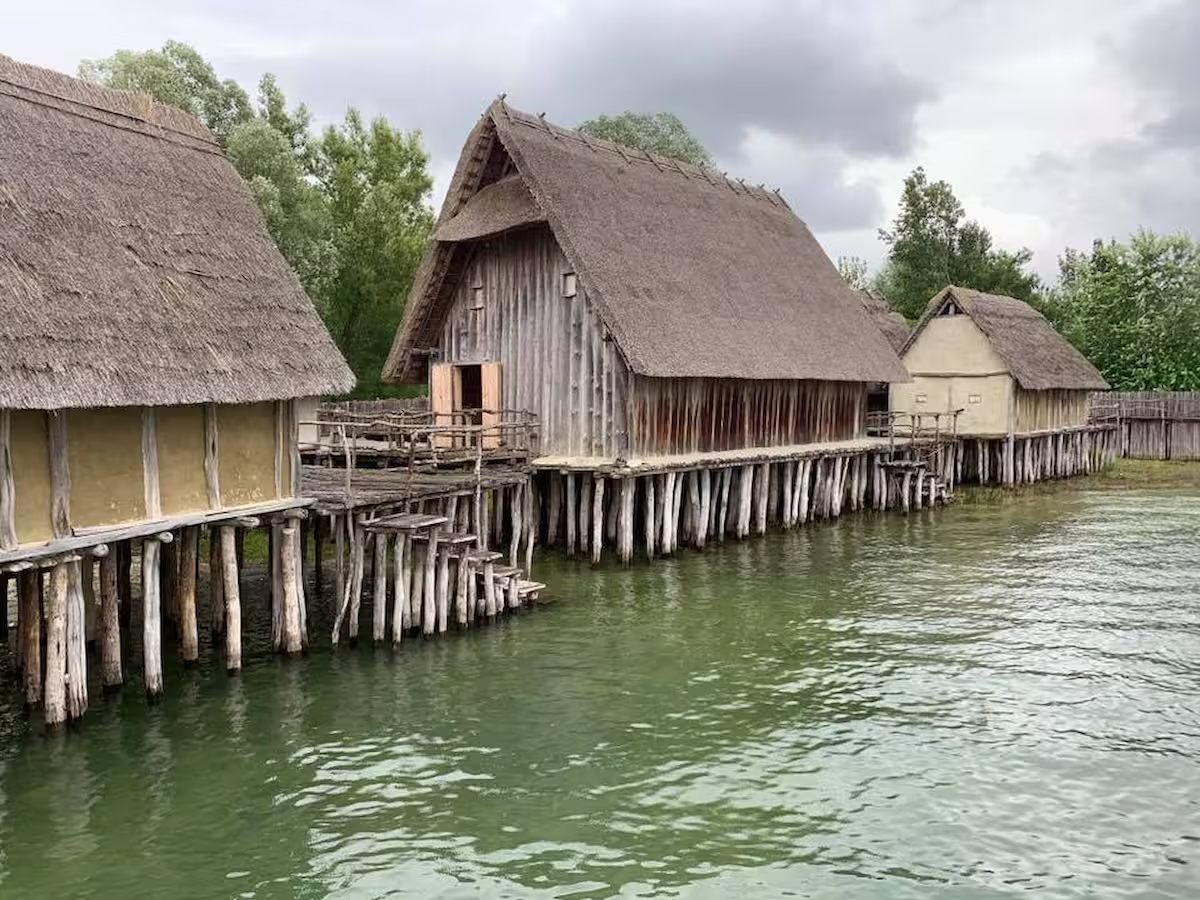
Pfahlbaumuseum Unteruhldingen – Discover Prehistoric Lake Dwellings on Lake Constance
Nestled on the shores of Lake Constance in southern Germany, the Pfahlbaumuseum Unteruhldingen offers a fascinating journey into prehistoric life, transporting visitors back thousands of years to the stilt house settlements of the Stone and Bronze Ages. As Germany’s oldest open-air archaeological museum, it reconstructs the daily life of prehistoric communities from 4000 to 850 BCE, giving a vivid sense of how our ancestors lived in harmony with their environment. The museum features 23 meticulously reconstructed stilt houses spread across six chronological zones, showcasing the evolution of building techniques and human settlement. Walking among the wooden dwellings, visitors can imagine families cooking, crafting, and fishing by the lake, experiencing first-hand how prehistoric people adapted to their surroundings. Each house is accompanied by detailed information, highlighting tools, construction methods, and cultural practices of the time. A standout feature of the museum is the ARCHAEORAMA, a 360-degree multimedia projection that immerses guests in a virtual reconstruction of the original submerged villages. This innovative installation allows visitors to explore underwater remains and understand the archaeological techniques used to uncover and preserve these UNESCO World Heritage sites, recognized for their exceptional cultural significance in the Alpine region. Beyond the stilt houses, the museum offers interactive workshops, educational displays, and live demonstrations of traditional crafts. Visitors can handle replica tools, try their hand at prehistoric construction methods, and learn about ancient techniques in a highly engaging and hands-on way. Seasonal events, from guided tours to family workshops, enhance the experience, making the museum suitable for both casual visitors and serious history enthusiasts. Located at Strandpromenade 6, 88690 Uhldingen-Mühlhofen, the museum is easily accessible by car with nearby parking, or via public transport through Oberuhldingen train station and local bus connections. While the site is mainly outdoors, paths are maintained for comfort, although sturdy shoes are recommended due to uneven terrain. The museum is generally open from March to December, with schedules varying slightly depending on the season, and special summer events taking advantage of the lakeside setting. Visiting the Pfahlbaumuseum Unteruhldingen is not just a step back in time; it is a fully immersive experience that connects visitors with the ingenuity and daily life of prehistoric communities. From exploring stilt houses to marveling at the scenic Lake Constance backdrop, every moment offers a glimpse into a world long past yet vividly brought to life. For anyone interested in archaeology, prehistory, or cultural heritage, this museum provides an unforgettable journey that combines education, adventure, and natural beauty in one remarkable setting.
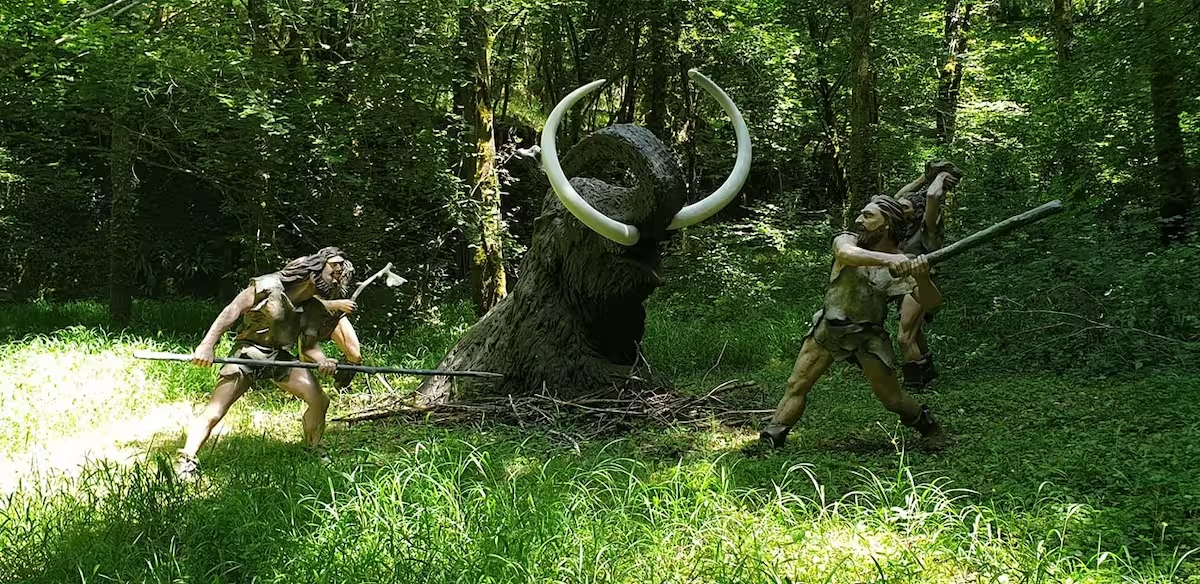
Préhisto Parc: A Journey Through Prehistoric Times in Tursac
Nestled in the heart of the Vézère Valley near the world-renowned prehistoric sites of Les Eyzies and Montignac-Lascaux, Préhisto Parc in Tursac offers a captivating journey into the distant past. As you enter the park, you are immediately transported tens of thousands of years back, to a time when Neanderthals and Cro-Magnon humans walked the forests of Dordogne. This open-air museum spans several hectares of carefully designed trails and exhibits that allow visitors to experience prehistoric life in a vivid and interactive way, combining education with entertainment in a setting that is as beautiful as it is informative. The park’s main attraction is its series of life-sized reconstructions of prehistoric humans and animals, crafted with incredible attention to detail. Walking through the trails, you encounter hunters carrying spears, families gathered around primitive shelters, and realistic scenes of daily life that showcase the ingenuity and resilience of early humans. Alongside these human reconstructions, the park features models of prehistoric fauna, from mammoths and saber-toothed cats to giant deer and other Ice Age creatures, allowing visitors to understand the world in which our ancestors lived. Informational panels accompany each scene, explaining the significance of tools, hunting techniques, and the social structures of early human communities, ensuring that every step through the park is both educational and immersive. One of the unique aspects of Préhisto Parc is its focus on interactive learning, particularly for children and families. The park offers activities such as archaeological digs, prehistoric games, and the Préhisto-Jeux booklet, which encourages young visitors to explore, answer questions, and engage with the exhibits. These hands-on experiences not only make learning fun but also deepen the understanding of prehistoric life, bridging the gap between imagination and science. Adults, too, find themselves fascinated by the detailed reconstructions, the naturalistic settings, and the opportunity to connect with a world that existed long before written history. The natural environment of the park adds another layer of authenticity to the experience. Walking along shaded trails and open clearings, visitors feel as though they are moving through the landscapes that prehistoric humans once inhabited. The forests, streams, and meadows of Tursac provide a fitting backdrop to the scenes of daily life, reinforcing the connection between humans and their environment in the distant past. The park’s layout encourages leisurely exploration, with pauses along the way to admire the craftsmanship of the models, observe educational displays, and imagine the rhythms of prehistoric existence. Visiting Préhisto Parc is not only a journey through time but also an invitation to reflect on the ingenuity and adaptability of our ancestors. From the tools they created to the communities they built, from their interactions with now-extinct animals to their mastery of fire and shelter, every exhibit tells a story of survival, creativity, and human curiosity. The park captures the imagination of all who visit, making it an unforgettable destination for families, school groups, and anyone with an interest in history, archaeology, or the natural world. Whether you arrive on a sunny summer morning or a crisp autumn afternoon, Préhisto Parc provides a full day of discovery, wonder, and learning. With its combination of realistic reconstructions, interactive activities, and beautiful surroundings in the Dordogne, it offers an experience that is both educational and deeply engaging, leaving visitors with a lasting appreciation for the rich tapestry of life that existed long before our modern world. 🛍️ Visitor Information Opening Hours: Address: La Faure Reignac, 24620 Tursac, Dordogne, France Contact: Admission Fees: Facilities: 🌿 Tips for Visitors
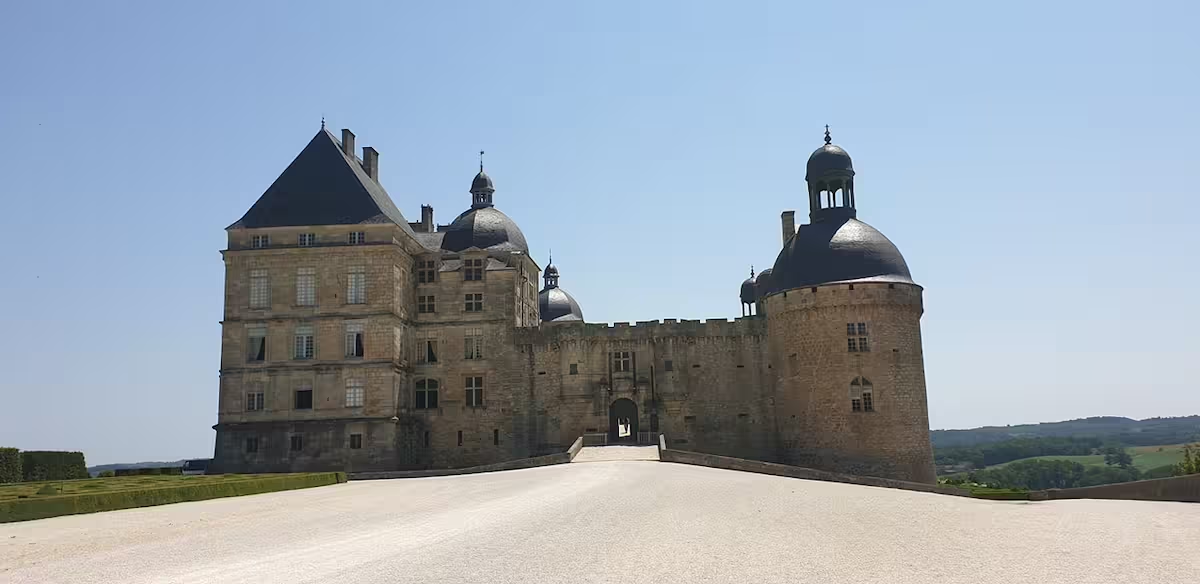
Hautefort Castle: A Majestic Journey Through French History and Elegance
Rising proudly above the verdant hills of the Dordogne, the Hautefort Castle is one of the most majestic castles in southwest France, a place where medieval strength meets classical refinement. Originally built as a fortress in the Middle Ages, the château was transformed in the 17th century into a grand residence that reflects the elegance and sophistication of the period, making it stand out as a unique jewel in the Périgord Noir. Its harmonious blend of defensive architecture and stately design has made Hautefort not only a historical landmark but also a symbol of power, art, and refinement. Approaching the castle, visitors are immediately struck by its commanding silhouette, with round towers, sweeping façades, and elegant lines that dominate the surrounding landscape. The setting itself is spectacular: perched on a rocky spur, the château overlooks the rolling countryside, offering breathtaking views that extend for miles. Inside, the château reveals another world, where richly decorated rooms tell the story of noble life through centuries. Antique furniture, tapestries, and portraits recreate the atmosphere of aristocratic grandeur, transporting visitors back to a time when Hautefort was a center of influence and refinement. But the charm of Hautefort is not confined to its architecture alone. The gardens and landscaped grounds are equally enchanting, designed in the 19th century and maintained with great care. French-style parterres unfold in perfect symmetry, while terraces, topiaries, and flowerbeds frame the château with a natural elegance that enhances its beauty. Walking through these gardens, one can feel both the meticulous artistry of garden design and the serenity of the countryside. In spring and summer, the vibrant colors of the flowers add a touch of poetry to the already breathtaking scenery, making the château as much a delight for nature lovers as for history enthusiasts. The castle history is as rich as its appearance. Originally built in the 12th century, it was a medieval fortress belonging to the de Born family, closely tied to the famous troubadour Bertran de Born, known for his poetry and political influence during the turbulent years of the Plantagenets. Later, during the 17th century, the fortress was transformed into a residence that reflected the tastes of the French nobility, with large windows, grand halls, and elegant ornamentation replacing the austere military structures. This transformation turned Hautefort into a place of beauty and comfort without erasing the traces of its fortified past, creating the unique blend that fascinates visitors today. Beyond its historical and architectural value, the Hautefort Castle has also played a role in culture and cinema. Its grand façades and perfectly preserved interiors have provided the backdrop for numerous films and television productions, adding a touch of cinematic glamour to its reputation. Yet despite its fame, the castle remains a welcoming site, open to visitors who wish to explore its treasures at their own pace. A visit to Hautefort is not just a tour of rooms and gardens; it is an experience that awakens the imagination. The echoes of medieval battles, the elegance of classical salons, and the peaceful charm of the gardens all come together to create a journey through time. Whether you are fascinated by history, enchanted by architecture, or simply seeking a beautiful place to explore in the Dordogne, the Hautefort Castle offers an unforgettable encounter with French heritage. Standing proudly above the valley, it continues to embody the grandeur of the past while inviting each visitor to pause, admire, and be inspired by its timeless beauty. 📍 Practical Information Address:Château de HautefortLe Bourg, 24390 Hautefort, Dordogne, France📍 GPS: 45.2561° N, 1.1325° E📞 Phone: +33 (0)5 53 50 51 23🌐 Website: chateau-hautefort.com Parking & Access: Visitor Tips:
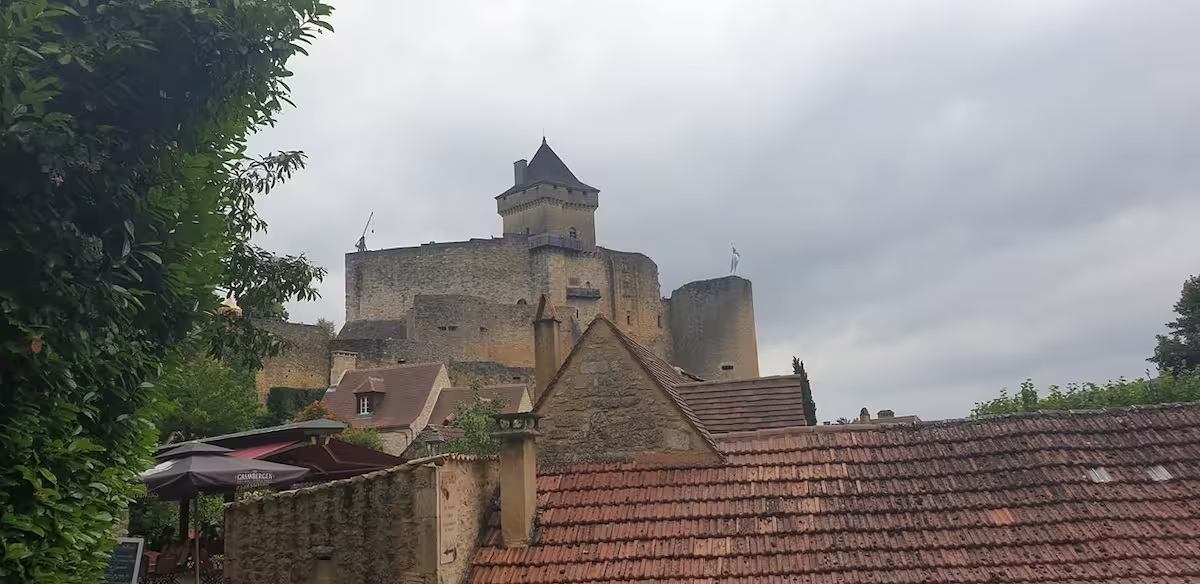
Castelnaud-la-Chapelle Castle: A Medieval Fortress Overlooking the Dordogne Valley
Dominating the valley of the Dordogne from the top of a steep rocky spur, the Castelnaud-la-Chapelle Castle is one of the most impressive fortresses in southwestern France. Built in the 12th century, it was a strategic stronghold during the Hundred Years’ War, a turbulent period when the region shifted repeatedly between French and English control. Throughout these centuries of conflict, Castelnaud stood as a powerful symbol of defense and authority, watching over the surrounding lands and rivers with its imposing towers and battlements. Today, fully restored and beautifully maintained, the castle is one of the most visited monuments in the Périgord Noir, admired not only for its medieval architecture but also for the extraordinary museum it houses within its walls. Walking up the narrow streets of the village of Castelnaud-la-Chapelle, which nestles at the foot of the fortress, the first view of the castle is striking. Its massive keep rises above terraced roofs and lush hills, commanding the landscape and offering spectacular views over the Dordogne valley and its neighboring castles, such as Beynac, often seen as its historic rival. Once inside the fortified gates, the visitor is immediately transported into the heart of medieval life. The castle is home to the Museum of Medieval Warfare, an exceptional collection that brings together a wide variety of weapons, armor, and siege machines, all carefully reconstructed based on historical sources. The museum is not confined to glass cases and static displays. As you walk through the castle, you encounter full-scale reproductions of trebuchets, mangonels, and other formidable engines of war installed in the courtyards, demonstrating the ingenuity and terrifying power of medieval military technology. The sight of these machines against the backdrop of the Dordogne landscape evokes the intense struggles that once shook the region. Inside, rooms are arranged with thematic exhibitions: swords and crossbows, chainmail and plate armor, and detailed models of medieval fortifications all help to illustrate the daily life of soldiers and lords. Beyond its military dimension, Castelnaud also offers an insight into seigneurial life. Kitchens, living quarters, and vaulted halls have been restored to reflect the rhythm of a fortress inhabited not only by warriors but also by families, servants, and craftsmen. The great hall, with its vast fireplace, recalls the gatherings and feasts of the lords, while the narrow spiral staircases remind visitors of the defensive needs of a building designed to resist prolonged sieges. The atmosphere is enhanced by multimedia displays and educational programs that make the visit both engaging and accessible to children and adults alike. Climbing up to the highest terraces of the castle, the panorama is breathtaking. From here, you can admire the Dordogne winding through a patchwork of green hills and villages, dotted with other medieval fortresses. This view explains why Castelnaud was such a coveted stronghold: whoever held it controlled the routes of the valley and the fertile lands surrounding it. Today, however, the atmosphere is peaceful, and the castle stands as a cultural beacon, offering both a lesson in history and an unforgettable scenic experience. A visit to the Castelnaud-la-Chapelle Castle is not just an encounter with stones and relics, but a true immersion into the Middle Ages. The fortress combines the grandeur of its architecture, the thrill of its war machines, and the richness of its museum collections with the beauty of one of France’s most picturesque valleys. It is a place where the echoes of battle have given way to discovery, learning, and wonder, making it an unmissable destination for anyone exploring the Dordogne and the treasures of the Périgord Noir. 🏰 Address of Château de Castelnaud-la-Chapelle Château de Castelnaud (Museum of Medieval Warfare)24250 Castelnaud-la-Chapelle, Dordogne, France📍 GPS: 44°48′57.4″N, 1°8′54.5″E📞 Phone: +33 (0)5 53 31 30 00🌐 Website: castelnaud.com 🚗 Parking & Access ✔️ Visitor Tips
Puymartin Castle: A Timeless Fairytale Fortress in Dordogne
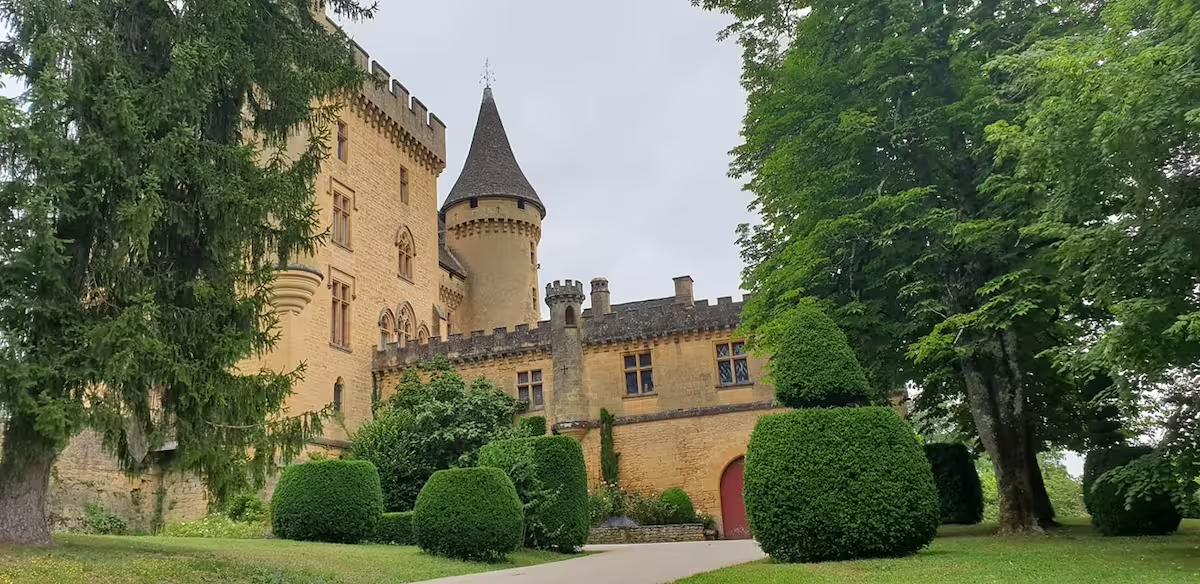
Puymartin Castle, nestled on a wooded hilltop near Sarlat in the Dordogne, is one of those rare places where history, legend, and architectural beauty blend seamlessly. From the moment I approached the gatehouse and winding ramparts, I felt transported to another era — an era of knights, aristocratic intrigue, and moonlit whispers. Originally built in the 13th century, Puymartin endured conflict, damage, neglect, and renaissance. In 1357 it fell under English occupation, then was reclaimed by local consuls before being abandoned. In the mid-15th century Radulphe de Saint-Clar undertook major reconstruction, giving the castle new life. As centuries passed, the castle witnessed the Wars of Religion — Raymond de Saint-Clar, known as Captain of Puymartin, played a part in driving Protestant forces from the region. In the 19th century, under the Marquis de Carbonnier de Marzac, Puymartin was restored with neo-Gothic influences, recreating its romantic silhouette. Walking through the castle today is a delight. The stone walls, arrow slits, dry moat, and spiral staircases evoke the castle’s defensive purpose, while inside, the décor reveals a more genteel past. Rooms display tapestries (including fine Aubusson pieces), elegant wood panelling, impressive painted ceilings with trompe-l’oeil effects, and a rare studiolo decorated in grisaille on wood panels depicting mythological scenes such as Bellerophon, Perseus, Memnon and others. One of the most captivating stories tied to Puymartin is the legend of the White Lady. According to tradition, Thérèse de Saint-Clar was discovered in an affair by her husband and, as punishment, confined in a small tower chamber for the last 16 years of her life, ultimately dying there. Her husband reputedly had her body bricked up. Many visitors claim to sense her presence on the spiral stairway, the ramparts, or in the corridors after dusk — her figure said to roam in white, sometimes seen at midnight. The tour takes about 1.5 to 2 hours if you take your time, exploring both the interior rooms and the surrounding grounds. For families, the explanatory panels are well done, and there’s the option to join a free guided tour included in the entrance fee. Outside, the gardens and terrace offer lovely views over the wooded valley, and the opportunity to walk around the castle exterior and appreciate its structure from all sides. What I loved about Puymartin is how it feels both intimate and grand: not a huge fortress, but exquisitely maintained and full of character. The transition from its austere medieval defensive architecture to the more comfortable, elegant living spaces tells a story of evolving times. The atmosphere is enhanced by the legends and the thought of past lives — it’s easy to imagine candlelit corridors, secret conversations, and even ghostly whispers. If you’re passing through the Dordogne or staying in Sarlat, Puymartin is absolutely worth a stop. It offers a perfect blend of architecture, history, and mystery, all wrapped in a peaceful landscape. Even if you’re not normally drawn to castles, the combination of views, craftsmanship, and atmosphere make it a memorable experience. Address & Visitor Tips (English) Address:Château de Puymartin24200 Marquay (near Sarlat, Dordogne, France) Getting there & practical tips:
Schloss Nymphenburg: A Bavarian Jewel of Elegance and History
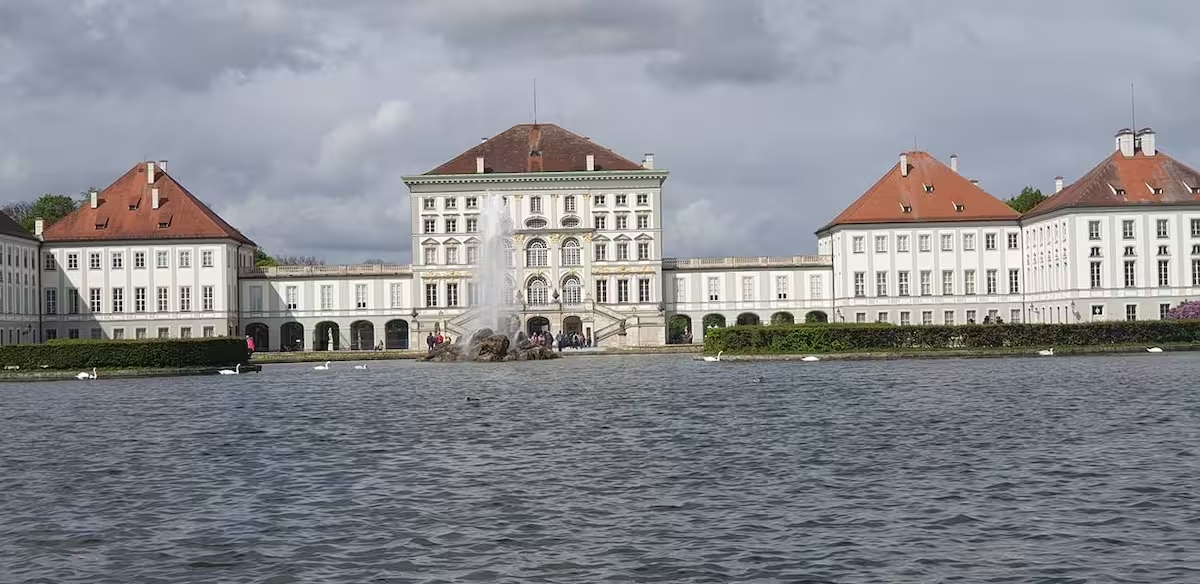
Strolling through the western part of Munich, I found myself drawn to a palace that seems to emerge from a storybook: Schloss Nymphenburg. Its pale yellow façades, crowned with elegant domes and surrounded by sprawling gardens, radiate a quiet grandeur. Unlike the imposing and somewhat austere Munich Residence, Nymphenburg exudes charm, inviting visitors to explore both the beauty of its interiors and the serenity of its park. Built in the 17th century as a summer residence for the Electors of Bavaria, Nymphenburg quickly became more than just a seasonal retreat. It was a symbol of power, taste, and refinement. Walking through its gates, I felt transported back to an era where art, architecture, and nature intertwined perfectly to celebrate the elegance of the Bavarian court. The palace is not a single cohesive structure; it is a series of pavilions, wings, and galleries, each reflecting the tastes of different rulers across centuries. From the Italian Baroque foundations to the Rococo interiors that dazzle with pastel colors and gilded stucco, Nymphenburg feels like a living story of artistic evolution. Every room tells a tale, and every hall reflects the ambitions of the Wittelsbach dynasty, who left an indelible mark on Bavaria. One of the highlights for me was the Marstallmuseum, the former royal stables turned museum. The collection of ceremonial carriages, sleighs, and equestrian equipment is astonishing. Each piece is not only beautifully crafted but also a testament to the ceremonial life of the court, where even transportation was an expression of prestige. Walking among the gilded carriages, I could almost imagine parades through Munich, with horses prancing and bells ringing. Inside the palace, the Gallery of Beauties, commissioned by King Ludwig I, stands out. Portraits of women from various social backgrounds, painted by Joseph Stieler, line the walls, each capturing elegance, charm, and personality. It’s a gallery that goes beyond mere decoration; it offers a glimpse into the human stories and ideals of beauty cherished by the Bavarian court. The palace gardens deserve just as much admiration. Stretching over 490 acres, they are a masterpiece of landscape architecture, combining formal French-style gardens with naturalistic English-style parkland. Walking along the canals, fountains, and tree-lined avenues, I felt a rare sense of calm. Hidden pavilions, small lakes, and carefully sculpted statues create moments of surprise at every turn, making the gardens not just a backdrop but an integral part of the Nymphenburg experience. Visiting Schloss Nymphenburg is also a lesson in historical resilience. While some parts suffered during wars, the palace has been carefully preserved and restored, allowing visitors to experience its original splendor. From the ornate ceilings and lavish rooms to the serene beauty of the park, the palace embodies the elegance and sophistication of Bavaria’s past. Leaving Nymphenburg, what stayed with me was not only its grandeur but its harmony—a perfect balance of architecture, art, and nature. Unlike the more formal city palaces, it feels like a place where people lived, celebrated, and enjoyed the beauty of life. It is a palace that invites exploration, contemplation, and admiration, and a true jewel of Bavarian culture. Visiting Schloss Nymphenburg: Tips and Information
The Munich Residence: A Palace at the Heart of Bavaria
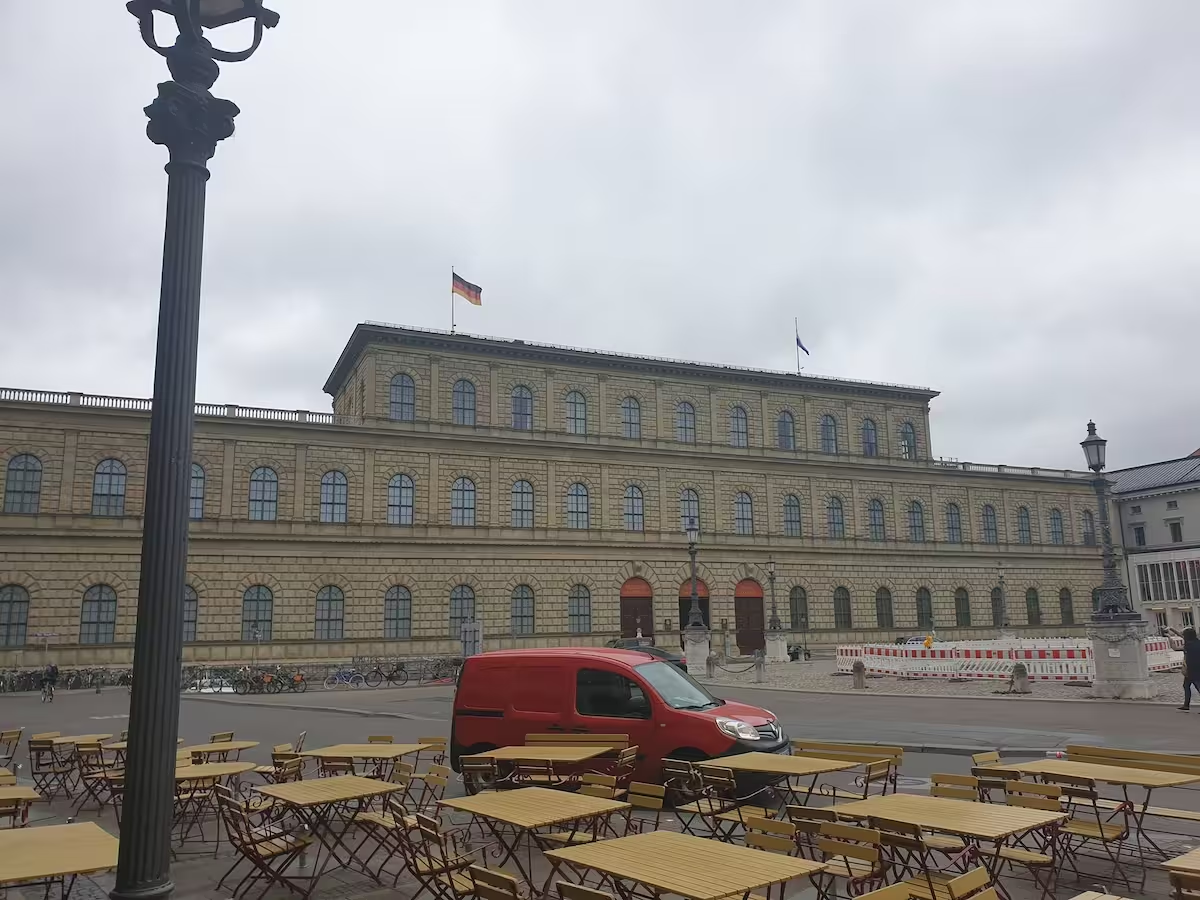
Walking through the center of Munich, I couldn’t miss this immense building with its sober yet imposing façades: the Munich Residence, once the seat of the Dukes, Electors, and later Kings of Bavaria. At first glance, its massive and somewhat austere exterior doesn’t necessarily reveal the wealth hidden behind its walls. Yet, once you pass through the doors, a whole world opens up—a journey through five centuries of history and art, a place where Bavaria has written some of its greatest chapters. The Residence is not a palace frozen in a single style. It is a grand assembly of rooms, courtyards, and galleries built over time, reflecting the tastes and ambitions of each ruler. Here, one finds Italian Renaissance, Baroque splendor, Rococo exuberance, and Neoclassical elegance. Every room is a surprise, giving the impression of walking through a living mosaic of European architectural history. One of the places that impressed me most is the Antiquarium, a huge gallery built in the 16th century to house the Dukes of Bavaria’s collection of antique sculptures. With its painted vaults, frescoes, and aligned busts, it is a hall that impresses with its majesty—a space where ancient art dialogues with the Renaissance. One almost feels tiny walking through this nave, which resembles a cathedral dedicated to culture and knowledge. Then, around a corner, you discover Baroque and Rococo rooms of incredible splendor: gilded decorations, painted ceilings, mirrors, and marble. Each salon seems designed to shine brighter than the previous one, to dazzle visitors and remind them of the power of the Wittelsbach dynasty, which ruled Bavaria for nearly 700 years. Among these jewels, the Cuvilliés Theatre, rebuilt after the war, is a pure Rococo masterpiece, all lace-like carved wood and red velvet—a small marvel that seems straight out of a dream. What makes the Residence fascinating is also its historical role. More than a palace, it was the real political heart of Bavaria, a center of power where major decisions were made. Each ruler left their mark, expanding the palace, adding new wings, and decorating according to the fashions of their era. This richness gives today an impressive ensemble of more than 130 rooms open to the public, an immersion into art and history that seems almost endless. The Treasury of the Residence also deserves attention: jewels, insignia, crowns, and reliquaries recall the wealth and prestige of the House of Wittelsbach. These precious objects perfectly complement the visit to the ceremonial rooms, offering an intimate view of power and its display. Leaving the Residence, what stays in memory is not only the image of a vast and sumptuous palace but that of a living place, which tells as much about dreams of grandeur as about the trials of history. Largely destroyed during World War II, the palace was patiently rebuilt, bringing back to life this masterpiece of European culture. Visiting the Munich Residence is a journey through time, from the splendor of the Renaissance to the elegance of the 19th century. It allows one to understand how Bavaria established itself at the heart of Europe, and above all, to feel the power and fragility of human heritage. It is a visit that dazzles, enriches, and leaves a lasting impression. Visitor Information
Versailles Palace: Splendor, Power, and the Memory of History
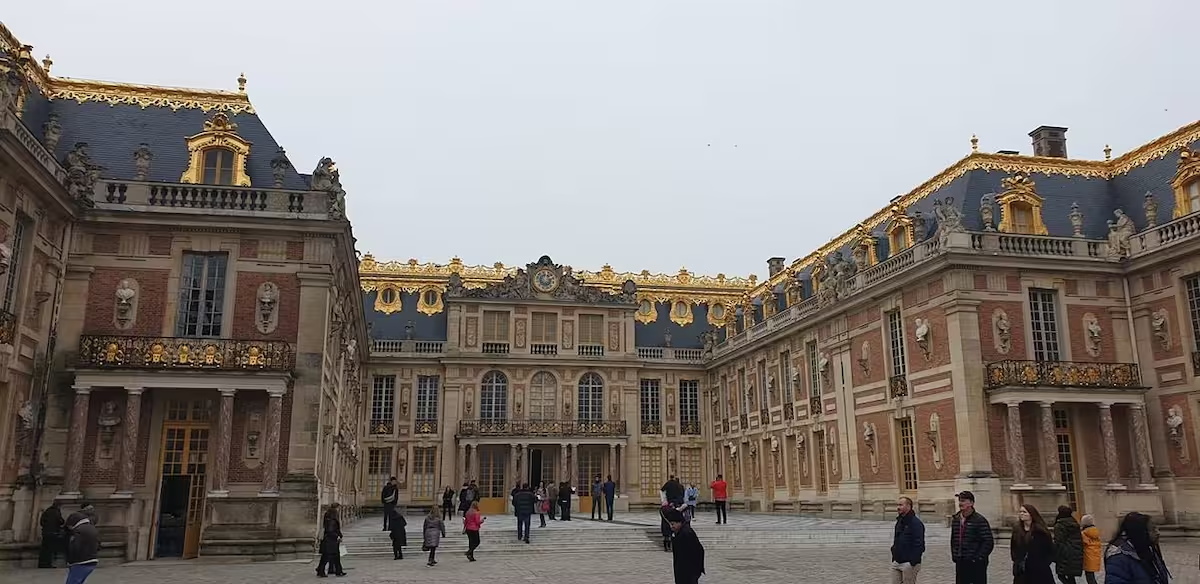
The Palace of Versailles is not just a visit—it is an experience. From the very moment you pass through its gilded gates and see the golden rooftops shimmering in the distance, you realize that you are about to step into another world. A world where architecture, art, and politics were fused together to serve one man’s vision: the Sun King, Louis XIV. What strikes you first, standing in the main courtyard, is the theatrical aspect of the place. The façades, with their red bricks, light-colored stone, statues, and golden balconies, are like a stage set designed to impress. And that is exactly what Versailles was meant to be: a stage for power, where every detail reminded courtiers and visitors that the king was at the center of everything. Inside, each room adds to this story. The State Apartments, richly decorated with marble, paintings, and mythological references, glorify the king as if he were a god. And then, there is the Hall of Mirrors. Stepping into this legendary gallery is like entering another dimension: 73 meters long, lined with 357 mirrors, and opening onto the gardens, it was created to dazzle. Here, the greatest ceremonies of the monarchy unfolded—royal receptions, extravagant balls, and key diplomatic encounters. History echoed here too: in 1919, the Treaty of Versailles was signed in this very room, ending World War I. And yet, the palace is only half the story. Once outside, the gardens designed by André Le Nôtre stretch endlessly, turning nature itself into an instrument of power. Straight alleys, majestic fountains, and hidden groves form a masterpiece of symmetry and control. To walk there is to step into a vision of harmony where even nature bowed to the will of the king. Beyond the grand perspectives, you reach the estate of Marie Antoinette, with the Petit Trianon and her charming Hamlet. These more intimate spaces remind us that behind the rituals and the grandeur, there were human beings who longed for simplicity and escape. Here, away from the rigid etiquette of the court, the queen sought refuge in a pastoral setting that contrasted so strongly with the splendor of Versailles. Versailles dazzles, but it also makes you reflect. Its beauty and magnificence are undeniable, but so too is the sense of excess. The palace symbolizes the height of French absolutism, but also the fragility of a system that, through its extravagance, paved the way for its own downfall. Leaving Versailles, I felt that I had not only visited one of the most beautiful palaces in the world, but also walked through history itself. The Palace of Versailles is more than a monument—it is a universal symbol of ambition, grandeur, and the complex legacy of the monarchy. 📍 Address & Visitor Information Palace of VersaillesPlace d’Armes78000 VersaillesFrance Visitor Tips:
Rivau Castle: A Fairytale in the Heart of Touraine
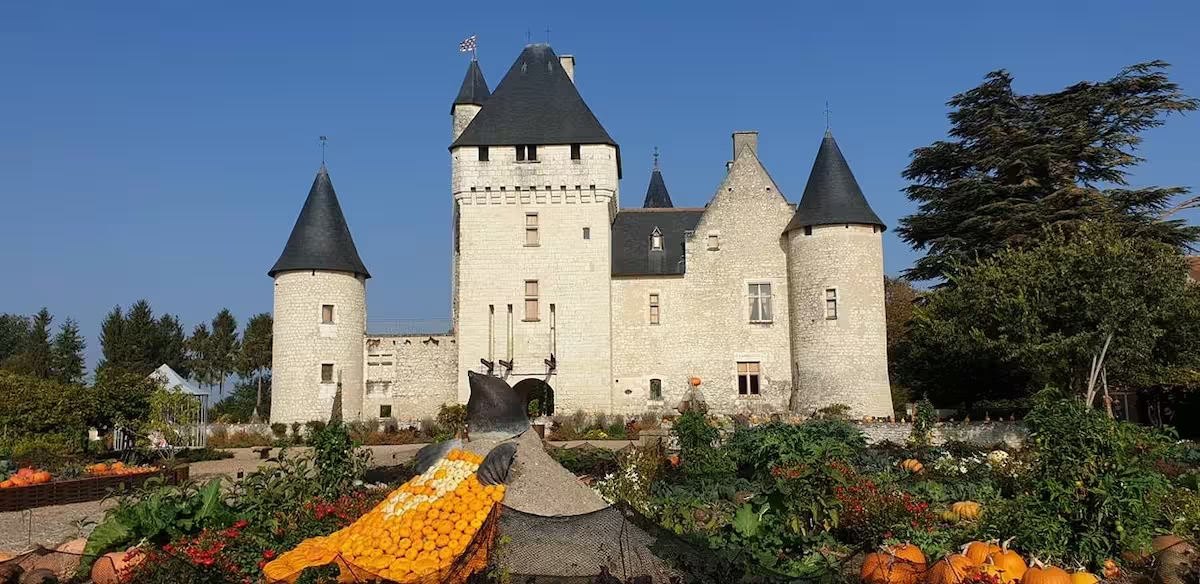
Arriving at Rivau Castle, I immediately felt as though I had stepped into a fairytale. Nestled in the peaceful countryside of Touraine, this castle does not overwhelm with the majesty of Chambord or the historical weight of Langeais. Instead, it possesses a unique atmosphere—enchanting, poetic, and almost dreamlike. With its tall towers, moats, and vibrant gardens, Rivau invites you not only to admire but to imagine, to dream, and to rediscover a childlike sense of wonder. Built in the 15th century, Rivau began as a medieval fortress but gradually transformed into a graceful residence. Its history is inseparably linked to Joan of Arc, who came here to requisition horses for her army. Walking across the cobbled courtyard, I couldn’t help but picture the scene: the sound of hooves, the clanking of armor, and Joan herself—determined, courageous, and larger than life—passing through the castle gates. That connection to one of France’s most legendary figures gives Rivau an aura of timeless significance. What makes Rivau truly unforgettable, however, are its gardens. Twelve themed gardens surround the castle, each inspired by myths, legends, and fairy tales. From the Snow White Garden to Gargantua’s Vegetable Patch, from the Unicorn’s Labyrinth to the Secret Garden, each space tells a story through colors, scents, and playful details. Strolling among them, I felt transported into a world where nature and imagination intertwine—a place where flowers bloom like characters, and where every corner offers a surprise. Inside the castle, the atmosphere is warm and full of life. The rooms are furnished to evoke daily life in the past, but what struck me most was Rivau’s unique ability to combine heritage with creativity. Contemporary art installations are displayed throughout the historic halls, creating a striking dialogue between centuries. Seeing a modern artwork framed by Gothic arches or a bold installation sharing space with an ancestral portrait felt refreshing and inspiring. This blend of history, nature, and art makes Rivau Castle unlike any other. It doesn’t seek to impress with grandeur or power; instead, it charms and enchants. It is a place that tells stories, sparks the imagination, and offers both adults and children a journey beyond time. Leaving Rivau, I felt I had experienced not just a castle, but a living fairytale—one that reminds us that heritage is not only about battles and stone walls, but also about dreams, creativity, and the emotions they awaken. 📍 Address & Visitor Information Rivau CastleChâteau du Rivau9 Rue du Château37120 LémeréFrance Visitor Tips: