

In the vibrant city of Esch-sur-Alzette, known for its industrial heritage and cultural revival, there’s a place where nature still rules and families can slow down, reconnect, and escape the urban hustle. Nestled on the Gaalgebierg hill, just minutes away from the city center, you’ll find the Déierepark, a charming animal park that invites visitors of all ages to enjoy a breath of fresh air – completely free of charge. As you enter the park, you’ll quickly forget you’re in Luxembourg’s second-largest city. Surrounded by lush greenery, winding forest paths, and the sounds of wildlife, it feels like stepping into another world. The Déierepark may not be a giant zoo, but that’s precisely what makes it so special. It’s a place designed for peaceful walks, up-close encounters with animals, and quality family time without overwhelming crowds or long distances to cover. Home to over 150 animals from 25 different species, the park offers a delightful variety of friendly residents – deer, goats, rabbits, raccoons, donkeys, and more. Children’s eyes light up as they discover the enclosures along the one-kilometre walking trail. Informational signs in French, German, and Luxembourgish help curious minds learn more about the animals and their environment. And for an extra magical moment, visitors can purchase small food pellets at the entrance to hand-feed some of the animals. But Déierepark is more than just an animal park. It’s an inviting green space that caters to families and visitors looking for relaxation. Two playgrounds provide entertainment for the little ones, while several picnic areas allow you to enjoy lunch outdoors, surrounded by birdsong and rustling leaves. It’s the perfect spot to unwind after exploring the nearby city or enjoying a morning walk in nature. And if you’re looking for something truly unique, the park offers an unforgettable overnight experience with its Escher Bamhaiser – cosy, wooden treehouses perched above the enclosures. Whether you’re seeking an adventurous stay high among the trees or just passing by for coffee at the Bamhauscafé, this place promises memories that will last long after your visit. Accessibility is also a top priority. Reserved parking spots, wheelchair-friendly paths, accessible restrooms, and even a free shuttle bus service, the Gaalgebus, ensure that everyone can enjoy the Déierepark comfortably. In the end, this animal park is more than just a fun family outing. It’s a peaceful retreat, an educational experience, and a hidden gem for locals and tourists alike. Whether you want to escape the daily routine, spend time outdoors with your children, or simply enjoy a walk among animals and nature – the Déierepark of Esch-sur-Alzette is a destination worth discovering, all year round, completely free of charge. Practical Info ☕ Café & lodging: Bamhaus café and three treehouse lodges 📍 Address: 64 rue du Stade, L‑4142 Esch‑sur‑Alzette 🕒 Opening Hours: Daily, 8:00–12:00 & 13:00–20:30 (Sundays: 8:00–12:00 & 14:00–20:30) 💶 Entry: Free 🍽️ Pellets: €1 per packet 🚗 Access: On-site parking, Gaalgebus shuttle, stroller/wheelchair-friendly The main entrance is located near the large Gaalgebierg parking area and the Bamhauscafé. Helpful Tips for Your Visit: ✔ Wear comfortable shoes – The walking trail is short (around 1 km) and easy, but you’ll be strolling through forest paths. ✔ Animal feeding – At the park entrance, you can buy special food pellets to feed some of the animals. Kids love this, but make sure to follow the rules and only use the approved food. ✔ Free entry, open all year round – The park is accessible 24/7, but daytime visits are ideal to see the animals active. ✔ Accessibility – The paths are stroller and wheelchair-friendly, with accessible toilets available on-site. ✔ Playgrounds – If you’re visiting with kids, allow extra time for the two playgrounds located inside the park. ✔ Picnic areas – Bring your own food if you’d like to enjoy lunch surrounded by nature. There are plenty of picnic tables available. ✔ Want a unique experience? Check out the Escher Bamhaiser, cosy treehouses you can visit — or even stay overnight in for a magical adventure. ✔ Parking – Free parking is available right next to the park entrance and the Bamhauscafé. ✔ Free shuttle bus – The Gaalgebus connects the city centre of Esch-sur-Alzette to the park, perfect if you don’t have a car. For a quieter, more peaceful experience, try visiting early in the morning or on weekdays, especially during school holidays or sunny weekends.
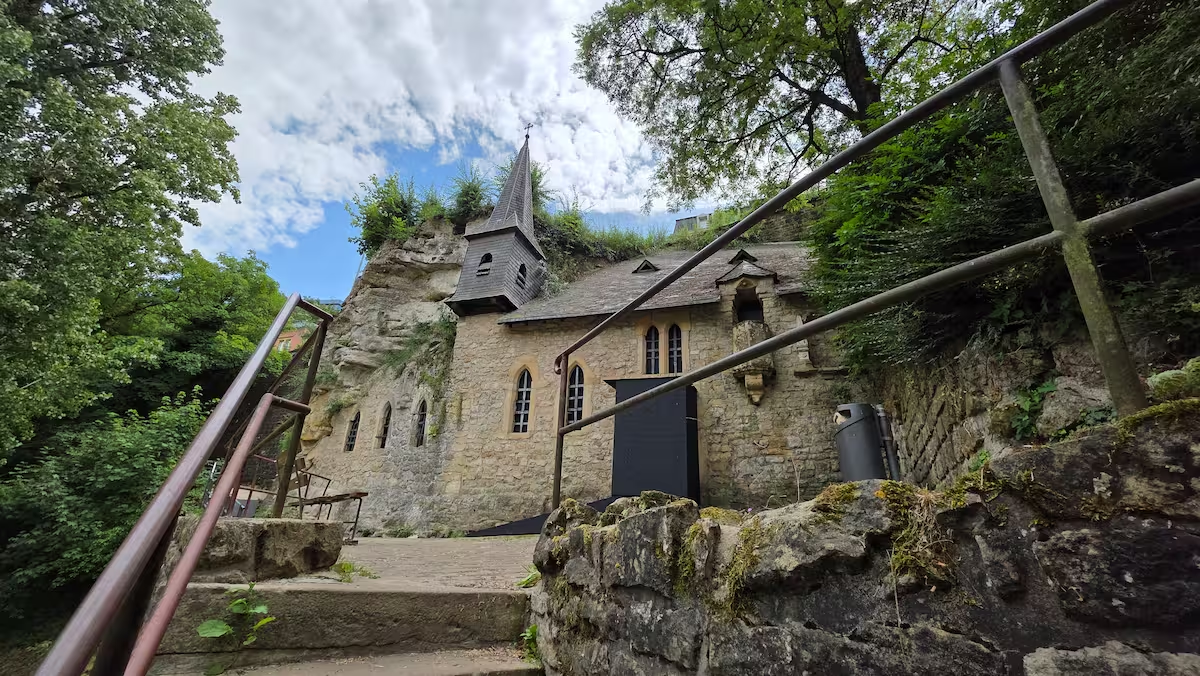
Saint Quirin Chapel – A Hidden Gem in the Pétrusse Valley
When exploring Luxembourg City, most visitors are captivated by the fortress walls, the Casemates, or the impressive historical landmarks. But what I love about this city is that beyond the famous attractions, you can stumble upon secret, lesser-known places that are equally fascinating. And the Saint Quirin Chapel is definitely one of those. Tucked away in the heart of the Pétrusse Valley, just a stone’s throw from the city centre, this small chapel carved directly into the rock is a real hidden treasure for those who enjoy unique spots and forgotten history. A Place Full of History… and Mystery The first time you arrive at the chapel, you feel like you’ve discovered a movie set. It sits there, embedded in the cliff, surrounded by greenery — discreet, yet with undeniable charm. It’s one of the few remaining examples of a troglodyte chapel in the region. While its appearance is impressive, its history is even more so. The site has been a place of worship since at least the Gallo-Roman era. Back then, natural springs and caves were often considered sacred. So, it’s no surprise that a chapel eventually appeared here. The structure we see today dates back to the Middle Ages and is dedicated to Saint Quirin, a Roman martyr from the 3rd century, known for his protective powers against illnesses — especially eye diseases and headaches. The Healing Spring of Saint Quirin One of the chapel’s most curious features is the small spring that seeps from the rock beside it. For centuries, locals believed this water had healing properties. People used to come here hoping the water could cure their ailments or relieve their pain. Is it fact or legend? That’s for you to decide, but this little spring certainly adds an extra layer of mystery to the site. A Quiet Escape in the Middle of the City What I personally love most about Saint Quirin Chapel is its atmosphere. Just a few minutes from the bustling city centre, yet once you’re down in the Pétrusse Valley, it feels like another world. The rock, the greenery, the birdsong, the calm — it’s the perfect spot to pause, reflect, and simply enjoy the moment. It’s ideal for a solo walk, a romantic stroll, or even a family outing. And for those who love walking, the chapel visit fits perfectly into a longer hike through the valley or after exploring the nearby Pétrusse Casemates. How to Get There Access is only by foot. From the Old Town or the Gare (train station) district, simply follow the signs towards the Pétrusse Valley. Small paths and stairs will lead you directly to this hidden gem. The chapel is open and free to visit all year round. Just be cautious on rainy days — the paths can be slippery. My Personal Opinion As someone who loves heritage sites and authentic places, I think Saint Quirin Chapel is a must-see if you want to experience a different, quieter side of Luxembourg. It’s also a great opportunity to share a piece of history with the younger ones or just take a well-deserved break. So, next time you’re in Luxembourg, don’t miss this hidden treasure. Sometimes, the simplest places leave the most lasting memories.
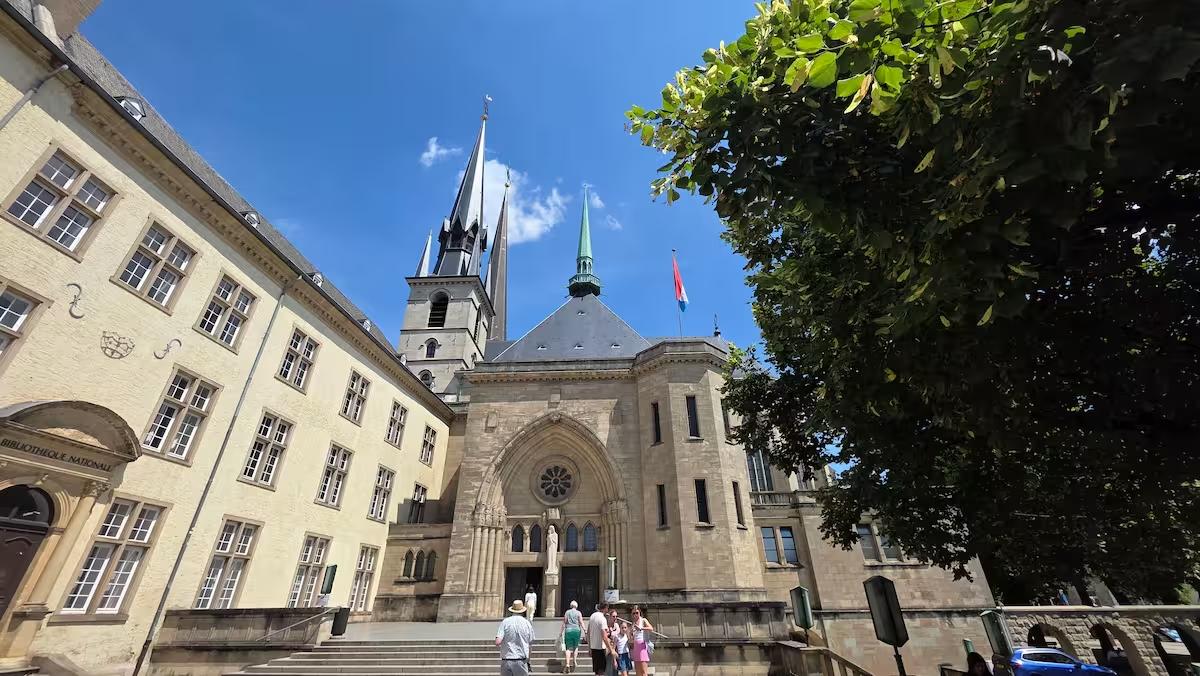
Discovering the Notre-Dame Cathedral of Luxembourg
You don’t need to be religious to step inside a church or cathedral. Sometimes, it’s simply worth it for the architecture alone — because these buildings are often far more exceptional than we might think. And considering that, when they were built, men had ideas and visions that seem unimaginable today… it becomes even more impressive. A Striking First Impression In the heart of Luxembourg City, just a few steps from Place d’Armes, the Notre-Dame Cathedral rises with elegance and grace. Its late Gothic architecture, enhanced by subtle Renaissance touches, makes it stand out. But the true experience begins the moment you step inside. The high vaulted ceilings immediately catch your eye. You feel small in the face of such grandeur — in the best way possible. There’s silence, a soft play of light, and a timeless atmosphere that surrounds you. The stained glass windows cast vibrant colors across the floor and pillars, and suddenly, you’re caught in a moment that feels suspended in time. The Crypt – Where History Sleeps Tucked beneath the cathedral lies its crypt — a peaceful and intimate space where several members of Luxembourg’s Grand Ducal family are buried, including Grand Duchess Charlotte. It’s quiet, solemn, and full of respect. A place that reflects the nation’s heart and memory. The cathedral is more than a religious monument. It’s a symbol of national identity. It has witnessed the country’s evolution and continues to stand as a place of spiritual and cultural unity. The Stained Glass Windows – A Show of Light The stained glass is one of the cathedral’s most memorable features. Some windows date back centuries, while others are more recent, but they all contribute to an ever-changing light show that brings warmth and color into the stone interior. It’s the kind of beauty that makes you pause — even just to watch how sunlight filters through history. Visiting with Children? Absolutely. I visited with my son Kai. Though still very young, he was amazed by the echo of his voice, the giant wooden doors, and especially the colorful windows. The cathedral offers a peaceful, welcoming atmosphere where both adults and children can experience wonder — each in their own way. 🧭 Tips for Visiting Notre-Dame Cathedral
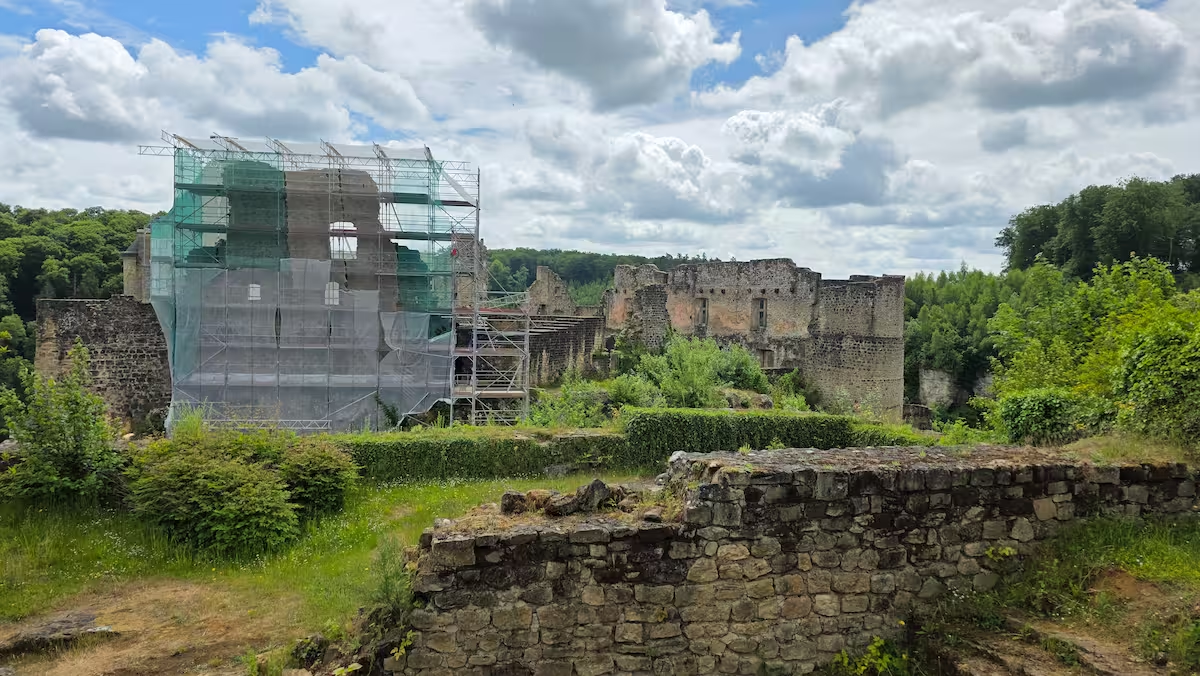
A Medieval Stop in the Müllerthal: Exploring Larochette Castle
As we continued our journey through the Müllerthal, often called Luxembourg’s Little Switzerland, we made a stop at Larochette Castle. It was a peaceful break in a landscape of rolling hills, forests, and charming villages. Standing proudly on a rocky promontory above the White Ernz valley, this castle makes a strong impression from the very first steps. It’s one of those places where history blends into the landscape, and the ruins still tell stories of centuries gone by. I visited with my son, and as usual, he set the pace—running through tall grass, climbing stone stairs, and marveling at ancient archways. Meanwhile, I found myself imagining what life was like here in medieval times. The site dates back to the 11th century and was home to several noble families. What’s interesting is that it’s not just one building—it’s a complex of fortified structures, almost like a small medieval village. One of them, the House of Créhange, has been partially restored and is open to visitors. What I really appreciated was how authentic everything felt. No flashy displays—just the raw stone walls speaking for themselves. The open views over the valley are breathtaking, and it’s easy to see why this spot was so strategically important. The visit doesn’t take hours, but it definitely leaves an impression. You’ll find calm, curiosity, and a strong sense of place. Kids will love the open space and adventure, while adults can enjoy a moment of historical immersion—before continuing on to the next wonders of the Müllerthal. Larochette Castle may not be Luxembourg’s most famous fortress, but it has soul, and you can feel it. A true hidden gem worth discovering if you’re looking for something sincere, quiet, and rich in memory. 📍 Address:Larochette CastleRue du ChâteauL-7612 LarochetteLuxembourg 🎟️ Admission fees:
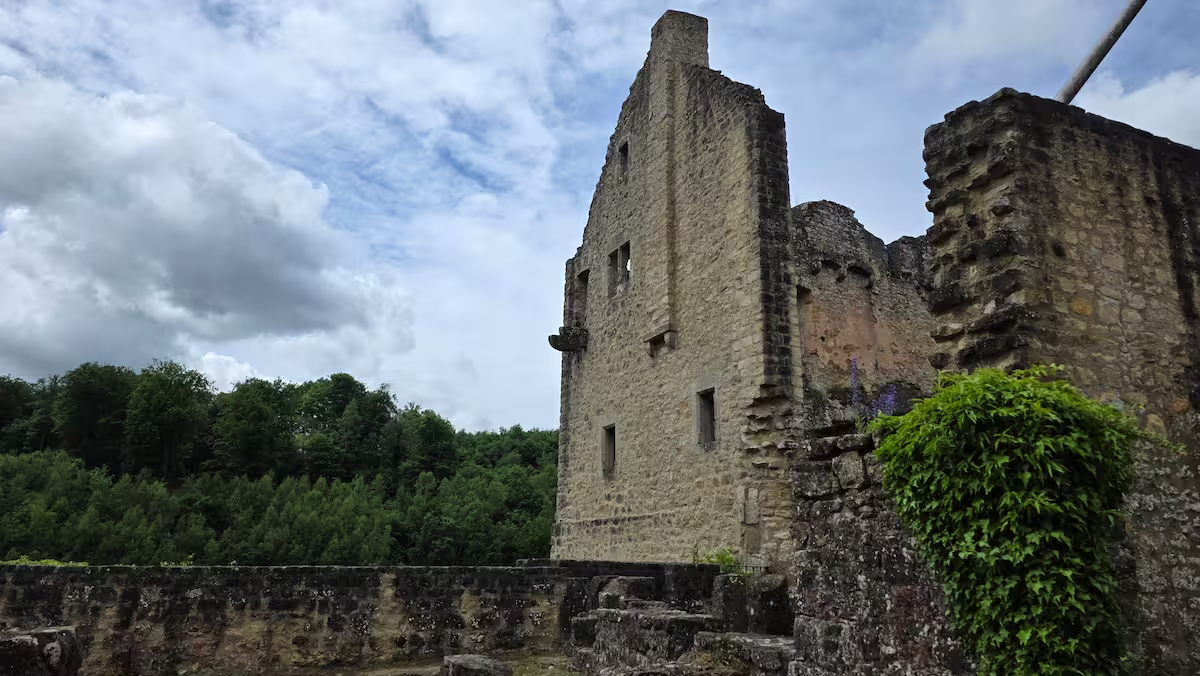
Discovering Larochette Castle – A Family Journey Through Time
That morning, the sky played between sun and clouds, but our plan was clear: we were heading to Larochette Castle. Just the three of us — Daddy, Papa, and our little adventurer Kai — setting out to explore one of Luxembourg’s most picturesque ruins. Right as we arrived, the castle stood tall above the village, perched on a massive rock formation. It’s almost like it’s watching over Larochette — and honestly, it kind of is. This medieval fortress has been here since the 11th century, guarding the valley and holding onto centuries of stories. What strikes you first is the raw charm of the ruins. Unlike castles that are fully restored, this one feels real. The stones are worn, yes, but full of character. We walked up a narrow path surrounded by greenery, and just a few steps in, we were already back in time. Our visit began at the Créhange House — one of the better-preserved parts of the complex. You can still walk through the old rooms, climb the staircases, and enjoy the breathtaking views through medieval windows. As we stood there, Kai asked: “Where did they keep the dragons?” — a perfect reminder that sometimes, imagination tells the best stories. We climbed higher into the site, taking in the stunning views of the forested valley. The higher we went, the more magical it felt. There’s something special about seeing this kind of place with a child — everything becomes an adventure, even the quiet moments. The castle isn’t huge, but it’s full of little surprises. Hidden staircases, narrow stone passages, dramatic overlooks… There are some areas closed for safety, but there’s plenty to see, touch, and imagine. What I loved most is how the castle seems to grow right out of the rock — as if it’s part of nature itself. Even with a young child, it’s a manageable visit. We didn’t rush, we wandered, we explored. And most importantly, we shared the experience. At the end, we sat near the entrance on a wooden bench. Kai munched on a snack while we soaked up one last view of the valley. Larochette Castle isn’t just a destination — it’s a feeling. It’s a quiet, beautiful corner of Luxembourg that invites you to pause and wonder. Practical Info
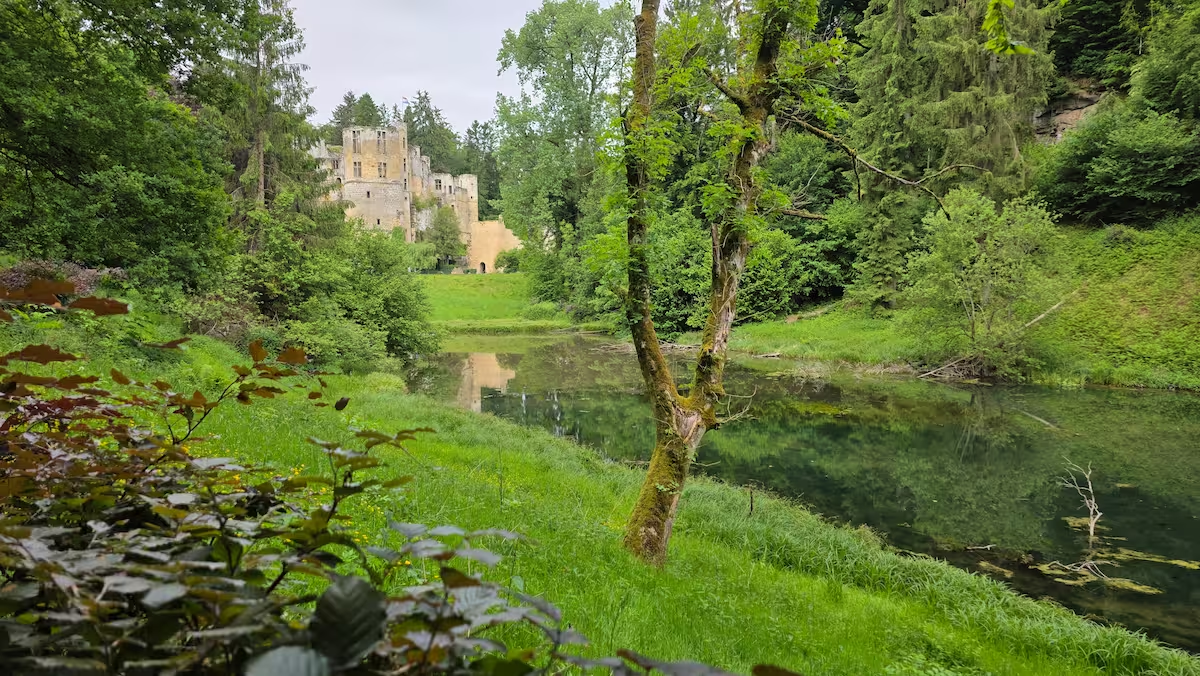
🏰 The Medieval Castle of Beaufort – A Timeless Adventure with My SonMedieval Castle of Beaufort
Some places immediately transport you somewhere else. Places that seem frozen in time, where every stone seems to whisper a forgotten story. That’s exactly how I felt when visiting the medieval ruins of Beaufort Castle, right next to the Renaissance Castle. This time, I had the chance to explore it with my son, who quickly imagined himself in a world of knights and grand adventures. A Stunning Setting Full of History The medieval castle of Beaufort offers a genuine journey back to the origins. While much of the original structure has been lost over time, what remains is enough to ignite the imagination. We stepped inside somewhat timidly, awed by the massive walls, ancient arches, and narrow stone corridors. It’s raw, it’s old, and it’s absolutely fascinating. Built in the 11th century and expanded in the 14th and 17th centuries, the castle’s ruins still tell the story of several centuries of Luxembourg’s past. You can explore the foundations of the keep, the old defense towers, the chapel — of which only a single wall remains — and several floors connected by stone staircases leading to mysterious rooms. What’s amazing is the freedom to wander this stone labyrinth. There are very few signs, letting you explore at your own pace and fully engage your imagination. My son became a knight, explorer, and castle guard all in one hour. This place truly sparks curiosity, play, and learning. And I love that. An Authentic Visit, Without Frills No guided tours or fixed paths here — just freedom. Free to follow the worn steps, climb up for panoramic views of the Luxembourgish forest, or linger at an opening in the wall imagining archers long gone. This freedom is precious. It lets families like mine enjoy the visit without pressure, just pure discovery. You can feel the respect visitors have for the site. People take their time, avoid running, and nature slowly reclaims the stone ruins. It’s a perfect balance between heritage, memory, and peacefulness. A Little Extra at the End Although the distillery is located inside the Renaissance Castle, don’t miss the chance to taste the famous local cassis liqueur called “Cassero” just after the tour. It’s a sweet way to end your visit — but remember, it’s for adults only! 📍 Practical Information Honestly, if you’re in the area, don’t just visit the Renaissance Castle. Take the time to explore the ruins too. It’s a different kind of journey — more raw, more ancient, and equally fascinating. For kids, it’s an incredible experience: no screens, no interactive displays… just stone, stories, and plenty of imagination.
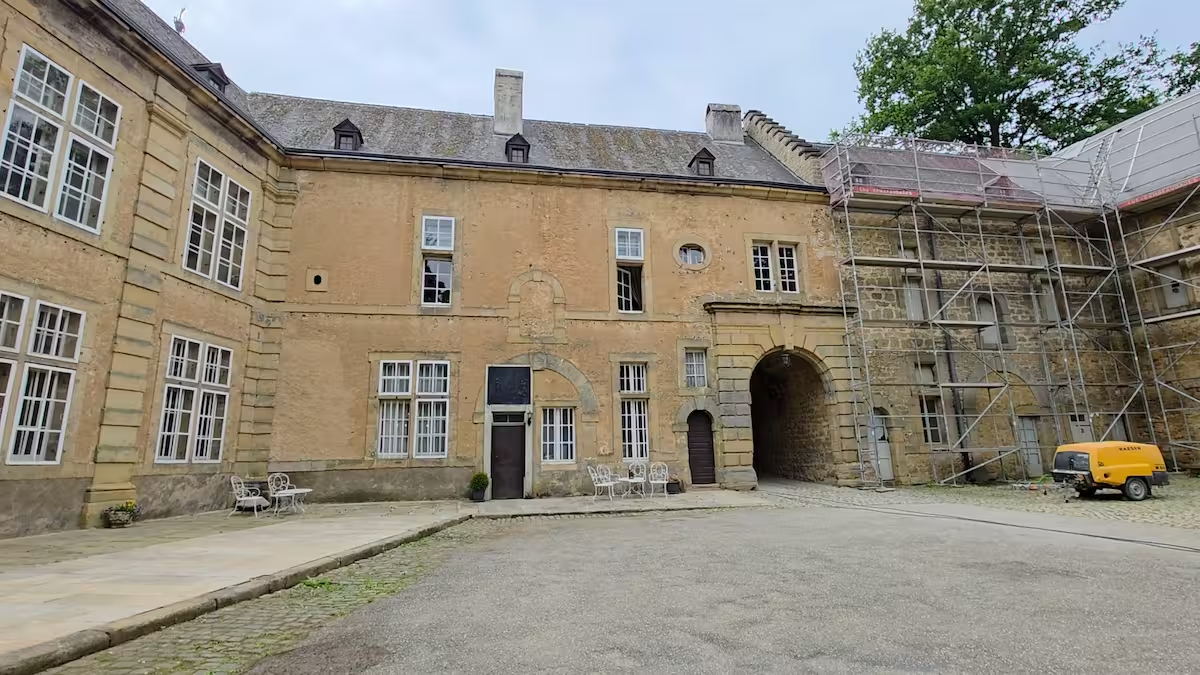
🏰 The Renaissance Castle of Beaufort – A Personal Journey Through Time
As a family travel ambassador and passionate heritage explorer, I’m always on the lookout for hidden gems that families can enjoy. One of my latest discoveries took me and my 4-year-old son to the eastern side of Luxembourg: the Renaissance Castle of Beaufort. Many people know the medieval ruins of Beaufort, but just a few steps away stands a remarkably well-preserved 17th-century gem that deserves far more attention: the Renaissance castle, built around 1649. A Castle with a Soul Unlike many monumental châteaux, this one feels real – human-sized, elegant yet humble. Originally begun by Jean Baron de Beck, a respected Luxembourgish general, the castle was finished by his son after his premature death. It was designed not as a fortress but as a refined residence. Since 2012, the castle has been open to the public, thanks to the generosity of Anne Marie Linckels-Volmer, its last private owner. She chose to sell it to the Luxembourg State so that it could be preserved and shared with future generations. Her decision was selfless and visionary – one that allows visitors like me to share this piece of history with their children. Our Visit The visit is only possible with a guide – and I highly recommend it. We discovered: Some parts are no longer intact: the private chapel can’t be visited, and the kitchen has lost much of its historical interest. But the overall experience remains memorable. Family-Friendly History What I appreciated most was the approachable storytelling. There are no sterile displays or dusty corridors. The guide brings the castle to life, and the ambiance allows both young and old to connect with history in a real and meaningful way. 📍 Location: Château de Beaufort, 24 Rue du Château, L-6313 Beaufort🎟️ Access: Guided tours only, April to October🎫 Combined tickets available with the medieval castle👨👩👦 Best with kids – but bring a carrier for little ones, as there are stairs Visiting the Renaissance Castle of Beaufort isn’t just a historical visit. It’s a heartfelt connection to a legacy that has been generously preserved. If you’re in Luxembourg with your family, this is a must-see.
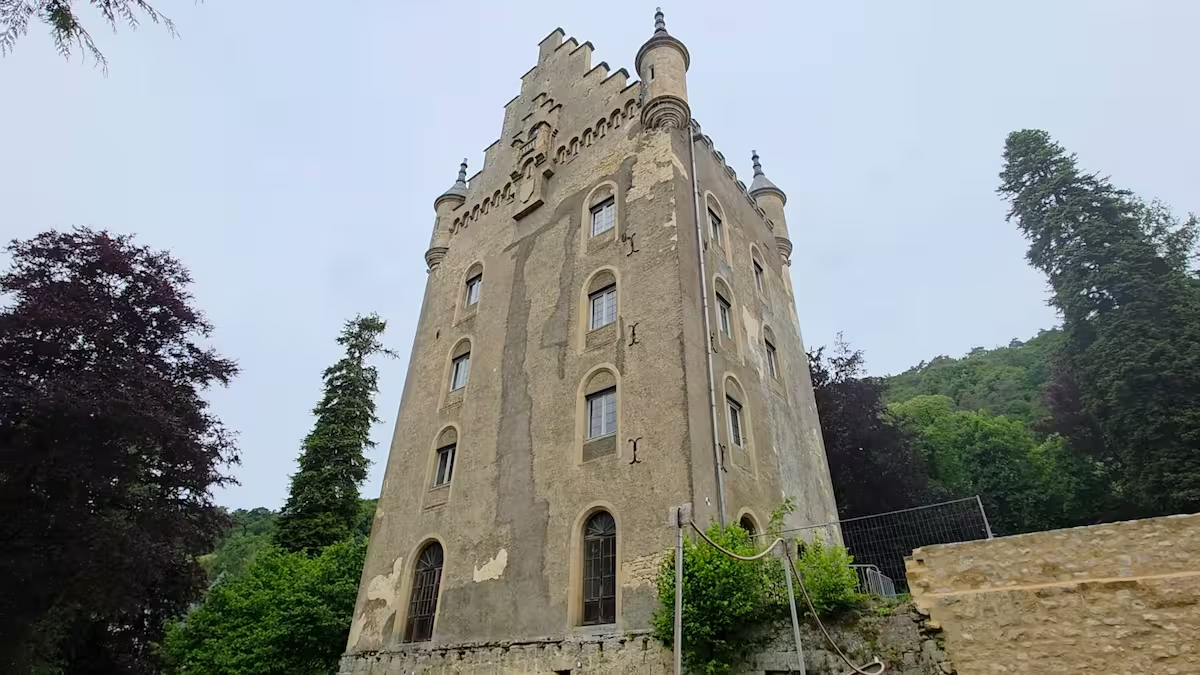
🏰 Schoenfels Castle – A Quiet Break Between Past and Present
Some places you don’t plan for — they simply find you. That’s how I came across Schoenfels Castle: on a winding road through the woods in central Luxembourg, this sturdy stone tower suddenly appeared, standing silent but proud. Luxembourg is often called the land of 100 castles, and honestly, that might be an understatement. They’re everywhere — on hills, in valleys, hiding in forests or towering next to highways. And each one tells a different story. Schoenfels, though, is one of those quiet ones, still off the tourist radar. A Bit of History Schoenfels Castle dates back to the 13th century, originally built by Friedrich von Schonevels, a local knight. Back then, it wasn’t meant to impress — it was meant to protect. Strategically placed in the Eisch Valley, between Luxembourg City and the north of the country, it served as a watchtower and fortress. Over the centuries, it changed owners, was damaged by fire, rebuilt, abandoned, and finally acquired by the Luxembourg State in 1971. What remains today is a solid 14th-century keep, surrounded by a fortified wall and a few restored buildings — closed for now, but still very much alive. Closed, But Not Forgotten You can’t visit the inside just yet — it’s undergoing restoration. The plan is to turn it into an official welcome centre for the Upper Sûre and Eisch Valley Nature Park, which makes total sense. This castle isn’t just history; it’s a gateway to nature. There’s a small car park just next to it. I stopped with my son, and we spent a quiet moment there — no crowds, no distractions. Just birds, trees, and stone walls full of stories. Great Starting Point for a Walk Even without a tour, it’s worth the stop. Hiking trails surround the area, well-marked and peaceful. It’s the kind of place where history fades into the landscape, where you step out of the car and into a different rhythm. In Short Schoenfels Castle won’t dazzle you with grandeur or flashy features. But that’s its charm. It’s real. It’s grounded. It’s waiting. And sometimes, that’s all you need for a truly memorable moment. 🏰 Schoenfels Castle – Address & Visitor Info 📍 Exact Address Rue du VillageL-7473 SchoenfelsCommune of Mersch, Luxembourg 🌍 GPS Coordinates ☎️ Contact Information ℹ️ Visitor Info
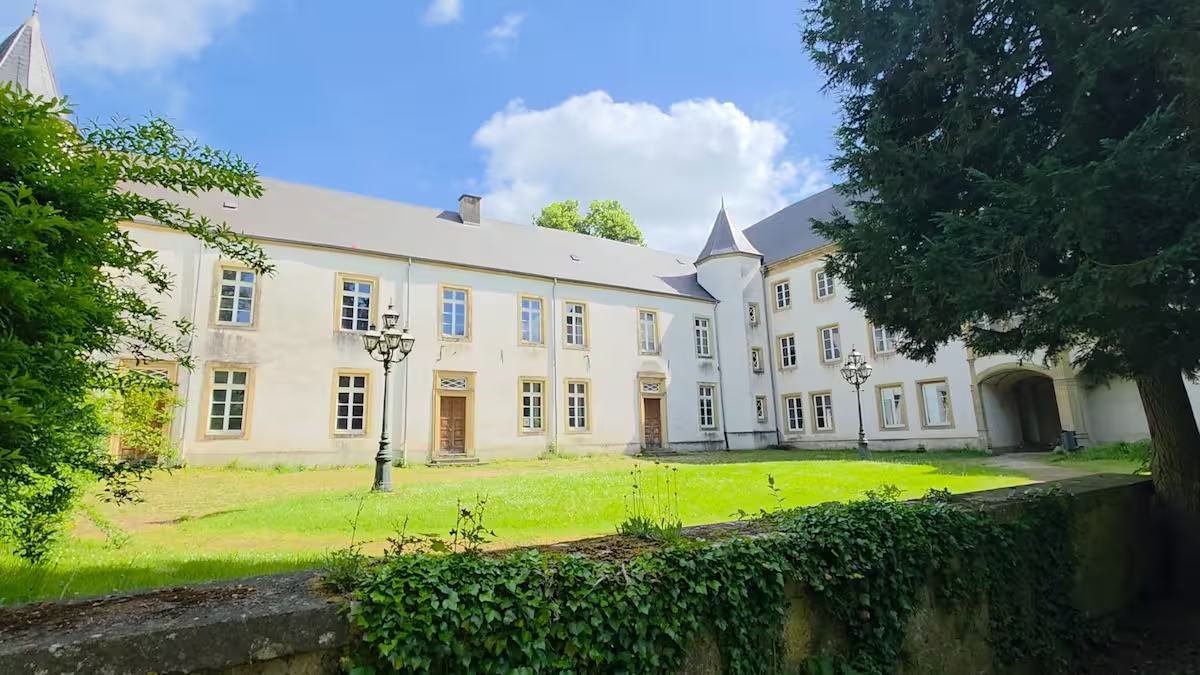
🏰 Discovering Sanem Castle – A Silent Witness of Luxembourg’s Past
Tucked away in the peaceful greenery of southern Luxembourg lies a discreet yet historically rich site: Sanem Castle. Though still under the radar for many visitors, it stands as one of the rare medieval fortresses in the country to have preserved its noble character through the centuries. Medieval Origins The origins of the castle date back to the 13th century, when local lords built fortified wooden structures to assert their authority and defend their lands. By the 15th century, this early fortification was replaced by a more robust stone castle, complete with defensive walls, a courtyard, and surrounding moats. But history had other plans. In 1550, a devastating fire swept through the castle. It was rebuilt soon after in the Renaissance style, turning the fortress into a more elegant noble residence. The round corner towers, large arched windows, and symmetrical façades are still visible today and reflect this transformation. A Noble Residence Through the Centuries Over time, Sanem Castle passed through the hands of several prestigious families: the Lords of Sanem, the Créhange, the Marchants, and finally the d’Ansembourg family. Each left their mark, slowly reshaping the medieval stronghold into a stately home. Surrounded by tranquil woodlands and meadows, the estate has preserved its aura through changing eras. A New Role… and a Pause In the 20th century, the castle found new purpose: first as a children’s home, and later as property of the municipality of Sanem. Until recently, it hosted administrative offices, cultural exhibitions, and occasional public events. Today, however, Sanem Castle stands empty. The interiors are closed to the public in preparation for long-overdue renovations. After years of continuous use, the structure is finally getting the care it deserves. The exterior grounds remain open to visitors. With its peaceful gardens and historic silhouette, the site is still a wonderful stop for walkers, photographers, and history lovers exploring Luxembourg’s past. A Special Event: Wanterfeeling Each December, the castle comes alive during Wanterfeeling — a magical Christmas market that brings light and warmth back to the old walls. For a few days, the castle courtyard and moats are transformed with wooden chalets, glowing lanterns, artisanal stalls, and medieval-themed entertainment. Expect live blacksmith demonstrations, storytelling by the fire, traditional choirs, and hands-on workshops where children can craft their own decorations. It’s a rare opportunity to experience the castle in motion — alive with sound, light, and festive joy — before it returns to its quiet slumber. A Promising Future Sanem Castle’s story is far from over. Once renovations are complete, the site is expected to reopen with new cultural, touristic, or community functions. The architecture will be preserved, the legacy celebrated, and the castle ready once again to welcome curious minds and passionate visitors. Until then, Sanem remains a peaceful escape for those who cherish places filled with memory. And in front of this silent fortress, one quickly understands that history doesn’t always shout — sometimes, it whispers. Sanem Castle32, rue du ChâteauL-4992 SanemLuxembourg For more information, you can visit the official website of the Sanem municipality: suessem.lu. Please note that the castle is currently closed for interior renovations, but the exterior grounds remain open to the public.
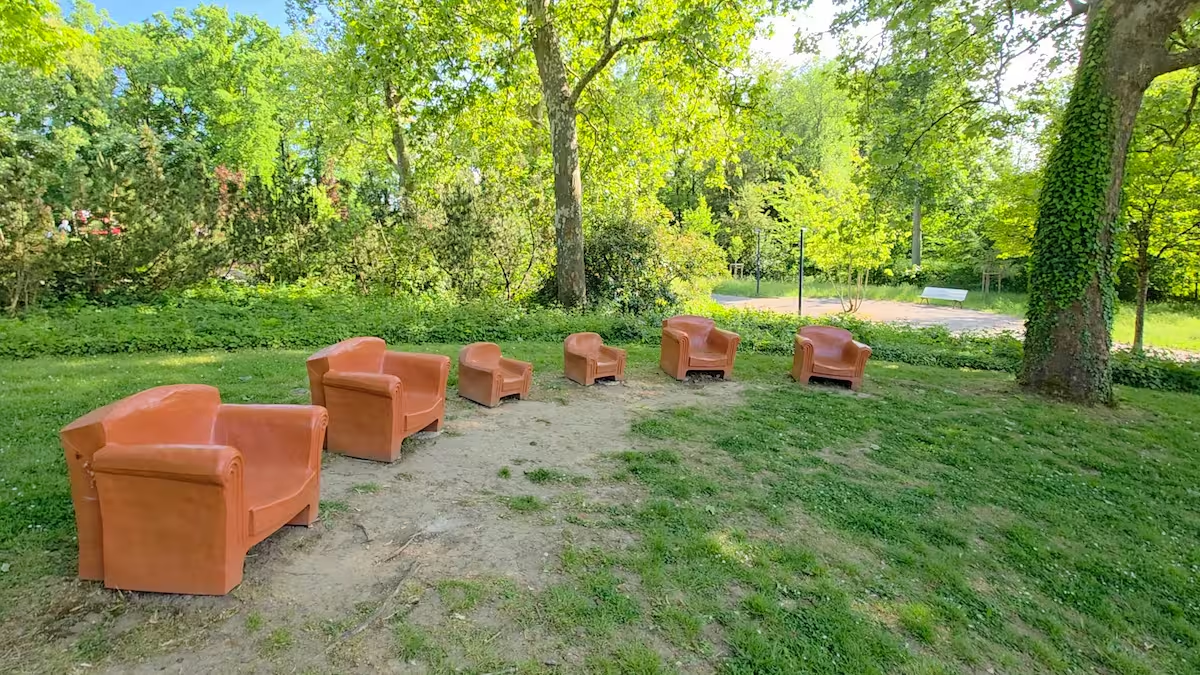
🌿 Mondorf-les-Bains – A Peaceful Escape in the Heart of Luxembourg
This time, we made a stop in the charming town of Mondorf-les-Bains—not for the thermal spa or the gourmet dining, but to explore the beautiful and peaceful Thermal Park. And what a refreshing experience it was. The first thing we noticed upon arrival was the calm. Here, time slows down. You hear the gentle rustling of leaves, birds singing, and the occasional trickle of a nearby fountain. It truly feels like a hidden oasis for anyone looking to unwind and reconnect with nature. The park is large, lush, and impeccably maintained. Wide paths lined with old trees invite you to wander—whether you’re walking, pushing a stroller, or simply taking it all in. We crossed paths with families enjoying the sunshine, couples strolling hand-in-hand, and even a few people practicing yoga quietly on the grass. What struck me most was the peaceful atmosphere. Benches are scattered under shady spots to rest, art sculptures surprise you around quiet corners, and the overall sense of well-being is almost instant. It’s the kind of place that helps you breathe a little deeper and forget the rush of daily life. The park is also a haven for biodiversity, home to rare tree species, beautifully curated flowerbeds, and if you’re lucky, a squirrel or two playing in the trees. For children, there’s a small but charming playground, and the open lawns are perfect for picnics or running free. And if you’re in the mood to extend your experience, the thermal spa and casino are just steps away. But even without entering those venues, the park alone is well worth the visit. It offers a moment of peace, a pause to recharge—just a short drive from the French border. 🗓️ Perfect for a family outing, a romantic walk, or a mindful escape.📍 Location: Thermal Domain, Mondorf-les-Bains🎟️ Free access all year round🌸 Best time to visit: Spring or autumn for blooming gardens and peaceful walks