I had the chance to visit Le Monde de Dinosauria in Amnéville, and honestly, I wasn’t expecting such an immersive and impressive experience. We went as a family, a bit on a whim, thinking it would be a fun outing for the kids… but it ended up being way better than expected. Right from the start, you’re transported to another time. The ambient sounds, the detailed scenery, and above all… the incredibly lifelike dinosaurs. What struck me the most was the realism. These aren’t just static statues like in some other parks. Here, the dinosaurs move, growl, and some even follow you with their eyes. One opens its mouth with a loud roar as you approach. It really feels alive. And I wasn’t the only one impressed. Our 4-year-old kids were completely captivated. Their eyes were wide with amazement—and a little bit of fear too! Some of the scenes were so realistic they clung to our legs, caught between fascination and nervous excitement. It was adorable to watch them so deeply engaged, yet always eager to see more. The trail winds through a wooded area, which makes the walk pleasant even on warm days. Each scene is different, featuring a variety of species, from gentle herbivores to dramatic predator moments. Even baby dinosaurs are part of the show, which adds a tender, playful element. Informational panels are short, clear, and suitable for all ages. You learn as you go without it ever feeling too heavy. What really stands out is the quality of the storytelling and setup. Each scene feels like it tells a story—not just a dinosaur placed on a path. There’s real attention to detail, and it shows. I’ve visited other dino parks in the region and on vacation, but honestly, Dinosauria in Amnéville is on another level. More immersive, more believable, and much more respectful of the prehistoric universe. By the end, our kids couldn’t stop talking about it. The big T-Rex, the one that roared loudly, the dinosaur that « looked at them, » and the baby dinosaur « sleeping in the leaves. » Moments like that are priceless. And as adults, we enjoyed it just as much. No boring parts, no frustration—just a fantastic family moment from start to finish. 👉 Important to know: Dinosauria is only accessible through the Amnéville Zoo. You can’t visit it separately.And that’s perfect—because in the next article, I’ll be sharing our visit to the zoo itself, which is also an amazing experience 🦁🐒
Pays de Salm House — A Hidden Gem of Local History
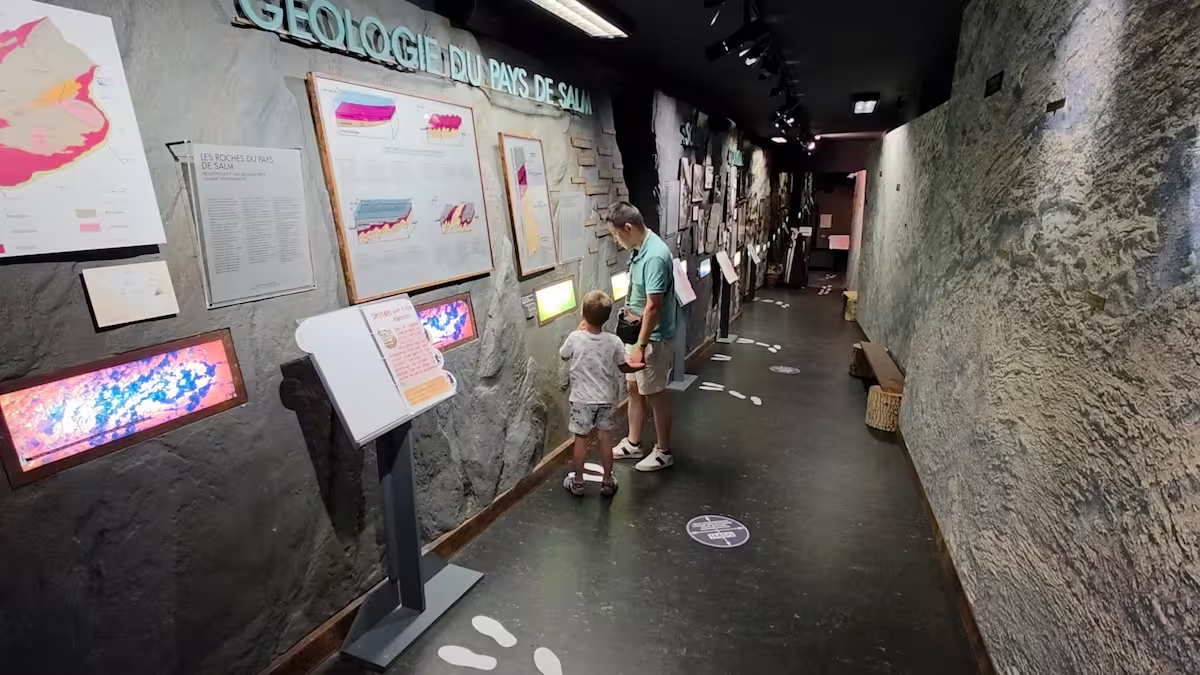
When you arrive at the Pays de Salm House, you might not expect such a deep dive into the region’s history and traditions. From the outside, it looks simple… but once you step inside, you quickly realize that every corner here tells a story. This museum is a true snapshot of what makes the Pays de Salm so special — a mix of history, local craftsmanship, and legends. It’s simple, no frills, but everything is so well put together that you can’t help but enjoy discovering the place. The visit starts with the story of the people who’ve lived here, the « Salmiens. » You learn about their daily lives, how they worked with the land, how they lived with the seasons, the forests, and their traditions. It’s not overwhelming — just objects, stories, and small displays that immerse you in a world not so far removed from ours. What surprised me most was learning about the famous Coticule stones, quarried here for centuries. These unique sharpening stones, almost exclusive to this region, have been used all over the world. From the United States to Japan, they’ve helped sharpen razors and knives. I honestly didn’t expect such global recognition for a small part of the Ardennes. That alone makes the visit worth it if you enjoy learning about traditional skills. But what really gives the museum its unique charm is the slightly mysterious atmosphere when you reach the section about local folklore… especially the legendary Macralles, the witches of the region. Through interactive displays and playful explanations, you dive into the stories passed down for generations. Whether you believe in these tales or not, it’s fascinating to see how these legends are deeply rooted in Vielsalm’s identity. Kids enjoy the visit too — with objects to look at, small interactive scenes, and little surprises along the way, it’s a great family-friendly experience. It’s educational without being boring, which is honestly rare in museums. Another thing I appreciated is how well the museum highlights the connection between the people and their natural surroundings. You quickly realize how the forests, hills, and environment have shaped life here, in work, in culture, and in the collective imagination. In short, the Pays de Salm House may not be a huge museum, but it’s exactly the kind of place I love visiting: authentic, enriching, and deeply connected to its territory. 📍 Full Address Avenue de la Salm 50, 6690 Vielsalm, Belgium 💶 Entrance Fees (guided tour approx. 50 min) 🌐 Official Website www.maisondupaysdesalm.be
A Hidden French Gem on Luxembourg’s Doorstep – Discover Château de Preisch
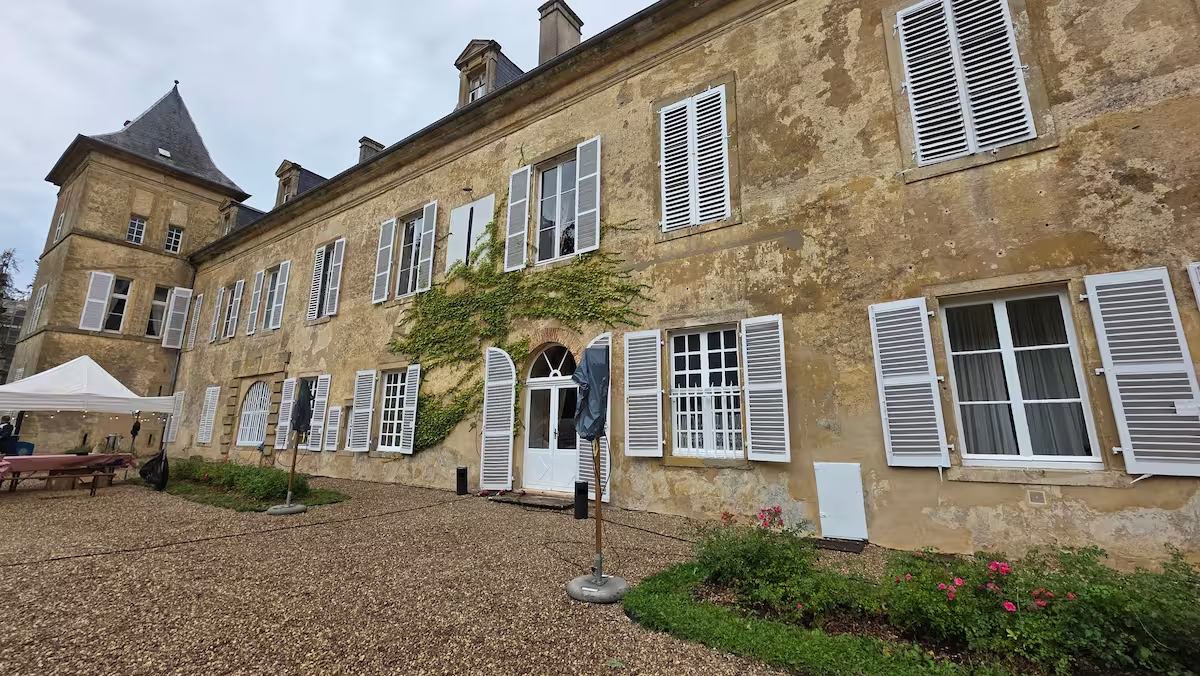
Just a few steps from the Luxembourg border lies the peaceful and charming Château de Preisch — a place full of beauty, history, and warm hospitality. As soon as you arrive, you feel like you’ve stepped into a unique world. Surrounded by lush greenery and calm countryside, the estate invites you to slow down and take it all in. The current château mainly dates back to the 17th century, but the site’s history is much older. You can still see remnants of the original medieval structure — moats, a tower — which give the whole place its character. Not far from the main building stands a beautiful 18th-century chapel. While it’s currently undergoing renovation, it’s worth mentioning that this very chapel is recognized by UNESCO as part of the world’s cultural heritage. The estate is still privately owned by the De Gargan family, who have lovingly cared for the château for generations. Their presence is felt everywhere, in the attention to detail, the thoughtful restoration work, and above all in the way they welcome visitors. This is not a cold or distant historical site — it’s a living place, and you can feel the family’s passion in every corner. One of my favourite parts? The park. It’s huge, peaceful, and so well maintained — not by noisy machines, but by adorable Hampshire sheep! There’s also a permaculture vegetable garden, the remains of a feudal motte, and even a little trail that’s great for kids. It’s the kind of place where you can spend an entire afternoon just walking, discovering, and enjoying the calm. The château visit is self-guided, so you can go at your own pace. You’ll find helpful booklets and audio guides along the way, and everything is well explained. What stood out to me the most, though, was the kindness of the people there. The staff are genuinely welcoming, respectful, and happy to share their love of the place with every visitor. A huge thank you to them for their warmth and generosity — it really made the visit unforgettable. ✅ Tips for visitors 📍 Address Château de Preisch2 Rue des Lilas,57570 Basse-Rentgen,France📍 Very close to the Luxembourg border, only 10 minutes from Mondorf-les-Bains.
A Hidden Gem in Capellen: Visit Luxembourg’s Police and Gendarmerie Museum
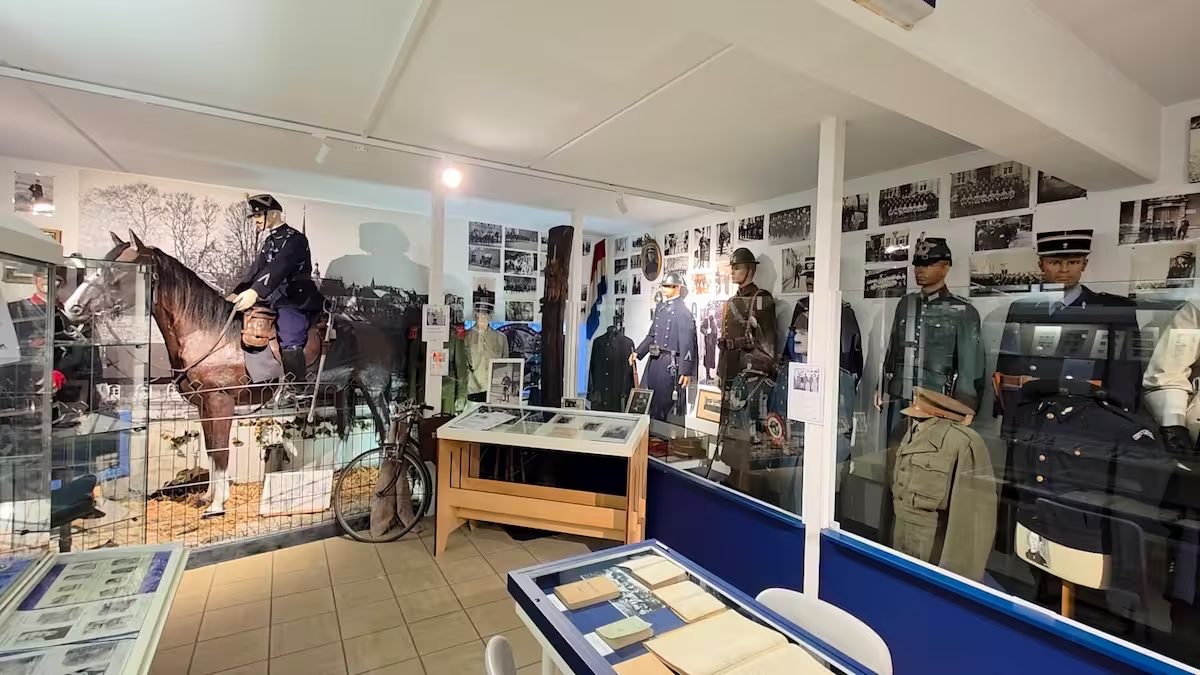
Discovering History, Humanity, and Courage – Through the Eyes of a Policeman Still in Service Earlier today, I took my son to a place many might overlook when planning a family outing — and I’m so glad we did. Tucked away in Capellen lies a true gem: the Museum of the Police and Gendarmerie. It’s not flashy, but it’s filled with stories that matter. From the moment we arrived, the visit felt different. We weren’t handed an audio guide or left alone to read dusty panels. No — we were greeted and guided by a real police officer still on active duty, someone who dedicates part of his free time to this museum. His passion, kindness, and dedication instantly set the tone for what turned out to be a truly meaningful experience. Inside, the museum takes you through decades of Luxembourg’s law enforcement history. Uniforms, badges, weapons (deactivated), radio systems, vintage documents, and so much more — every item tells a story. But it’s not just about objects. It’s about real people behind the uniforms. One part that really stood out was the section about World War II, where we learned that many Luxembourgish gendarmes were sent to Germany to be re-educated under Nazi ideology. Some followed orders, others resisted. That room hits hard — not because it’s dramatic, but because it’s told with honesty and respect. Another emotional moment came in the interrogation room replica — stark lighting, a lonely chair, a report sheet. So simple, yet so powerful. It’s not about glorifying the past; it’s about making you understand what law and justice looked like — and still look like — under pressure. But don’t think this place is too serious for kids — my son had a blast. He got to wear a bulletproof vest, try on a real police cap, and yes — get playfully handcuffed for fun. That interactive approach makes it all the more engaging for children. Although there’s not enough space for patrol cars, the museum features a real police motorcycle and a horse, nodding to Luxembourg’s mounted police units. Honestly, you don’t even miss the vehicles — the human stories are far more captivating. What made it unforgettable was the man guiding us. With over 25 years of experience and still serving, he shared his stories humbly, openly, and passionately. He answered every question — including the 100 from my son! — with patience and warmth. This wasn’t a museum visit; it was a conversation with someone who lives this every day. 🙏 Thank you To the officer who welcomed us: thank you. You didn’t just show us a collection — you gave us insight, understanding, and a deeper appreciation for what it means to serve and protect. You made this visit one we won’t forget. If you’re in Luxembourg and looking for something truly meaningful — whether you’re into history, education, or family adventures — go visit this museum. It’s a place where curiosity meets respect, and where both children and adults leave with something valuable. 📍 Police and Gendarmerie Museum📍 2, rue de la Gare, Capellen🕒 Visits by appointment only – plan ahead
The Oldest Church in Luxembourg: Saint Michael’s Church
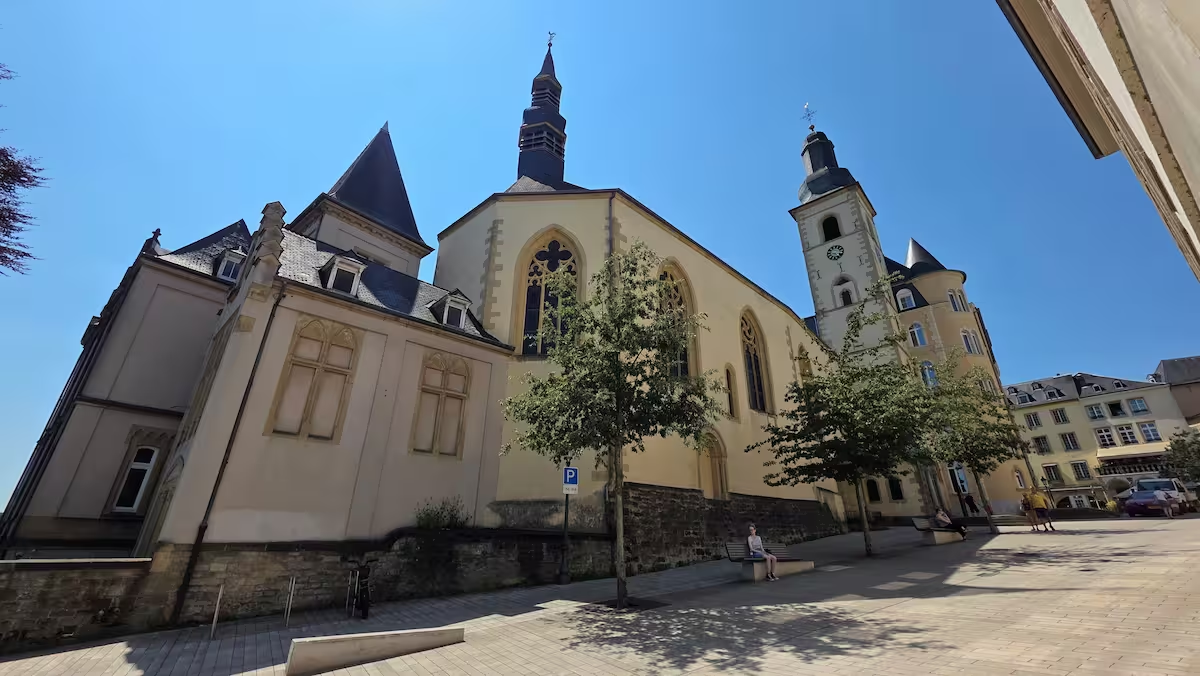
In the heart of Luxembourg City’s Old Town, where narrow medieval streets wind through stone walls and every corner breathes history, one building quietly commands respect through its simplicity and its age. This is Saint Michael’s Church, widely recognized as the oldest surviving church in the Grand Duchy of Luxembourg. Its origins date back to the year 987, when Count Siegfried, the founding father of the Luxembourg dynasty, established a chapel within the fortified walls of his newly built castle on the Bock promontory. More than just a place of worship, this early sanctuary was a symbol of spiritual protection and authority. Dedicated to Saint Michael the Archangel, the church was meant to embody strength, justice, and divine guardianship — all values central to the emerging identity of Luxembourg. Over the centuries, the church has been shaped by time, war, and faith. Damaged, destroyed, rebuilt and reshaped, Saint Michael’s bears the marks of many eras. Its current structure reflects a fascinating mix of architectural influences, blending Romanesque sobriety, Gothic elegance, and Baroque richness. This fusion of styles is not accidental; it is the result of over a thousand years of evolution, with each restoration adding a new layer to its story. As you step inside, you’re entering more than a religious space — you’re walking into a thousand-year-old narrative carved in stone and wood. Inside, the silence is almost sacred. Light filters gently through stained-glass windows, falling on stone columns and ornate altars that seem to have held their place for centuries. It’s a quiet, introspective place — one where you feel the passing of time not through noise, but through stillness. Despite its antiquity, the church remains very much alive. Services, concerts, and community events are held here regularly, and its doors are open to anyone seeking beauty, history, or a moment of peace. Saint Michael’s Church is not just an important religious site — it is a cultural landmark that tells the story of Luxembourg’s beginnings. From its strategic position overlooking the Alzette valley, it has witnessed the birth of the city, the rise of the Grand Duchy, and the unfolding of a national identity. Visiting this church offers more than architectural appreciation; it invites reflection on the resilience and continuity of a place and a people. For anyone exploring Luxembourg City, a visit to Saint Michael’s is not just recommended — it’s essential. In a country where history often hides in plain sight, this church stands as a quiet but powerful reminder of where it all began. Église Saint-MichelRue SigefroiL-2536 LuxembourgGrand-Duché de Luxembourg
A Peaceful Pause at the Church of Saints Peter and Paul in Echternach
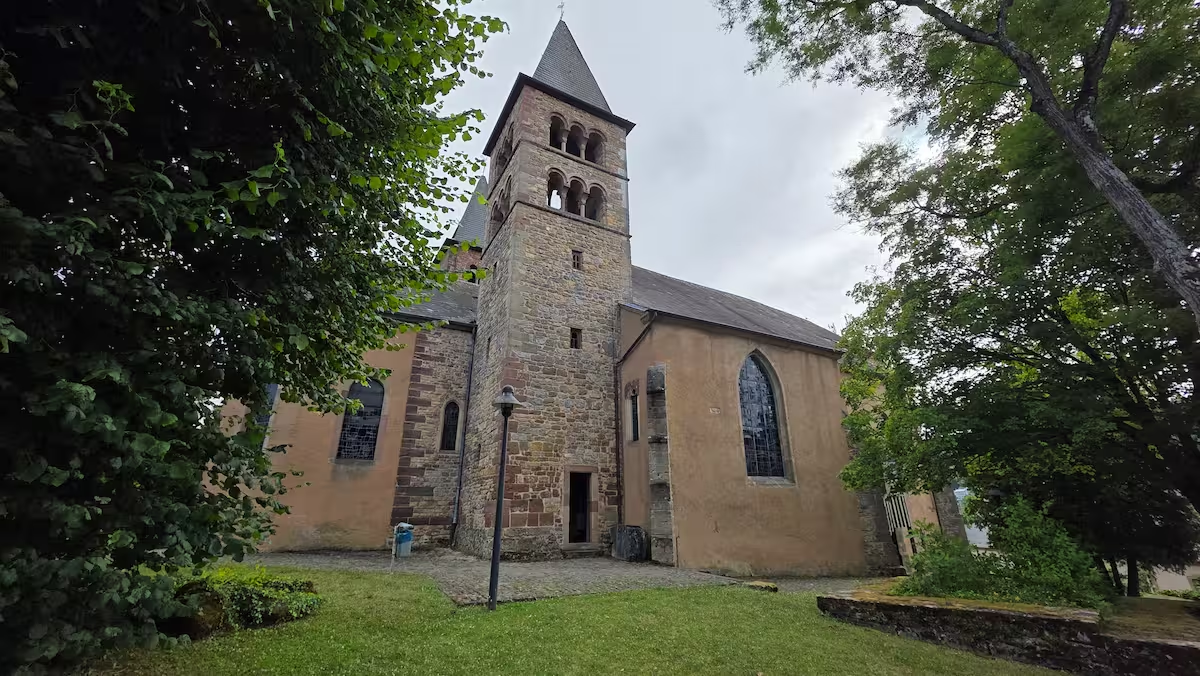
After wandering through the cobbled streets of Echternach, surrounded by historical charm and old houses, we decided to take a quieter break. That’s how we ended up stepping inside the Church of Saints Peter and Paul — a smaller, more discreet church than the large basilica nearby, but one that definitely deserves your attention. What’s truly fascinating about this church is its deep-rooted history. The first structure on this site dates back to the 5th century, making it one of the oldest Christian places of worship in Luxembourg. Over the centuries, it’s been rebuilt and adapted — especially in the 11th and 18th centuries — but it always remained a central place for the town’s religious life. While the monks gathered at the abbey, this was the church of the people. The moment we stepped in, we were struck by the silence and simplicity of the place. Unlike more ornate churches, this one feels almost monastic in its restraint. But that’s what makes it so peaceful. My son, still small but curious, looked up at the tall arches with that wide-eyed wonder kids are so good at. The walls, solid and cool, seem to whisper prayers from centuries past. We sat on a bench for a moment, just to soak in the stillness. And I realized — it’s these kinds of quiet pauses that give meaning to the journey. There are no grand displays here, no lavish altars. Just a living, breathing church that continues to welcome locals and visitors alike. It may not have the fame of the Basilica of Saint Willibrord, but it’s a hidden gem — a simple stop that feels genuine and real. And often, it’s these little detours that make our travels feel more human.
Aal Eechternoach: Where History Meets Hearty Flavour in Echternach”
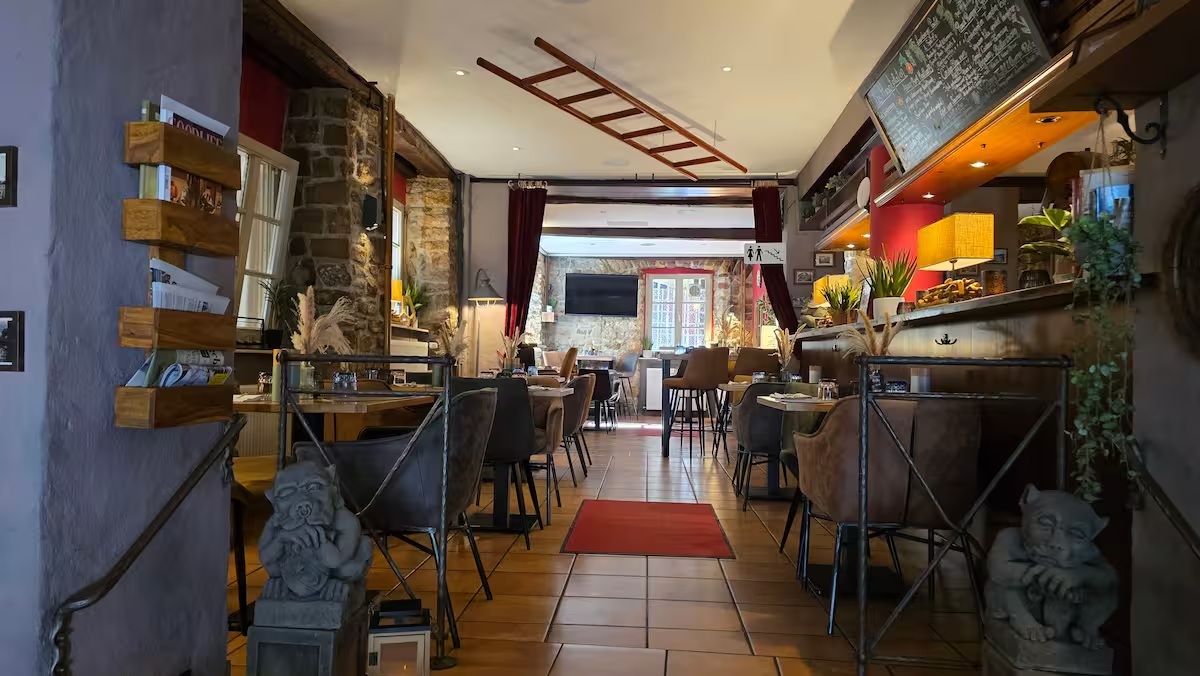
After a long stroll through the old town and its monuments in the oldest city of Luxembourg, it’s only natural to take a well-deserved break to recharge. So we sat down at Aal Eechternoach, perfectly located on Echternach’s main square, right in front of the historic Town Hall. The moment you walk in, you feel it — a warm atmosphere, rustic charm, and welcoming smiles that instantly make you want to stay. With its old-stone walls and traditional wood decor, the restaurant offers a cosy setting that blends authenticity and comfort. And when the scent from the kitchen reaches your table… you know you’re in the right place. The menu is varied, with local dishes and a few more creative options. I went for the Aal Eechternoach Steakhouse Pan — a hearty plate with perfectly cooked meat, sautéed potatoes, caramelised onions and homemade sauces. Comfort food done right, just what you need after a busy sightseeing day. We also shared a Smoked Salmon Flammkuchen (tarte flambée), and it was a lovely surprise — crispy, well-balanced, and enhanced by that delicate smoky flavour. A nice twist on the traditional, and a clear favourite of our visit. Sitting on the terrace, we watched the town go by in a peaceful, relaxed setting. The service was friendly and attentive, without ever rushing us — a real plus in such a central, touristy spot. If you’re looking for an authentic and satisfying food stop in Echternach, Aal Eechternoach hits the mark. Great local flavours, a pleasant vibe, and a location that couldn’t be better.
The Rococo Pavilion of Echternach: A Peaceful Pause by the Lake
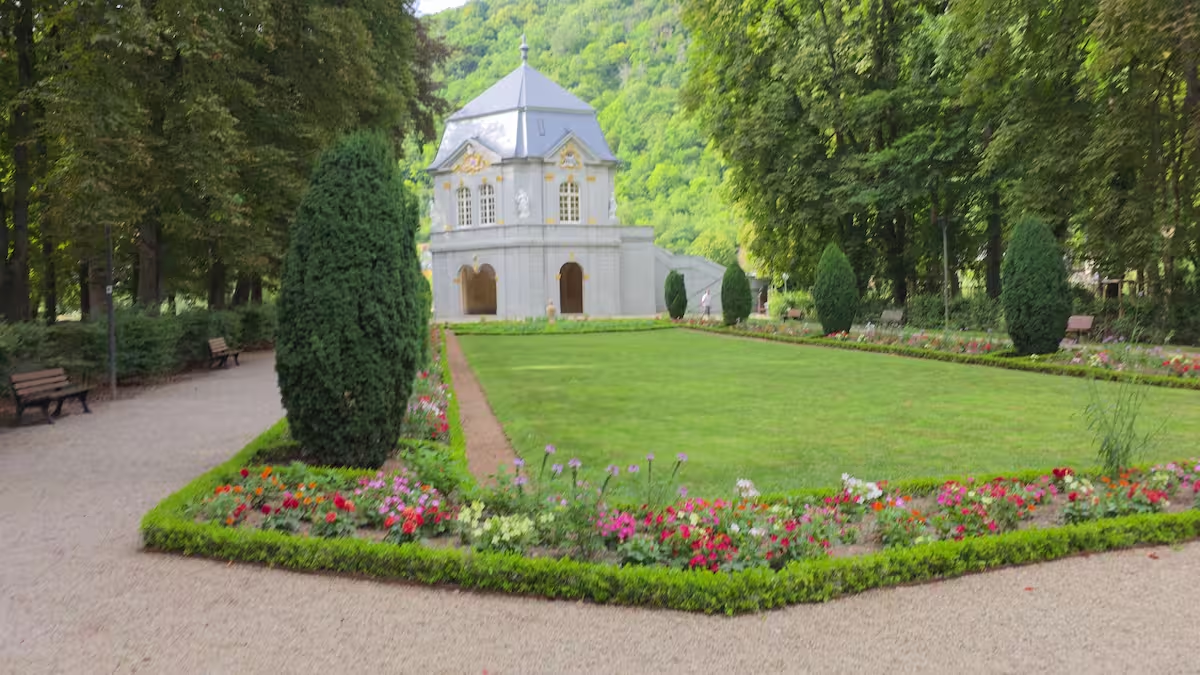
Some places don’t need to be grand to capture your heart. They’re not flashy, not crowded… just quiet, beautiful, and full of charm. That’s exactly what I felt when I came across the Rococo Pavilion in Echternach. We were strolling as a family around Echternach Lake — kids playing, birds singing, a soft breeze in the air — and suddenly, there it was. A small white building in the distance, elegant and timeless, like it had stepped right out of a storybook. Built in 1761, this pavilion is a fine example of Rococo architecture, with its symmetry, graceful details, and serene setting. It used to serve as a retreat for the monks from the nearby abbey — a place of calm, contemplation, and rest. And honestly? It still serves that purpose today. I sat down for a while, watching my son run through the grass while I soaked in the atmosphere. It’s not a “big attraction,” and maybe that’s why it feels so special. It’s a place that invites you to breathe. To slow down. To take in beauty without noise. That’s what I love about Echternach. One moment, you’re exploring Roman ruins or a majestic basilica, and the next, you’re here — in a hidden pocket of peace beside the water. So if you ever find yourself near the lake, don’t skip this little gem. Take a break at the Rococo Pavilion. Let it remind you that beauty doesn’t always shout… sometimes, it whispers.
A Place of Silence, Spirit, and History at the Heart of Luxembourg’s Oldest Town
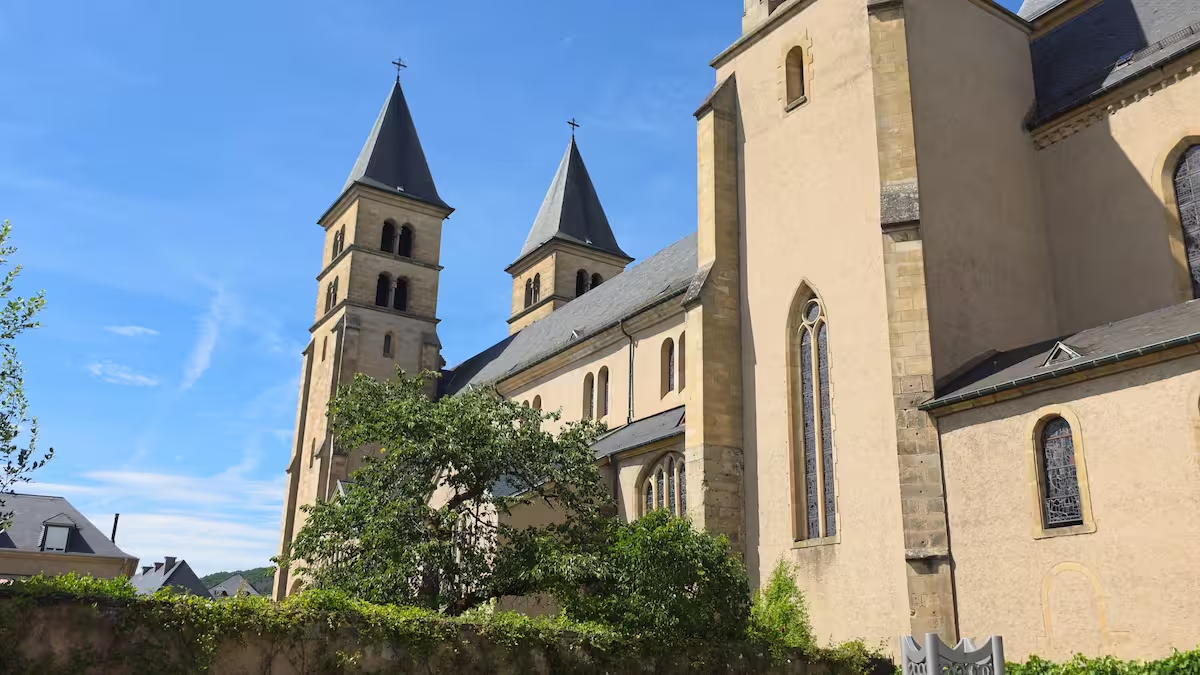
If you ever find yourself in Echternach, you’ll quickly understand why it’s called the oldest town in Luxembourg. It’s not just about medieval streets or picturesque views — it’s about atmosphere, presence, and timelessness. At the very center of this unique ambiance stands the Basilica of Saint Willibrord, a place where history and spirituality blend seamlessly. During our exploration of Echternach, my son and I stepped into the basilica — and immediately, everything changed. There’s a silence inside that isn’t cold or empty. It’s a respectful silence, filled with emotion, with stories, with centuries of footsteps and prayers. The architecture, a mix of Romanesque features and post-war restorations, gives the entire structure a sense of dignity, of endurance. Originally founded by Saint Willibrord in the 8th century, the basilica has gone through many changes. The current version mostly dates back to the 11th century, rebuilt after being severely damaged in World War II. Yet it has kept something that no renovation can ever replace: soul. What makes this basilica truly unique is the presence of Saint Willibrord’s tomb in the crypt — a sacred site visited by pilgrims from all over the world, especially during the famous Pentecost dancing procession, listed by UNESCO as intangible cultural heritage. Even if you’re not religious, it’s impossible not to feel the weight of history and human devotion here. My son was particularly fascinated by the crypt. “Is that really him?” he asked. And I answered — not only yes, but that this place exists thanks to him. That moment of wonder, of curiosity, made our visit truly personal. The basilica also holds beautiful artworks, mosaics, and a majestic organ, inviting you to slow down and take it all in. It’s a perfect contrast to the fast pace of modern life — a chance to reconnect, reflect, or simply breathe. Afterwards, we walked around the building, admired the serene gardens, and peeked at the nearby abbey. Echternach truly offers a perfect balance between spirituality, history, and nature. 🙏 Final thoughts The Basilica of Saint Willibrord is more than a religious site — it’s a living memory of a town and its people. Whether you come for the architecture, the spiritual depth, or the cultural insight, you’ll leave with more than what you came for. 📍 Basilica of Saint Willibrord, Echternach🕒 Open daily – free entry
Echternach – More Than a Town, a Journey Through Time, Nature and Spirit
There are places that tell you their story the moment you arrive. Echternach is one of them. It’s not a town you simply visit — it’s one you feel. Walk its streets, listen to its silence, and let its history wrap around you. This is Luxembourg’s oldest town, founded in the 7th century, and yet it still breathes with life. The story begins with Saint Willibrord, an English monk who established a Benedictine abbey here in 698 AD. From that moment, Echternach became a spiritual and cultural center for the region. You can still feel that influence today, especially in the Basilica of Saint Willibrord, a beautiful church with a peaceful crypt where the saint rests. It’s not just a monument — it’s a place of deep emotion and reflection. One of the town’s most incredible traditions is the Dancing Procession, held every year on the Tuesday after Pentecost. Imagine thousands of people moving in rhythm, hand in hand, hopping through the streets accompanied by a small accordion tune. It’s a unique mix of faith, folklore, and unity, and it’s recognized by UNESCO as intangible cultural heritage. But Echternach has more sacred ground to offer. In this video series, I also take you inside the Church of Saint Peter and Paul. It’s lesser-known, quieter, and truly moving. With its Romanesque style and understated presence, it reminded me that history is not always grand — sometimes, it’s in the silence. 🏞️ And when you’ve taken in enough history and spiritual calm, it’s time to explore Echternach’s wild side. Just steps from the center, you’ll find yourself entering the Mullerthal region, also known as “Luxembourg’s Little Switzerland.” The trails here are stunning — carved rock formations, fairytale forests, tiny bridges, and shaded paths. Whether you’re a casual walker or a seasoned hiker, you’ll find your rhythm in these woods. 👨👩👧👦 And for families? Echternach is a gem. The Echternach Lake is just outside the town — a quiet, clean and spacious spot where you can rent pedal boats, walk, cycle, or simply relax by the water. There are playgrounds for the kids, learning trails, picnic tables, and even some summer activities. It’s perfect for a midday break before heading back into the town or deeper into the Mullerthal. 🎶 The cultural scene also adds depth to your stay: the Abbey Museum, classical music concerts, seasonal festivals — there’s always something happening here, but never in a way that overwhelms. Echternach lives at its own pace, gently inviting you in. ✨ So why should you visit Echternach? Because it’s more than a location — it’s an experience.A town where past and present walk side by side, where nature is always close, and where traditions are still alive and proudly shared.You come here to slow down, to breathe, to walk, and to connect. And honestly? You’ll want to come back.