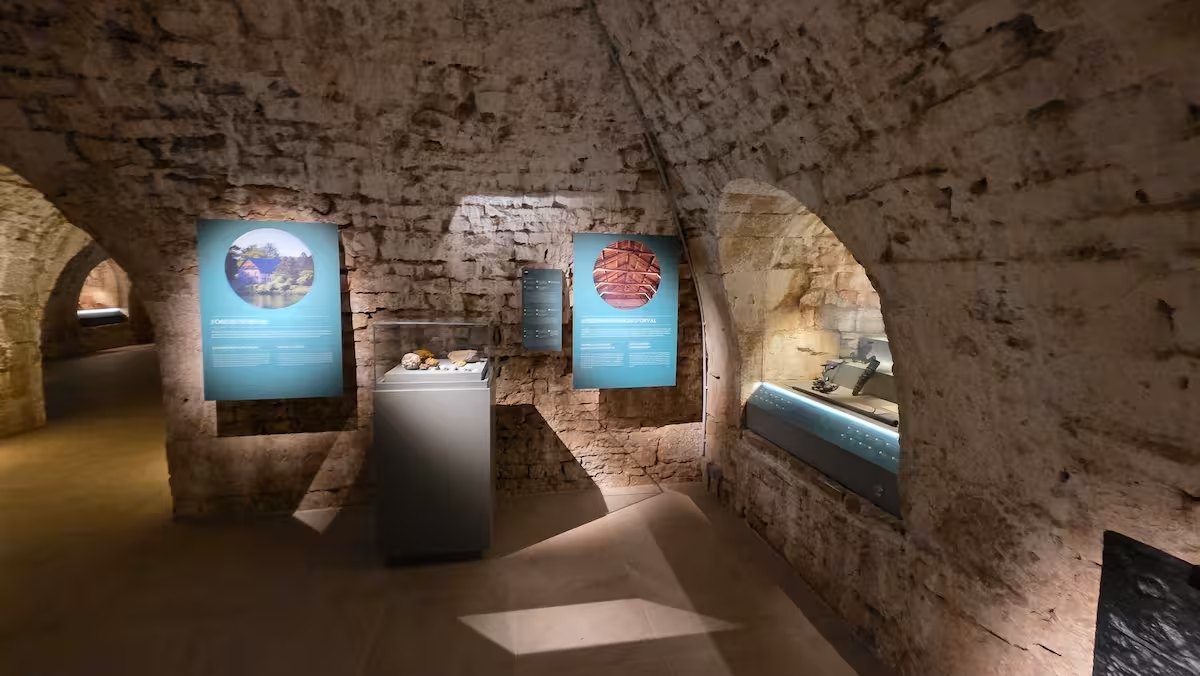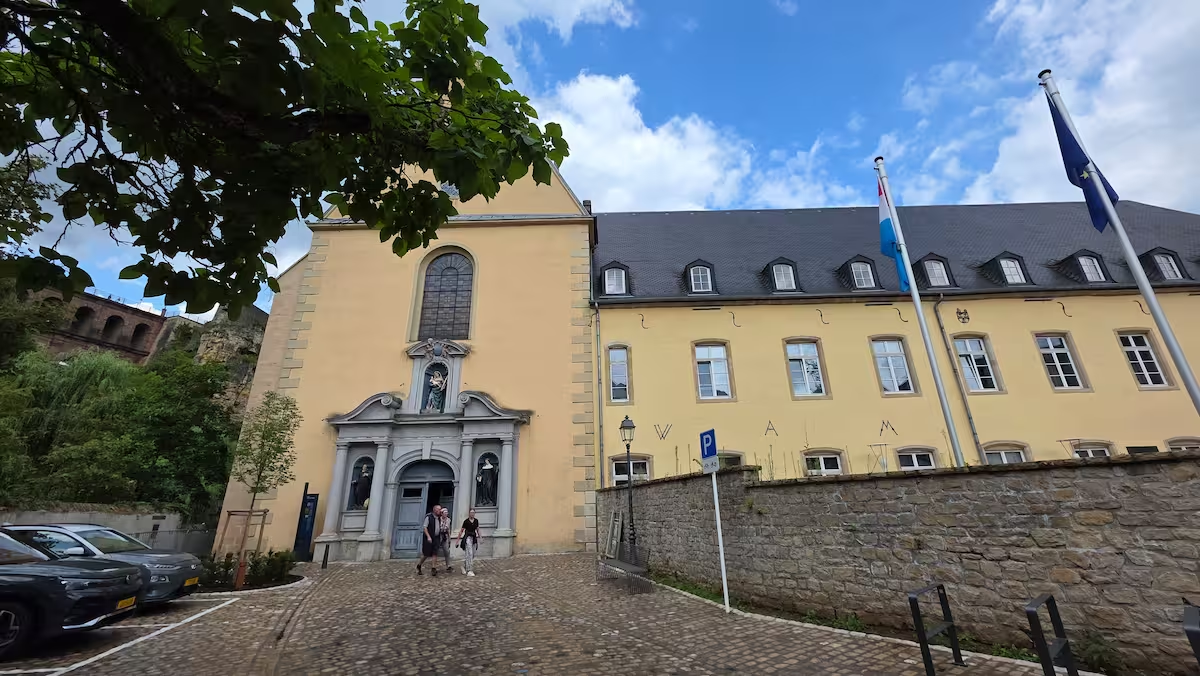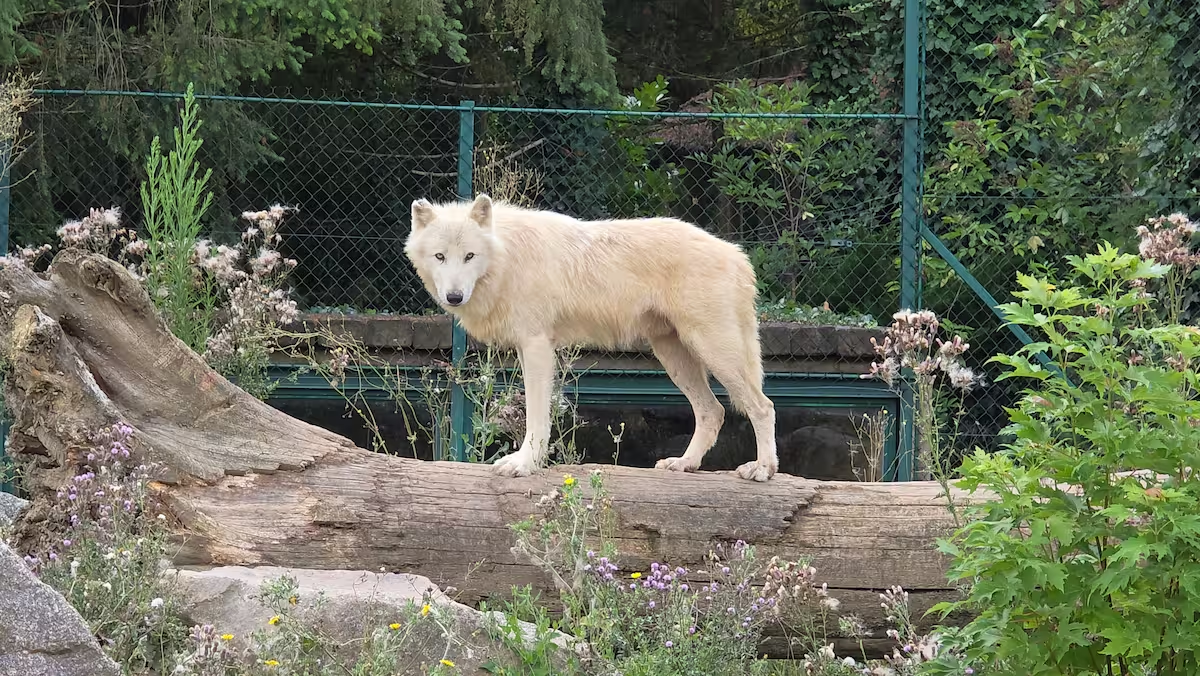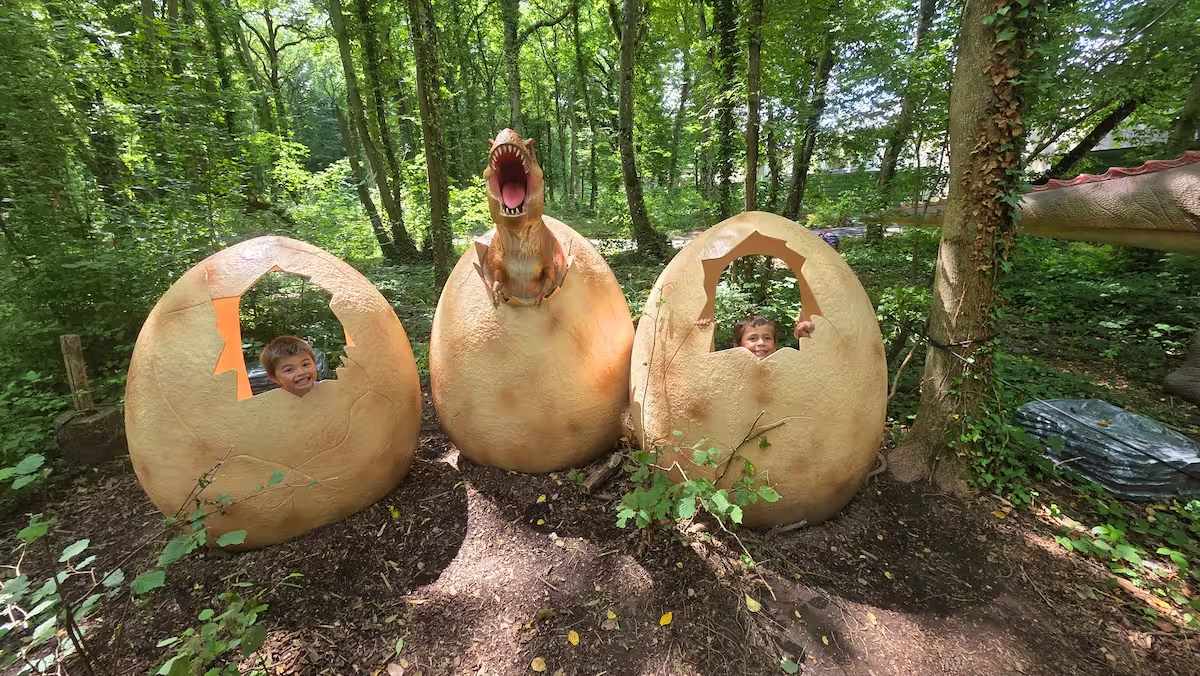
When visiting the historic town of Bouillon, most travelers are drawn to its iconic medieval castle and the Ducal Museum, both rich in heritage and stories of the past. Yet, to truly grasp the fascinating history of Godfrey of Bouillon and the medieval era that shaped this region, the Bouillon Medieval Experience stands out as an essential and immersive attraction. Unlike traditional museums or castle tours, the Bouillon Medieval Experience offers a dynamic, interactive journey that brings history to life through modern technology and storytelling. Here, history is not just seen — it’s felt, heard, and experienced. Visitors step back in time through engaging multimedia exhibits, immersive projections, and realistic reconstructions that illuminate the life, struggles, and achievements of Godfrey of Bouillon, the legendary knight who led the First Crusade and became Duke of Bouillon. While the castle itself tells the story of medieval fortifications and power, and the Ducal Museum preserves artifacts and regional culture, the Medieval Experience connects the dots by explaining the human stories behind these monuments. It reveals the daily life, the political intrigues, and the fervent spirit of the medieval world in a way that is both educational and captivating for all ages. The exhibition is designed to appeal not only to history enthusiasts but also to families and casual visitors, making it accessible and engaging through a mix of historical facts and interactive displays. Visitors can walk through recreated medieval scenes, hear dramatic narratives, and even witness virtual battles, all designed to deepen the understanding of Godfrey’s legacy and the significance of Bouillon in medieval Europe. In essence, the Bouillon Medieval Experience completes the historical visit to Bouillon by offering a fresh, vivid perspective on a time when knights, castles, and crusades shaped the course of history. For anyone looking to go beyond the surface and truly immerse themselves in the medieval past, this attraction is an unmissable part of the Bouillon journey. 📍 Practical Information Address Bouillon Medieval Experience14, Quai des Saulx,6830 Bouillon, BelgiumLocated in the historic Couvent des Sépulcrines (built in 1626) on the banks of the Semois River.Official site: bouillonmedievalexperience.be Opening Hours Open daily, except December 25th and January 1st. Tickets Contact Accessibility Easily reachable on foot from Bouillon’s city center. Parking available nearby, including spaces for reduced mobility upon request. Why Visit? Even if you’ve already explored the Bouillon Castle and the Ducal Museum, the Bouillon Medieval Experience offers something unique — an immersive show that brings the era of Godfrey of Bouillon and the Crusades to life. Here, you don’t just see history… you experience it.
Bouillon Castle – A Journey Through a Thousand Years of History
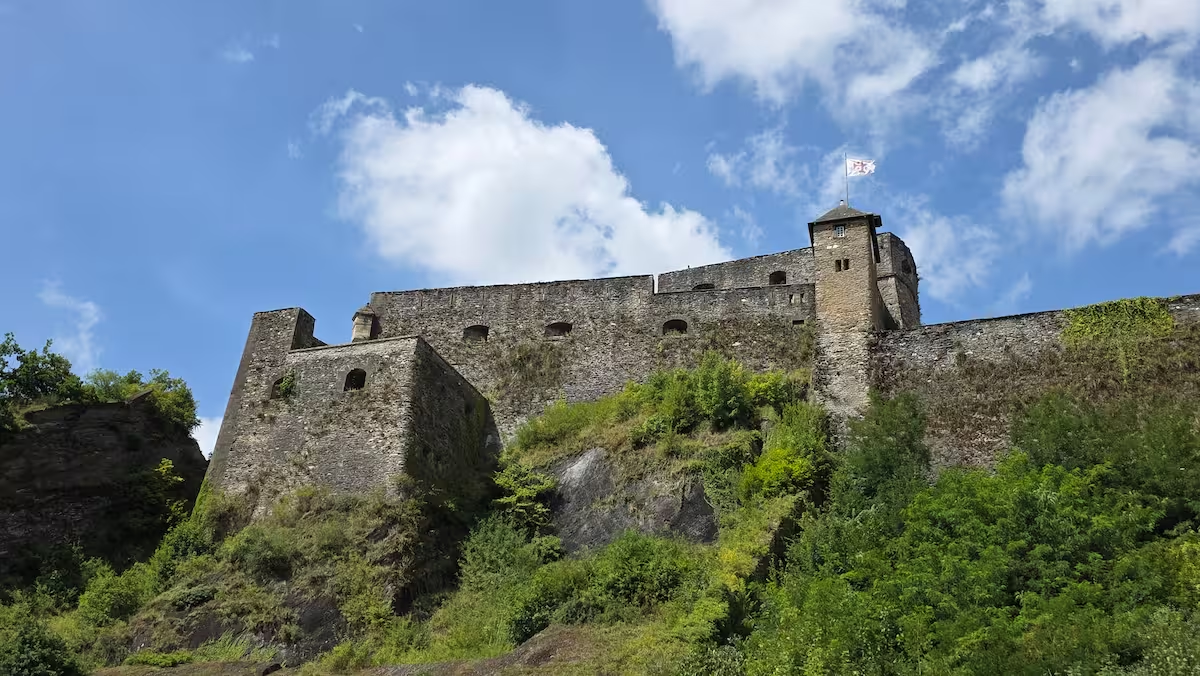
When you arrive in Bouillon, it’s impossible to miss the imposing silhouette of the bouillon castle standing proudly above the town and the Semois valley. It feels as though the very stones are whispering tales of centuries gone by—of battles, military strategy, and legends. For me, this place is far more than just a monument; it’s a living witness to history that transports you straight into the heart of the Middle Ages. The story of Bouillon Castle stretches back over a thousand years. The first traces of fortifications date from the 10th century, built to protect the region from invasions. But it was in the 11th century that the castle truly rose to prominence, thanks to a legendary figure: Godfrey of Bouillon. This lord, heir to the castle, left his mark on history by leading the First Crusade and becoming the first ruler of the Kingdom of Jerusalem in 1099. Although he never returned to reign here, his name remains forever linked to these ancient walls. After Godfrey’s era, the castle passed through various hands, most notably those of the powerful Prince-Bishops of Liège. From the 16th century onward, it underwent significant transformations, especially under the influence of the famed military engineer Vauban, who reinforced its defenses and adapted the fortress to new siege techniques. This blend of medieval architecture and military innovation is what gives the castle its unique character today. Walking through its shadowy corridors, climbing its narrow staircases, and exploring its vaulted halls, you can almost hear the echo of clashing swords and the heavy steps of armored soldiers. From the top of its ramparts, the view over the valley is breathtaking—especially at sunset. This panorama, almost unchanged for centuries, is a powerful reminder of the site’s strategic importance. Today, Bouillon Castle is much more than a relic of the past. It’s a lively, dynamic site hosting falconry shows, exhibitions, and immersive tours that bring medieval life to the present day. It’s also the perfect starting point for exploring the many other treasures of Bouillon, such as the Ducal Museum or the Belvedere viewpoint. For me, visiting Bouillon Castle is like stepping into a life-sized history book, where every stone, tower, and walkway has a story to tell. It’s an experience I recommend to anyone exploring the Belgian Ardennes. Bouillon Castle – Visitor Information 📍 Address:Bouillon CastleEsplanade Godefroy 16830 BouillonBelgium 🕒 Opening Hours: 🎟 Entry Fees (may vary depending on the season): 💡 Visitor Tips:
Saints Peter and Paul Church – The Spiritual Heart of Bouillon
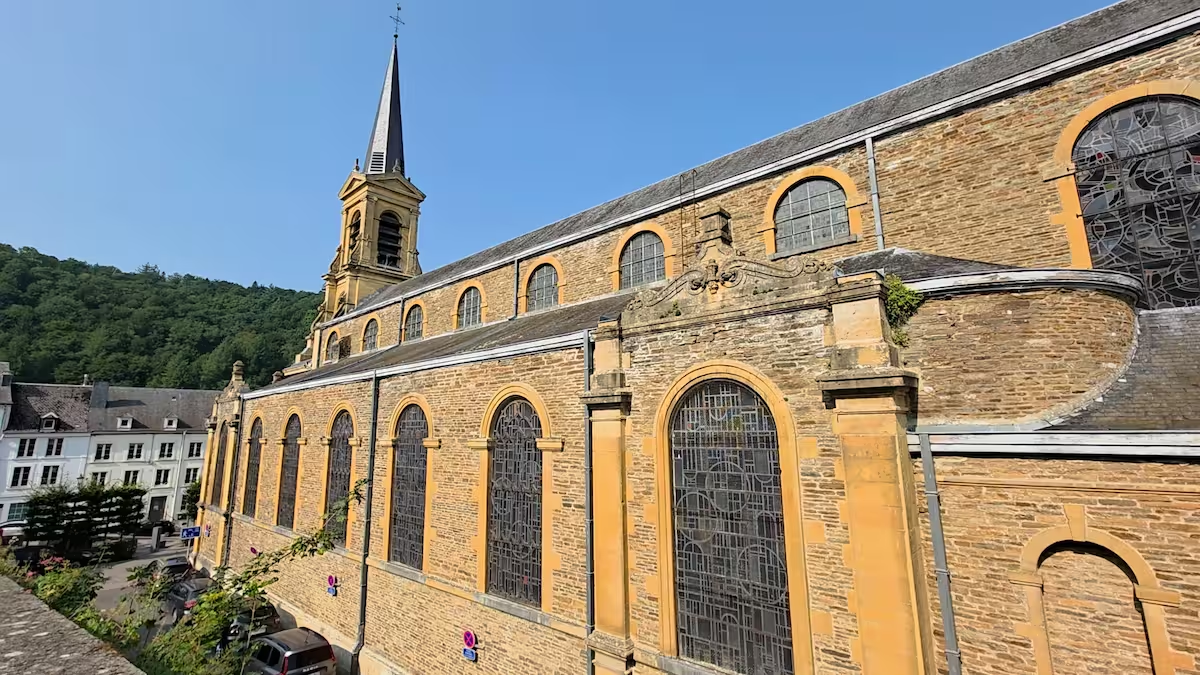
While strolling through the charming streets of Bouillon, past cobbled lanes and traditional façades, you will almost inevitably come across the Saints Peter and Paul Church. Located on Rue des Augustins, this elegant landmark rises with its square tower topped by a slender slate spire, like a silent guardian watching over the town. Its façade, built from a mix of sandstone, schist, limestone, and fine stone brought from France, reflects both strength and refinement. The current church was built in 1848 on the site of the former Augustinian college. Stepping inside, you immediately leave behind the sounds of café terraces and lively streets, entering a space filled with calm and reverence. Soft light filters through the modern stained-glass windows, bathing the three naves in warm colors. The eye is naturally drawn to the rounded choir, an area that invites contemplation and reflection. As you move forward, you will notice paintings illustrating significant episodes from the Gospel and the life of Jesus. At the entrance, frescoes remind visitors of the importance of Godfrey of Bouillon, the city’s most iconic historical figure. Every detail inside seems to tell a story, whether rooted in religion or local heritage. The finely carved wooden sculptures stand as a testament to the craftsmanship of the 19th century. The majestic organ dominates the space, and one can easily imagine its powerful music resonating through the church during services. Among the more recent additions, a statue of Saint Eloi, installed in 2017, draws attention. It replaced the previous one but continues to serve the same purpose — to watch over the faithful and the town. What struck me most was the sense of serenity. Even in the bustling heart of Bouillon, this church feels like a sanctuary, a place where time seems to slow down. Visitors linger here, whether to admire the stained glass, study the frescoes, or simply enjoy a peaceful moment. For me, Saints Peter and Paul Church is not just a historic building — it’s the soul of Bouillon. It embodies a unique blend of spirituality, heritage, and timeless beauty that makes the town so special. Visiting it feels like stepping into history while being embraced by an atmosphere of gentle tranquility. Saints Peter and Paul ChurchRue des Augustins 12,6830 Bouillon,Belgium
The Belvedere of Bouillon – A Breathtaking View Over the Ardennes
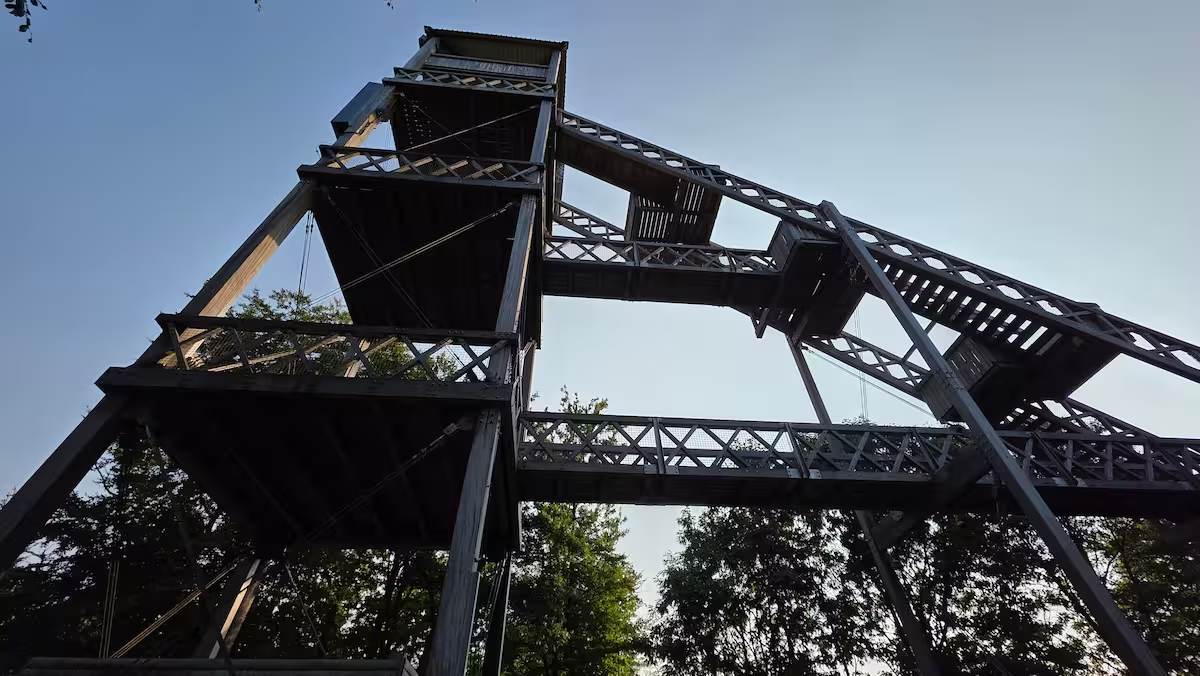
As an ambassador for the Ardennes and Wallonia, I feel it would be impossible — even unthinkable — not to talk about one of Bouillon’s most remarkable attractions: the Belvedere of Bouillon. This stunning vantage point is far more than just a viewing platform; it is a place where nature and history meet, offering visitors an unforgettable perspective over one of Belgium’s most picturesque towns. Perched high above the winding curves of the Semois River, the Belvedere rewards those who make the journey with a panoramic view that stretches over the dense forests, rolling hills, and the medieval heart of Bouillon itself. From here, the majestic Bouillon Castle rises proudly above the town, a reminder of the city’s strategic importance through the centuries. For lovers of hiking and nature, this is not just a stop — it’s an essential part of the Bouillon experience. Reaching the Belvedere can be part of a scenic walk through the Ardennes woodlands, where the air is fresh, the birdsong is constant, and every step brings you closer to an awe-inspiring view. In autumn, the landscape becomes a patchwork of gold, red, and amber; in spring and summer, the greenery bursts with life. The structure itself is a steel tower rising 30 meters high, allowing you to climb above the treetops for an even more spectacular panorama. From the top platform, the Semois appears like a silver ribbon weaving through the valley, framed by the natural beauty that has made the Ardennes famous. It’s a perfect spot for photography, contemplation, or simply soaking in the vastness of the landscape. Whether you arrive by car, bike, or on foot, the Belvedere offers a moment of pause — a chance to step back from the bustle of travel and immerse yourself in the timeless beauty of the Ardennes. It’s a reminder that Wallonia’s charm lies not only in its historic towns and cultural heritage but also in its unspoiled nature. If you are visiting Bouillon, make sure this is on your itinerary. The Belvedere is more than just a view — it’s an experience, a breath of fresh air, and a celebration of everything that makes the Ardennes so special. Practical Details Address Belvédère of BouillonRue de la Bichetour,6830 Bouillon, Belgium Situated on the right bank of the Semois River, this observation tower stands over 30 meters tall, reaching an elevation of approximately 385 meters above sea level—and about 180 meters above the river. Opening Hours The viewpoint is open 24 hours a day, every day . (Note: Access may require climbing; plan accordingly.) Highlights & Access Accessible by car or via scenic forest hikes, the Belvédère offers a rewarding view of Bouillon and the surrounding Ardennes. Climbing 161 steps leads you to the upper platform with striking 360° panoramas that encompass the town, the castle, and the river valley. Historically, this elevated position served as a visual relay for the castle’s defenses, part of a system of sightlines used for communication over distances
The Grund and Neumünster Abbey: History, Silence, and New Life in the Heart of Luxembourg
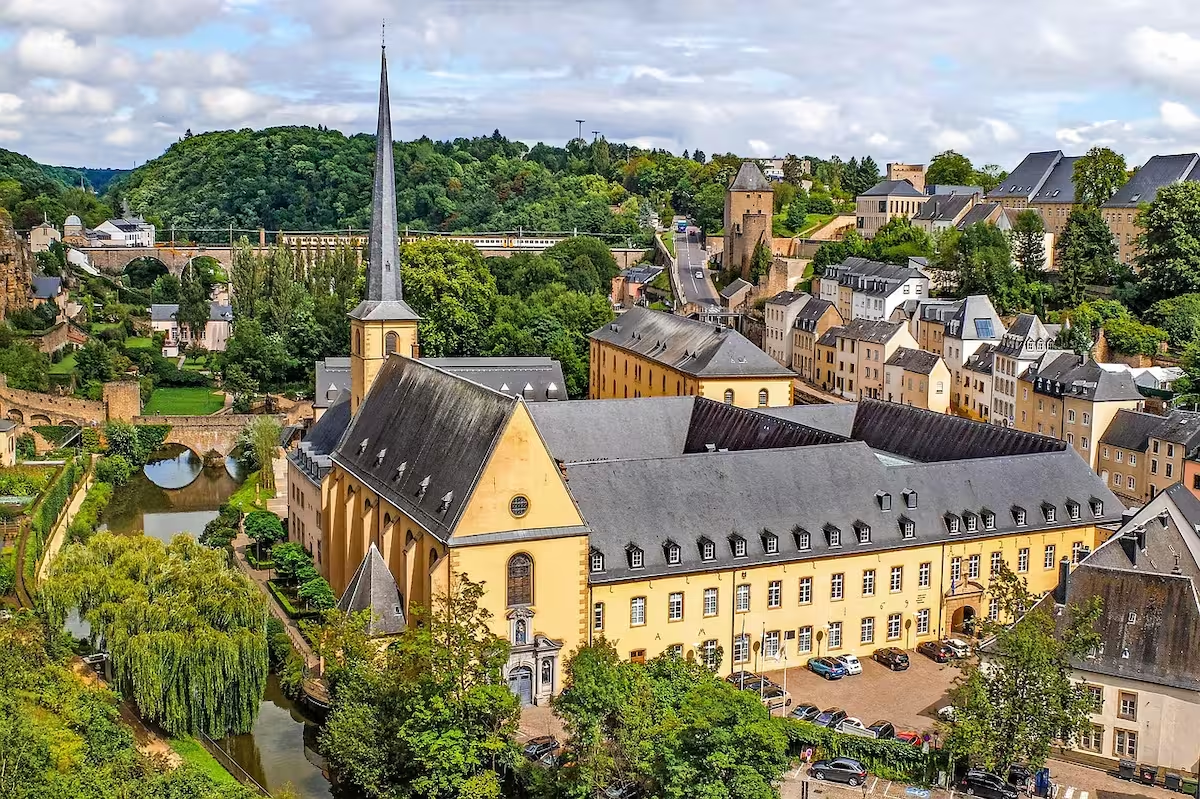
Some places seem frozen in time, and the Grund district in Luxembourg City is one of them. Just a short ride down the free panoramic elevator from the upper town, and you’re suddenly walking through cobbled alleys, colorful houses, and along the peaceful Alzette River. It feels like stepping into a hidden village — quiet, charming, and full of stories. That day, we let ourselves wander with no particular plan. The kids loved it — running across little bridges, watching ducks by the river, and discovering a slower rhythm of the city. Everything invites you to slow down and look around. In the heart of the Grund stands the impressive Neumünster Abbey. Today, it’s a peaceful cultural center. But it wasn’t always like this. Originally founded by Benedictine monks in the 10th century, the abbey has had a turbulent past. It was used as a prison all the way until 1985, which makes it even more striking to walk through its beautiful courtyard today, where exhibitions and concerts now take place. That contrast between darkness and rebirth gives the place a powerful energy. Today, Neumünster is alive with creativity. You can visit freely, admire art installations, or just sit and enjoy the quiet vibe. But what’s even more fascinating is how this neighborhood also once held a glove-making factory — a piece of Luxembourg’s forgotten working-class history that reminds us how much life has passed through these streets. Walking through the Grund isn’t just sightseeing. It’s a quiet immersion in centuries of life, faith, labor, and transformation — and sharing that with our children made the experience even richer. 📍 Practical Tips for Visiting the Grund & Neumünster Abbey Whether you’re looking for peace, architecture, or stories hidden in the stones, the Grund is a magical stop in the heart of Luxembourg. You come for an hour — and stay much longer.
Sodam in Belair: A Korean Dining Experience That’s Pleasant, Yet Slightly Tamed
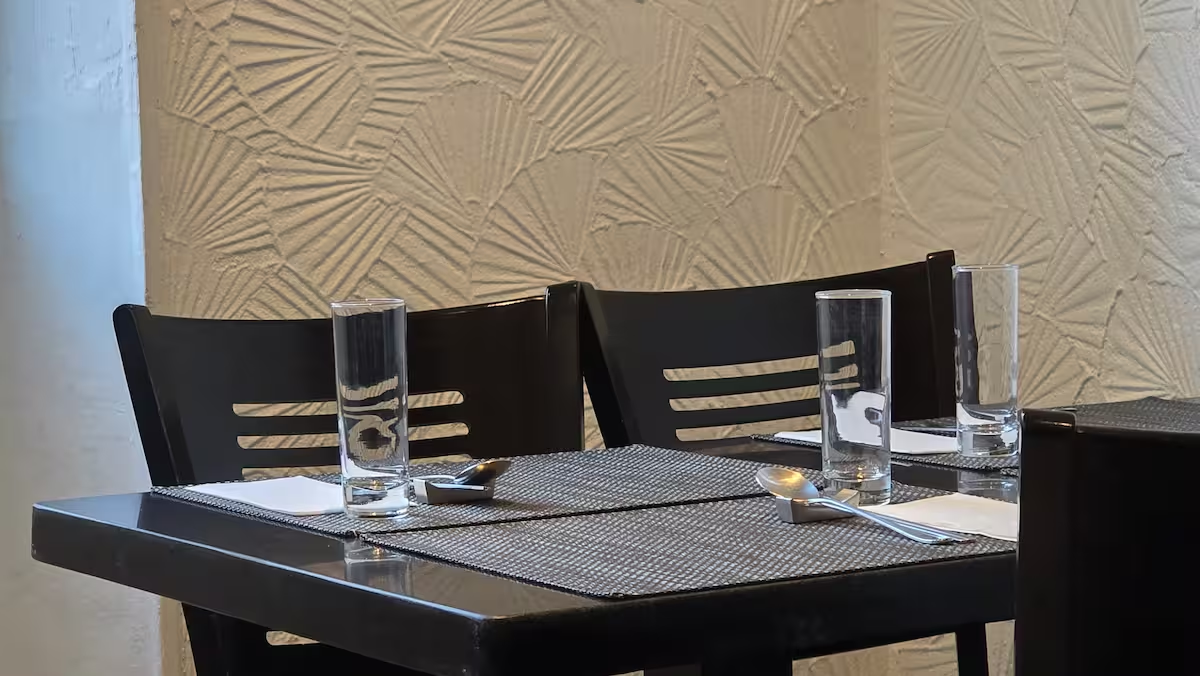
In the calm residential district of Belair, Luxembourg City, Sodam offers a Korean dining experience that’s both comforting and elegant. The atmosphere is cozy, the service is friendly, and the menu is filled with Korean classics that immediately spark curiosity — bibimbap, bulgogi, japchae, kimchi, and more. The dishes are nicely presented, the ingredients fresh, and the flavors well-balanced. It’s clear that Sodam puts care into their cooking. And for many guests, this might feel like a satisfying glimpse of Korean cuisine. But for those who know the bold, complex, and sometimes fiery flavors of true Korean food, something feels just slightly… toned down. The reality is, Asian cuisine served in Europe often differs from what you would find in its country of origin. Not just in presentation, but in intensity. Spices are often reduced, fermentation is more subtle, and the dishes are adjusted to suit European palates — smoother, safer, and sometimes a little less exciting. It’s not a failure — just a fact. And Sodam is no exception. That’s not to say the food isn’t good. On the contrary — the bibimbap is beautifully layered, the meat dishes are tender and full of flavor, and the homemade sides add welcome variety. But there’s a slight lack of boldness, of that wild authenticity that makes Korean food unforgettable. You enjoy it… but you don’t quite feel like you’ve traveled to Seoul with your fork. Still, Sodam is a solid and charming restaurant that introduces Korean cuisine in a way that’s accessible and satisfying. It’s perfect for a casual lunch, a quiet dinner, or a friendly night out. Just know that if you’re searching for the full-on Korean experience — loud, spicy, fermented and fierce — you might be left wanting a little more. Or you might just need to ask what’s off the menu. 📍 Address Sodam Korean Restaurant203 Route de LongwyL-1941 Luxembourg (Belair)📞 +352 28 99 66 88
A Journey into History: Our Visit to the Orval Abbey Museum, a Treasure Worth Discovering
We recently visited Orval Abbey, and to deepen our understanding of its fascinating history, we decided to extend our experience by exploring the Abbey Museum — a place truly worth visiting. As soon as we stepped inside, we were instantly transported back in time to the world of Cistercian monks, their beliefs, daily lives, and the many legends surrounding this exceptional site. The museum is thoughtfully arranged to tell the abbey’s story in an immersive and captivating way. Each room invites discovery with carefully preserved ancient artifacts, religious artworks, manuscripts, archival documents, and detailed models illustrating the abbey’s construction and architectural evolution through the centuries. These elements help us grasp not only the historical importance of the place but also the intense spiritual life that flourished there. What struck us most were the legends highlighted throughout the exhibits. One of the most famous is the story of Countess Mathilde, who — according to tradition — founded the abbey after witnessing a miraculous trout holding a ring in its mouth. This anecdote adds a magical dimension to the visit and reveals the deep connection between nature, faith, and history at Orval. Beyond the history, the museum offers a glimpse into the daily life of the monks. Faithful reconstructions of monastic cells, workshops, and living spaces reveal how these men led lives structured around prayer, manual labor, and study. We learned about the artisanal skills they developed, especially in brewing the renowned Orval Trappist beer and producing cheese, both of which continue to be made today by the 40 monks still living in the abbey. This link between tradition and contemporary life gives the museum a rare authenticity. For visitors of all ages — especially children — the museum provides interactive areas and explanatory videos that make the visit both fun and accessible. Young and old alike can immerse themselves in the rich history and spirituality of this unique place. When we left, we felt genuinely enriched by this deep dive into the past and monastic life. We understood better the abbey’s grandeur—not just as an architectural masterpiece but as a place of faith, craftsmanship, and continuity. The Orval Abbey Museum is undoubtedly a must-visit for anyone wanting to fully experience this exceptional heritage.
🌿 Orval Abbey: A timeless journey through stone, silence, and monastic life
We didn’t expect this place to touch us the way it did. We thought we’d discover an old building, and instead we found something much deeper: a peaceful energy, a powerful atmosphere — the kind that stays with you long after the visit. Orval Abbey, nestled in the heart of Belgium’s Gaume region, feels like it belongs outside of time. Surrounded by nature, its silence isn’t heavy — it’s soothing. From the first steps inside, the harmony of the site invites contemplation. The abbey was originally founded in the 11th century by Benedictine monks. Over the centuries, it thrived, suffered destruction — especially during the French Revolution — and was eventually rebuilt in the 20th century. One of the most beloved legends tells of Countess Matilda, who lost her wedding ring in the spring and miraculously recovered it in the mouth of a trout. In gratitude, she donated the land to the monks — and that image of the trout with a ring still represents Orval today. What’s nice is that the visit can be done on your own or with a guide. We chose the guided experience and had the pleasure of being led by Victor, a young man who clearly loves his work. Friendly, passionate, and full of knowledge, he made the history come alive with a gentle, authentic energy that made the experience even more special. Today, Orval is partly in ruins, partly rebuilt — and it’s exactly that contrast that gives it soul. Arches open to the sky, vaulted rooms turned into museums, tranquil gardens, and fountains bubbling away… Every space feels like an invitation to slow down and breathe. And what makes Orval even more unique is that it’s not just a historical site — it’s alive. Around 40 Trappist monks still live there today, devoted to silence, prayer, and manual labor. You don’t see them during the visit, but you feel their presence in every corner. (Yes — they’re the ones who make Orval’s legendary beer! 🍺 A deep, complex Trappist ale unlike any other. And let’s not forget their amazing cheese — creamy, subtle, with a distinct Orval character.) The experience is thoughtfully designed: a medicinal herb garden, interactive museum rooms, video projections, and plenty of open spaces to wander. Our children loved exploring the ruins, climbing the stones, and looking for fish in the spring. For them, it was an adventure — and for us, a deep breath of serenity. ✨ In short:Orval Abbey isn’t just a place to see. It’s a place to feel. A living blend of history, spirituality, silence… and delicious local craft. Special thanks to Victor, our guide, for making it all come alive with kindness and passion. We left refreshed — and with beer and cheese in our bags! 😄 📍 Exact Address of Orval Abbey Abbaye Notre-Dame d’OrvalOrval, No. 1B-6823 Villers-devant-Orval, Belgium📞 +32 61 311 060🌐 www.orval.be 🕰️ Opening Hours Season Opening Hours Last Entry Winter (Nov – Feb) 10:30 AM – 5:30 PM 4:30 PM Shoulder Season (Mar – May) 9:30 AM – 6:00 PM 5:00 PM Summer (Jun – Sep) 9:30 AM – 6:30 PM 5:30 PM Note: Hours may vary, so please check the official website before your visit. 💰 Admission Fees Category Price Adults €8.00 Reduced (seniors, students) €6.00 Children (7 to 14 years) €3.00 Disabled persons €3.00 Groups (20+ persons) €6.00 Senior/student groups €4.50 School groups €2.00 Solidarity groups Free 🧭 Visitor Tips
🕊️ Saint John the Baptist Church in Grund: History, Silence… and the Black Virgin
While strolling through the peaceful Grund district in Luxembourg City, we decided to step inside the Church of Saint John the Baptist. It wasn’t part of our original plan, but, as often happens during travels, it’s the unexpected stops that leave the deepest impressions. From the moment we arrived, we felt this place was different. Built in 1309, this church is known as the second oldest in Luxembourg City. It stands on the site where Benedictine monks once founded an abbey centuries ago. The building has survived centuries of history with humble grace. It doesn’t try to impress — yet it does, quietly, with its peaceful atmosphere and historical depth. As we entered, soft light streamed through the stained-glass windows. A hushed silence surrounded us. Even the children, usually full of energy, instinctively lowered their voices. There is something powerful and almost sacred in the air. What moved us the most was the presence of the Black Virgin, lovingly known as « Marie noire. » Placed in a small side chapel and surrounded by flickering candles, her peaceful yet intense gaze caught our attention immediately. And there’s a story behind her. Originally, this Virgin Mary wasn’t black. It was during the 17th century, in a time of devastating plague, that she was painted black — a symbolic act by the faithful. It represented grief, mourning… but also strength, faith, and hope. Since then, she has remained that way, a silent witness to suffering and spiritual resilience. To this day, people still visit her to light candles, pray, or simply reflect. She is not just a religious statue — she carries meaning, emotion, and memory. Our visit didn’t take long, but the experience stayed with us. We lingered, observed every detail, and enjoyed the stillness. Even our kids had thoughtful questions: Why is she black? Why is it so quiet? Why do people still come here? That’s what makes this place so unique: it sparks emotion, curiosity, and peace. 📍 Practical Info for Visitors: This humble yet deeply meaningful church is a hidden treasure of the old city, and we’re grateful we stumbled upon it. A powerful place, filled with memory and serenity — whether you’re a believer or just curious.
🦁 A Magical Day at Amnéville Zoo: A Family Day Full of Firsts and Wonder
Some outings just stick with you. And I know this one will be remembered for a long time. This weekend, we took our son to the Amnéville Zoo — his very first real visit to a big animal park. Sure, he had seen animals in books or stuffed toys before… but this was real, alive, and sometimes even giant. And honestly, it was just as magical for him… as it was for us. Right from the entrance, we realized this isn’t just a small town zoo. The paths are wide, the animal enclosures are beautifully integrated into a natural setting, and most of all: the variety of animals is incredible. We saw lions, tigers, elephants, giraffes, monkeys, red pandas… and so many more. Every enclosure is thoughtfully designed, and the animals have room to rest, play, climb, swim, or simply disappear into nature when they want peace. But what moved me most was seeing my son’s eyes light up at every turn. He’d stop in his tracks, point, whisper « look mommy! » or « daddy, quick! », like he was discovering treasure after treasure. He stood frozen in awe in front of the tigers. He laughed out loud with the monkeys. And when he saw the giraffes, he just said, very seriously: « They’re soooo tall, right? ». Adorable. There are some amazing highlights along the way, like the tropical aviary, where you walk among exotic birds and vines, or the sea lion area, where you can see them dive and twirl behind a giant glass wall — something the kids absolutely loved. And of course, we couldn’t miss the Big Cat Show. That part was seriously impressive. White lions and tigers participate in demonstrations with expert caretakers, all presented with great respect and passion. You can feel the bond between the humans and the animals. It’s educational, powerful, and one of the standout moments of the day. As for practical stuff: the zoo is very well maintained, clean restrooms, multiple spots to sit or picnic, and even several food stands along the route. It’s super family-friendly, whether your kids are toddlers or older. We had a stroller and had no trouble navigating the paths. Even though it was busy, it never felt crowded or overwhelming. We ended up spending the entire day there — filled with laughter, discovery, and those magical little moments you never forget. Even on the way home, our son was still talking about “the elephant eating with his big nose” or “the baby monkey riding on his mommy’s back.” It’s amazing how deep these experiences sink in, even for little ones. After visiting The World of Dinosauria (which I wrote about in my last post), the zoo experience really completed our adventure. The two are linked: you can only access Dinosauria from inside the zoo, so it’s the perfect way to turn one day into a double discovery. 💬 If you’re looking for a day out that will genuinely delight your kids — and bring a smile to your face too — I can’t recommend this place enough. The Amnéville Zoo isn’t just a zoo. It’s an experience. A connection. A memory in the making. And for us, it was the start of our son’s very first real adventure with the animal world. 📍 Exact Address of Amnéville Zoo 1 Rue du Tigre, 57360 Amnéville, Grand Est, France🌐 Official website 🐾 Tips to Make the Most of Your Zoo Visit