In the heart of Brittany, nestled in the charming town of Vitré, stands one of France’s best-preserved medieval castles — the Vitré Castle. As soon as we approached, we were captivated by its majestic silhouette, standing proudly above the Vilaine River, with its conical towers, high stone walls, and timeless allure. Visiting the castle feels like stepping into a fairy tale. Built in the 11th century by the Baron de Vitré, the castle served both as a defensive stronghold and a symbol of feudal power. Over the centuries, it evolved into a magnificent fortress, especially during the 15th century when it became the residence of the powerful La Trémoille family. Today, the Château de Vitré is open to the public and houses the town museum. Inside, visitors can admire a fascinating collection of historical artifacts, period furniture, and artwork that reveals the region’s rich past. Walking through the castle rooms, climbing the towers, and enjoying the panoramic views over the medieval city below is a journey through time. What struck us most was how well-preserved the whole structure is. The town of Vitré itself enhances the magic — cobbled streets, half-timbered houses, and local cafés create a perfect blend of history and charm. Whether you’re a history lover, a family looking for a fun cultural experience, or simply a traveler in search of beautiful architecture, the Château de Vitré is a must-see stop in Brittany. 📍 Address Vitré CastlePlace du Château,35500 Vitré,Brittany, France 🕰️ Opening Hours Always check the official website or local tourism office before your visit, as hours may vary on special dates. 🎟️ Admission Fees 🧭 Tips for Visitors
Mont-Dol: Legends, Breathtaking Views, and the Iconic Windmill
Rising proudly in the heart of the Breton plains, Mont-Dol is impossible to miss when arriving in Dol-de-Bretagne. Standing about forty meters high, this rocky hill offers a spectacular view over the bay of Mont-Saint-Michel. The climb to the top is quite easy, and you can reach it either on foot or by car. However, to truly appreciate the place, nothing beats a peaceful walk along the paths winding around its slopes. You’ll pass through shaded wooded areas and rocky outcrops before reaching open plateaus where the panorama unfolds in all its glory. At the summit, visitors will find the old Saint-Michel Chapel, a reminder of the site’s deep religious roots, as well as a striking statue of the Archangel defeating the dragon, evoking the legend of Saint Michael’s battle against Satan. But one of Mont-Dol’s most charming features is undoubtedly its windmill — a picturesque and timeless guardian of the landscape, symbolizing the agricultural heritage of the region. Locals like to say that the cracked stones and oddly shaped rocks are the scars of that celestial battle. On a clear day, the view stretches as far as Mont-Saint-Michel itself, along with sweeping fields, marshes, and charming villages. Mont-Dol is far more than a natural site — it is a place infused with legends, history, and landscapes that beg to be photographed. Whether you are a nature enthusiast, a history lover, or simply looking for an unforgettable view, Mont-Dol is an unmissable stop in Brittany. Practical Information for Visiting Mont-Dol 📍 Address:Mont-Dol, 35120 Mont-Dol, Brittany, France 🕒 Best Time to Visit:Visit early in the morning or late afternoon for softer light and fewer crowds. Sunset from the top offers incredible views over the bay of Mont-Saint-Michel. 🚗 Parking:Free parking is available near the base of Mont-Dol, just a short walk from the path leading to the top. 👟 Accessibility & Walk:The climb to the summit is easy and suitable for most visitors, but wear comfortable walking shoes as the paths can be uneven in places. 📸 Photography Tip:Bring a zoom lens or binoculars to fully enjoy the distant views of Mont-Saint-Michel and the surrounding countryside. ⚠️ Local Tip:If you want to visit the Saint-Michel Chapel or the windmill, check their opening hours in advance as they may be limited depending on the season.
Saint-Samson Cathedral – The Beating Heart of Dol-de-Bretagne
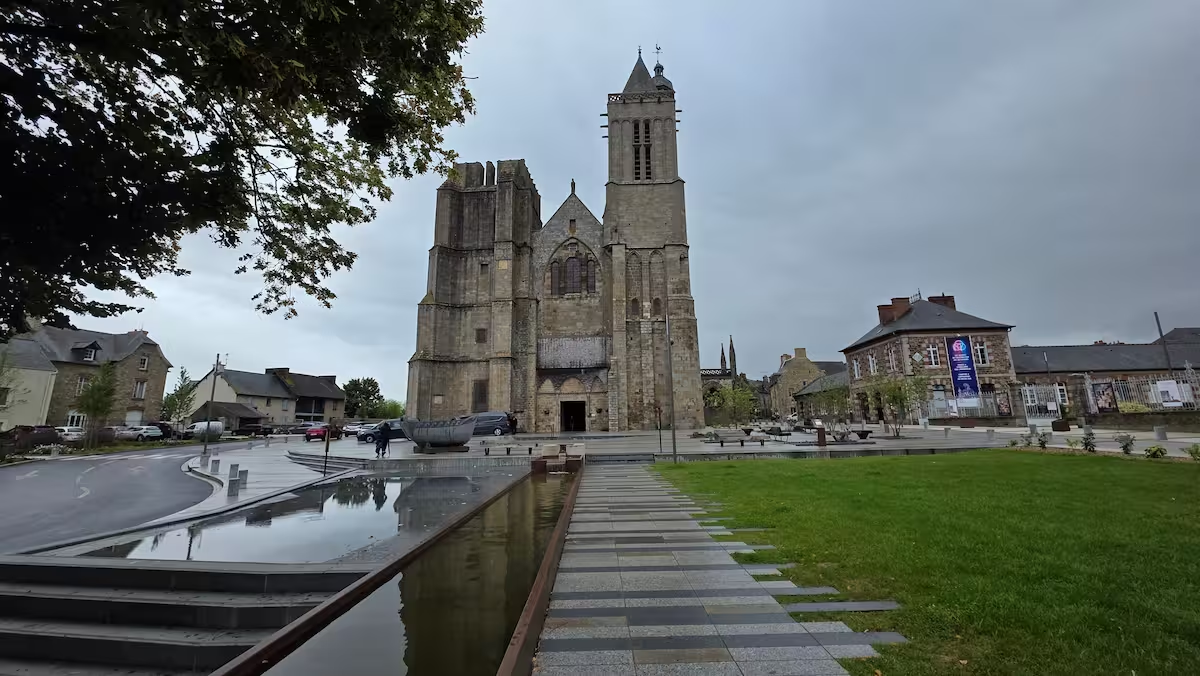
When you arrive in Dol-de-Bretagne, it’s impossible to miss the majestic silhouette of Saint-Samson Cathedral towering over the town. Its two imposing towers and gothic facades rise above the surrounding streets, like a spiritual lighthouse guiding visitors toward the historic centre. Stepping through its massive wooden doors, you enter a space where every stone seems to tell a story. Soft light filters through colourful stained-glass windows, painting the walls in warm hues, while the silence invites contemplation. The floor, worn smooth by centuries of footsteps, bears the invisible marks of countless generations. Construction of the cathedral dates mainly from the 12th and 13th centuries. It is dedicated to Saint Samson, one of the seven founding saints of Brittany, who came from Wales in the 6th century to evangelise the region. The building blends Romanesque and Gothic elements in a unique architectural harmony. Inside, you’ll find finely carved sculptures, soaring vaulted ceilings, and side chapels that reflect the deep religious devotion of the time. The cathedral’s history is deeply intertwined with that of Dol-de-Bretagne. During the Middle Ages, it served as the seat of the Dol bishopric, an important spiritual and political centre. It withstood wars, storms, and even the upheavals of the French Revolution, maintaining its role as a place of worship and a landmark for the community. What struck me most during my visit was the sense of peace within. Even though the town outside bustles with shops and visitors, here, time seems to stand still. You can sit on a wooden pew, admire the choir and its stained glass, and simply let the beauty and serenity of the place wash over you. As you leave, it’s impossible not to glance back at its towering profile dominating the skyline. Saint-Samson Cathedral is not just a historical monument—it’s a living symbol of Dol-de-Bretagne, a meeting point between past and present, and an unmissable stop for anyone visiting the region. Visiting tips for Saint-Samson Cathedral 📍 Address: Place de la Cathédrale, 35120 Dol-de-Bretagne, France
The Harry Potter Studio Tour in England: A Magical Journey into the Wizarding World
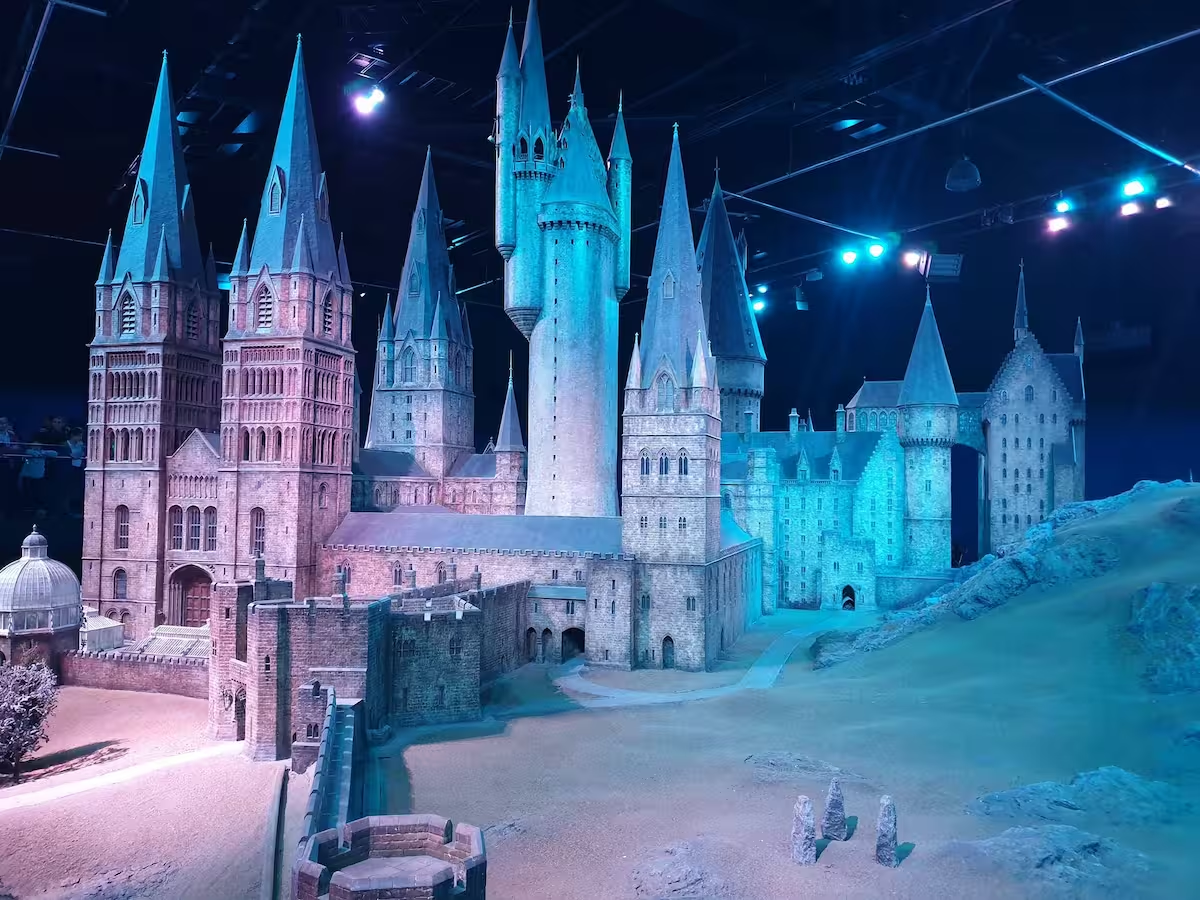
Just outside London, in the town of Leavesden, lies one of the most enchanting attractions for fans of J.K. Rowling’s universe: the Warner Bros. Studio Tour London – The Making of Harry Potter. Far more than a simple amusement park, this immersive experience takes visitors behind the scenes of the iconic films and offers a journey into the very heart of the wizarding world. From the moment you step inside, it feels like you are leaving the Muggle world behind and entering a place where magic truly comes alive. The adventure begins with a breathtaking moment: the massive doors open to reveal the Great Hall of Hogwarts, complete with long wooden tables, floating chandeliers, and the authentic costumes worn by the actors. Standing in this very room where countless unforgettable scenes were filmed is a powerful and emotional start to the tour. From there, visitors are guided through an impressive array of sets, each one carefully preserved and filled with incredible details. You can explore the cozy Gryffindor common room, step inside Dumbledore’s office with its magical artifacts and the Pensieve, peek into Snape’s Potions classroom filled with jars and mysterious ingredients, and even wander around Hagrid’s hut, rustic and warm. Each set is a masterpiece in its own right, revealing the artistry and craftsmanship that made the saga so believable. One of the highlights of the tour is stepping onto the Diagon Alley set, a whimsical street lined with vibrant shopfronts. Visitors can admire Ollivanders wand shop, Flourish and Blotts bookstore, and the Weasley twins’ joke shop, all designed with such detail that you almost expect to see wizards bustling around buying their school supplies. The tour continues with the dark and mysterious Forbidden Forest, where visitors encounter Aragog, the giant animatronic spider, and even bow to Buckbeak the hippogriff, who responds with lifelike movements. This section of the tour perfectly captures the magical yet slightly eerie atmosphere that made the films so captivating. A particularly emotional moment is meeting the iconic Hogwarts Express on Platform 9¾. The scarlet steam engine sits proudly by the brick wall, and visitors can climb aboard a carriage, imagining themselves traveling alongside Harry, Hermione, and Ron on their way to Hogwarts. Beyond the sets, the tour reveals countless behind-the-scenes secrets. Guests can learn about special effects, animatronics, prosthetics, and the creative techniques used to bring characters like Dobby or creatures like dragons to life. It’s a fascinating insight into the ingenuity and talent of the production teams who worked tirelessly for over a decade on the films. The experience culminates in front of the stunning Hogwarts Castle model, an enormous, highly detailed scale version used for aerial shots in the films. Illuminated with magical lighting, it is a breathtaking sight that often leaves visitors speechless. Many people linger here, soaking in the beauty of the castle that has fueled so many childhood dreams. Of course, no visit would be complete without a stop at the official gift shop, where fans can choose from an incredible range of souvenirs: character wands, house scarves, Chocolate Frogs, quills, notebooks, and even full Hogwarts robes. It is nearly impossible to leave empty-handed. The Harry Potter Studio Tour in England is much more than a tourist attraction – it is an emotional and immersive experience that brings back the wonder of childhood, the excitement of the films, and the joy of stepping into a world where magic feels real. It is a place for fans of all ages to share unforgettable memories together. Yet, one cannot ignore a sad reality: sometimes, tourists behave as if the entire experience revolves around them, pushing, rushing, or monopolizing sets just for photos. Such behavior stands in contrast to the spirit of the place, which should remain a sanctuary of joy, wonder, and shared enjoyment for everyone. 📍 Address & Visitor Tips Address:Warner Bros. Studio Tour LondonStudio Tour DriveLeavesden, WD25 7LRUnited Kingdom Visitor Tips:
🏰 Hunaudaye Castle: A Medieval Gem We Almost Explored
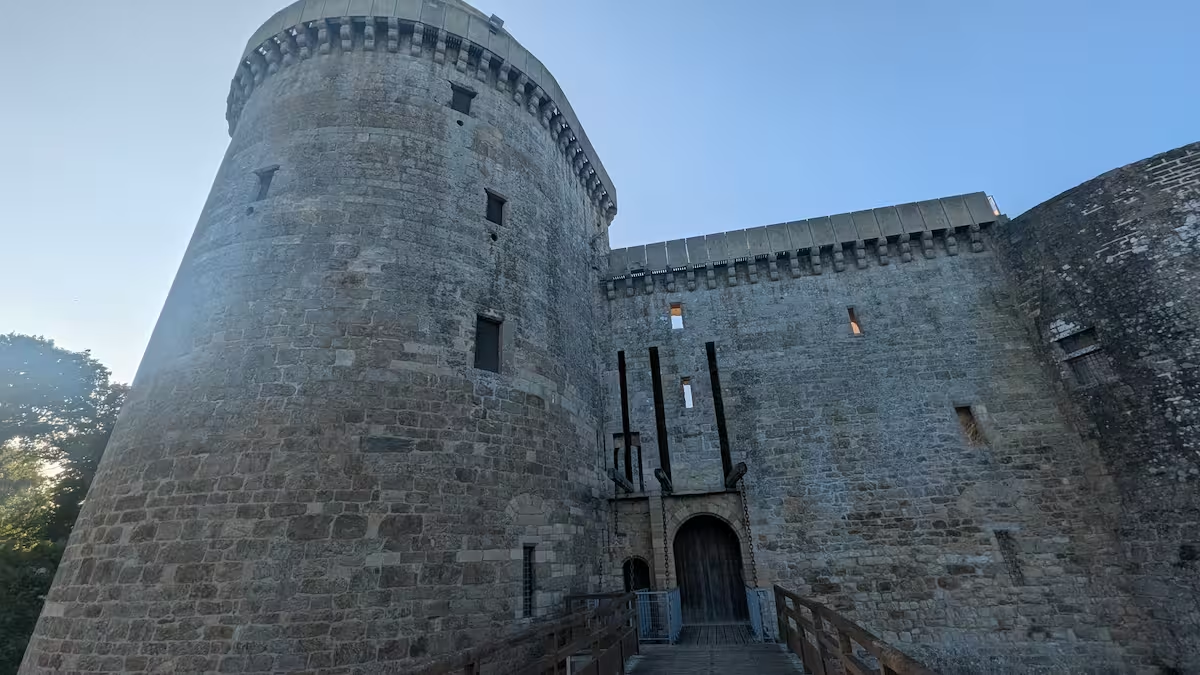
As we continued our journey through the peaceful landscapes of Brittany, a striking silhouette suddenly appeared in the distance. Nestled in a small forest, surrounded by ponds and countryside, the Château de la Hunaudaye stood tall and proud — as if it had never surrendered to time. We hadn’t planned to stop there, but the sight of this magnificent medieval fortress made it impossible to just drive past. Sadly, we arrived just a few minutes too late — the gates had already closed for the day. A bit disappointing, yes, but the magic of the moment remained untouched. Even from the outside, the castle is absolutely majestic. Built in the 13th century by the Tournemine family, the castle has witnessed centuries of history, wars, fires… and even oblivion. It originally replaced a wooden fortified structure, mentioned as early as the 1200s. One can easily imagine knights standing guard, craftsmen working in the courtyard, and noble life unfolding behind those high stone walls. In the 15th century, the castle was transformed into a more comfortable residence, combining defense and elegance. Like many others, it suffered during the French Revolution and eventually fell into ruin. Thankfully, restoration efforts over the years have preserved much of the castle, especially the five impressive towers that still surround the central courtyard. From the outside, we admired the moat, the drawbridge, and the thick stone walls that tell silent stories of the past. Even without stepping inside, your imagination starts to run wild. The kids, completely fascinated, kept asking: “Was there a dungeon?”, “Do you think there were dragons here?”, “Where did the knights sleep?” That’s the beauty of a place like this — it speaks for itself. Today, the château is open to visitors, offering educational trails, historical reenactments, and temporary exhibitions. You can even climb the towers for panoramic views of the region — or so we’ve heard! We’ll definitely be coming back, and next time, we’ll make sure to arrive earlier. The Château de la Hunaudaye is a wonderful stop for families, history lovers, and curious travelers. Even closed, it gave us a timeless moment of wonder. 📍 Practical Information
L’Atm O Sphère in Avranches: A Fresh Culinary Experience with a Parisian Touch
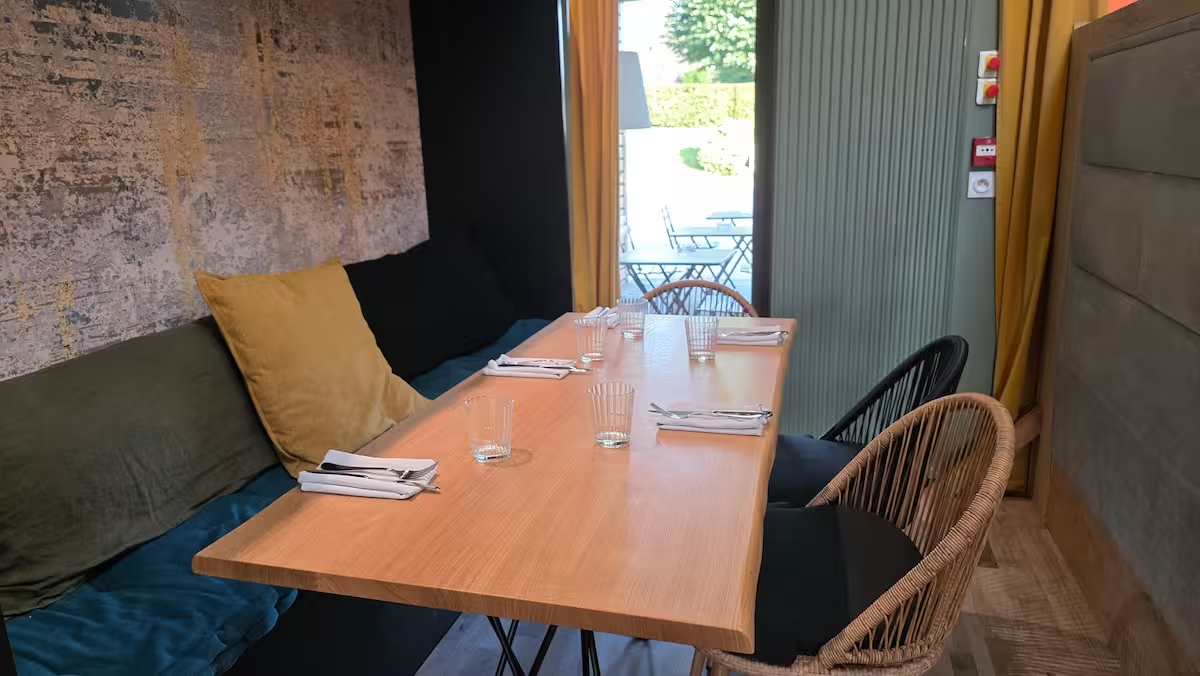
Since July, L’Atm O Sphère in Avranches has been undergoing a remarkable transformation. The restaurant welcomed a new owner, who after successfully managing three restaurants in the Paris region, decided to settle in this charming Norman town. His arrival brings fresh energy and promises a unique gastronomic experience for both locals and visitors passing through Avranches. From the moment you enter, the warm and inviting ambiance of L’Atm O Sphère is immediately noticeable. The décor combines modern elegance with a cozy atmosphere, creating the perfect setting for a romantic dinner, a gathering with friends, or a family meal. The staff is professional, friendly, and attentive, reflecting the passion and care that the new owner brings to every guest. The cuisine is where the transformation is most evident. The menu features refined dishes made with seasonal and local products, crafted with precision and creativity. Each plate is a visual and culinary delight, offering delicate flavors and perfectly balanced textures. French classics are reimagined with a modern twist, creating an experience that is both authentic and innovative. Service is attentive and efficient, guiding guests expertly through the menu and wine selection. Every detail is designed to ensure that diners feel welcomed and pampered throughout their meal. In conclusion, L’Atm O Sphère in Avranches is more than just a restaurant. With the arrival of its new owner, it now perfectly combines Parisian culinary expertise, high-quality local ingredients, and a welcoming, convivial atmosphere. Whether you are a fan of refined French cuisine or simply curious to discover a new gastronomic spot, Atmosphère is a must-visit in Avranches. 📍 Restaurant Address:L’Atm O Sphère8, rue de la mairie, 50300 Avranches, France
🏰 Brandenbourg Castle – A Forgotten Fortress Watching Over the Ardennes
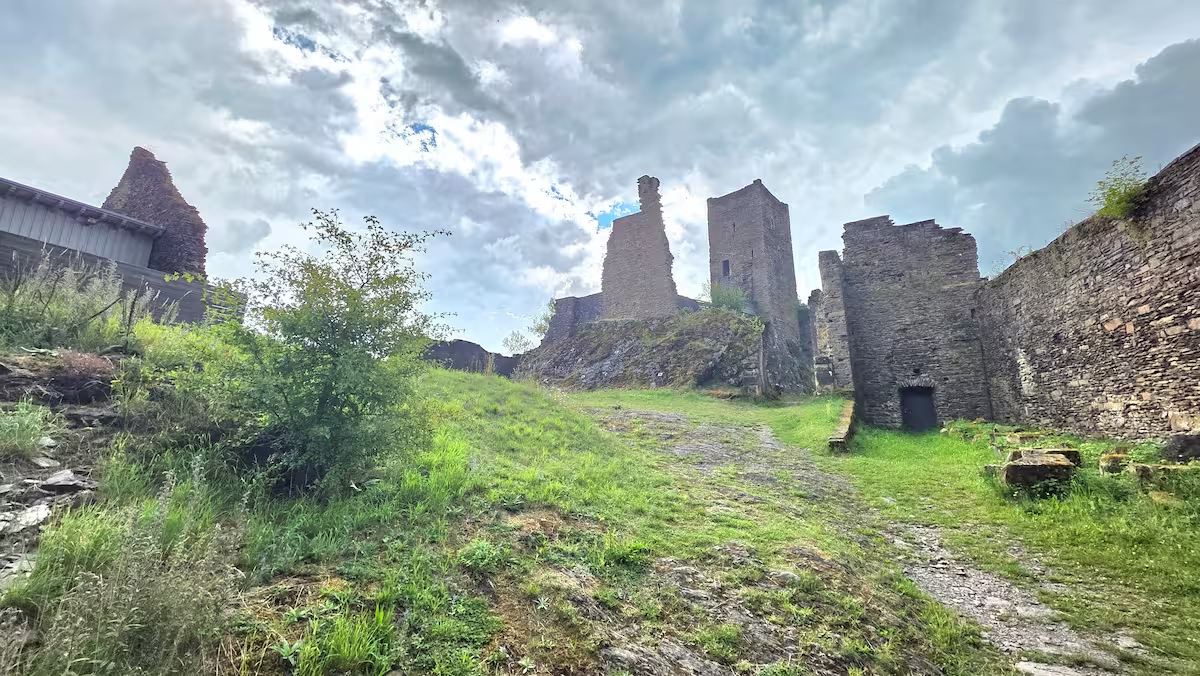
As an ambassador for the Ardenne brand, I couldn’t pass up the opportunity to introduce you to this powerful place. Hidden in the northern hills of Luxembourg, the Brandenbourg Castle stands like a silent guardian over the valley — a ruin, yes, but one with a soul. Recently opened to the public after thoughtful restoration and safety works, this site is now ready to welcome those curious enough to walk in the footsteps of centuries past. The story of this castle stretches back to around 900 AD, when a simple wooden structure stood here — more watchtower than fortress, watching over the ancient routes between villages and valleys. It wasn’t until the 12th century that stone took over, and the castle we see today began to take shape. It became the stronghold of the noble House of Brandenbourg, a powerful family that played a key role in Luxembourg’s medieval history. Wandering through the ruins today is like stepping into a quiet storybook. Though time has taken its toll, many parts are still clearly visible — crumbling towers, winding staircases, arched doorways. The site is freely accessible and beautifully integrated into nature, with interpretive signs that enhance the experience without disturbing the magic. You’re free to explore, climb, imagine. That day, my children turned the place into a knight’s kingdom. For them, it was an adventure. For me, it was a moment of connection — to time, to memory, and to a region that never ceases to amaze me. The Ardennes of Luxembourg hold so many quiet treasures like this one: humble, authentic, unforgettable. Brandenbourg may not make the front pages of travel guides, but once you see it, you’ll carry a piece of it with you. 📍 Exact Address: Brandenbourg Castle2 Rue du ChâteauL-9363 Brandenbourg, Luxembourg(Commune of Tandel, in the Luxembourg Ardennes) 🔓 Public Access and Recent Renovation: Brandenbourg Castle is freely open to the public all year round, following a recent conservation and safety project supported by the Luxembourg state and the Commune of Tandel. Thanks to this work, the castle is now: Although it’s a ruin, the experience feels immersive and respectful of the past. The upgrades make exploration easier while maintaining the castle’s authentic atmosphere. 🧭 Visitor Tips:
The Abbaye aux Hommes – William the Conqueror’s Monument to Faith and Power
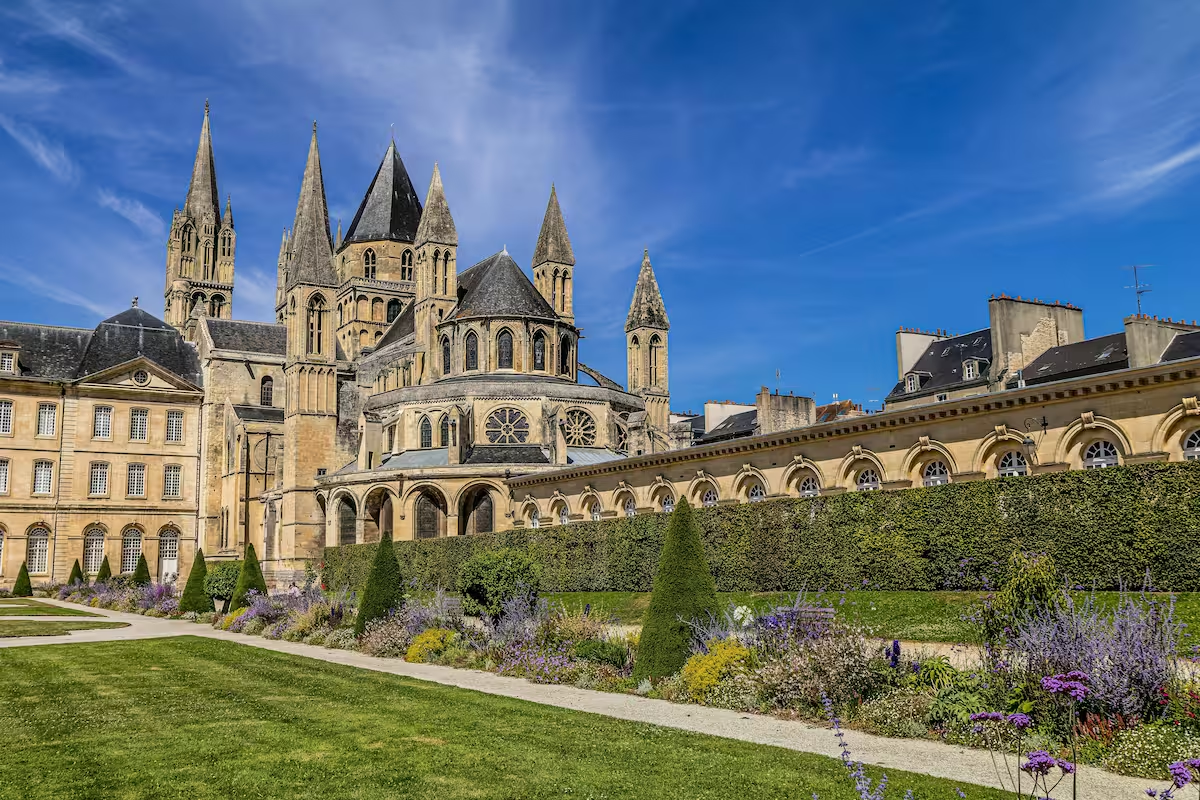
After leaving the Abbaye aux Dames behind, my footsteps led me to its grand counterpart: the Abbaye aux Hommes. Standing proudly in the heart of Caen, this imposing Romanesque masterpiece is as much a testament to faith as it is to the ambition of its founder — William the Conqueror. Built around 1063, the Abbaye aux Hommes (or Abbaye Saint-Étienne) was William’s answer to the delicate political and religious situation surrounding his marriage to Matilda of Flanders. As distant cousins, their union had been condemned by the Church, and in order to reconcile with Rome, each spouse founded an abbey: Matilda the Abbaye aux Dames, and William the Abbaye aux Hommes. Dedicated to Saint Stephen, the abbey became one of the most important Benedictine monasteries in Normandy. Its church, with its powerful twin towers and harmonious proportions, is a shining example of Norman Romanesque architecture. Inside, the vast nave draws the eye toward the choir, where light floods through tall, narrow windows, creating a serene and solemn atmosphere. The abbey was not just a place of worship but also a center of learning and influence. For centuries, it shaped the spiritual and cultural life of Caen. William himself was laid to rest here in 1087, though his tomb has endured a turbulent history — desecrated during the French Wars of Religion, and later damaged during the Revolution. Today, a simple marble slab marks the spot where the Conqueror lies. The surrounding monastic buildings, including the cloister and chapter house, have evolved over time. During the French Revolution, the abbey was repurposed and eventually became Caen’s Town Hall — a role it still fulfills today. This unusual blend of civic function and historic heritage makes it one of the most unique sites in the city. Walking through its vast spaces, I couldn’t help but imagine the daily life of the monks who once called this place home — the chants echoing under the stone vaults, the quiet work in the cloisters, the prayers offered for the soul of a king. The Abbaye aux Hommes is more than just a monument; it’s a living link to Normandy’s medieval past, the personal story of William the Conqueror, and the architectural genius of the 11th century. Address & Visitor Tips 📍 Address:Abbaye aux Hommes – Saint-ÉtiennePlace Saint-Étienne14000 Caen – France 🕰 Visitor Tips:
The Abbaye aux Dames – The Spiritual Jewel of Matilda of Flanders
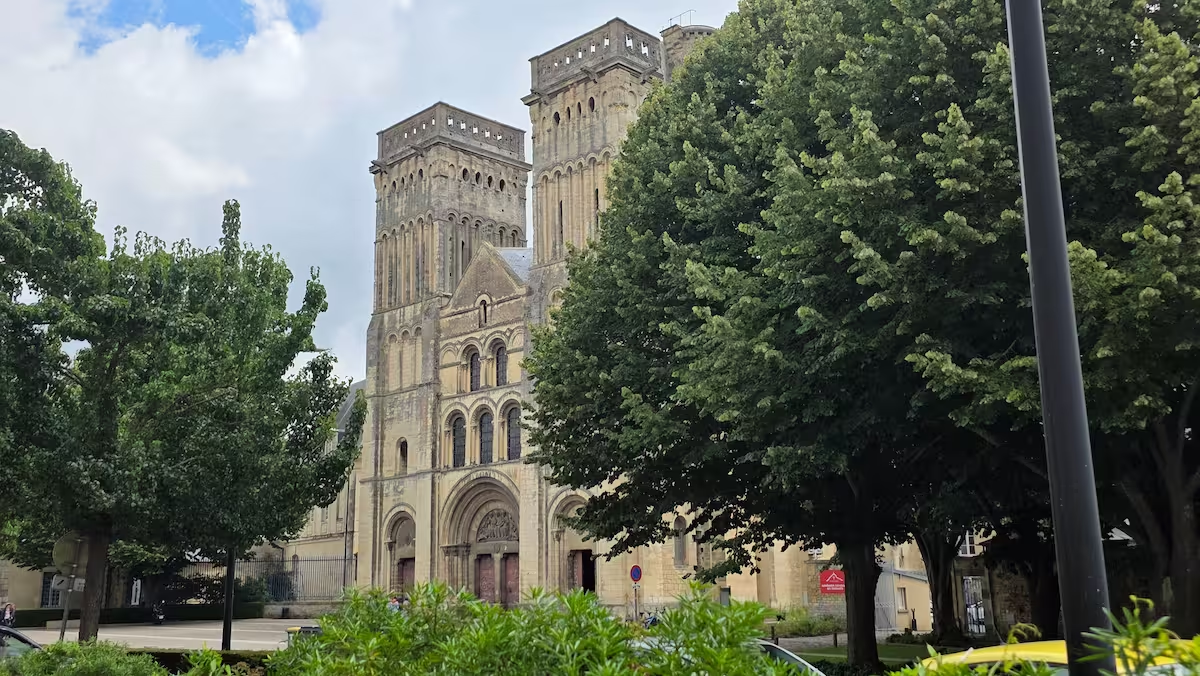
After visiting the castle, it was time to explore the Abbaye aux Dames — a place of elegance, history, and deep spirituality, perched on the heights of Caen. Also known as Sainte-Trinité, this abbey impresses with its understated beauty and Romanesque grace. But behind its pale stone walls lies a fascinating story, closely tied to one of the most famous couples of the 11th century: William the Conqueror and Matilda of Flanders. Founded around 1060 by Matilda, William’s wife, the abbey was born from a rather delicate situation. Their marriage, though politically powerful, was controversial at the time — they were distant cousins, and the Church disapproved of such unions. To reconcile with Rome, the couple each founded an abbey: William built the Abbaye aux Hommes, while Matilda, as a counterpart, created the Abbaye aux Dames. Dedicated to the Holy Trinity, the abbey quickly became both a spiritual landmark and a symbol of devotion. It welcomed a community of Benedictine nuns and stood as a testament to Matilda’s piety and influence. She was later buried here, her tomb still lying in the choir — simple, yet deeply moving. Architecturally, the abbey is a fine example of Norman Romanesque style: a pure, unadorned façade, soaring vaults, and soft light filtering through tall windows. Walking through the nave, one can almost hear the echo of Gregorian chants, marking the rhythm of the sisters’ lives in prayer and work. Over the centuries, the abbey experienced both prosperity and hardship — from wars to pillaging and religious upheavals. During the French Revolution, it was converted into a hospice for elderly women, a social mission it upheld for many years. Today, the Abbaye aux Dames remains both a major historical monument and the seat of the Normandy Regional Council. Its walls, once filled with prayers, now resonate with political decisions shaping the region. Visiting the Abbaye aux Dames means stepping into a chapter of Norman history where love, politics, faith, and art intertwine. And in the quiet cloisters, you can still feel the enduring presence of Matilda of Flanders. Now, it’s time to continue my journey through Caen and head to the Abbaye aux Hommes — William the Conqueror’s own creation. the practical info for the Abbaye aux Dames: 📍 AddressAbbaye aux Dames – Sainte-TrinitéPlace Reine-Mathilde14000 Caen, France 🕰 Visitor Tips Combine your visit with the Abbaye aux Hommes and Caen Castle for a complete half-day history loop. Plan about 1 hour to fully enjoy the church, cloister, and grounds. Join a guided tour if possible—great for hidden details and anecdotes. Go in the morning to enjoy the quiet, especially in the church and cloister. Pause at Matilda of Flanders’ tomb in the choir—simple yet moving. Check opening hours on the official website, especially off-season.
Caen Castle: A Journey Through Normandy’s History
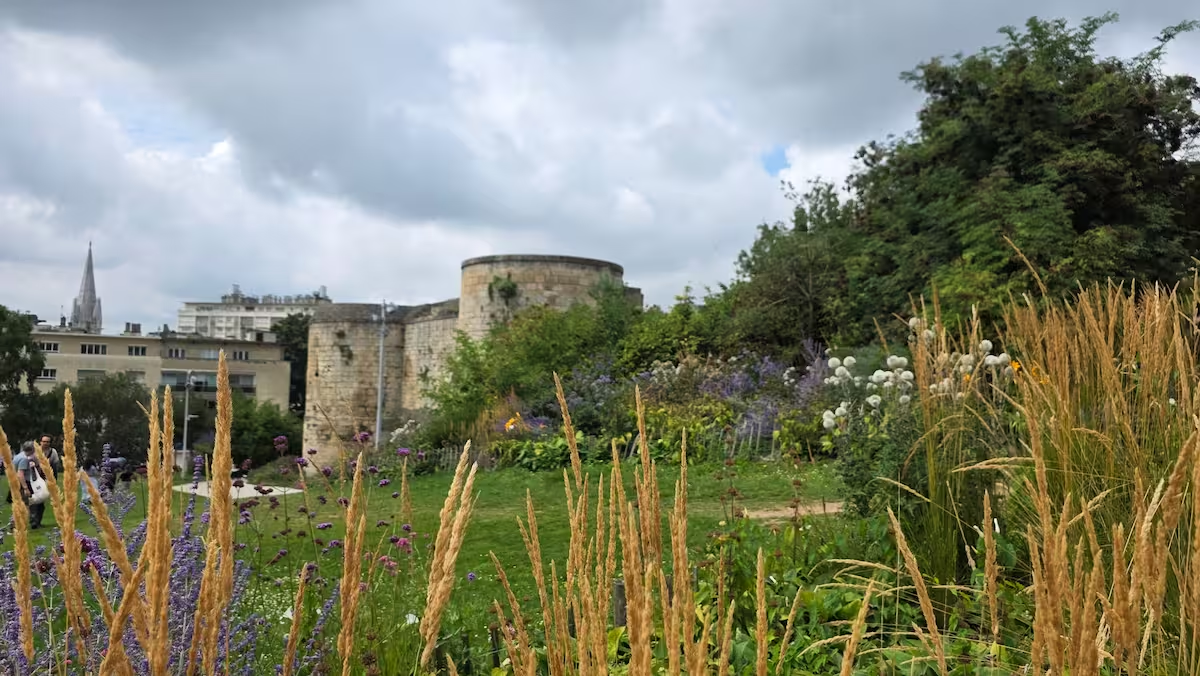
From the moment I stepped through the monumental gates of Caen Castle, I felt like I was entering a place where every stone carries the weight of time. This is one of the largest medieval fortresses in Europe, founded around 1060 by William the Conqueror, long before he became King of England. Standing here, it’s impossible not to imagine the centuries of history that have unfolded within these walls. The path leading up to the ramparts already offers a stunning view of the city. As I climbed, I could almost picture the footsteps of knights and sentinels centuries ago. From the top, the view is breathtaking: Caen’s rooftops stretch into the distance, punctuated by church spires and the tower of the Abbaye aux Hommes. William’s story also holds a curious and romantic twist. He wished to marry Matilda of Flanders, who happened to be his third cousin. At the time, such close kinship was forbidden by the Church. To gain the Pope’s approval, William and Matilda had to agree to a very unusual condition: each of them would build an abbey in Caen. And so, two of the city’s most iconic landmarks were born — the Abbaye aux Hommes, founded by William, and the Abbaye aux Dames, built by Matilda — both of which still dominate the Caen skyline today. Inside the castle grounds, the space is far larger than one might expect at first glance. The site houses the Museum of Normandy, a perfect place to discover the region’s roots, and the Museum of Fine Arts, home to an impressive collection, particularly European paintings from the 16th to the 20th centuries. Between exhibitions, I wandered along the pathways, admiring the remains of the ducal lodgings and the imposing towers, such as the Puchot Tower and the Porte des Champs. What struck me most was how the old and the modern coexist so harmoniously here. Archaeological excavations sit alongside peaceful walking paths, and the ramparts welcome visitors who come as much for the history as for the chance to enjoy a sunset over the city. It’s easy to forget that the castle also played a strategic role during World War II and suffered heavy bombardments in 1944. Walking through this vast fortified enclosure feels like traveling through several eras at once: the Middle Ages of the Norman dukes, the Renaissance with its architectural transformations, and the modern era that has breathed new life into the site. As I left the castle, I turned back for one last look at its golden-lit ramparts. More than just a monument, Caen Castle is a living book of nearly a thousand years of history, one that is a pleasure to read — page by page, stone by stone. 📍 Address:Château de CaenEsplanade Général Eisenhower14000 CaenFrance 🗝 Tips for Visitors: