When wandering through the heart of Basel, it is impossible not to be drawn to the silhouette of the Basel Minster, the cathedral whose twin towers rise above the city and look out over the slow, steady flow of the Rhine. Built from warm red sandstone and crowned with a roof of dazzlingly patterned tiles, the Minster is more than just an architectural jewel – it is the soul of the city itself. The cathedral tells a story that stretches back almost a thousand years. First constructed in the 11th century in the Romanesque style, it has been shaped and reshaped by history, surviving earthquakes and centuries of change, enriched over time by Gothic elegance. To stand before its façade is to stand in front of history itself, where every carved portal and delicate arch whispers of faith, resilience, and artistry. Stepping inside, the noise of the city falls away and a calm silence takes over. Light pours softly through the stained-glass windows, casting colors on the stone pillars, and the vast nave feels like a sanctuary not just of religion, but of peace. The cloister, tucked away behind the main church, is one of the most enchanting spaces of all. Its quiet corridors, lined with medieval carvings, open onto a courtyard where time seems to slow down, offering a moment of reflection amid the bustle of modern Basel. The Minster is also a place where the threads of culture and intellect intertwine with faith. Here lies the tomb of Erasmus of Rotterdam, one of Europe’s greatest Renaissance scholars, a reminder that Basel has always been a crossroads of ideas and creativity. Outside, the cathedral square is a lively meeting place, where concerts, festivals, and markets breathe life into the historic stones, blending past and present into a vibrant whole. For me, what makes the Basel Minster unforgettable is the way it binds the city together. From its towers, the view sweeps across tiled rooftops, the winding alleys of the Old Town, and far beyond the Rhine to the hills of France and the forests of Germany. Standing there, looking out, I felt that this cathedral is not only a house of worship, but also a guardian of Basel, watching over its people and connecting it to the wider world. Visiting the Basel Minster is not just about admiring a beautiful church. It is about stepping into the living heart of Basel, where centuries of history and culture are woven into stone and where the rhythm of the city continues to echo through its walls. It is a place to be still, to look, to listen, and to feel the spirit of Basel in its purest form.
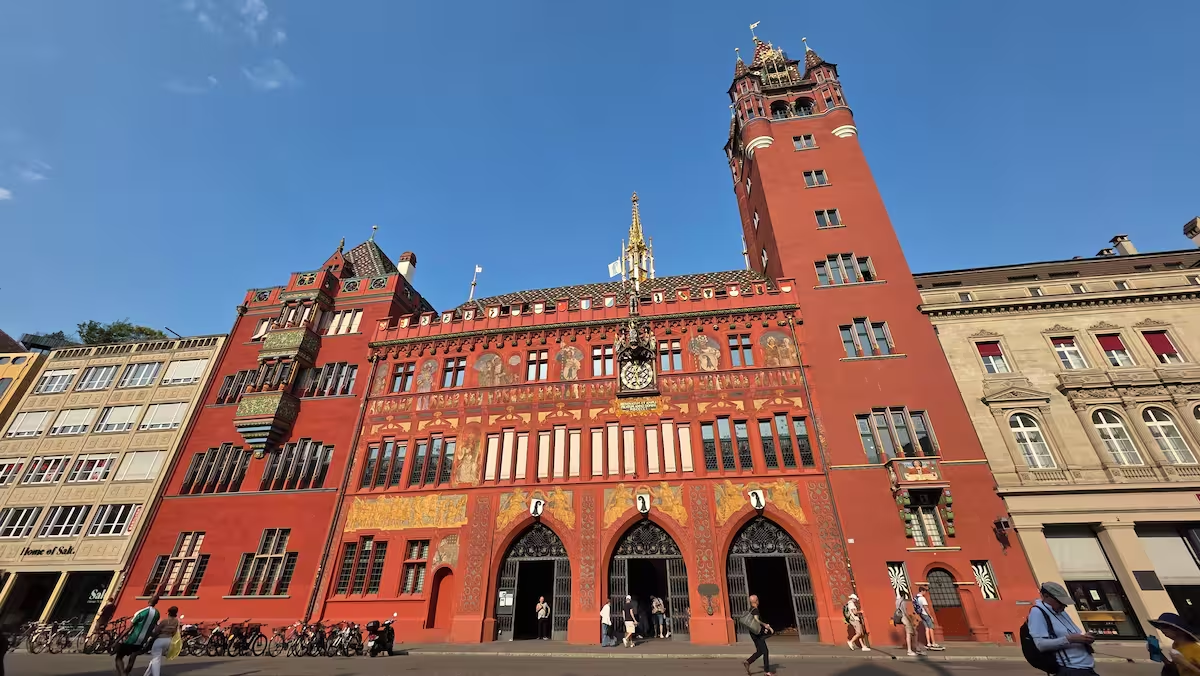
Basel Rathaus: The Town Hall That Brings History to Life
Walking through the heart of Basel’s Old Town, my steps naturally led me to one of the city’s most striking landmarks: the Rathaus, or Town Hall. With its deep red façade, colorful murals, and elegant tower rising above the bustling Marktplatz, the Rathaus is impossible to miss. It is not only the seat of Basel’s government but also a living reminder of the city’s rich history and civic pride. The building immediately caught my attention with its vibrant appearance. Unlike many solemn town halls across Europe, Basel’s Rathaus seems to celebrate color and creativity. The red sandstone walls are covered with intricate frescoes, allegorical paintings, and decorative details that tell stories of justice, power, and Basel’s role as a free imperial city in the Holy Roman Empire. Every glance reveals something new: a figure here, a coat of arms there, all blending into a masterpiece that reflects the spirit of the Renaissance. Stepping into the inner courtyard, I felt as though I had entered a hidden gem tucked away behind the busy market square. Surrounded by arcades, staircases, and murals, the courtyard is a work of art in itself. The colors are bold, the atmosphere is majestic yet intimate, and it is easy to imagine centuries of civic life unfolding within these walls. One of the highlights is the statue of Lady Justice, standing proudly as a symbol of fairness and order, reminding visitors of the values on which the city was built. The Rathaus is more than just a monument; it is still very much alive. Today, it continues to house the cantonal government and the Grand Council of Basel-Stadt. Knowing that the same building has served as the political heart of Basel since the early 16th century made my visit feel even more meaningful. History here is not frozen in stone – it continues to evolve with the life of the city. And for those who wish to go beyond the courtyard, the good news is that the interior of the Rathaus can be visited – but only with a guided tour. Tickets must be booked in advance through the local tourist office, and reservations are mandatory. With a bit of luck, you may even meet one of Basel’s wonderful guides, who take the time to explain every detail with warmth and passion. My advice: listen carefully, take in every story, and admire the artistry of this extraordinary place. What I loved most about the Rathaus is how it connects the past and the present. Just outside, the Marktplatz is alive with daily activity, from locals shopping for fresh produce to tourists pausing to admire the architecture. Inside, the murals and symbols remind us of Basel’s heritage, while the ongoing political life shows that this is still a place of decision-making and civic responsibility. For anyone visiting Basel, the Rathaus is more than a photo opportunity. It is a chance to step into the story of the city, to witness art and politics interwoven in one of Switzerland’s most beautiful town halls. Standing in the courtyard, or lucky enough to join a guided tour inside, I understood why the Basel Rathaus is considered not just a building, but a true emblem of the city’s identity. 📍 Practical Information for Visitors
Saint-Vincent Cathedral of Saint-Malo
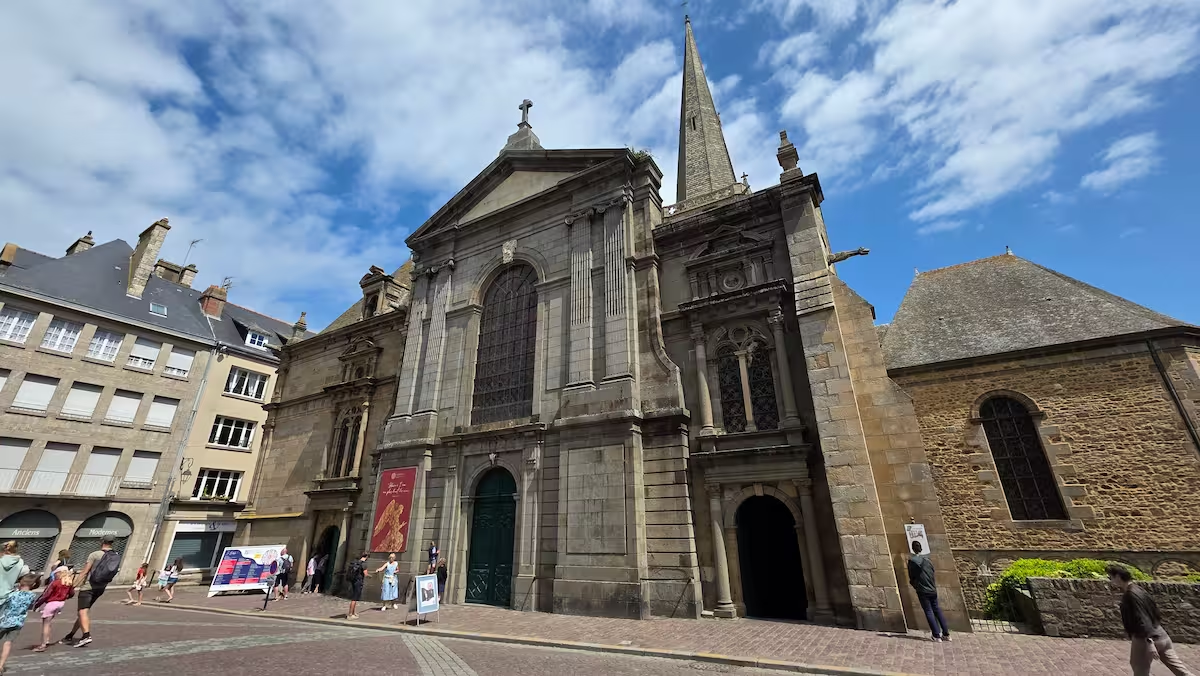
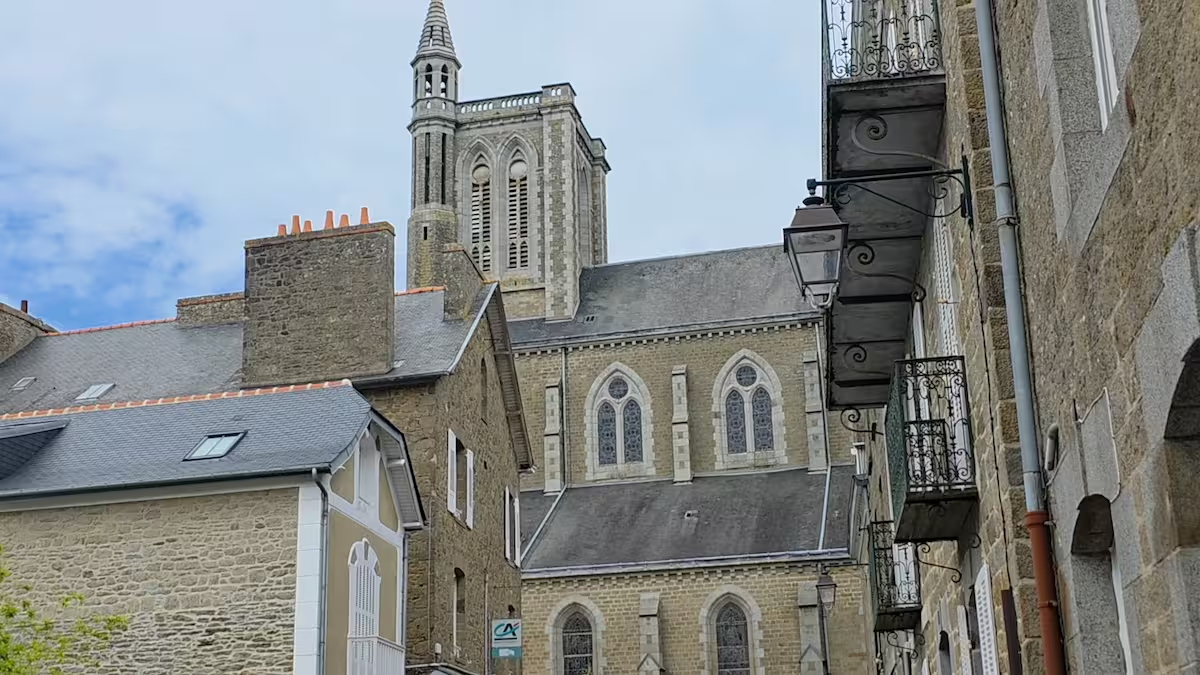
Walking through the cobbled streets of Saint-Malo’s walled city, it is impossible not to be drawn to the majestic silhouette of Saint-Vincent Cathedral. Standing proudly at the heart of the old town, the cathedral rises above the granite rooftops and embodies both the faith, resilience, and maritime history of the corsair city. The story of the cathedral begins in the 12th century, when the first Romanesque church was built on the site of an earlier sanctuary dedicated to Saint Vincent of Saragossa, a Spanish martyr from the 4th century. Over the centuries, the monument evolved: Gothic elements were added during the 13th and 14th centuries, and in the 15th century, a beautiful spire was erected. This architectural mix makes the cathedral a true open book of history. The cathedral has witnessed some of the most significant moments of Saint-Malo’s past. Most notably, it houses the tomb of Jacques Cartier, the famous explorer who discovered Canada in 1534. His resting place, inside a dedicated chapel, reminds visitors of the deep connection between faith and the sea in the city’s identity. Like the city itself, Saint-Vincent Cathedral has faced trials. During World War II, in August 1944, Saint-Malo was heavily bombed, and large parts of the cathedral were destroyed. It took more than thirty years of restoration to bring it back to life. Today, its spire rises 60 meters above the city as a symbol of resilience and rebirth. Inside, the cathedral offers a unique spiritual atmosphere. The post-war stained glass windows, designed by artists such as Max Ingrand, bathe the interior in colorful light. Some depict biblical stories, while others highlight Saint-Malo’s maritime vocation. The play of light creates an almost poetic aura, making every visit an emotional journey. More than a religious building, Saint-Vincent Cathedral is a symbol of Saint-Malo’s soul. It reflects the city’s strength, its adventurous spirit, and its unwavering resilience in the face of history. Practical Information for Visitors 📍 Address: Cathédrale Saint-Vincent, Place Jean de Châtillon, 35400 Saint-Malo (inside the walled city). ⏰ Opening Hours: Usually open daily from 9 AM to 6:30 PM (hours may vary depending on the season and services). 🎟️ Admission: Free. 👉 Tips for Visitors:
Saint-Malo Castle: Guardian of the Corsair City
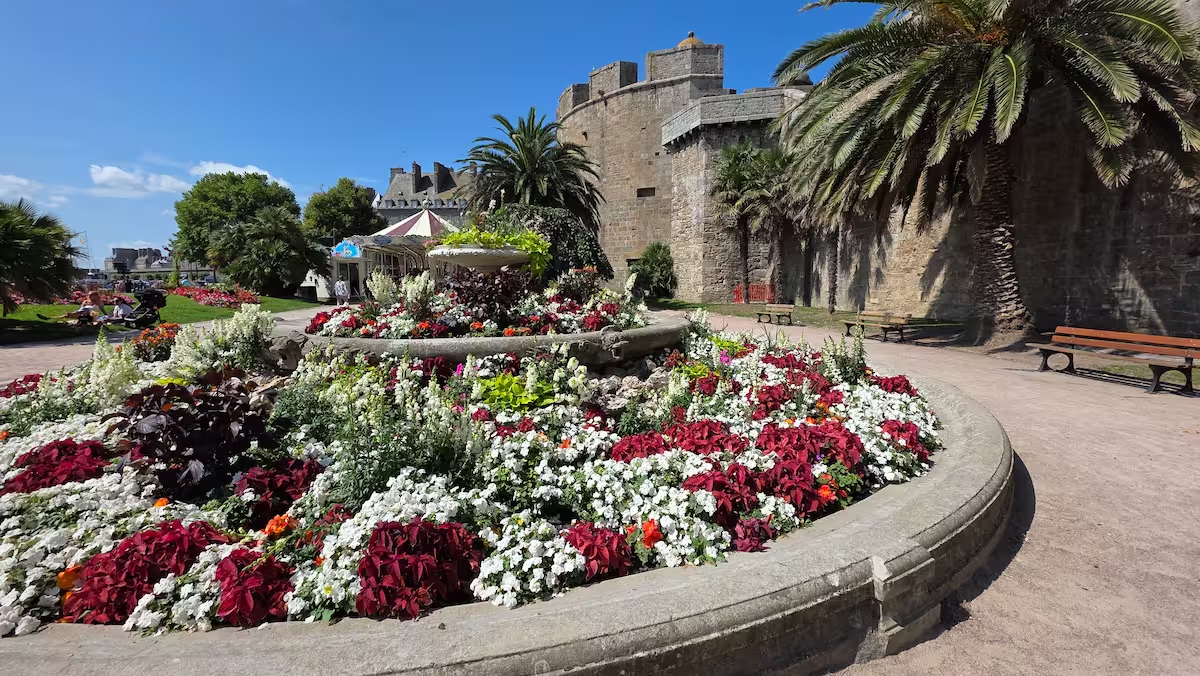
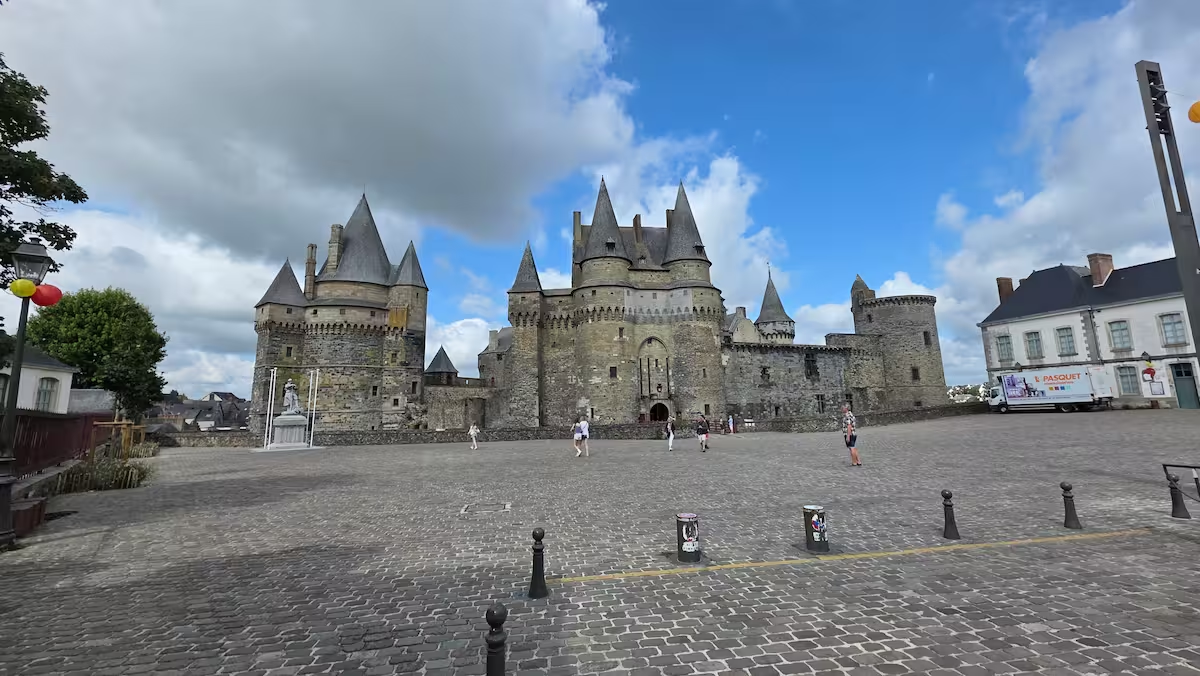
After exploring the city itself, it is now time to take a closer look at the castle, one of the most striking monuments of Saint-Malo. Standing proudly at the entrance of the old town, the granite fortress with its massive towers and tall ramparts seems as if it is still watching over the corsair city. The construction of Saint-Malo Castle began in the 15th century, commissioned by the Dukes of Brittany. At that time, the people of Saint-Malo were known for their strong independence and rebellious spirit. To assert their authority over this defiant population, the Dukes built this imposing fortress—not so much against external enemies, but as a way to control the Malouins themselves. It was a symbol of power and political dominance. Over the centuries, the castle evolved through different roles. Initially a fortress, it was reinforced during the 16th and 17th centuries to adapt to new maritime threats. It later became the residence of governors and dukes when they stayed in the city, and eventually, it served as a prison. During World War II, like much of Saint-Malo, the castle suffered from bombings and destruction. Yet it was rebuilt, standing today as one of the key landmarks of the city. Today, Saint-Malo Castle houses the City Hall and other local administrations. Unfortunately, this means that the castle cannot be visited from the inside. Many visitors are surprised to learn this, but access is restricted due to its administrative function. However, the exterior is still a wonder to explore. Its thick granite walls, watchtowers, and imposing architecture are a perfect testimony to the city’s rich history. Around the castle, visitors can enjoy breathtaking views of the port, the sea, and the maze of narrow streets that make up the old town. The castle is also an excellent starting point for a walk along Saint-Malo’s ramparts, which offer one of the best panoramas of the Emerald Coast. Even if its doors remain closed to the public, Saint-Malo Castle continues to embody the soul of the corsair city. It is more than just a monument—it is the guardian of a unique identity, symbolizing resilience, independence, and maritime heritage. 📍 Practical Information
Mersch Castle: A Living Fortress in the Heart of Luxembourg
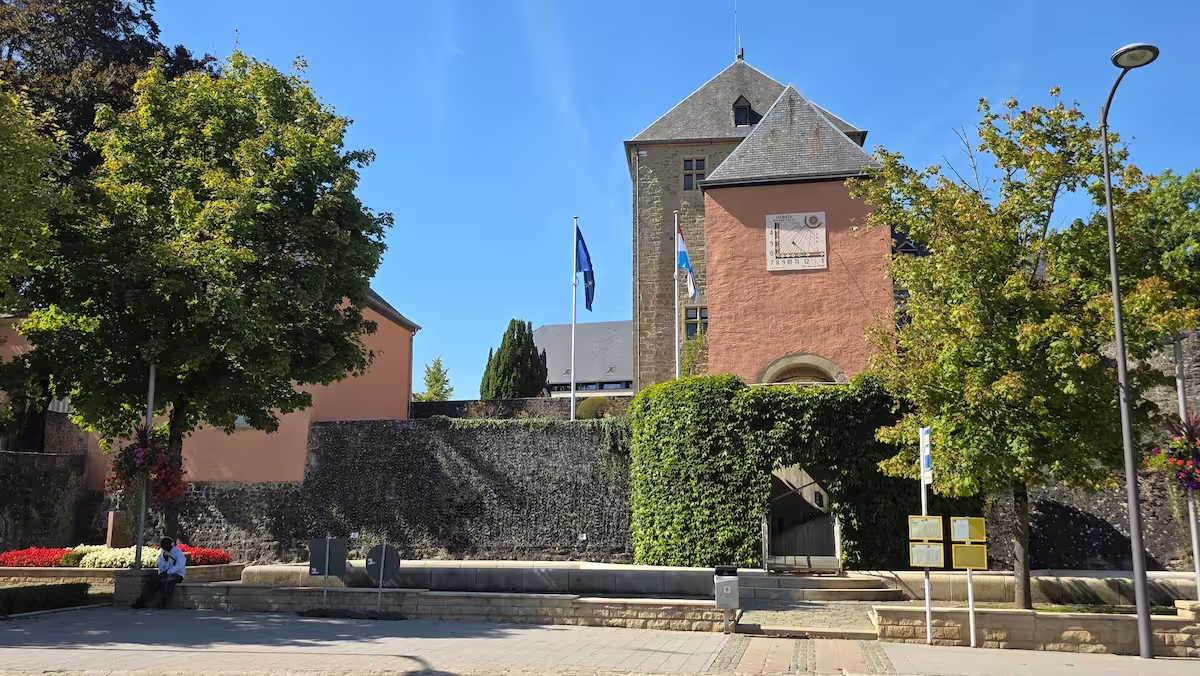
In the heart of Luxembourg, in the small town of Mersch, stands a castle that seems both discreet and imposing, a reminder of centuries gone by. The Castle of Mersch, whose origins date back to the 13th century, is part of the famous “Valley of the Seven Castles,” yet it has a character all its own. Unlike many fortresses that have become silent monuments, this one is still alive, integrated into the daily life of the town. Today, it houses the local administration, which makes it truly unique. Watching residents walk through its medieval gates not to admire history, but to carry out everyday administrative tasks, creates a striking image of the past meeting the present. As you approach the castle, the grey stone walls immediately speak of time and endurance. You can almost imagine the lords who ruled here, the soldiers who defended it, and the families who crossed its courtyards. Like many castles in Luxembourg, Mersch has known destruction and rebuilding, bearing the scars of wars and rivalries but always finding a way to rise again. Its architecture reflects its dual purpose: a fortress to defend a strategic valley, and a noble residence meant to showcase the power of its owners. What makes the Castle of Mersch fascinating today is the way it continues to live. While the interior is not open to public visits in the same way as other castles, walking around it is enough to feel its presence. The walls, towers, and courtyards blend into the town around them, creating a contrast that gives Mersch its charm: a place where history is not confined to museums but accompanies daily life. Tucked inside one of the castle’s towers, visitors will also find a small museum, open free of charge, that adds yet another layer to the experience. Modest in size but rich in content, it offers a glimpse into the local history of Mersch and its surroundings, showcasing artifacts, documents, and stories that connect the medieval fortress to the daily life of the town across the centuries. This hidden gem makes the castle more than just an administrative building: it is also a place of memory, inviting anyone who steps inside to pause for a moment and discover the heritage of the region in an intimate and accessible way. Exploring Mersch further, one discovers another witness of the past: on the Grand-Place, an imposing medieval tower, once part of the town’s fortifications, now restored and given a new purpose. This tower is home to the Mersch Tourist Office, welcoming visitors who wish to explore the region. What was once built to defend the town is now a doorway for travelers eager to discover it. Together, the castle, its small museum, and the Grand-Place tower embody the spirit of Mersch: a town where history is not only remembered but lived, where heritage has been given new roles without losing its identity. To stroll through Mersch is to experience a place where the stones of the past continue to breathe alongside the rhythm of modern life. 📍 Exact Address of Mersch Castle Mersch CastlePlace Saint-Michel, L-7556 Mersch, LuxembourgPhone: +352 32 50 23-1Email: info@mersch.lu Inside one of the castle’s towers (the former chapel), you’ll also find a small museum, free of charge, where visitors can explore the history of Mersch and its surroundings. ✔️ Visitor Tips
The Church of Saint-Suliac: A Timeless Jewel of Brittany’s Spiritual Heritage
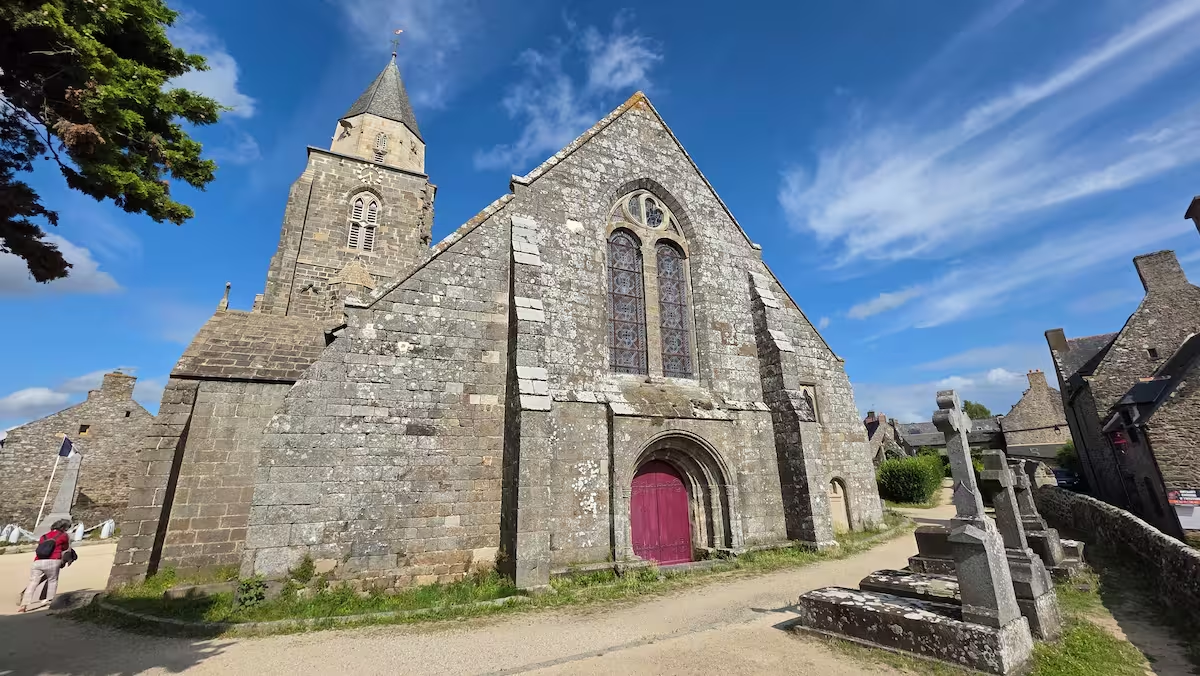
In the heart of the village of Saint-Suliac, one of the Most Beautiful Villages of France, rises a church whose quiet presence speaks of centuries of history and faith. Built in the 13th century by the Benedictine monks of Mont-Saint-Michel, the Church of Saint-Suliac is more than just a religious monument – it is the very soul of the community, a living witness to the memory of a village shaped by the sea, the river, and devotion. The church is dedicated to Saint Suliau, a Welsh monk who came to Brittany in the 6th century to evangelize the region and whose legacy is forever tied to this place, even giving the village its name. When the monks erected the church, they sought to create a sanctuary that was strong and enduring, just like the faith of the people who lived here. Its thick granite walls, weathered by time yet unshaken, reflect both resilience and eternity, standing guard against the winds and tides of the Rance. From the outside, the church seems austere, even severe, with its sturdy tower and massive stonework. But step inside, and the atmosphere changes instantly. Cool stone, soft light filtering through stained glass, and the elegant arches of Gothic style invite peace and contemplation. Sculpted capitals and details carved centuries ago remind us of the craftsmanship of medieval builders, whose hands left behind traces of faith turned into stone. Through the centuries, the Church of Saint-Suliac has been at the center of village life. It has welcomed baptisms, weddings, prayers for sailors before they left for sea, and farewells to loved ones. Every generation has left a part of its story within these walls, making the church not only a place of worship, but also the heart of the community. Today, it remains alive, still hosting religious services and welcoming visitors who come to discover this jewel of Breton heritage. It is not a silent relic of the past, but a living monument where faith, history, and tradition continue to meet. For those who enter, it offers a moment of stillness, a chance to feel the rhythm of centuries and the presence of those who came before. The Church of Saint-Suliac is more than an old building: it is a sanctuary of memory and identity, a timeless landmark that embodies both the spirituality and the authenticity of Brittany. 📍 Address Église Saint-SuliacPlace de l’Église35430 Saint-SuliacFrance
Saint-Méen Church – A Hidden Gem in Cancale
Leaving behind the lively port and the scent of fresh oysters, I wandered into the upper town of Cancale, where time seems to slow down. The cobbled streets led me to a modest yet historic building: Saint-Méen Church. Nestled in the heart of the town, it has watched over Cancale for centuries, serving as a quiet but essential anchor for its residents. The current structure dates mostly from the 19th century, but its origins go back much further. The devotion to Saint Méen, a 6th-century monk from Wales, shows the ancient spiritual links between Brittany and the British Isles. Known as a healer, Saint Méen quickly became the patron saint of Cancale, especially for the sailors who braved the storms of the bay. Stepping through its heavy wooden doors, I was enveloped in calm and serenity. Soft light filters through the stained glass, casting warm colors on the walls. Some windows depict biblical stories, while others pay tribute to local maritime life: boats at sea, protective saints, and fishing scenes. Everything here reminds visitors that the sea, with all its gifts and dangers, is central to life in Cancale. The ex-votos hanging in the side chapels were particularly moving. These small offerings—model ships, engraved plaques, and other items—are tokens of gratitude from families whose loved ones returned safely from the sea. Through these gestures, one can feel the deep faith and attachment the Cancale community has to this church. The architecture, while modest, has a quiet elegance. Simple vaults, pale stones, and old woodwork create a harmonious space. This is a place where one naturally feels at peace, as if time flows differently inside. Outside of services, Saint-Méen Church also serves as a gathering place during religious festivals and local celebrations. It embodies the connection between generations, anchoring a town that is both maritime and deeply rooted in tradition. Stepping back onto the church square, I lingered for a moment, enjoying the distant view of the sea. Saint-Méen Church reveals another side of Cancale: intimate, authentic, and deeply human—a place that touches both heart and soul.
After Saint-Malo Church and the castle, our next stop: the Basilica of Saint-Sauveur
After exploring Saint-Malo Church with its magnificent stained glass and the imposing castle of Dinan standing guard over the Rance valley, our footsteps naturally carried us to another jewel of this medieval town: the Basilica of Saint-Sauveur. It is one of those places that immediately intrigues you, not only for its architecture but also for the weight of history it carries within its walls. At first glance, the basilica stands apart from other religious monuments I’ve visited. Built in the 12th century, it doesn’t follow a single architectural style, but rather brings together an astonishing mix of Romanesque, Gothic, and Byzantine influences. This unusual combination makes it unique in Brittany. The exterior, with its asymmetry and varied details, seems to reflect the centuries of additions, transformations, and restorations that shaped it. Crossing the threshold, I was immediately struck by the calm that fills the interior. The basilica is not overly ornate, yet every detail seems to have meaning. The vaulted nave draws your eyes upward, inviting contemplation, while the light from the stained glass creates a soft, colorful glow that bathes the stone in warmth. Walking along the aisles, I stopped often to admire the sculpted capitals, the chapels tucked into corners, and the silent atmosphere that seems to whisper fragments of the past. One of the aspects I found most moving is how deeply the basilica is tied to Dinan’s history. It was built as an act of gratitude by a local lord after returning safe from the Crusades, and over the centuries, it became not only a place of worship but also a witness to the life of the town—wars, celebrations, and daily rituals. Standing inside, I could almost imagine the generations of townspeople who gathered here, their footsteps worn into the stone floor, their voices lifted in prayer or song. The basilica is also surrounded by legends and local traditions. Some say that hidden beneath its stones are untold secrets, linking it to Dinan’s medieval past. Whether truth or myth, these stories add an aura of mystery to the visit and make the experience even more immersive. Stepping back outside, the basilica once again impressed me with its presence. From certain streets of the old town, its silhouette rises beautifully against the sky, framed by cobblestones and half-timbered houses. It feels like a reminder that Dinan is not only a town of ramparts and medieval walls, but also a place where spirituality and heritage intertwine seamlessly. Visiting the Basilica of Saint-Sauveur was more than just another stop on our journey—it felt like the heart of Dinan itself. After the strength and grandeur of the castle, and the serenity of Saint-Malo Church, the basilica brought a sense of harmony that perfectly rounded out our day. It is a place that lingers in memory, leaving not only images of stone and stained glass, but also a deep emotional impression of timeless beauty. 📍 Practical InformationBasilica of Saint-SauveurPl. Saint-Sauveur, 22100 Dinan, France
The Historical Heart of Dinan: Dinan Castle
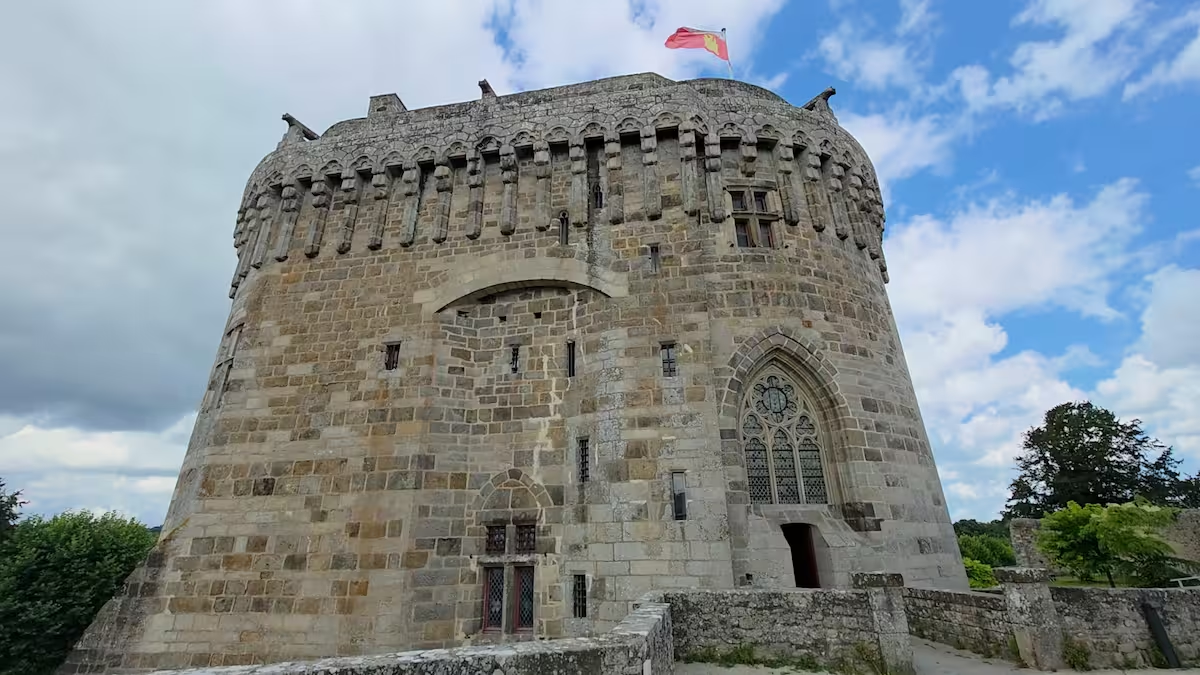
Rising proudly above the medieval town of Dinan, the Dinan Castle is more than just a fortress of stone — it is a living testament to centuries of Breton history. Built in the late 14th century by Duke John IV of Brittany, the castle was designed as both a defensive stronghold and a symbol of ducal authority. Its imposing keep, flanked by thick walls and guarded by a deep moat, was strategically placed to watch over the Rance River and control one of the key routes between Normandy and Brittany. The construction of the castle came during a turbulent time in Brittany’s history. The Breton War of Succession had recently ended, and the dukes sought to reinforce their power against both internal rivalries and external threats from the Kingdom of France and the Duchy of Normandy. Dinan, already a prosperous trading town, became a crucial point of defense — and the castle was at its heart. Over the centuries, Dinan Castle witnessed sieges, political intrigues, and moments of royal pageantry. During the 15th and 16th centuries, it evolved from a purely military fortress into a more comfortable residence, reflecting the Renaissance influence that spread across Brittany. Yet, its military role was never entirely forgotten — its walls still bristle with machicolations and arrow slits, reminders of its original purpose. By the 18th century, the castle’s strategic importance declined, and it was repurposed for various uses, including as a prison. In the 19th and 20th centuries, efforts to preserve Dinan’s rich medieval heritage led to the restoration of the castle, ensuring its survival as one of the best-preserved examples of ducal military architecture in Brittany. Today, visitors can explore its towering keep, climb the ramparts for panoramic views of Dinan’s half-timbered houses and the Rance Valley, and immerse themselves in exhibits that trace the town’s storied past. Standing within its walls, it’s easy to imagine the clang of armor, the calls of sentries, and the pulse of a town shaped by centuries of history. The Dinan Castle is not merely a monument — it is a bridge to another time, carrying the echoes of Brittany’s proud and often turbulent past into the present.
A Journey Through Bourscheid Castle – A Hidden Treasure in Luxembourg
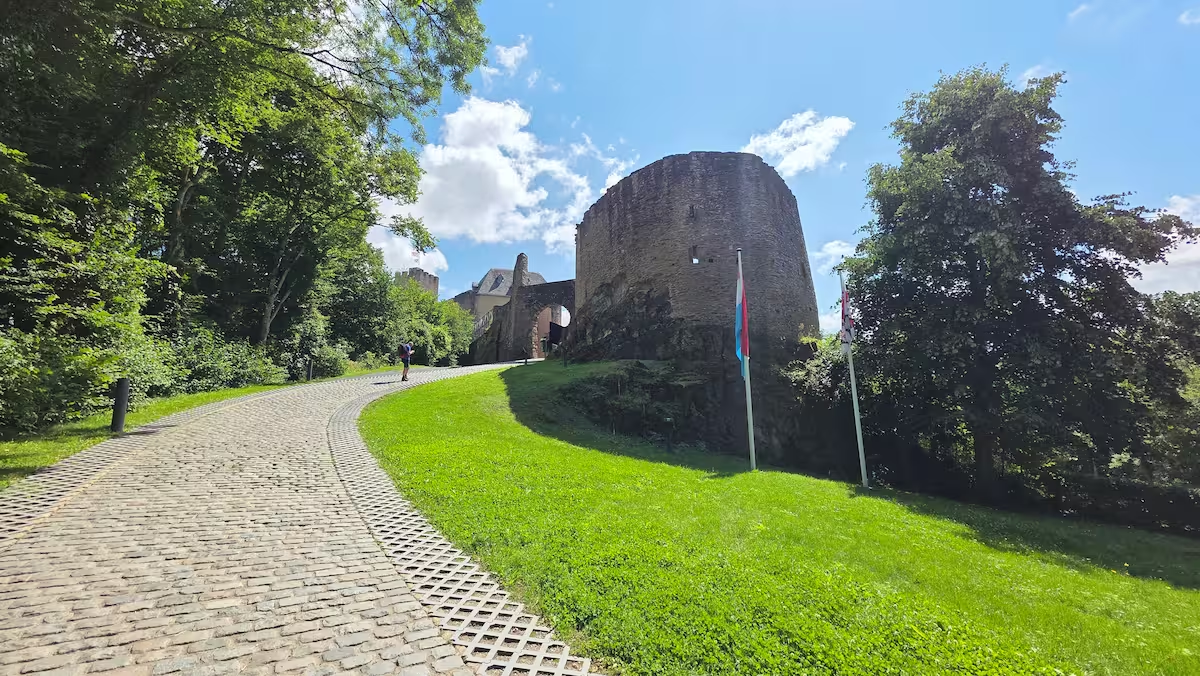
During our family trip through the Luxembourg Ardennes, we couldn’t miss the chance to explore one of the most breathtaking fortresses in the country — Bourscheid Castle. As a travel-loving family and proud ambassador of the Ardennes region, this stop was not just a visit, but a moment of connection with history, nature, and timeless architecture. Set high on a rocky promontory overlooking the Sûre river, the castle truly dominates the landscape. Even before reaching it, the view is jaw-dropping. Surrounded by forests and valleys, the castle rises with all its medieval grandeur — and from the moment we arrived, we felt like we’d stepped back in time. The site is impressively preserved, and it’s not just a quick photo spot. It’s a real place to explore — to climb towers, stroll along thick walls, and let your imagination run wild. You can picture the knights, the guards, the daily life behind those massive stone walls. What makes Bourscheid Castle so fascinating is its deep history. The original structure dates back to around 1000 AD, but back then, it was made of wood. It wasn’t until the 11th century that the first stone walls appeared, and from there, the castle kept evolving. It changed hands many times — from the Lords of Bourscheid to noble families like the von Metternichs and even the house of Brandenburg. Over the centuries, towers were added, outer walls strengthened, and the castle grew into the complex we see today. As we walked through its large inner courtyard, with its nine defensive towers, the kids were wide-eyed. They ran from corner to corner, excited to explore every nook and cranny. The panoramic views from the ramparts were just incredible — you can see the entire valley below. It’s no wonder this location was chosen for defense. There’s also a small exhibition space with artifacts and historical background — which added even more depth to the visit. Though the castle is in ruins, much has been restored, making it easy to picture life in medieval times. Bourscheid Castle is open to the public, and we were happy to see how well it is maintained. There’s a visitor center at the entrance and detailed information signs throughout the grounds. You can visit at your own pace or take an audio guide for more context. And if you’re lucky enough to come in the summer, you might even catch one of the special events or historical reenactments held within its walls. 🧭 Practical Information Whether you’re a history lover, a curious traveler, or a family looking for an adventure, Bourscheid Castle is a must-see. It offers a perfect mix of nature, culture, and wonder, nestled in the heart of Luxembourg.