As a MOSL brand Ambassador, I had to check out the 2026 edition of « Luminescences » at the Amnéville Zoo. It’s a flagship attraction for our region, but beyond the official title, I mainly wanted to see if the magic still worked for a family outing. After spending the evening walking through the illuminated trails, here is my honest feedback. It all started with the arrival at the site, and I have a quick tip for you: stay sharp! Unfortunately, the parking was a bit poorly indicated this year, and we actually had to drive around a second time before finally finding the entrance. It’s a small detail, but when the kids are buzzing with excitement in the back seat, it’s better to know in advance so you can keep your cool. Once through the gates, the improvement compared to last year’s edition was obvious. This year, the atmosphere is significantly better than last year, as the organizers have done a fantastic job with the color palette and the diversity of the displays. The trail is divided into six different themes, which keeps the wonder alive at every turn. It is a truly immersive experience where every visitor can enjoy the magic in their own way. For those who might be concerned about animal welfare, I was very reassured to see that the organizers carefully thought out their decoration plan and the route. In the larger areas where the animals stay outside, there was no loud music and no excessive lighting. This is a major plus that proves animal respect was a priority in the festival’s design. In our family, the evening was a total hit. The children were literally dazzled by the beauty of the structures and the richness of the colors. It’s a show that speaks directly to the imagination. Personally, although every area is beautifully crafted, my favorite theme was definitely « Los Muertos » (The Day of the Dead). The colors are vibrant, and the aesthetics are simply impressive. To conclude, let’s talk about the budget. At 22 euros per ticket, the verdict is clear: it is an impressive experience that more than justifies the cost, given the quality of the work and the length of the walk. If you are looking for an outing that will blow you away in early 2026, head to Amnéville. Moselle can be proud of this festival, which is becoming a must-see reference year after year. 📅 Dates & Opening Times The Luminescences 4 – Fiesta Latina festival is currently running and will stay open until Saturday, March 28, 2026. Note: The last entry is at 8:00 PM. Make sure to give yourself at least 1.5 hours to walk the 1.5km trail without rushing. 💻 Official Website & Tickets To skip the lines (which is a lifesaver when it’s cold!), it’s best to book online: 👉 zoo-amneville.com 💡 Pro-Tips for Families 1. Dress like an onion 🧅 Amnéville nights in January and February are freezing. Dress the kids in layers—thermal leggings under jeans, thick socks, and warm hats are non-negotiable. You’ll enjoy the lights much more if no one is shivering! 2. Stroller vs. Baby Carrier The path is stroller-friendly, but it can get a bit crowded near the most popular displays. If your little one is light enough, a baby carrier makes it easier to move around and get those perfect photos. 3. Timing is everything Most people rush in right at opening time. If you arrive 30 to 45 minutes after the doors open, the initial crowd has usually thinned out, making the experience much more peaceful. 4. The « Mid-Way » treat There are food stalls along the route selling hot chocolate, waffles, and snacks. Honestly, stopping for a hot drink halfway through is usually the highlight for the kids—and a great way to warm up cold hands. 5. Check your CSE/Work Council tickets If you have tickets through work, double-check if they cover both the zoo and the lights. Also, if you’re already in the zoo during the afternoon, don’t leave! You can access the festival directly from inside the park once it gets dark.
Two Magical Clifftops for Families: Exploring Cap Blanc-Nez and Cap Gris-Nez Together
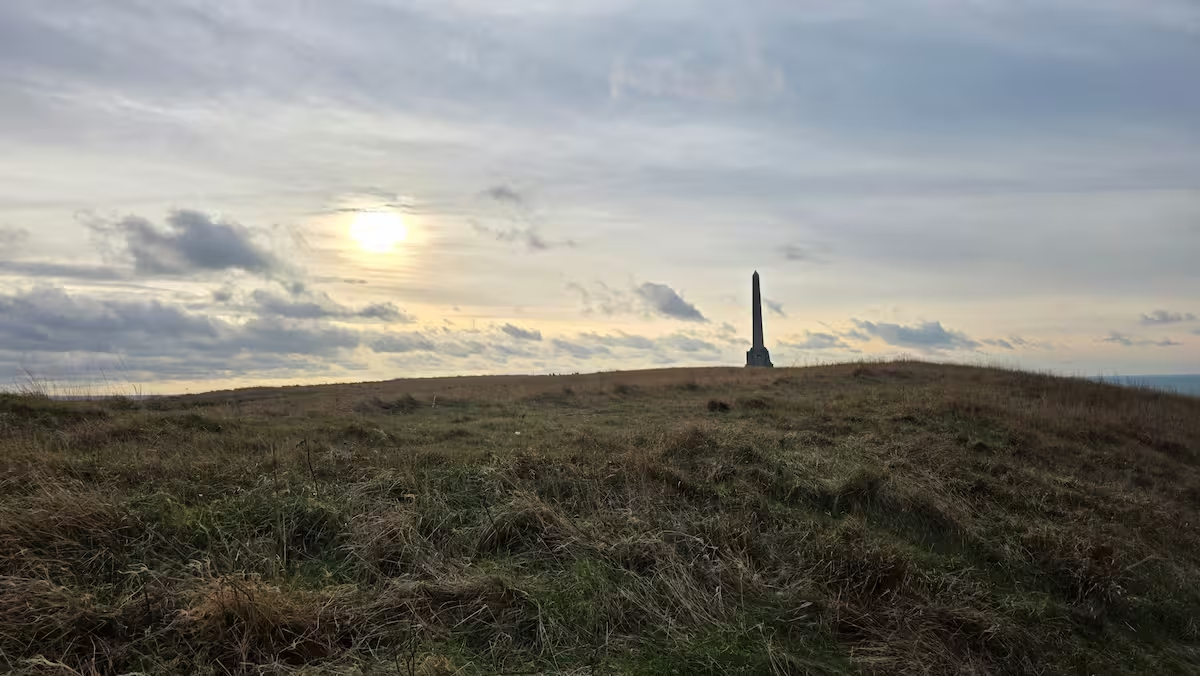
Cap Blanc-Nez and Cap Gris-Nez are wonderful places for a family adventure. Along this part of the Côte d’Opale, the sea breeze, the wide horizons and the dramatic cliffs make every walk feel like a discovery. At Cap Blanc-Nez, children are often amazed by the towering white cliffs and the incredible view over the English Channel. On clear days, you can even see England in the distance — a detail that always sparks curiosity. Walking here also means walking through history. At the top of Cap Blanc-Nez stands a large monument dedicated to sailors who protected the Channel during the First World War. Scattered across the land, small craters and broken structures remind us that this coastline was a strategic point again during the Second World War. For children, it’s a gentle way to understand that these peaceful landscapes once played an important role in Europe’s past. Cap Gris-Nez is a bit lower than its neighbor, but it feels much closer to the sea. Its lighthouse, which had to be completely rebuilt after the war, still stands guard over one of the busiest shipping lanes on the planet. If you sit down for a break nearby, you can just watch the world go by—ferries, massive cargo ships, and tiny fishing boats constantly crossing paths. It’s like a front-row seat to a living history lesson on how we’re all connected. Plus, it’s a haven for migratory birds; watching them stop over during their long journeys really puts things into perspective. The best part, though, is the walk between the two capes. The paths are easy and let families move at their own pace—no rush, no stress. You can wander for a bit, stop for a picnic whenever you find a good spot, and just keep going when the kids are ready. The scenery keeps changing between dunes, open fields, and sandy beaches, so it never gets boring. Kids love the simple stuff here: racing against the wind, hunting for shells, or trying to spot the difference between the bright white cliffs of Blanc-Nez and the darker, grey rocks of Gris-Nez. It’s those quiet moments—the laughs and the real conversations away from phones and screens—that parents seem to love the most. A quick heads-up, though: the cliffs are as fragile as they are beautiful. It’s really important to stick to the marked paths and keep a safe distance from the edge. But honestly, with just a bit of common sense, a day at the Two Capes is the perfect mix of fresh air, history, and memories that actually stick with you. Practical Information for Families Access & Parking Strollers & Walking Facilities Weather & Safety Best Times to Visit Fun Activities for Kids Final thoughts The Two Capes are an ideal destination for families: authentic nature, history to explore, spectacular coastal scenery and plenty of space for children to run, discover and marvel safely. It’s an easy, memorable and affordable outing — the kind that creates the best shared memories.
The Third Stop at Dunkirk Maritime Museum: The Iconic Péniche Guilde
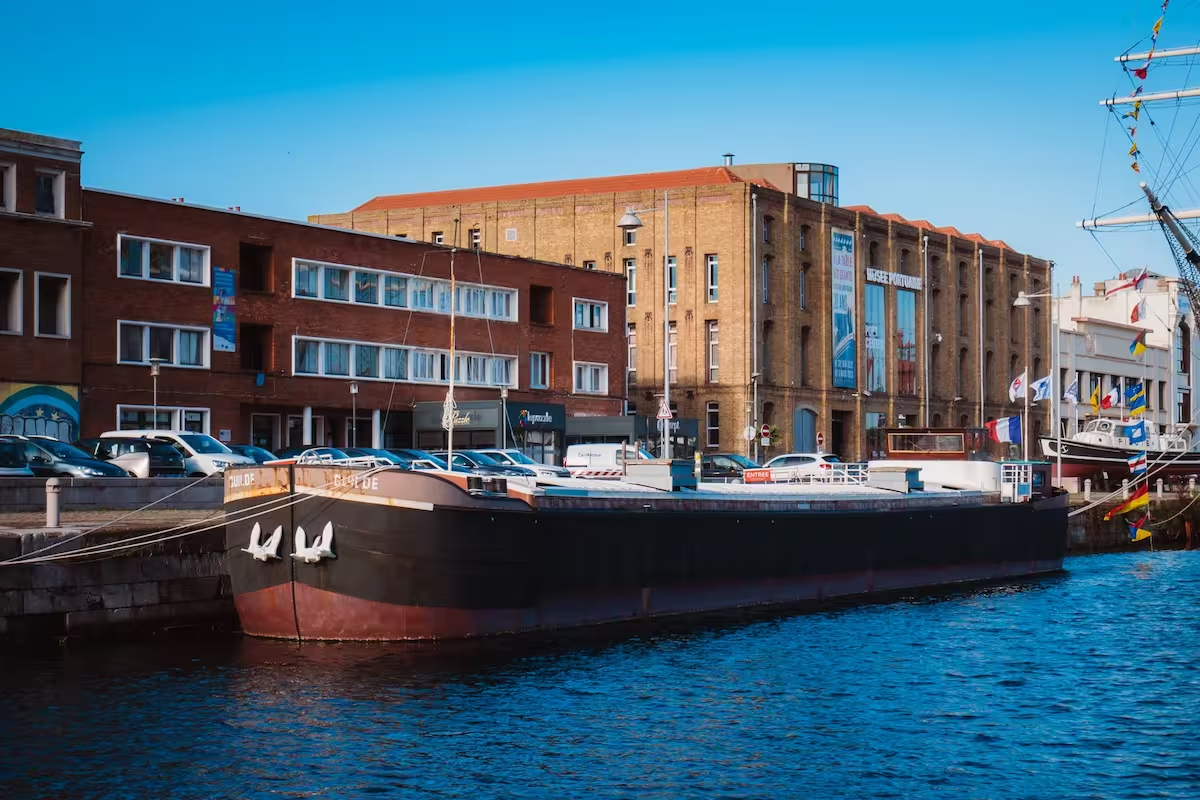
After exploring the tugboat Entreprenant and the lighthouse ship Sandettié, we continued our journey through Dunkirk’s maritime heritage with the Péniche Guilde, the third and final vessel of our visit. Unlike the first two ships, the Guilde is a historic barge designed for navigating canals and transporting goods, yet it tells an equally rich story about commerce and river transport in the region. Docked in the port, the Péniche Guilde immediately impresses with its long, low silhouette, typical of 20th-century cargo barges. Onboard, every detail reflects the daily life of the crew: modest yet functional cabins, workspaces for loading and unloading, and the wheelhouse used to navigate narrow and winding waterways. Walking along the deck, it’s easy to appreciate the discipline and skill required to operate these barges, as well as the simple but demanding life of their crews. What struck me most was the authenticity preserved throughout the vessel. Volunteers and maritime heritage enthusiasts have done an incredible job maintaining every element in its original state. You can touch the wooden cabins, examine the old engine mechanisms, and imagine a time when these barges were the lifeblood of local commerce. The Péniche Guilde offers a unique perspective compared to the first two ships: it highlights the importance of cargo transport and trade, connecting Dunkirk’s port to inland waterways. It demonstrates how maritime heritage is not only about seafaring vessels, but also the smaller, hardworking boats that supported the regional economy. Visiting the Guilde completes the experience of Dunkirk’s historic ships. It gives a tangible sense of life on the water from a practical and economic perspective while allowing visitors to appreciate the beauty and simplicity of these historic barges. Walking aboard the third ship, I felt as if I had truly journeyed through Dunkirk’s maritime history, understanding the different roles each vessel played — guiding, protecting, and transporting. The Péniche Guilde is a living testament to Dunkirk’s river and port heritage, providing an immersive experience that connects visitors to the lives of the sailors and merchants who shaped the city’s maritime history, and it closes our three-ship exploration in an unforgettable way. Visitor Tips ✨ Address: Dunkirk Maritime Museum, 9 Quai de la Citadelle, 59140 Dunkirk, France ✨ Tickets: Get the combined Museum + Boats ticket to access all three historic ships ✨ Best Time to Visit: Early morning or weekdays to enjoy a quieter experience✨ Accessibility: Museum is accessible; some areas of the barge may be narrow✨ Parking & Transport: 10-minute walk from Dunkirk train station; parking available near the port✨ Combine Visits: Explore all three historic ships, then take a stroll along the harbor for panoramic views
Step Aboard the Sandettié: Dunkirk’s Floating Lighthouse and Maritime Treasure
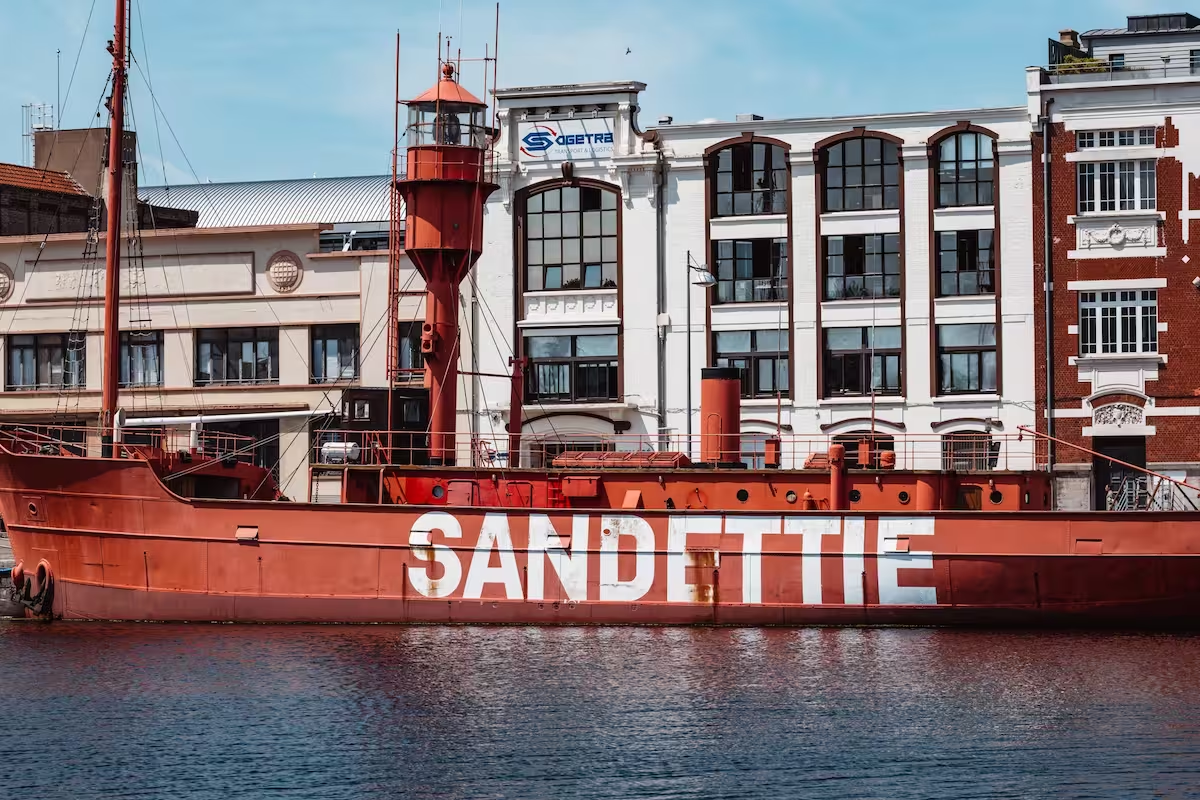
After visiting the tugboat Entreprenant, the first of the three historic ships, we continued our maritime adventure with the Sandettié Lighthouse Ship, the second vessel we had the chance to explore in Dunkirk. Docked proudly at the port, the Sandettié immediately stands out with its bright red hull and impressive silhouette — a floating beacon that once played a critical role in maritime safety. Built in 1939, the Sandettié served as a lighthouse ship, guiding vessels through the busy waters of the North Sea and the Pas-de-Calais. Its mission was crucial: in a region known for dense maritime traffic and unpredictable weather, this ship warned sailors of sandbanks and hazards, ensuring that ships could safely reach Dunkirk’s port. Walking aboard, it’s easy to appreciate the careful design of every element, from its signal lamps to the observation cabins, all built for vigilance and navigation safety. What struck me most was the sense of stepping back in time. The narrow metal staircases, the bridges, and the engine room are all authentically preserved. You can almost imagine the crew keeping watch day and night, monitoring the horizon and guiding ships safely. The restoration work done by passionate volunteers is remarkable, keeping the vessel intact while making it fully accessible to visitors. Every corner and piece of equipment tells a story about the maritime heritage of Dunkirk. Visiting the Sandettié offers a unique perspective on life at sea. While the Entreprenant showed the action of guiding ships in the port, the Sandettié demonstrates the constant vigilance required to protect maritime routes. Seeing firsthand how sailors of the past used technology and skill to navigate and secure busy shipping lanes is fascinating. This second ship gave us an incredible and immersive experience, revealing both the technical and human side of Dunkirk’s maritime history. Each tool, signal, and observation point tells a story of a sea that could be harsh, and of those who devoted their lives to keeping it safe. After exploring the Sandettié, I couldn’t wait to discover the third and final ship, completing this journey through Dunkirk’s historic vessels. Visitor Tips ✨ Address: Dunkirk Maritime Museum, 9 Quai de la Citadelle, 59140 Dunkerque, France ✨ Tickets: Purchase the combined Museum + Boats ticket for full access to all three historic ships ✨ Best Times to Visit: Early mornings or weekdays for quieter exploration and better lighting on the water✨ Accessibility: The museum is accessible, but some areas of the ships are narrow and may be challenging for visitors with reduced mobility✨ Parking & Transport: 10-minute walk from Dunkirk train station; parking available near the port✨ Combine Visits: After Sandettié, explore the other historic vessels and the nearby Risban Lighthouse for panoramic views
My Visit to the Entreprenant Museum Ship — First of Three Historic Vessels at Dunkirk’s Maritime Museum
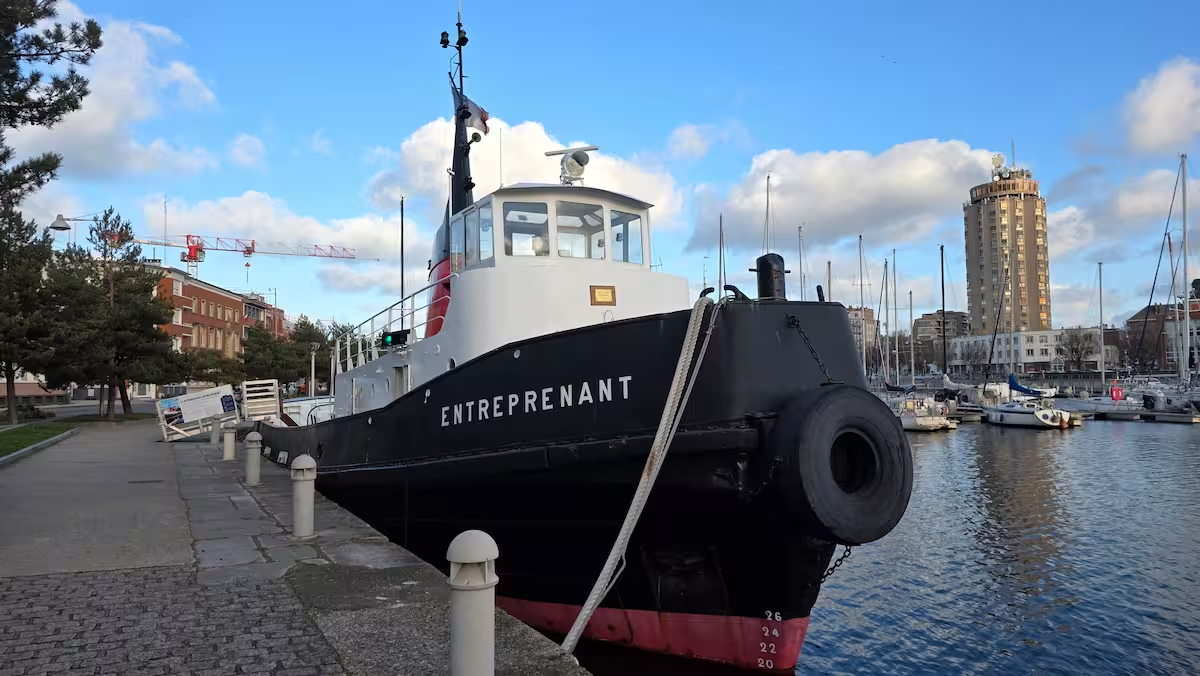
When I visited the Port Museum of Dunkirk, I didn’t just walk through a museum — I travelled through centuries of maritime history. Standing on the quay, facing the calm waters, the first boat that captured my attention was the remorqueur Entreprenant, the first of three remarkable historic ships I planned to explore that day. Docked right in front of the museum on 9 Quai de la Citadelle, 59140 Dunkerque, France, the Entreprenant carries decades of history within its steel hull. Built in 1965 in Dunkirk, this tugboat played an important role in guiding vessels safely through the busy port waters for more than thirty years. It wasn’t just a work machine — it was a trusted companion to sailors and captains, helping them maneuver through weather, tides, and the demands of maritime life. Walking aboard, I was immediately struck by the authentic feel of the ship. The bridge, the control levers, the engine room, even the narrow corridors — all of it whispered stories of countless port operations. You can really sense the daily life of the crew who once worked here, from the steady routine to the moments of intense focus as they guided heavy cargo ships and passenger vessels alike. What makes this experience even more special is the careful restoration by passionate volunteers. You can see the respect and dedication in every detail — from the polished metalwork to the preserved equipment that has been maintained for visitors to truly understand what life was like on a working tugboat. This dedication doesn’t just preserve history — it brings it to life. What I loved most about visiting Entreprenant was that I wasn’t surrounded by crowds — just space, silence, and the vessel itself, letting me absorb every detail at my own pace. It was like stepping into a moment frozen in time, where the stories of the ship’s past had room to resonate. This incredible boat is just the first of three, and I couldn’t wait to continue my journey to the other vessels moored alongside — the Péniche Guilde and other historic ships — each with their own tale to tell. Visitor Tips — Plan Your Visit Right ✨ Location: 9 Quai de la Citadelle, 59140 Dunkerque, France — right along the historic port. ✨ Museum + Boats Ticket: You can combine your entry to the museum with access to all the boats, including Entreprenant. ✨ Best Times to Go:
Santa’s Castle in Dunkirk: A Christmas Memory Our Family Won’t Forget
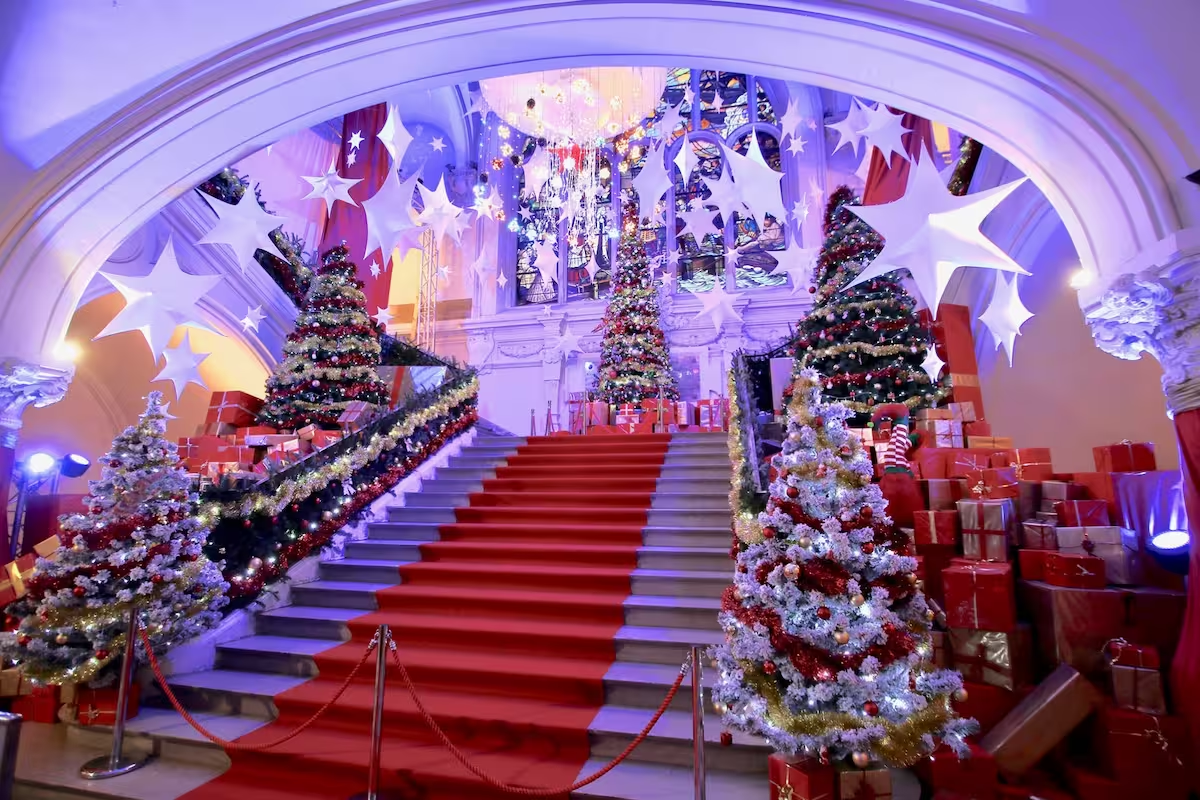
Sometimes, you visit a place thinking it will just be “something nice to do with the kids” — and you leave with real magic in your heart. That’s exactly how I felt at Santa’s Castle in Dunkirk. Every winter, the city turns its beautiful town hall into a real-life fairytale. Yes — the Dunkirk town hall actually transforms into Santa’s Castle. From the outside, the building already looks impressive, but at Christmas it becomes something completely different: lights everywhere, garlands at the doors, soft music in the air, and children whispering excitedly while waiting to go inside. Before you even step in, you feel the atmosphere. What touched me most is knowing how this castle is created. It isn’t built by a big company — it’s made by people from the city, who truly care. Around forty municipal workers designed and assembled everything, guided by the ideas of Jacques-Olivier Simon, a retired city employee whose imagination still brings joy to thousands of kids each year. When you walk through the rooms, you can almost feel the love and effort behind every scene. Inside, each space invites you to slow down. Toy trains, snowy villages, giant books, twinkling trees… children move from one scene to another with wide eyes, and honestly — as parents, we do too. I found myself stopping, smiling, and thinking, “This is exactly what Christmas should feel like.” And then, of course — comes the moment. Meeting Santa. It isn’t rushed, it isn’t commercial. Santa listens, smiles, and somehow makes every child feel special. Watching my child speak to him was one of those quiet family moments I want to keep forever — the kind you remember long after the decorations come down. What I really appreciated is how well everything is organized. You don’t feel pushed; you have time to enjoy, take photos, and simply live the moment together. It’s also manageable for families with young children, strollers, or grandparents — something that matters a lot when we travel. After the visit, we wandered outside a bit more, enjoying the Christmas lights and the festive mood around the square. Dunkirk may not be the first city you think of for a Christmas trip — but maybe that’s what makes this experience so special. It feels authentic, warm, and truly family-friendly. If you plan to go, my advice is simple: take your time. Let the kids explore, ask questions, and enjoy the details. Bring your camera, a warm jacket, and be ready to feel like a kid again yourself. We left Santa’s Castle with that soft, glowing happiness that only Christmas can bring. For us, it wasn’t just a visit. It was a shared memory — and exactly the kind of place I love discovering and sharing on Family Travel Guide. Practical Tip for 2026: Arrive Before Opening Time If you’re planning to visit Santa’s Castle in 2026, here’s my best advice: arrive before 2:00 p.m., ideally a little earlier than the official opening time. The experience has become more and more popular, and families who arrive later in the afternoon often face long lines. When doors open, the flow is smooth and pleasant — but after 2:00 p.m., waiting times can easily increase and range between 40 minutes and 1 hour, especially on weekends and during school holidays. Arriving early not only reduces stress, it also lets children enjoy the magic without feeling tired before they even get inside. Bring a small snack, dress warmly, and make it part of the adventure — a calm start makes the visit even more magical. 📍 Dunkirk Town HallPlace Charles Valentin, 59140 Dunkerque, France
The Gravensteen: A Stone Fortress in the Heart of Ghent
After gazing at the soaring spires of the Belfry and St. Bavo’s Cathedral, another giant demands your attention—but its presence is strikingly different. Massive, austere, and impenetrable, the silhouette of the Gravensteen, or the Castle of the Counts, looks as if it were dropped into the middle of the modern city by a leap through time. It is one of the only medieval moated castles in Belgium with its defense system almost entirely intact, offering a unique witness to the sheer scale of feudal power. The story of the Gravensteen truly begins in 1180, commissioned by Philip of Alsace, Count of Flanders. In those days, architecture served a dual purpose: protection and intimidation. By erecting this stone fortress on the banks of the River Lieve, the Count sent a clear message to the citizens of Ghent—his authority was absolute and unshakable. With its thick walls, crenelated battlements, and deep moats, the Gravensteen was the ultimate symbol of countly domination over an increasingly rebellious city. Stepping through the great fortified gatehouse, you enter a world of stone where every corridor seems to whisper intrigues of the past. Over the centuries, the castle has worn many faces. From the lavish residence of the Counts of Flanders, it evolved into an administrative center, then a courthouse, and eventually a dreaded prison. One of the most striking—and darkest—parts of the visit is the Torture Museum located in the old keep. Here, visitors find a chilling collection of period instruments, a stark reminder that medieval justice was as spectacular as it was cruel. Yet, the Gravensteen almost disappeared. By the end of the 19th century, the castle was in such a state of decay that it served as a cotton mill, its ancient walls disfigured by industrial buildings. Some even called for its demolition. Fortunately, the city of Ghent purchased the edifice in 1885 to undertake a monumental restoration, returning it to the heroic medieval appearance we admire today. The highlight of the visit is literally at the top. Climbing to the ramparts, you stand high above the rooftops of Ghent. From this vantage point, the view is peerless: you realize the strategic genius of the castle’s location, surrounded by water and overseeing the commercial activities that made the city rich. Today, the Gravensteen is no longer a place of terror, but a place of culture. With its famously humorous audio guides and immersive exhibitions, the castle invites visitors on a journey that is both educational and entertaining. It is a total immersion into the Middle Ages—a mandatory stop for anyone wishing to understand the soul of Ghent, a city that has never been afraid to challenge its masters from behind walls of stone. 2. Visitor Information & Tips
The Belfry of Ghent: The Tower of Liberty and World Heritage
Standing tall between the St. Bavo’s Cathedral and the St. Nicholas’ Church, the Belfry of Ghent is more than just a magnificent tower; it is the ultimate symbol of the city’s independence and the pride of its medieval burghers. As a UNESCO World Heritage site, this 91-meter-high giant has watched over the city for seven centuries, serving as a watchtower, a treasury, and the « voice » of Ghent. The construction of the Belfry began in 1313, a time when Ghent was one of the most powerful and wealthiest cities in Europe. Unlike the surrounding churches, the Belfry was a purely secular building. It wasn’t built for God, but for the people. For centuries, it housed the City Privileges—the documents that granted Ghent its rights and freedoms—locked away in a massive chest behind heavy iron doors. This was the heart of Ghent’s civic identity. As you look up at the spire, your eyes are immediately drawn to the Golden Dragon. This legendary creature has perched atop the tower since 1377. It is the guardian of the city, keeping a watchful eye over the citizens. According to local lore, the dragon was originally brought back from a crusade, and while the current dragon is a meticulously crafted replica, it remains the most beloved symbol of Ghent’s spirit. One cannot talk about the Belfry without mentioning its « voice »—the Carillon. In the Middle Ages, the bells were the city’s heartbeat. They signaled the opening of the city gates, called the weavers to work, and warned of approaching enemies or fires. The most famous bell of all was Roland, whose deep boom echoed through the streets to rally the citizens to arms. Today, the carillon consists of 54 bells, and hearing their melody ripple across the historic center is an experience that transports you straight back to the 14th century. Climbing the tower—or taking the elevator for a more modern experience—reveals the sheer architectural grit of the structure. Inside, you can see the intricate clockwork mechanism and the massive drum that operates the carillon. Once you reach the stone gallery at the top, the reward is unparalleled. The view offers a 360-degree panorama of Ghent’s « Three Towers » skyline, with the winding canals and the red-tiled roofs stretching out toward the horizon. Adjacent to the tower lies the Cloth Hall, a masterpiece of Brabantine Gothic architecture that served as the center of the city’s booming textile trade. Together, the Belfry and the Cloth Hall stand as a testament to a time when Ghent was a hub of global commerce and democratic ambition. Today, as a protected World Heritage site, the Belfry remains a living monument. It doesn’t just represent the past; it embodies the resilience and the fiery independence of the « Ghentenaars. » Whether you are listening to the chime of the bells or standing in the shadow of the Golden Dragon, you are touching the very soul of this historic city. Visitor Information & Tips
St. Bavo’s Cathedral in Ghent: A Journey Between Heaven and Earth
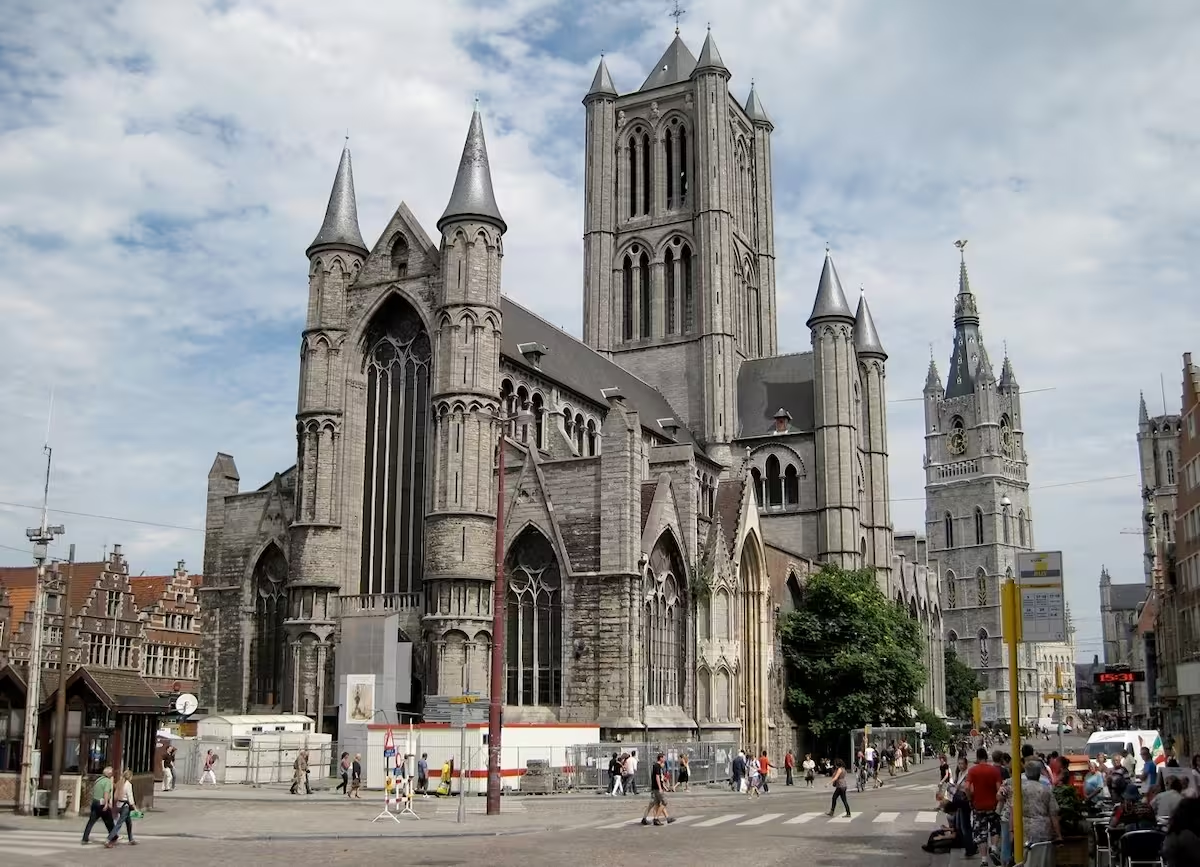
After exploring the city’s quiet museum galleries, our journey through Ghent leads us to a stone giant: St. Bavo’s Cathedral. Thanks to exclusive permission to film inside, we are able to take you behind the scenes of this monumental edifice to reveal its most precious secrets. Dominating the skyline from a height of 89 meters, this sentinel of limestone and brick tells the story of Flanders’ glorious and turbulent past. The history of St. Bavo’s begins long before the soaring Gothic vaults we see today. To understand the soul of this place, one must venture into the cool air of the crypt. Here lie the remains of the old St. John the Baptist church, a 12th-century Romanesque structure where the original robust masonry is still visible. This transition from Romanesque to Gothic perfectly illustrates the rise of Ghent: as the city grew wealthy through the cloth trade, its church rose higher toward the sky, adorning itself with deep choirs and radiating chapels built from Tournai blue stone. However, the cathedral’s worldwide fame rests on a treasure hidden within a protected chapel: The Adoration of the Mystic Lamb. Completed in 1432 by the brothers Hubert and Jan van Eyck, this polyptych is considered the starting point of the Flemish Renaissance. Visitors are struck by the incredible, almost microscopic attention to detail. Every pearl on a crown, every blade of grass in the Garden of Eden, and every reflection of light on armor bears witness to the genius of the Van Eycks. But this painting is also a survivor of history. Stolen by Napoleon’s troops, hidden during WWI, and looted by the Nazis before being found in an Austrian salt mine, it has survived everything—except for the lingering mystery of the 1934 theft of the « Just Judges » panel, which remains missing to this day. Moving past the Middle Ages, the cathedral surprises us with its Baroque contrasts. In the center of the nave stands the monumental « Pulpit of Truth, » an 18th-century masterpiece carved by Laurent Delvaux. This blend of white Carrara marble and dark oak is a feat of movement and theatricality, illustrating the victory of Truth over Error. Nearby, the walls host the energy of Peter Paul Rubens with his painting « St. Bavo Enters the Convent at Ghent, » reminding us that the cathedral has always been a crossroads for the greatest artists of their time. Beyond the art, St. Bavo’s is a place of light. Its stained-glass windows filter sunlight to color the stone floors, creating an atmosphere of both contemplation and wonder. Each side chapel, often funded by wealthy guilds, contains altarpieces and funerary monuments that serve as pages of an open history book. In conclusion, crossing the threshold of St. Bavo’s means losing track of time. Between its thousand-year-old crypt, the striking realism of the Van Eycks, and the power of the Baroque, the building remains the spiritual and artistic heart of Ghent. This report, made possible by the cathedral’s warm welcome, is an invitation to take a fresh look at this UNESCO World Heritage site, where every stone seems to whisper a prayer or an artist’s secret. 2. Visitor Information & Tips
Hôtel d’Hane-Steenhuyse, Ghent – A Hidden Aristocratic Gem in the Heart of the City
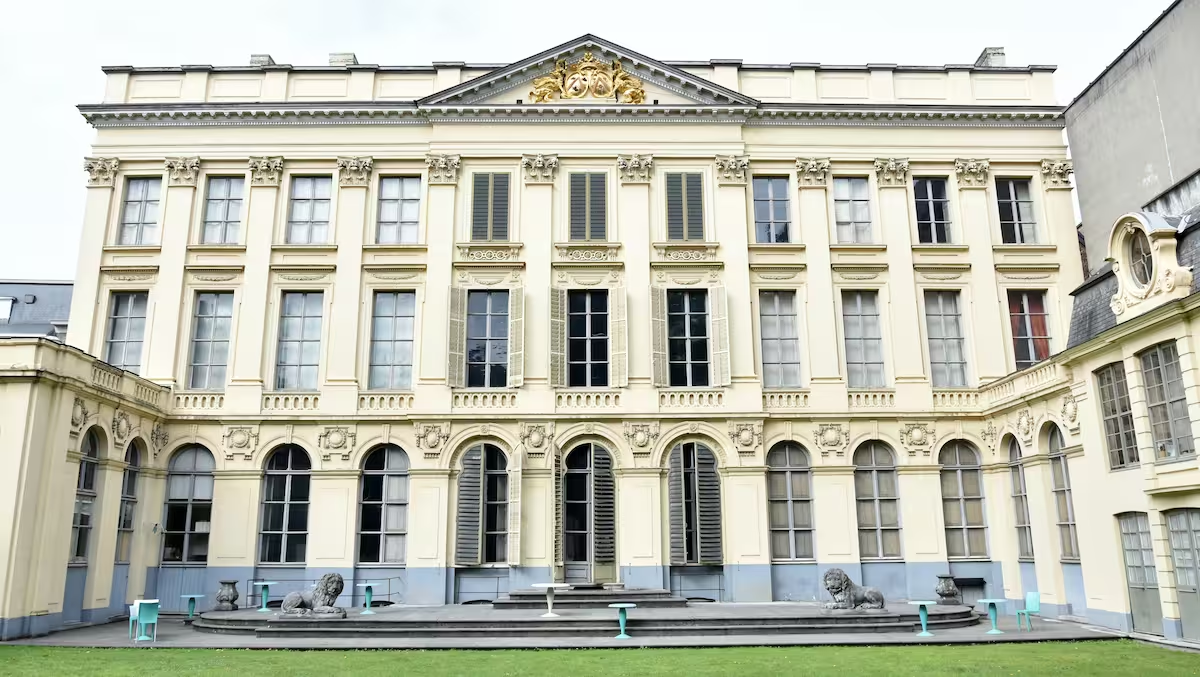
Walking along the busy Veldstraat in Ghent, nothing really prepares you for what lies behind the elegant façade of the Hôtel d’Hane-Steenhuyse. Yet the moment I stepped inside, I felt as though I had slipped quietly into the refined world of the eighteenth century. This grand town mansion, both discreet and sumptuous, offers one of the most atmospheric encounters with aristocratic life in Ghent. The Hôtel d’Hane-Steenhuyse was created between 1768 and 1773 by gradually merging several medieval houses. Over time, generations of the d’Hane family transformed the property into one of the city’s most prestigious private residences. What immediately struck me was the architectural contrast: the richly decorated street façade reflects the elegance of the Louis XV style, while the garden side adopts a calmer, more symmetrical Louis XVI neoclassical approach. It feels deliberate—prestige displayed to the city, serenity reserved for private life. Inside, the rooms unfold naturally in a refined enfilade. Each salon has its own atmosphere, shaped by delicately carved wooden panels, mirrors that amplify light, richly coloured walls, and original parquet floors that still echo with past footsteps. I particularly enjoyed how intimate the space feels despite its grandeur. The famous ballroom, with its almost theatrical proportions, is without doubt the highlight. Standing there, it is easy to imagine candlelit receptions, music drifting through the air, and conversations that once shaped social life in Ghent. Beyond its beauty, the Hôtel d’Hane-Steenhuyse is deeply connected to European history. In 1815, during Napoleon’s Hundred Days, King Louis XVIII of France stayed here while in exile. Knowing that royal decisions and political discussions took place within these walls adds a powerful historical dimension to the visit. The house is not simply decorative—it is a silent witness to turbulent times. One of the most pleasant surprises is the garden. Hidden behind the bustling shopping street, it offers a peaceful retreat and reinforces the sense of balance between city life and private comfort. This dialogue with nature is also present indoors, where floral motifs and soft decorative details reflect the eighteenth-century ideal of a refined, controlled natural world. Even the cellars tell a story, preserving traces of earlier constructions and reminding visitors that this house evolved gradually rather than appearing fully formed. Today, the Hôtel d’Hane-Steenhuyse is part of Ghent’s network of historic houses and is open to the public. I found the presentation particularly well done: the interiors feel alive rather than frozen in time, enhanced by temporary exhibitions, cultural events, and carefully displayed furniture and objects. Items such as the porcelain service gifted by Louis XVIII give the house a tangible connection to the people who once lived and visited here. Leaving the Hôtel d’Hane-Steenhuyse, I had the impression of having experienced more than a simple monument. This is a place that invites you to slow down, observe details, and imagine the lives that once unfolded here. For me, it is one of Ghent’s most rewarding hidden treasures—an elegant bridge between past and present. Visitor Tips Address Hôtel d’Hane-SteenhuyseVeldstraat 559000 GhentBelgium