
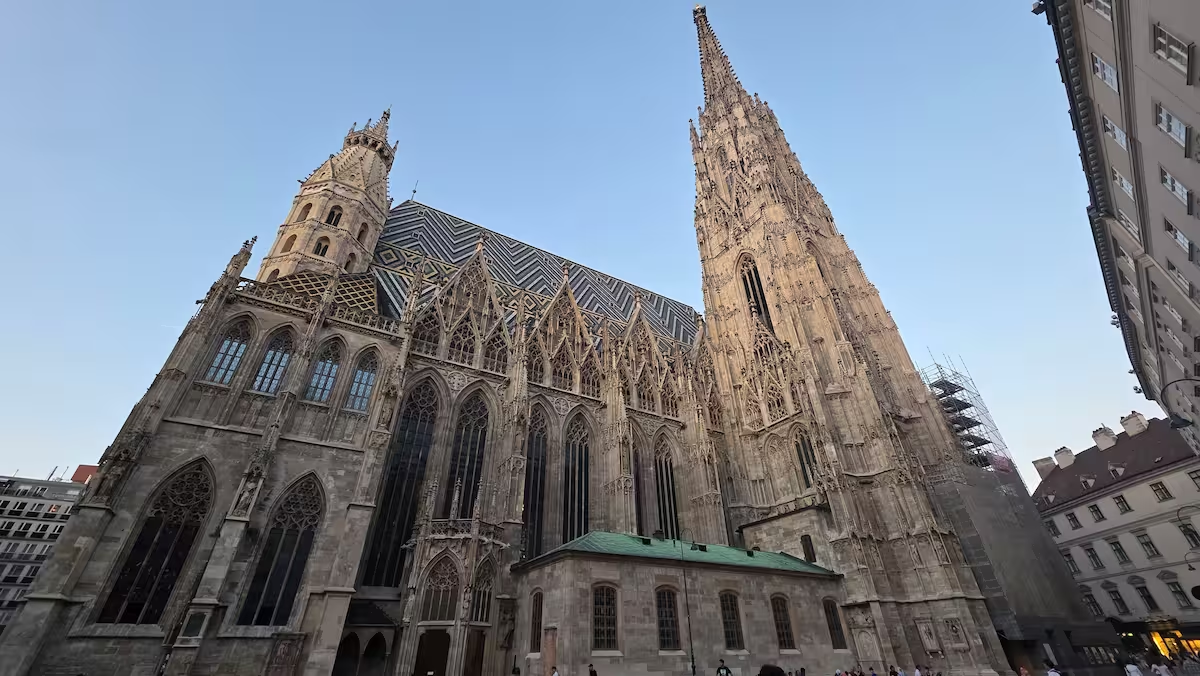
In the heart of Vienna, where history and modern life intertwine, stands the magnificent St. Stephen’s Cathedral (Stephansdom) — the city’s most iconic landmark and one of the most important Gothic structures in Europe. Rising proudly above Stephansplatz, its majestic spire has watched over Vienna for more than 700 years, serving as both a spiritual center and a symbol of the Austrian nation.
From a distance, the cathedral captivates with its spectacular roof — a masterpiece of color and geometry. Over 230,000 glazed tiles shimmer under the sun, forming the imperial double-headed eagle and the coats of arms of Vienna and Austria. As you draw nearer, the immense south tower, known as “Steffl,” dominates the skyline with its 136 meters of height. Climbing the 343 steps to the top rewards visitors with breathtaking views over Vienna’s historic rooftops, stretching far into the Danube Valley.
Inside, the cathedral offers an atmosphere that is both solemn and inspiring. The vast Gothic nave, illuminated by the warm hues of stained-glass windows, seems to transport visitors to another era. The Pulpit of Anton Pilgram, a late Gothic masterpiece, is an intricate work of stone art that seems to come alive under the soft light. The High Altar, depicting the stoning of St. Stephen, stands as a testament to the devotion and craftsmanship of centuries past. Every detail — from the side chapels to the statues of saints — tells a story of faith, resilience, and art.
Yet, beneath this grandeur lies a hidden world. The catacombs, accessible through guided tours, reveal Vienna’s deep history and its connection to mortality and faith. Here rest the remains of bishops, nobles, and plague victims, sealed within the heart of the city they once served. The experience is haunting yet deeply moving, offering a rare glimpse into the city’s medieval past.
St. Stephen’s Cathedral has survived wars, fires, and destruction. During the final days of World War II, it was nearly lost when flames consumed its roof. Yet the people of Vienna rebuilt it, stone by stone, as an act of collective love and determination. Today, it continues to host major religious ceremonies, concerts, and national events, echoing the very heartbeat of Austria itself.
For visitors, exploring the cathedral is an unforgettable experience, but it is worth knowing a few practical details to make the most of your visit.
Try to arrive early in the morning or later in the evening, when the crowds thin out and the atmosphere becomes almost meditative. Entry to the main nave is free, but a small fee is charged for access to the towers and catacombs — both absolutely worth it. The north tower, accessible by elevator, offers a great alternative view if you prefer to skip the stairs. Don’t forget to step outside and observe the cathedral from Graben Street or Kärtner Straße, where you can admire the full beauty of its façade.
Photography is allowed inside, but visitors are encouraged to remain discreet and respectful, especially during mass. If you wish to experience the cathedral’s magic in sound, attend an organ concert or choir performance — the acoustics are astonishing and the atmosphere unforgettable.
Located at Stephansplatz 3, 1010 Vienna, the cathedral sits right above the metro interchange of U1 and U3 lines, making it one of the easiest landmarks to reach. Around the square, cafés, chocolate shops, and souvenir stores invite you to linger and enjoy the Viennese atmosphere after your visit. At night, when the cathedral’s exterior is beautifully illuminated, it becomes a poetic sight — timeless, elegant, and deeply moving.
More than a monument, St. Stephen’s Cathedral is the soul of Vienna — a living testament to faith, endurance, and the creative spirit of humankind. Whether you come to admire its architecture, discover its history, or simply stand in awe of its silent grandeur, you will leave feeling connected to something eternal — the very heart of Vienna itself.