
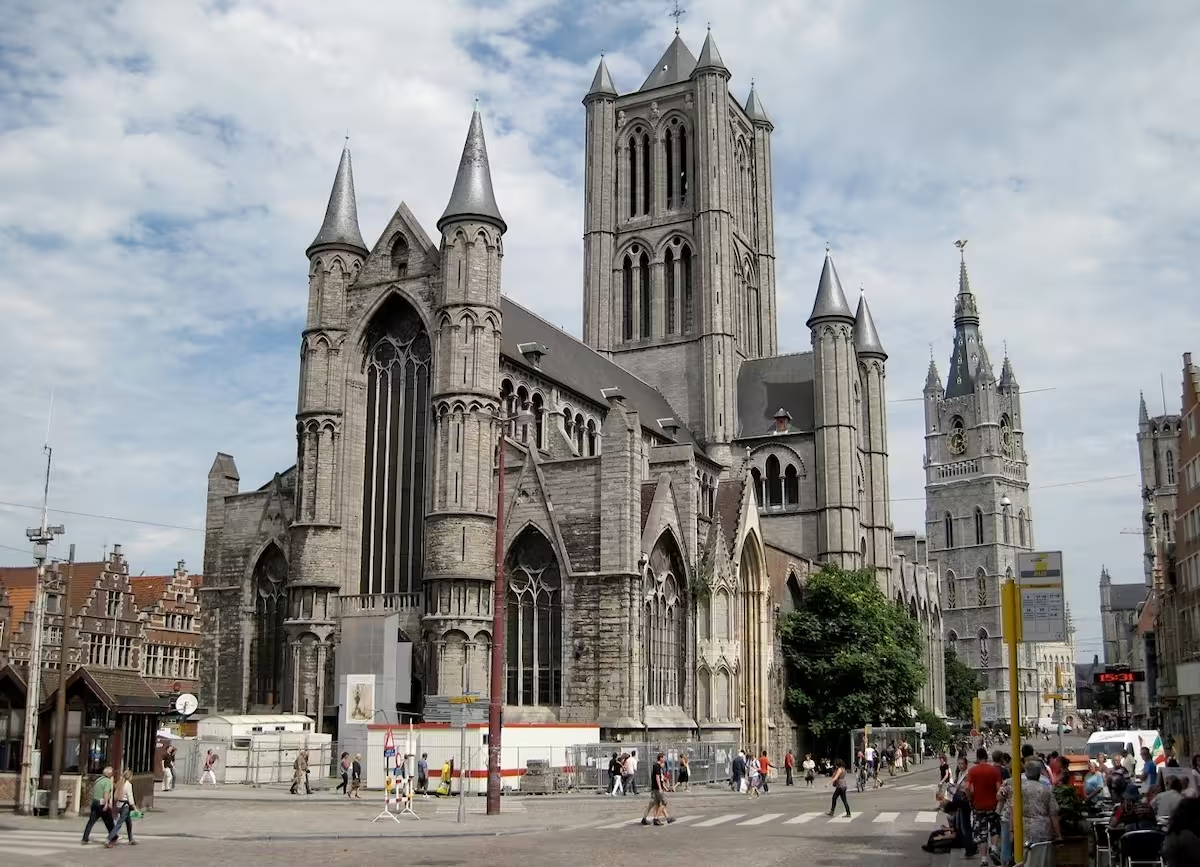
After exploring the city’s quiet museum galleries, our journey through Ghent leads us to a stone giant: St. Bavo’s Cathedral. Thanks to exclusive permission to film inside, we are able to take you behind the scenes of this monumental edifice to reveal its most precious secrets. Dominating the skyline from a height of 89 meters, this sentinel of limestone and brick tells the story of Flanders’ glorious and turbulent past.
The history of St. Bavo’s begins long before the soaring Gothic vaults we see today. To understand the soul of this place, one must venture into the cool air of the crypt. Here lie the remains of the old St. John the Baptist church, a 12th-century Romanesque structure where the original robust masonry is still visible. This transition from Romanesque to Gothic perfectly illustrates the rise of Ghent: as the city grew wealthy through the cloth trade, its church rose higher toward the sky, adorning itself with deep choirs and radiating chapels built from Tournai blue stone.
However, the cathedral’s worldwide fame rests on a treasure hidden within a protected chapel: The Adoration of the Mystic Lamb. Completed in 1432 by the brothers Hubert and Jan van Eyck, this polyptych is considered the starting point of the Flemish Renaissance. Visitors are struck by the incredible, almost microscopic attention to detail. Every pearl on a crown, every blade of grass in the Garden of Eden, and every reflection of light on armor bears witness to the genius of the Van Eycks. But this painting is also a survivor of history. Stolen by Napoleon’s troops, hidden during WWI, and looted by the Nazis before being found in an Austrian salt mine, it has survived everything—except for the lingering mystery of the 1934 theft of the « Just Judges » panel, which remains missing to this day.
Moving past the Middle Ages, the cathedral surprises us with its Baroque contrasts. In the center of the nave stands the monumental « Pulpit of Truth, » an 18th-century masterpiece carved by Laurent Delvaux. This blend of white Carrara marble and dark oak is a feat of movement and theatricality, illustrating the victory of Truth over Error. Nearby, the walls host the energy of Peter Paul Rubens with his painting « St. Bavo Enters the Convent at Ghent, » reminding us that the cathedral has always been a crossroads for the greatest artists of their time.
Beyond the art, St. Bavo’s is a place of light. Its stained-glass windows filter sunlight to color the stone floors, creating an atmosphere of both contemplation and wonder. Each side chapel, often funded by wealthy guilds, contains altarpieces and funerary monuments that serve as pages of an open history book.
In conclusion, crossing the threshold of St. Bavo’s means losing track of time. Between its thousand-year-old crypt, the striking realism of the Van Eycks, and the power of the Baroque, the building remains the spiritual and artistic heart of Ghent. This report, made possible by the cathedral’s warm welcome, is an invitation to take a fresh look at this UNESCO World Heritage site, where every stone seems to whisper a prayer or an artist’s secret.
2. Visitor Information & Tips
- Address: Sint-Baafsplein, 9000 Gent, Belgium.
- The Altarpiece (The Mystic Lamb): You must book a specific time slot online to see the Ghent Altarpiece. There is a « Virtual Reality » tour available that provides a deep dive into its history.
- The Crypt: Don’t miss it! It’s one of the oldest parts of the city and is included in the visit.
- Dress Code: As it is an active place of worship, please dress respectfully (shoulders covered, no hats inside).
- Photography: While we had special permission to film, regular visitors are often restricted from taking photos of the original altarpiece to protect the pigments. Always check local signs.