
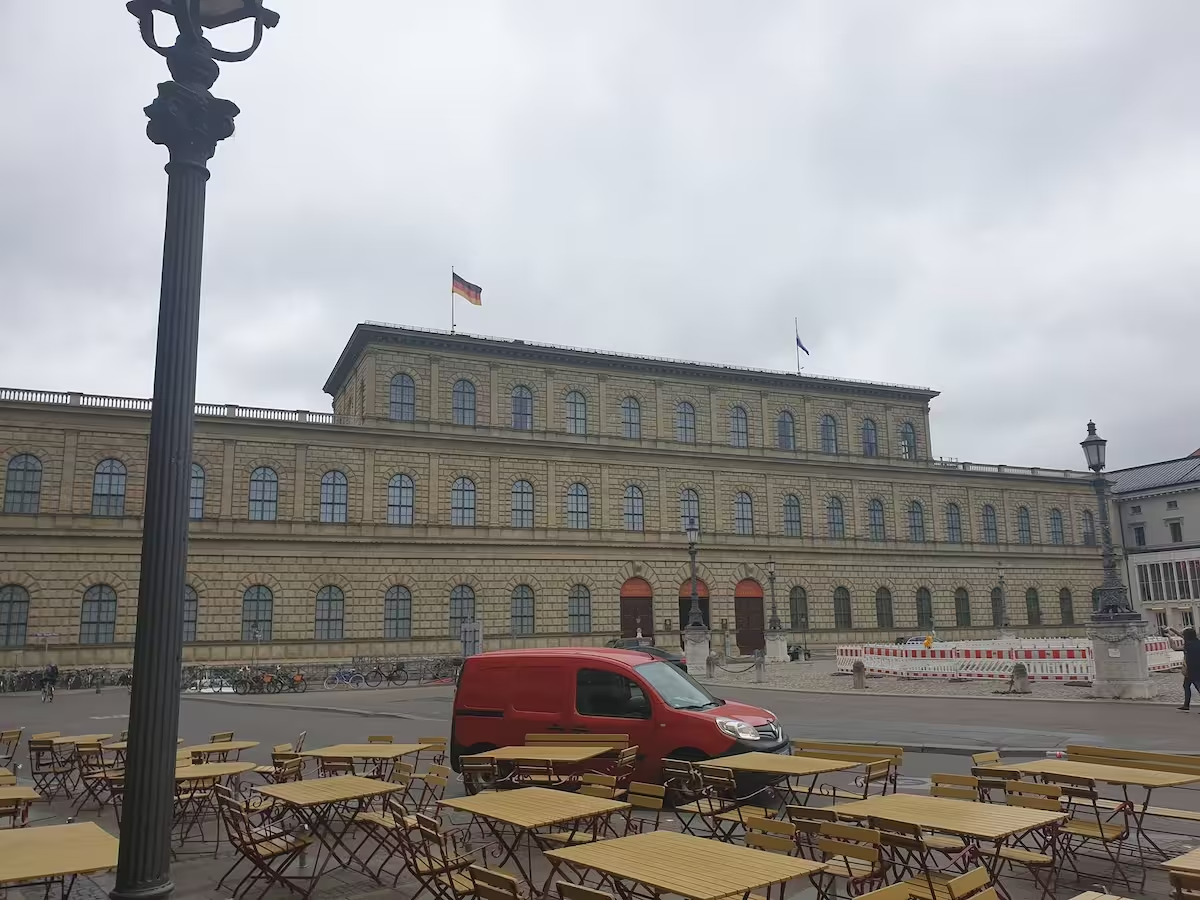
Walking through the center of Munich, I couldn’t miss this immense building with its sober yet imposing façades: the Munich Residence, once the seat of the Dukes, Electors, and later Kings of Bavaria. At first glance, its massive and somewhat austere exterior doesn’t necessarily reveal the wealth hidden behind its walls. Yet, once you pass through the doors, a whole world opens up—a journey through five centuries of history and art, a place where Bavaria has written some of its greatest chapters.
The Residence is not a palace frozen in a single style. It is a grand assembly of rooms, courtyards, and galleries built over time, reflecting the tastes and ambitions of each ruler. Here, one finds Italian Renaissance, Baroque splendor, Rococo exuberance, and Neoclassical elegance. Every room is a surprise, giving the impression of walking through a living mosaic of European architectural history.
One of the places that impressed me most is the Antiquarium, a huge gallery built in the 16th century to house the Dukes of Bavaria’s collection of antique sculptures. With its painted vaults, frescoes, and aligned busts, it is a hall that impresses with its majesty—a space where ancient art dialogues with the Renaissance. One almost feels tiny walking through this nave, which resembles a cathedral dedicated to culture and knowledge.
Then, around a corner, you discover Baroque and Rococo rooms of incredible splendor: gilded decorations, painted ceilings, mirrors, and marble. Each salon seems designed to shine brighter than the previous one, to dazzle visitors and remind them of the power of the Wittelsbach dynasty, which ruled Bavaria for nearly 700 years. Among these jewels, the Cuvilliés Theatre, rebuilt after the war, is a pure Rococo masterpiece, all lace-like carved wood and red velvet—a small marvel that seems straight out of a dream.
What makes the Residence fascinating is also its historical role. More than a palace, it was the real political heart of Bavaria, a center of power where major decisions were made. Each ruler left their mark, expanding the palace, adding new wings, and decorating according to the fashions of their era. This richness gives today an impressive ensemble of more than 130 rooms open to the public, an immersion into art and history that seems almost endless.
The Treasury of the Residence also deserves attention: jewels, insignia, crowns, and reliquaries recall the wealth and prestige of the House of Wittelsbach. These precious objects perfectly complement the visit to the ceremonial rooms, offering an intimate view of power and its display.
Leaving the Residence, what stays in memory is not only the image of a vast and sumptuous palace but that of a living place, which tells as much about dreams of grandeur as about the trials of history. Largely destroyed during World War II, the palace was patiently rebuilt, bringing back to life this masterpiece of European culture.
Visiting the Munich Residence is a journey through time, from the splendor of the Renaissance to the elegance of the 19th century. It allows one to understand how Bavaria established itself at the heart of Europe, and above all, to feel the power and fragility of human heritage. It is a visit that dazzles, enriches, and leaves a lasting impression.
Visitor Information
- Address: Residenz München, Residenzstraße 1, 80333 Munich, Germany
- Opening Hours: Daily 10:00 AM – 6:00 PM (closed on some holidays, check official website)
- Tickets: Approximately €14–€17 for adults (reduced rates for students, seniors, and children)
- Tips:
- Plan at least 2–3 hours to explore the palace and treasury.
- Wear comfortable shoes; the Residence is vast with many rooms and staircases.
- Photography is allowed in most areas, but flash may be restricted.
- Combine your visit with the Residenz Museum, Treasury, and Cuvilliés Theatre for a complete experience.
- Guided tours or audio guides are highly recommended to fully appreciate the historical context.