
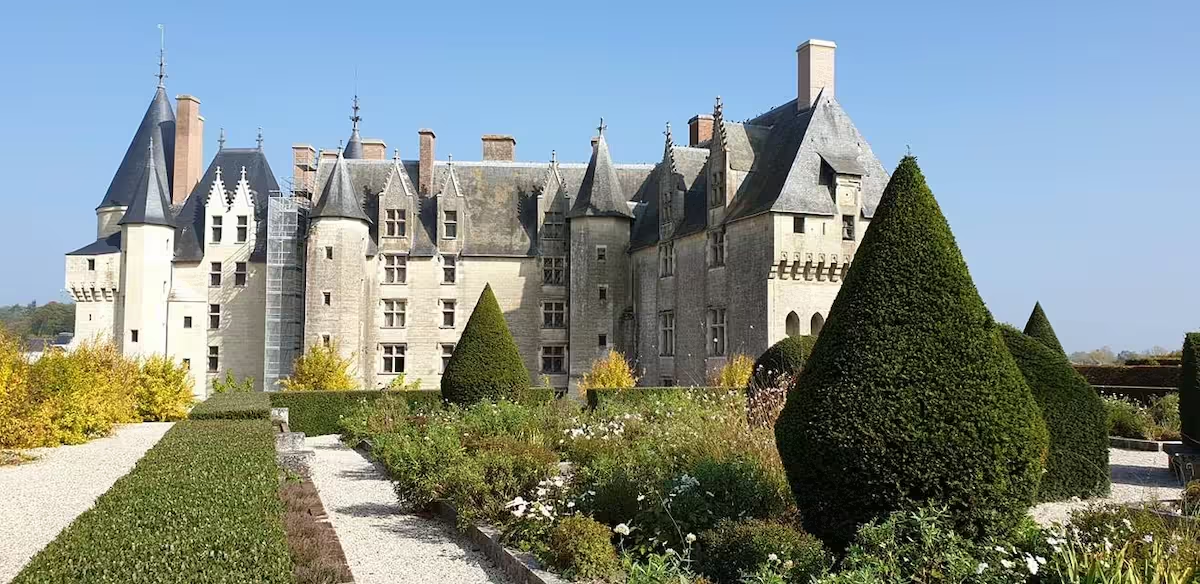
Arriving in the charming town of Langeais, on the banks of the Loire, it is impossible to miss the imposing silhouette of Langeais Castle. With its tall towers, crenellated walls, machicolations, and a working drawbridge, the castle looks like it has been taken straight out of the Middle Ages. One almost expects armored knights to appear on the battlements. Built in 1465 by King Louis XI, Langeais Castle was designed above all as a fortress—a rare example of defensive architecture at a time when many castles were beginning to turn into Renaissance residences of prestige and comfort.
Yet behind its austere exterior lies a story that forever changed the destiny of France. It was here, in 1491, that Charles VIII, King of France, married Anne of Brittany, Duchess and heir to the powerful Duchy of Brittany. This marriage, celebrated in the castle’s wedding hall, was not just a union between two young royals; it was a political event of immense importance. It sealed the definitive attachment of Brittany to the French crown, shaping the nation as we know it today. Standing in that very room, it is easy to imagine the scene—the glow of torches, nobles gathered in solemn silence, and a royal oath that altered the course of history.
Inside, Langeais Castle reveals a surprising richness. While the exterior still carries the weight of medieval austerity, the interiors are warm, ornate, and richly decorated. Flemish tapestries cover the walls, sculpted wooden furniture recalls the artistry of the 15th century, and immense canopy beds show the grandeur of daily life for royalty. Each room feels frozen in time, as though its occupants had only just left a moment before. The banquet hall, with its long tables and benches, evokes scenes of feasts and celebrations, while the royal chamber offers a glimpse into the more private side of power.
The most powerful space, however, remains the wedding hall, carefully reconstructed to evoke the historic union of Charles VIII and Anne of Brittany. Here, history does not feel distant—it feels alive. The atmosphere is almost tangible, a reminder that these walls were silent witnesses to one of the most decisive moments in the history of France.
Outside, the contrast is striking. Beyond the heavy fortress walls, the castle gardens and terraces open onto peaceful views. The Loire stretches out in the distance, a reminder of the strategic and cultural importance of this valley for the kings of France. Strolling through the gardens, I found it easy to pause, admire the scenery, and reflect on the centuries of life, trade, and royal processions that once animated this river landscape.
Langeais Castle may not be the largest of the Loire Valley castles, but it stands out with its authenticity and its powerful historical legacy. While Chambord amazes with its grandeur and Chenonceau enchants with its elegance, Langeais moves the heart with its strength, its sincerity, and its role in shaping French history. It is a castle of transition—a place where the Middle Ages meet the Renaissance, where fortress walls shelter refined interiors, and where love and politics merged to change the course of a kingdom.
Leaving the castle, I carried with me the impression of having stepped into a true threshold of time. Langeais is not just a monument—it is a living story, a reminder that the soul of France was built in moments like this, between stone walls where history was sealed forever.
📍 Address & Visitor Information
Langeais Castle
Château de Langeais
Place Pierre de Brosse
37130 Langeais
France
Visitor Tips:
- Opening hours vary by season; check the official website before your visit.
- Book your tickets online in advance during summer or holidays.
- Plan 1.5 to 2 hours to explore the castle and gardens.
- The castle is easily accessible by train from Tours (about 25 minutes) with a short walk from the station.
- Don’t miss the view from the terraces overlooking the Loire—especially at sunset.
- Families will enjoy the interactive exhibits and reconstructions that make the history more vivid.