
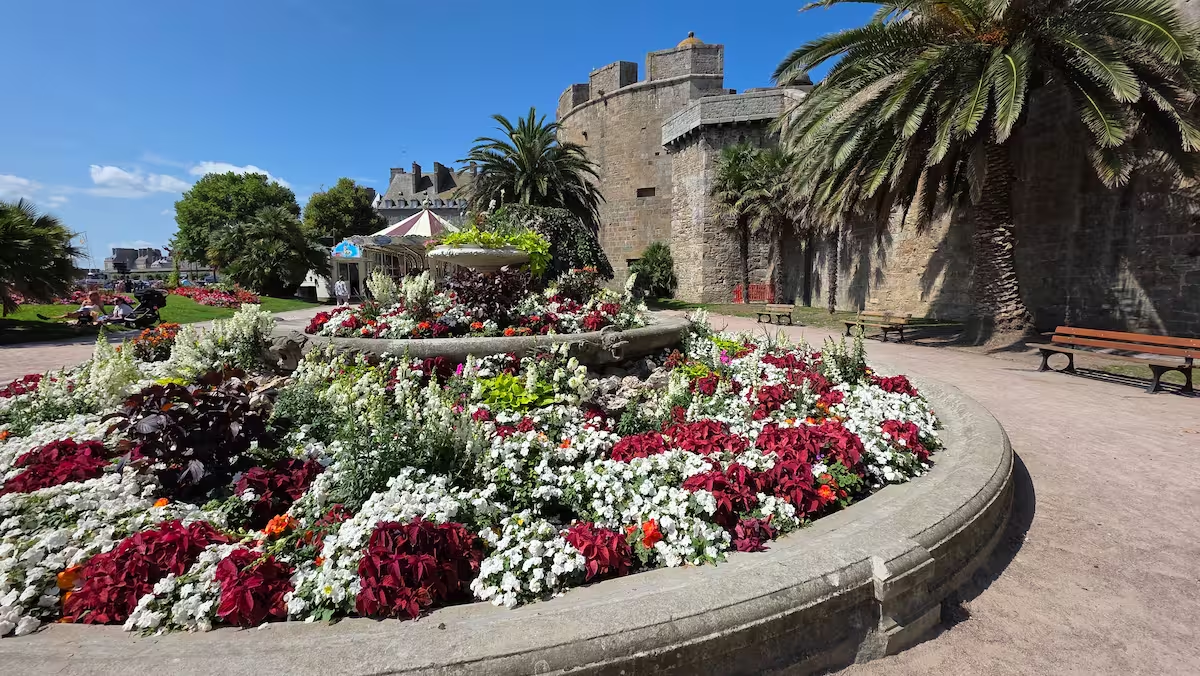
After exploring the city itself, it is now time to take a closer look at the castle, one of the most striking monuments of Saint-Malo. Standing proudly at the entrance of the old town, the granite fortress with its massive towers and tall ramparts seems as if it is still watching over the corsair city.
The construction of Saint-Malo Castle began in the 15th century, commissioned by the Dukes of Brittany. At that time, the people of Saint-Malo were known for their strong independence and rebellious spirit. To assert their authority over this defiant population, the Dukes built this imposing fortress—not so much against external enemies, but as a way to control the Malouins themselves. It was a symbol of power and political dominance.
Over the centuries, the castle evolved through different roles. Initially a fortress, it was reinforced during the 16th and 17th centuries to adapt to new maritime threats. It later became the residence of governors and dukes when they stayed in the city, and eventually, it served as a prison. During World War II, like much of Saint-Malo, the castle suffered from bombings and destruction. Yet it was rebuilt, standing today as one of the key landmarks of the city.
Today, Saint-Malo Castle houses the City Hall and other local administrations. Unfortunately, this means that the castle cannot be visited from the inside. Many visitors are surprised to learn this, but access is restricted due to its administrative function.
However, the exterior is still a wonder to explore. Its thick granite walls, watchtowers, and imposing architecture are a perfect testimony to the city’s rich history. Around the castle, visitors can enjoy breathtaking views of the port, the sea, and the maze of narrow streets that make up the old town. The castle is also an excellent starting point for a walk along Saint-Malo’s ramparts, which offer one of the best panoramas of the Emerald Coast.
Even if its doors remain closed to the public, Saint-Malo Castle continues to embody the soul of the corsair city. It is more than just a monument—it is the guardian of a unique identity, symbolizing resilience, independence, and maritime heritage.
📍 Practical Information
- Location: Château de Saint-Malo, Place Chateaubriand, 35400 Saint-Malo, France
- Visiting tip: The interior cannot be visited, but take time to explore the ramparts starting from the castle for the best sea views.
- Extra tip: Early morning or late afternoon is the best time to enjoy the castle surroundings with fewer crowds.