
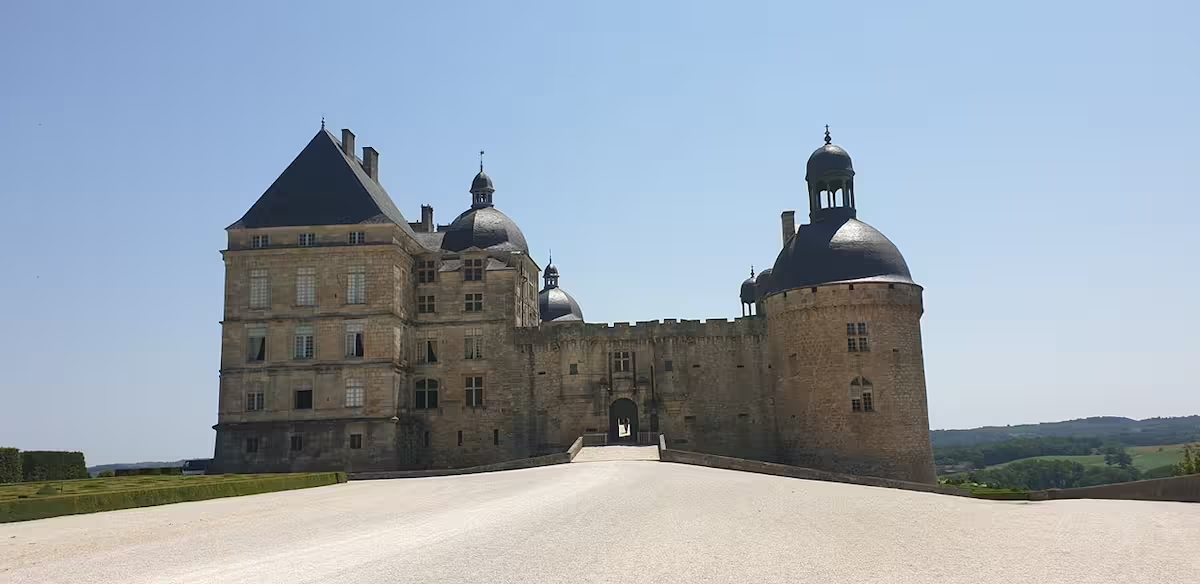
Rising proudly above the verdant hills of the Dordogne, the Hautefort Castle is one of the most majestic castles in southwest France, a place where medieval strength meets classical refinement. Originally built as a fortress in the Middle Ages, the château was transformed in the 17th century into a grand residence that reflects the elegance and sophistication of the period, making it stand out as a unique jewel in the Périgord Noir. Its harmonious blend of defensive architecture and stately design has made Hautefort not only a historical landmark but also a symbol of power, art, and refinement.
Approaching the castle, visitors are immediately struck by its commanding silhouette, with round towers, sweeping façades, and elegant lines that dominate the surrounding landscape. The setting itself is spectacular: perched on a rocky spur, the château overlooks the rolling countryside, offering breathtaking views that extend for miles. Inside, the château reveals another world, where richly decorated rooms tell the story of noble life through centuries. Antique furniture, tapestries, and portraits recreate the atmosphere of aristocratic grandeur, transporting visitors back to a time when Hautefort was a center of influence and refinement.
But the charm of Hautefort is not confined to its architecture alone. The gardens and landscaped grounds are equally enchanting, designed in the 19th century and maintained with great care. French-style parterres unfold in perfect symmetry, while terraces, topiaries, and flowerbeds frame the château with a natural elegance that enhances its beauty. Walking through these gardens, one can feel both the meticulous artistry of garden design and the serenity of the countryside. In spring and summer, the vibrant colors of the flowers add a touch of poetry to the already breathtaking scenery, making the château as much a delight for nature lovers as for history enthusiasts.
The castle history is as rich as its appearance. Originally built in the 12th century, it was a medieval fortress belonging to the de Born family, closely tied to the famous troubadour Bertran de Born, known for his poetry and political influence during the turbulent years of the Plantagenets. Later, during the 17th century, the fortress was transformed into a residence that reflected the tastes of the French nobility, with large windows, grand halls, and elegant ornamentation replacing the austere military structures. This transformation turned Hautefort into a place of beauty and comfort without erasing the traces of its fortified past, creating the unique blend that fascinates visitors today.
Beyond its historical and architectural value, the Hautefort Castle has also played a role in culture and cinema. Its grand façades and perfectly preserved interiors have provided the backdrop for numerous films and television productions, adding a touch of cinematic glamour to its reputation. Yet despite its fame, the castle remains a welcoming site, open to visitors who wish to explore its treasures at their own pace.
A visit to Hautefort is not just a tour of rooms and gardens; it is an experience that awakens the imagination. The echoes of medieval battles, the elegance of classical salons, and the peaceful charm of the gardens all come together to create a journey through time. Whether you are fascinated by history, enchanted by architecture, or simply seeking a beautiful place to explore in the Dordogne, the Hautefort Castle offers an unforgettable encounter with French heritage. Standing proudly above the valley, it continues to embody the grandeur of the past while inviting each visitor to pause, admire, and be inspired by its timeless beauty.
📍 Practical Information
Address:
Château de Hautefort
Le Bourg, 24390 Hautefort, Dordogne, France
📍 GPS: 45.2561° N, 1.1325° E
📞 Phone: +33 (0)5 53 50 51 23
🌐 Website: chateau-hautefort.com
Parking & Access:
- Free parking is available at the foot of the castle, with additional spaces nearby in the village.
- Accessible by car: Hautefort is located about 30 km northeast of Périgueux and 40 km south of Brive-la-Gaillarde.
- Public transport: Best reached by car, as there are limited connections by bus from Périgueux.
Visitor Tips:
- Plan at least 2–3 hours to explore both the interiors and the gardens.
- Wear comfortable shoes: there are cobbled paths, steps, and sloping garden terraces.
- The castle is open seasonally, usually from April to November—check the official website for exact dates and times.
- Guided tours are available and highly recommended for learning about the château’s history.
- The gardens are most spectacular in spring and summer, with colorful flowerbeds and perfectly trimmed parterres.
- Families will enjoy special events and workshops often held during school holidays.
- Early mornings and late afternoons are the best times for photography, with soft light enhancing the views.