
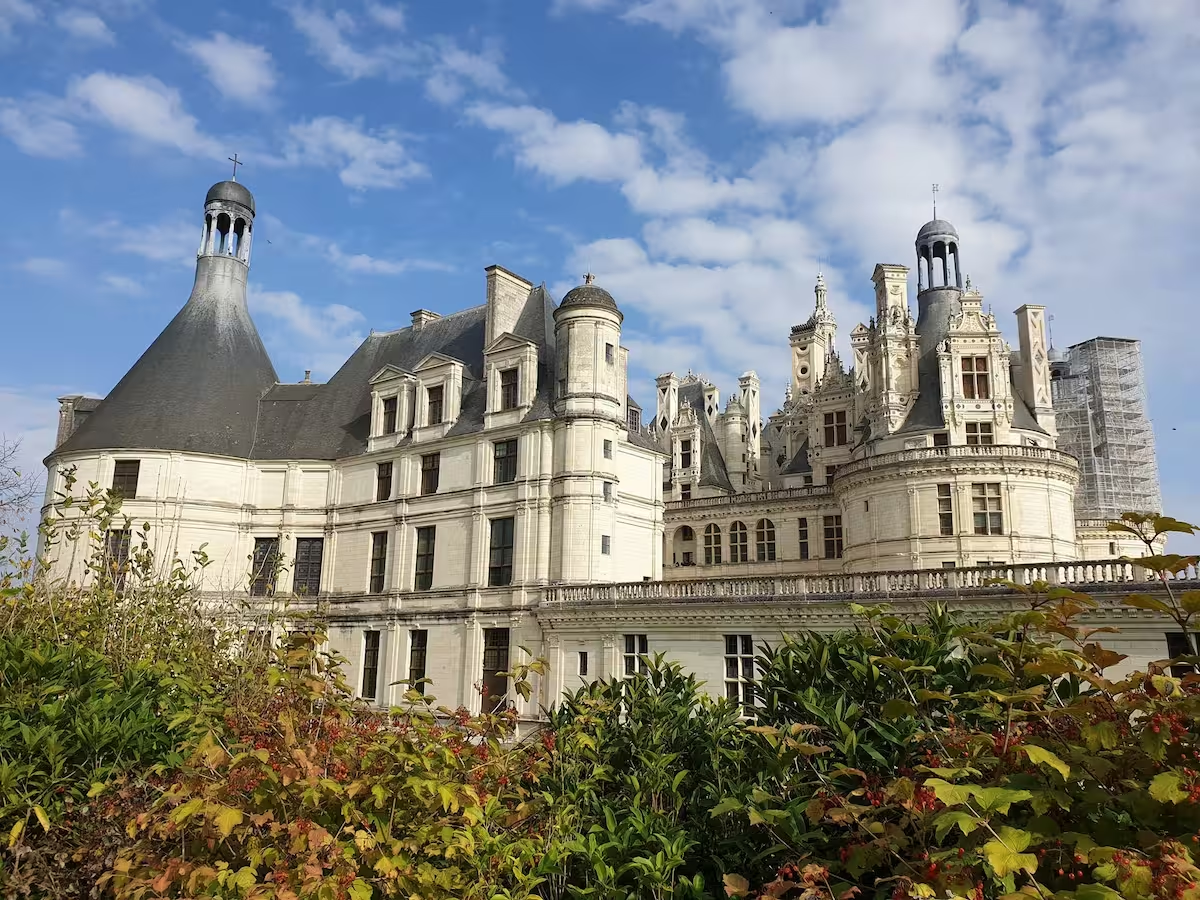
The moment you approach Chambord Castle, you are left speechless. It rises from the forest, vast, majestic, almost surreal. With its 440 rooms, 282 chimneys, and 84 staircases, it is unlike any other castle I have ever seen. Every time I think back to my visit, it’s the feeling of grandeur and mystery that comes to mind first. You immediately sense that you are facing a unique monument, a place where history and legend are intertwined in every stone.
Chambord was built in the early 16th century under the reign of King Francis I, who wanted a castle worthy of his power and love for the arts. He envisioned a place to hunt, entertain courtiers, and demonstrate the magnificence of the French monarchy. Interestingly, although often called a “castle,” it was never permanently inhabited. It served primarily as a royal residence during hunts and as a showcase of the king’s prestige.
The most striking feature upon entering Chambord is the double-helix staircase, often attributed to Leonardo da Vinci. One person can ascend while another descends without ever meeting. It is a Renaissance architectural marvel, symbolizing both the ingenuity of the era and Francis I’s genius for art and innovation. Standing in the middle of this staircase, I felt as if I were walking through a dream, a space where every detail was designed to impress and inspire awe.
The vast rooms of the castle are equally impressive, with monumental fireplaces, intricately carved ceilings, and finely crafted woodwork. While many of the original furnishings have disappeared over the centuries, the rooms still evoke the lavish life of the royal court and aristocracy of the time. Each space invites you to imagine grand banquets, political discussions, and festive gatherings that animated Chambord during the Renaissance.
Outside, the park of Chambord is equally remarkable. Spanning over 5,000 hectares of forest and meadows, it was designed for hunting and remains today one of Europe’s largest enclosed parks. Walking through this immense estate, with the castle framed against the horizon, offers a sense of freedom and reflection found nowhere else. The perspectives, pathways, and moats create a continuous dialogue between nature and architecture, characteristic of Renaissance vision.
Chambord Castle is also fascinating for its historical significance. It has witnessed kings and emperors, survived revolutions and wars, yet it stands today imposing and elegant—a symbol of French grandeur. For me, visiting Chambord is not just about seeing a castle; it is about feeling the ambition, creativity, and genius of an era, understanding why it remains a unique monument in the world.
Leaving the castle, I was struck by the impression that Chambord is more than a historic building. It is a visual, intellectual, and emotional experience, where every stone tells a story, every tower, staircase, and façade bears witness to the passion for art and the power of those who imagined it. Chambord is a place where the French Renaissance is not only read about but lived and felt.
📍 Address & Visitor Information
Chambord Castle
Château de Chambord
41250 Chambord
France
Visitor Tips:
- Opening hours vary by season; check the official website before your visit.
- Book tickets online in advance, especially during summer and holidays.
- Allocate 2 to 3 hours to fully explore the castle and park.
- The castle is accessible by train from Blois or Tours, with a short bus or taxi ride.
- The park is ideal for walking, cycling, or picnicking, and is especially beautiful in early morning or late afternoon.
- Combine your visit with nearby Loire castles such as Cheverny or Chambord’s neighboring estates for a full Loire Valley experience.