Tucked away in the quieter part of Dinan’s medieval heart lies one of its hidden treasures — the Church of Saint-Malo, a peaceful sanctuary steeped in centuries of history and spiritual grace. While most visitors are drawn to the bustling squares, artisan shops, and the iconic castle, those who wander a little off the beaten path will find themselves in front of this majestic yet understated Gothic church. Built in the 15th century to replace an earlier Romanesque structure, Saint-Malo Church stands as a remarkable example of flamboyant Gothic architecture. Its soaring arches, intricate tracery, and tall windows reveal the ambition and craftsmanship of a city that once played a key role in the Duchy of Brittany. Though not grand in size, the building’s elegance lies in its proportion, its symmetry, and its quiet confidence. Stepping inside is like entering another world. The noise of the town fades into a gentle silence, replaced by the subtle echo of footsteps and the play of colored light filtering through the stained glass windows. Some of these windows date back to the 19th century, while others are more modern, but all work together to bathe the stone columns and vaulted ceilings in a calm, almost celestial glow. The church is far from lifeless — quite the opposite. It continues to serve as a place of prayer, of gathering, and of music. The acoustics are sublime, making it a popular venue for choral and classical concerts throughout the year. Even during quiet moments, the space seems to hum with the memory of past harmonies, as if the walls themselves had kept each note alive. As you explore the side chapels and carved altars, you sense a living faith woven through time. Wooden statues, flickering votive candles, and worn stone floors tell the story of countless generations who have passed through this place — not just to admire it, but to find peace, to hope, to mourn, and to believe. Outside, the small adjoining cemetery adds another layer to the experience. Timeworn tombstones, some leaning, others covered in moss, bear the names of Dinan’s past citizens. It is a space for remembrance, yet it feels less like an end and more like a continuation — a quiet conversation between the past and the present. What makes the Church of Saint-Malo so special is not only its architecture or its age, but its atmosphere. It is a place that invites stillness. A moment to breathe. A moment to feel connected to something beyond the everyday. Whether you’re a lover of history, art, faith, or simply beauty — this church will speak to you. When you leave its quiet walls and step back into the lively streets of Dinan, you carry a little of that peace with you. And maybe, like me, you’ll feel grateful for having found a place that doesn’t just tell history — but lets you feel it.
Perlépampille: A Charming Culinary Gem in the Heart of Dinan
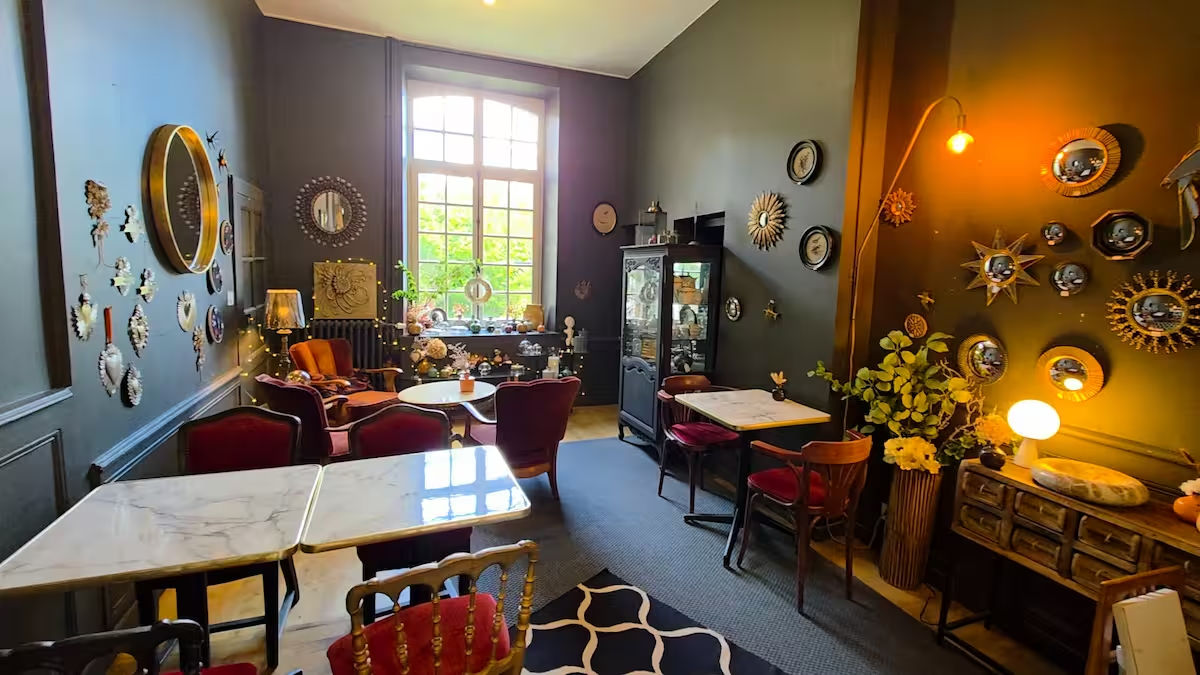
In the picturesque medieval town of Dinan, perched above the River Rance in Brittany, some places are more than just restaurants — they’re experiences. Perlépampille is exactly that. Tucked away in a quaint cobbled street of the historic center, this enchanting restaurant and tea room is a true treasure: a cozy haven where refined decor, homemade delights, and thoughtful details come together in perfect harmony. From the moment you walk in, you feel like you’ve stepped into a fairy tale. The interior is delightfully elegant, with vintage furniture, antique china, dried flower arrangements, and shimmering chandeliers — every corner tells a story. It’s charming without being overdone, and there’s a small boutique on site where you can browse curated decorative objects, books, and charming curiosities, all selected with care and taste. The magic continues on the plate. Perlépampille proudly offers a homemade, seasonal menu, carefully crafted and full of flavor. During our visit, we started with a classic yet delicious hard-boiled egg served with homemade mayonnaise — creamy, delicately tangy, and nostalgic in the best way. The main course was a golden, crispy croque with ham, soft on the inside and beautifully toasted on the outside, served with a selection of savory mini tarts that added a lovely, delicate balance to the dish. And then came dessert — the highlight of the meal. Perlépampille offers a selection of beautifully presented sweets, but the real showstopper was the lemon meringue tart: bright and zesty with a perfectly crisp crust and a generous swirl of fluffy, lightly toasted meringue on top. It was as pretty as it was delicious. The service matched the setting — warm, attentive, and discreet, with a touch of genuine kindness that makes you feel right at home. The team clearly loves what they do, and it shows in every detail. ✨ A Place With Soul Perlépampille isn’t just a restaurant — it’s a peaceful escape, a place where everything is done with heart. Whether you’re stopping in for lunch, enjoying a quiet afternoon tea, or browsing the boutique, this little gem captures the delicate beauty and charm of Dinan like nowhere else. Exact Address & Website
The Historical Heart of Dinan: Dinan Castle
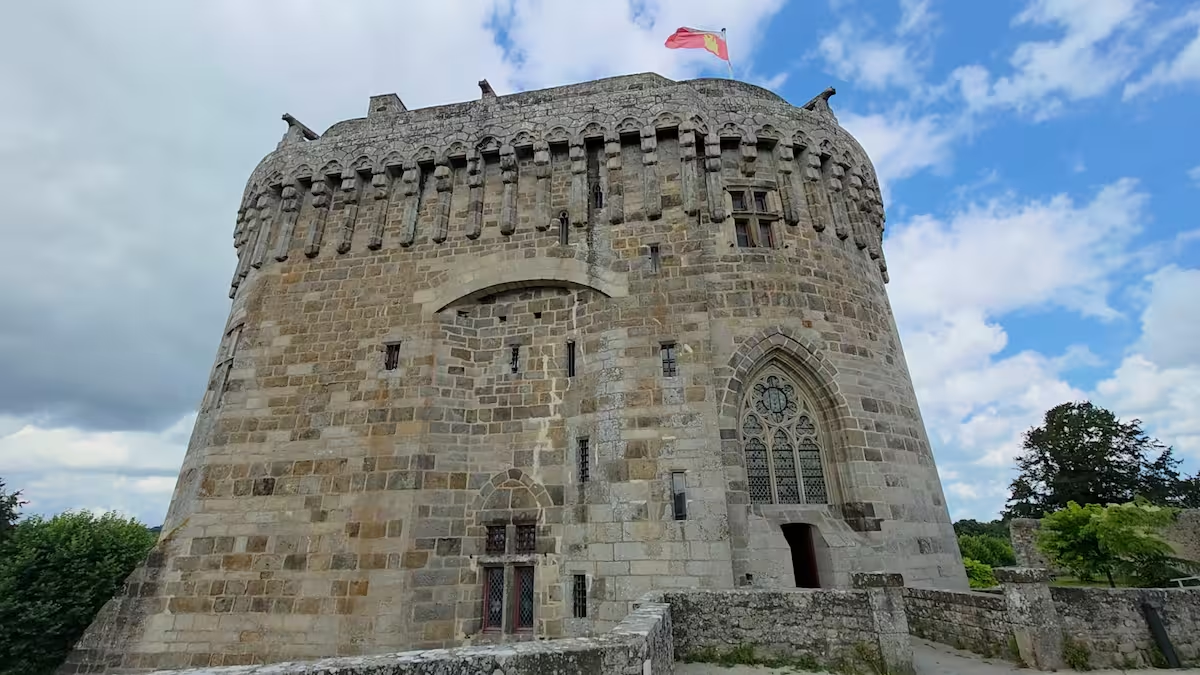
Rising proudly above the medieval town of Dinan, the Dinan Castle is more than just a fortress of stone — it is a living testament to centuries of Breton history. Built in the late 14th century by Duke John IV of Brittany, the castle was designed as both a defensive stronghold and a symbol of ducal authority. Its imposing keep, flanked by thick walls and guarded by a deep moat, was strategically placed to watch over the Rance River and control one of the key routes between Normandy and Brittany. The construction of the castle came during a turbulent time in Brittany’s history. The Breton War of Succession had recently ended, and the dukes sought to reinforce their power against both internal rivalries and external threats from the Kingdom of France and the Duchy of Normandy. Dinan, already a prosperous trading town, became a crucial point of defense — and the castle was at its heart. Over the centuries, Dinan Castle witnessed sieges, political intrigues, and moments of royal pageantry. During the 15th and 16th centuries, it evolved from a purely military fortress into a more comfortable residence, reflecting the Renaissance influence that spread across Brittany. Yet, its military role was never entirely forgotten — its walls still bristle with machicolations and arrow slits, reminders of its original purpose. By the 18th century, the castle’s strategic importance declined, and it was repurposed for various uses, including as a prison. In the 19th and 20th centuries, efforts to preserve Dinan’s rich medieval heritage led to the restoration of the castle, ensuring its survival as one of the best-preserved examples of ducal military architecture in Brittany. Today, visitors can explore its towering keep, climb the ramparts for panoramic views of Dinan’s half-timbered houses and the Rance Valley, and immerse themselves in exhibits that trace the town’s storied past. Standing within its walls, it’s easy to imagine the clang of armor, the calls of sentries, and the pulse of a town shaped by centuries of history. The Dinan Castle is not merely a monument — it is a bridge to another time, carrying the echoes of Brittany’s proud and often turbulent past into the present.