
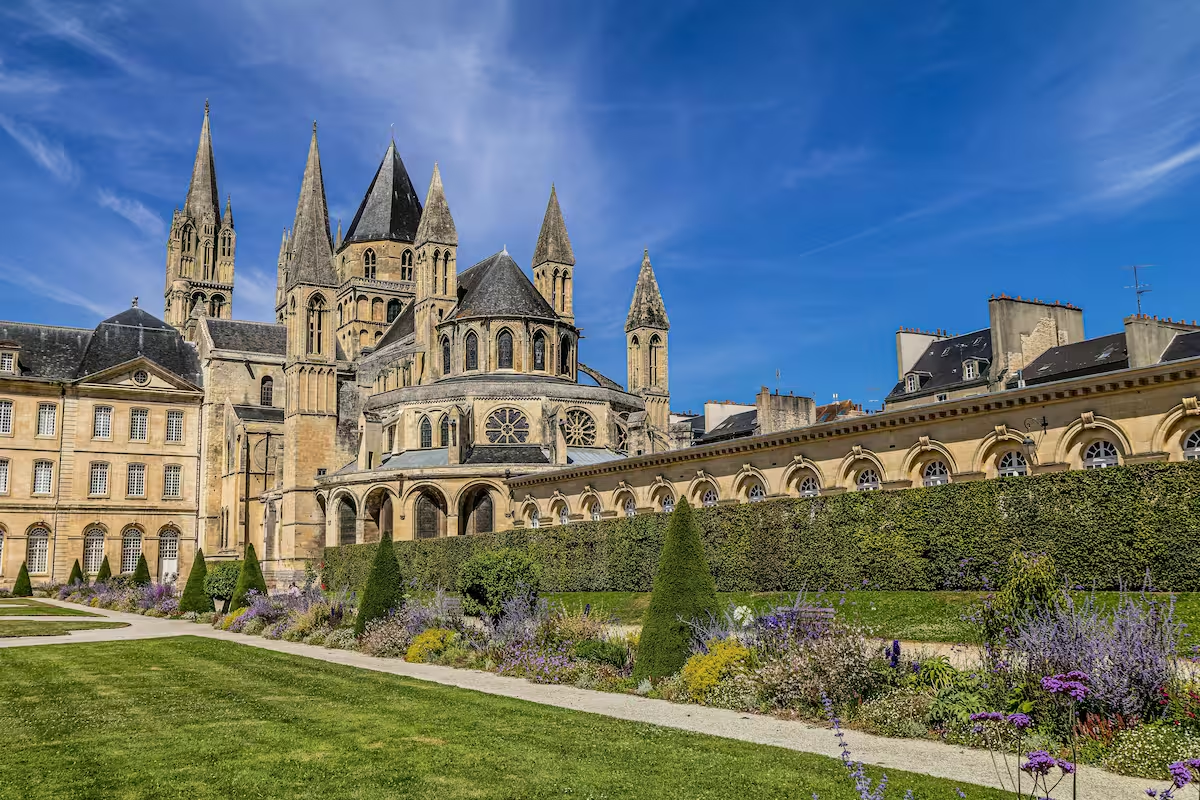
After leaving the Abbaye aux Dames behind, my footsteps led me to its grand counterpart: the Abbaye aux Hommes. Standing proudly in the heart of Caen, this imposing Romanesque masterpiece is as much a testament to faith as it is to the ambition of its founder — William the Conqueror.
Built around 1063, the Abbaye aux Hommes (or Abbaye Saint-Étienne) was William’s answer to the delicate political and religious situation surrounding his marriage to Matilda of Flanders. As distant cousins, their union had been condemned by the Church, and in order to reconcile with Rome, each spouse founded an abbey: Matilda the Abbaye aux Dames, and William the Abbaye aux Hommes.
Dedicated to Saint Stephen, the abbey became one of the most important Benedictine monasteries in Normandy. Its church, with its powerful twin towers and harmonious proportions, is a shining example of Norman Romanesque architecture. Inside, the vast nave draws the eye toward the choir, where light floods through tall, narrow windows, creating a serene and solemn atmosphere.
The abbey was not just a place of worship but also a center of learning and influence. For centuries, it shaped the spiritual and cultural life of Caen. William himself was laid to rest here in 1087, though his tomb has endured a turbulent history — desecrated during the French Wars of Religion, and later damaged during the Revolution. Today, a simple marble slab marks the spot where the Conqueror lies.
The surrounding monastic buildings, including the cloister and chapter house, have evolved over time. During the French Revolution, the abbey was repurposed and eventually became Caen’s Town Hall — a role it still fulfills today. This unusual blend of civic function and historic heritage makes it one of the most unique sites in the city.
Walking through its vast spaces, I couldn’t help but imagine the daily life of the monks who once called this place home — the chants echoing under the stone vaults, the quiet work in the cloisters, the prayers offered for the soul of a king.
The Abbaye aux Hommes is more than just a monument; it’s a living link to Normandy’s medieval past, the personal story of William the Conqueror, and the architectural genius of the 11th century.
Address & Visitor Tips
📍 Address:
Abbaye aux Hommes – Saint-Étienne
Place Saint-Étienne
14000 Caen – France
🕰 Visitor Tips:
- Plan 1 to 1.5 hours to explore both the church and the cloisters at a relaxed pace.
- Consider a guided tour to uncover fascinating historical details about William the Conqueror and the abbey’s architecture.
- Visit in the late afternoon for softer light filtering through the nave’s tall windows — it creates an atmospheric glow.
- Don’t miss William’s tomb in the choir, a simple but powerful reminder of Normandy’s most famous duke.
- The abbey is located near the Château de Caen and the Abbaye aux Dames, making it easy to combine them into a half-day historical circuit.